Due to the major societal transformations currently underway, many of which also have a spatial dimension […] architecture is facing major challenges. For the moment, however, it seems to be mainly groping in the dark. This sentence from the introduction to Architectuurboek Vlaanderen no. 15 is refreshing in its openness to doubt and questioning, in these times filled with endless social, ecological, health and economic ‘crises’, which no longer follow one another, but respond to each other. It is also here that the ‘alliances’ in the title take on an exciting programmatic significance. With ‘reality’, as the title poetically, albeit vaguely, adds, but also very concretely through the search for collective approaches that explore sustainable responses to these transformations.
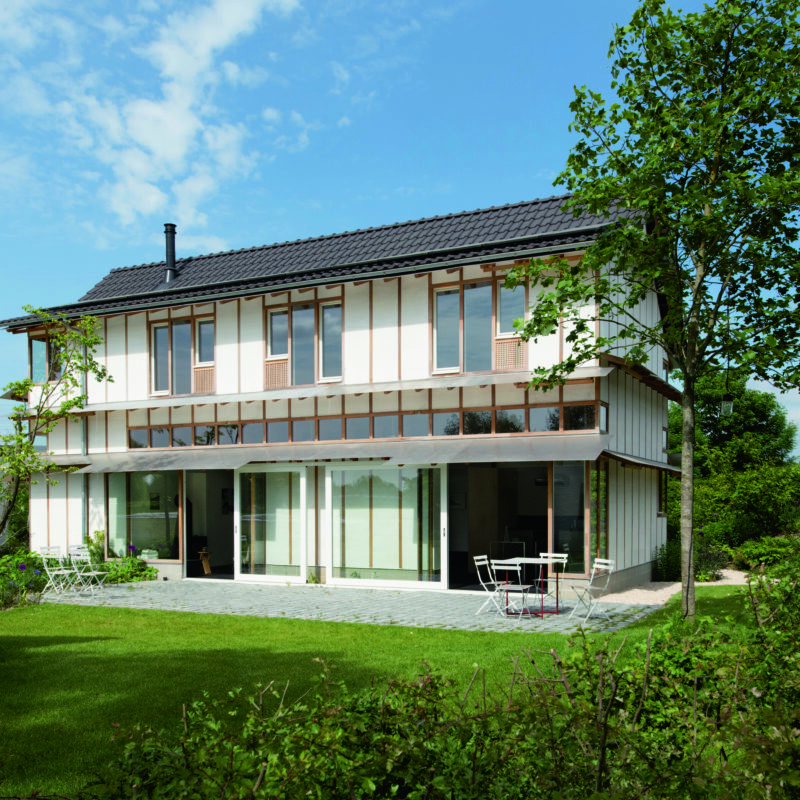
Relevant observations and lofty ambitions, then. However, the selection and readings of projects proposed thereafter may come as a surprise. It would seem that, in order to belong to the inner circle of published projects, one must have done a lot and doubted little. This is strange for a discipline that is said to be “trial and error”. The fact that these are often projects with undeniable spatial intelligence and architectural qualities is not the issue. There are even a few exemplary projects, modest and precise, whether in their formal solutions or in their attention to community life, the territory and its activities. But without making room for hesitation in the descriptions. As is often the case in this type of catalogue, the architects are presented as having known, mastered and done. At first glance, it would therefore seem that the industry of signature architecture is doing rather well.