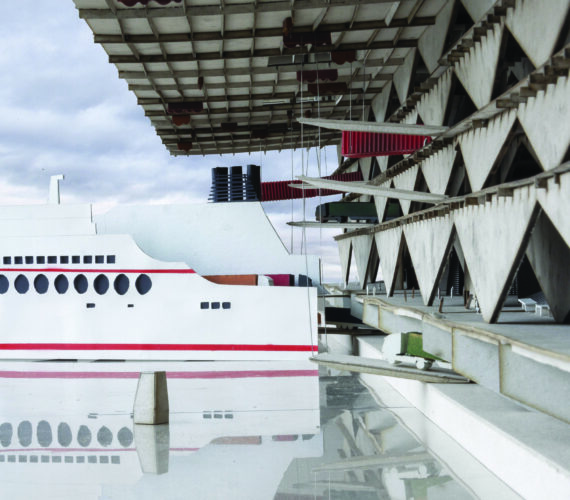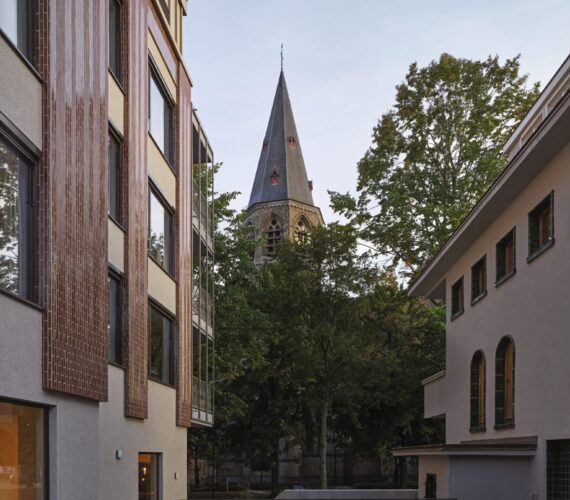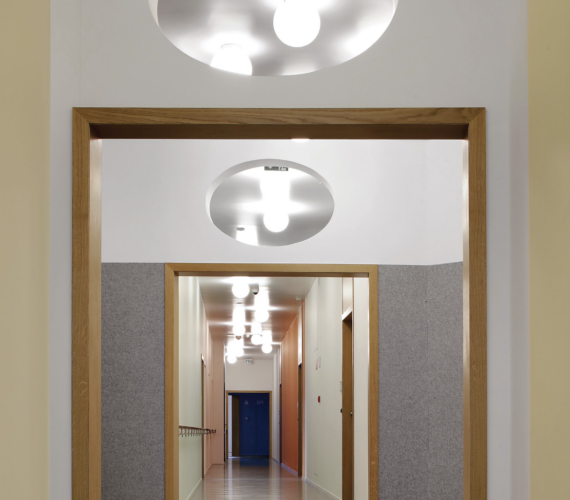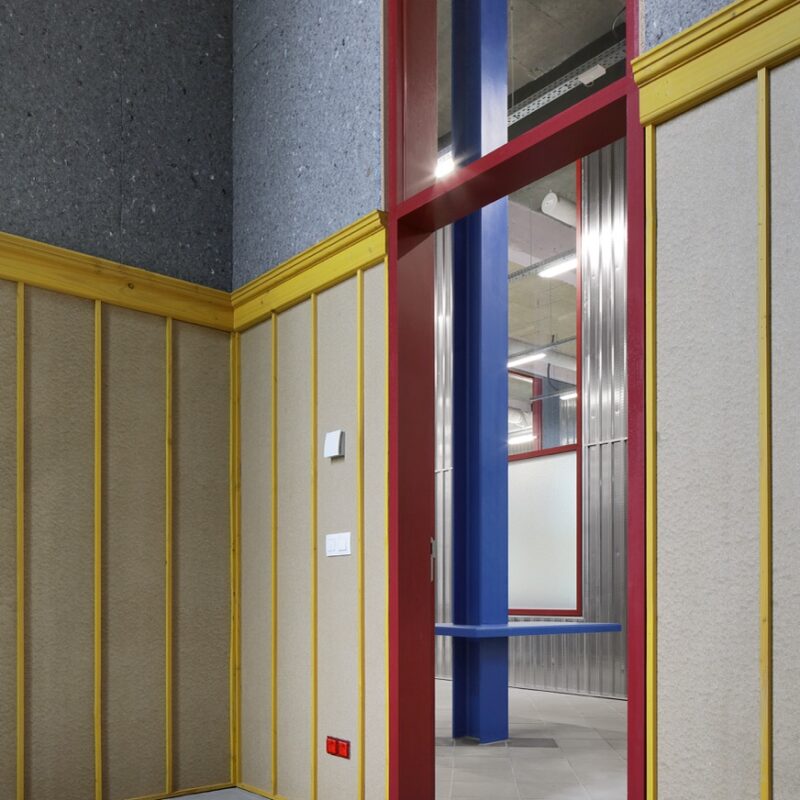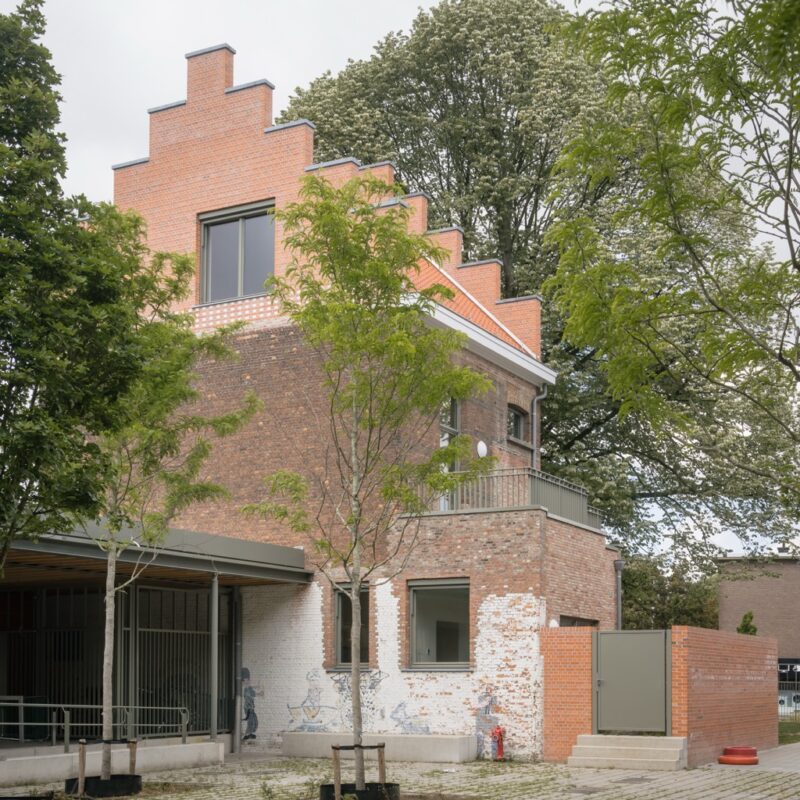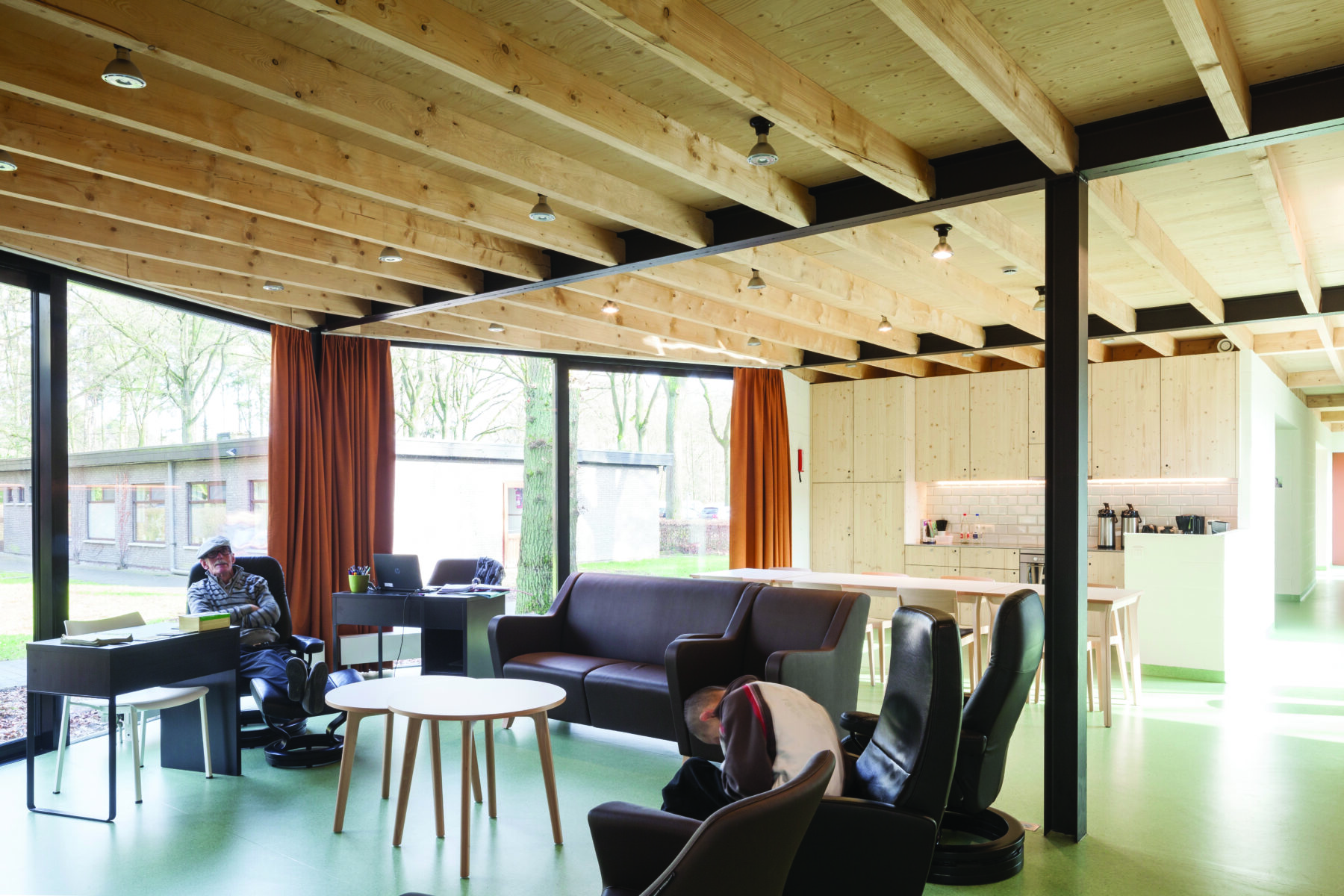
At the Monnikenheide care home in Zoersel, ur architects have completed a new residential pavilion for nine people with intellectual disabilities. Like the non-profit organisation’s previous projects, it is a fine example of how architecture can bring real added value to the daily lives of residents in need of care.
Following the birth of their son with Down’s syndrome, Paul and Wivina Demeester took the initiative in 1970 to build a short-stay centre for children and adults with intellectual disabilities near their own home in a wooded area in Zoersel. The first buildings at Monnikenheide opened in 1973: five parallel pavilions, which were referred to as ‘houses’ from the outset because homeliness and small scale, normalisation and integration were absolute priorities. Today, various studies confirm the benefits of ‘small-scale normalised living’1, but at the time it was an innovative model of care for people with disabilities, inspired by Scandinavian examples. It has remained the guiding principle for every new build and extension at Monnikenheide. 1 Living as normally as possible is the guiding principle of small-scale normalised living. The core elements are: normalisation, personalised care, quality of life, quality of relationships, striking a balance between autonomy and security, and small-scale living.