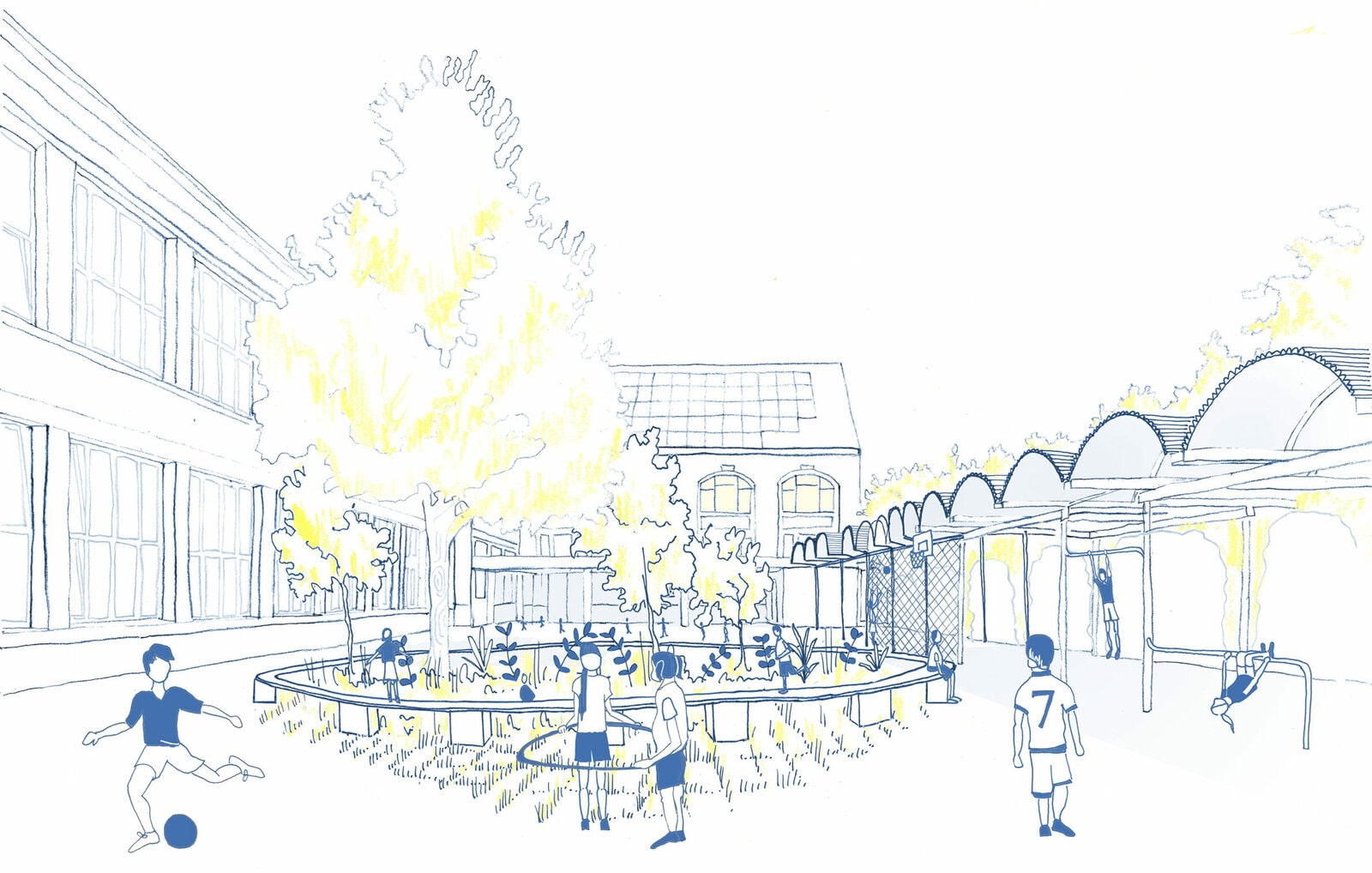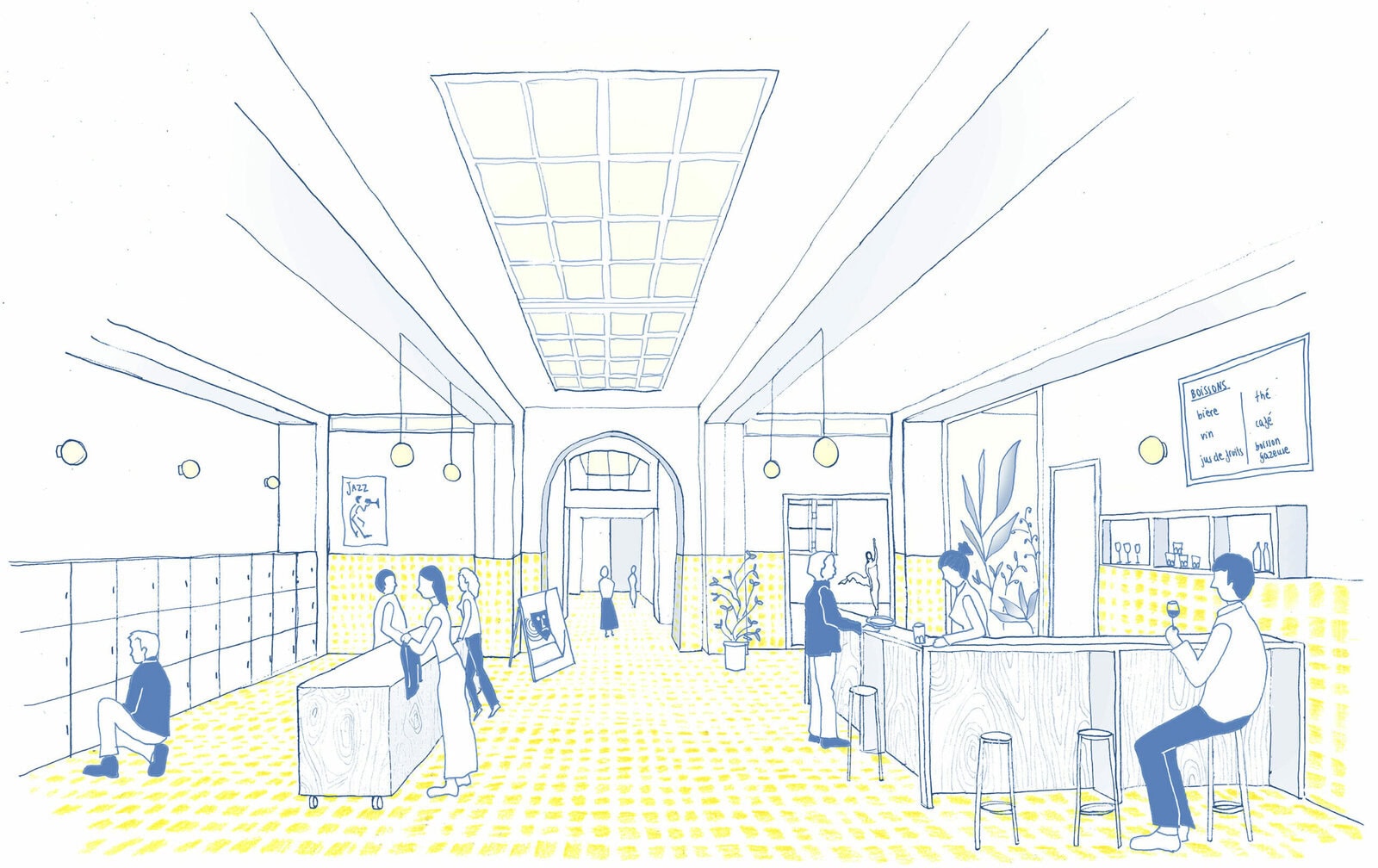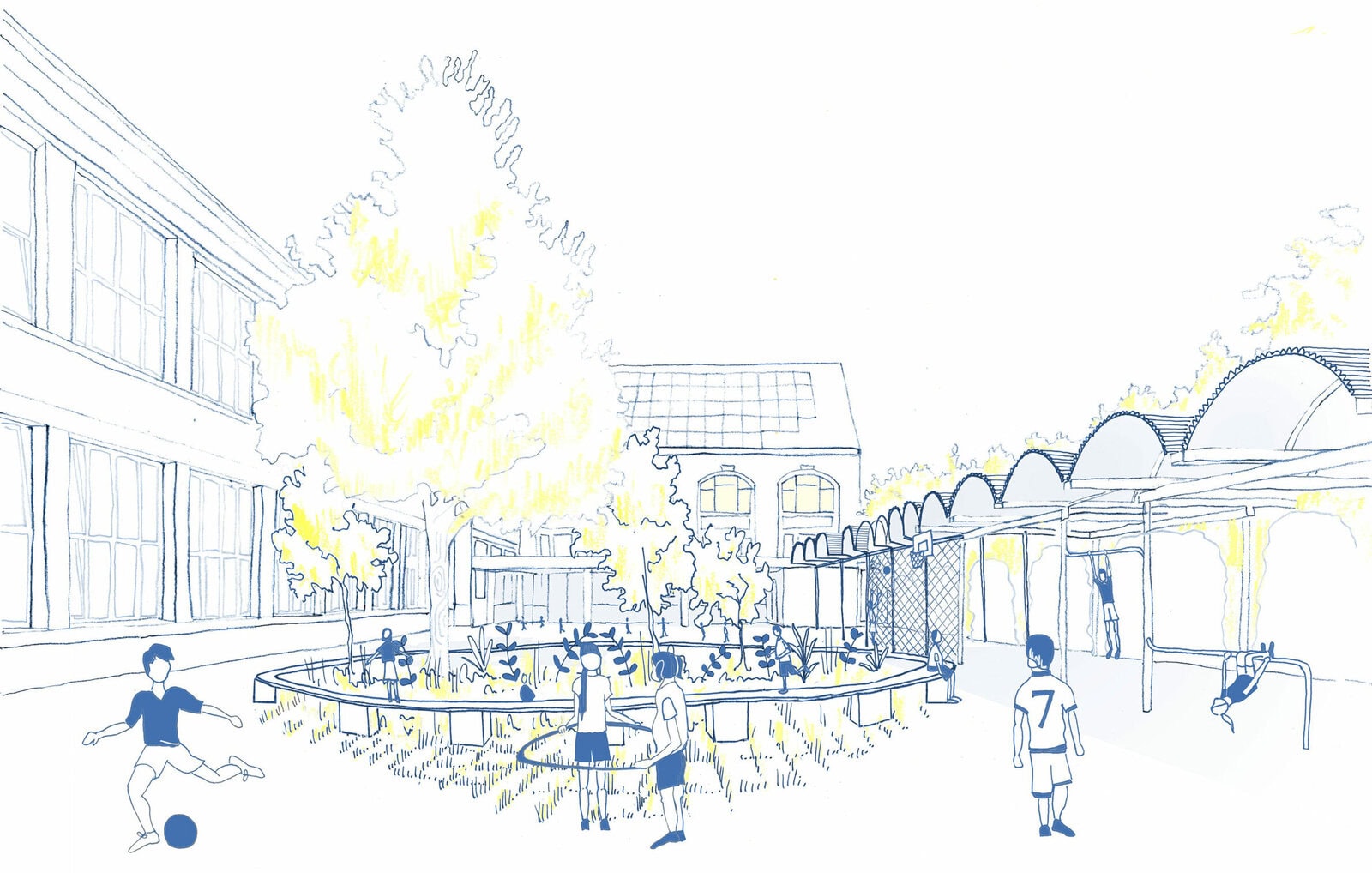
The renovation of the Cadol cultural centre in Koekelberg was the subject of a competition won by the team at OUEST architecture. A key feature of the brief is the interplay between the architectural design and the landscaping of the courtyard at the neighbouring Swartenbroeks school. Through subtle, well-judged interventions, the project succeeds in enhancing the existing architectural heritage and forging new connections.
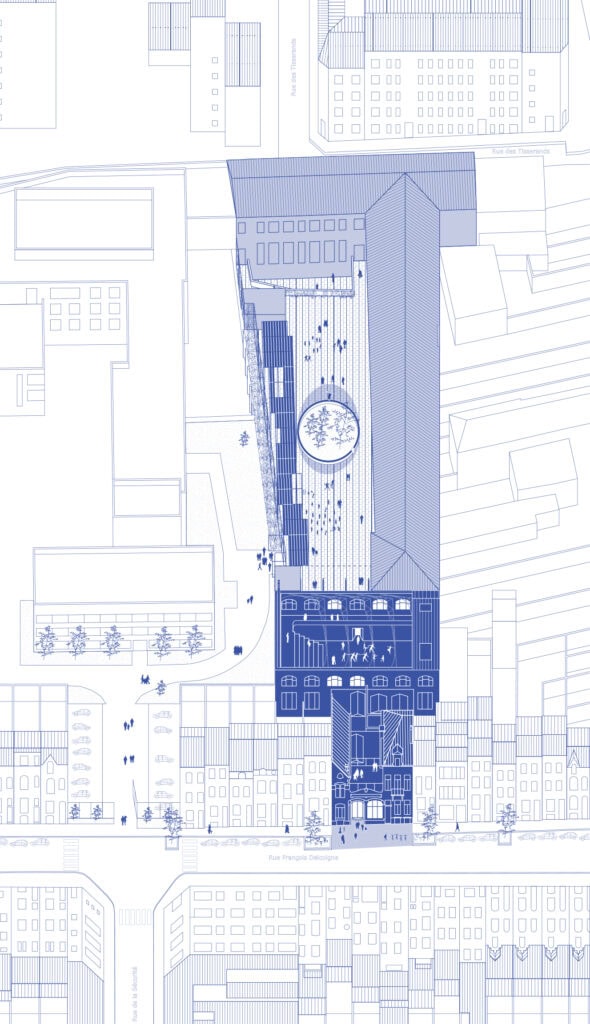
OUEST’s work, in collaboration with the landscape architecture firm LOKUS on the outdoor landscaping, is crucial in defining the space connecting the school playground to the cultural centre. Several elements give rhythm to this new landscape. The existing hedge running along the edge of the playground has been trimmed to create openings and views through the existing green wall. The covered playground is extended and complemented by children’s play equipment. Meanwhile, a circular bench serves both as a subtle boundary between the older children’s and younger children’s play areas and forms the perimeter of a green island incorporating the existing tree.
To approach the cultural space project, consideration is given to the spatial sequence that allows for a harmonious dialogue between the different spaces. Access points are suggested through a play of perspectives as one approaches the building, even whilst still outside. Indeed, particular attention is paid to the porch, an element dear to its architect Henri Jacobs, to whom we owe the early 20th-century Art Nouveau façade. Today, the approach is to retain the qualities of this porch and offer it new perspectives. When queuing to enter the auditorium from the street, an opening offers glimpses of the bar inside. This same interplay of perspectives is repeated inside, with a view from the bar onto the small auditorium.
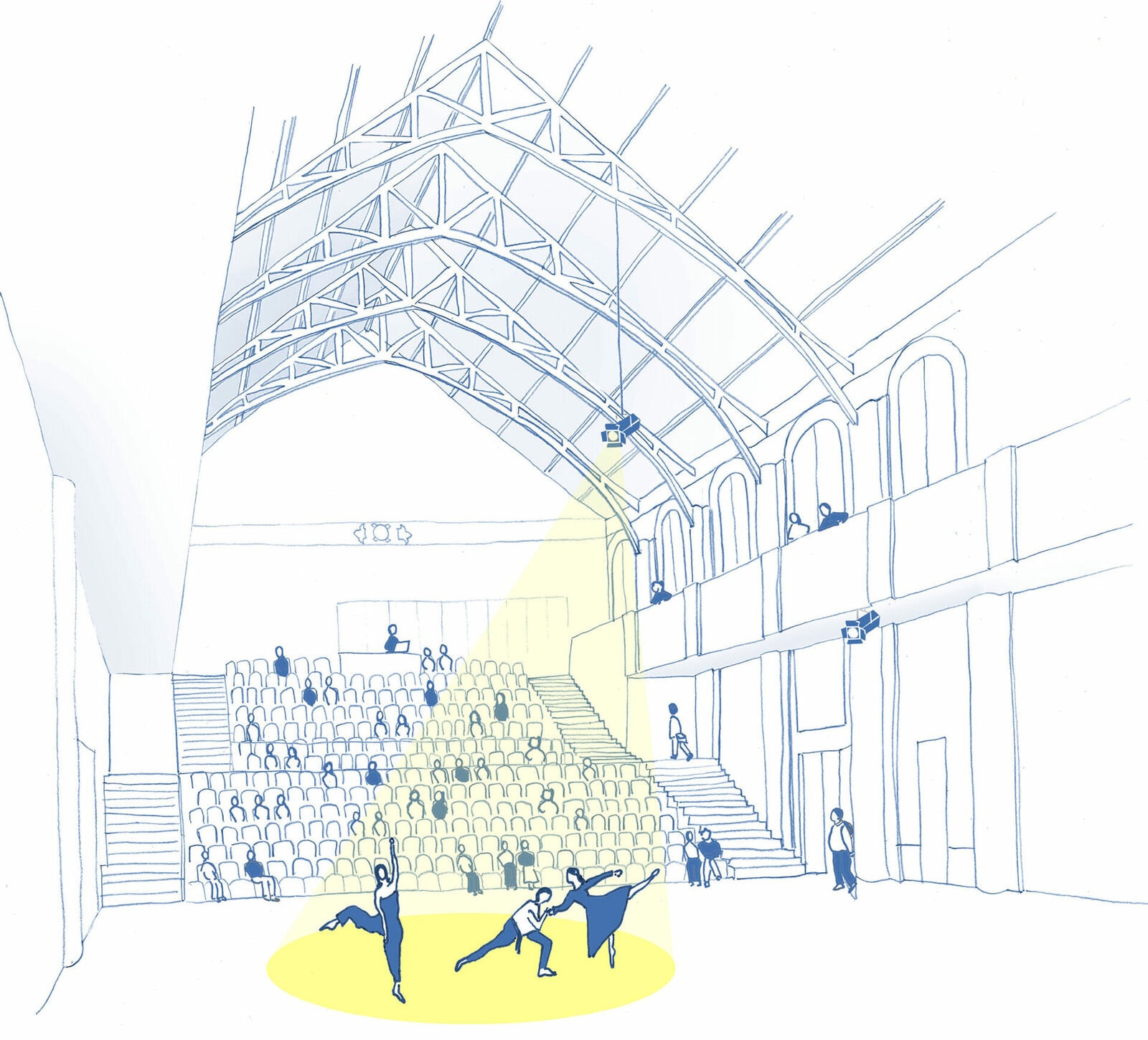
In the main auditorium, several configurations are available. The clever concealment of technical equipment in the unused spaces beneath the tiers frees up the auditorium space. The continuous balcony offers further views of the stage. Thorough consideration has been given to the crucial issue of acoustics, notably through the use of reflectors, sound-absorbing panels, external insulation, and shutters—a solution already employed by OUEST for the Ateliers Claus project in Saint-Gilles.
The project thus combines several targeted interventions to enhance the existing architectural heritage. It outshines the projects of the other competitors—teams from Atelier Architecture Alain Richard, Burobill, époc and Label—thanks to its marked attention to what is ‘already there’. By taking a targeted approach, it demonstrates that, without resorting to a clean slate, the issue of communal living can be addressed with greater sensitivity.