Development of the Arenberg Science Park began in Leuven over two decades ago, on the grounds of Arenberg Castle. Recently, the city and KULeuven revised its masterplan: intensive greening must cover a third of the site to strengthen the connection with the banks of the Dijle to the south. The footprint of the buildings must therefore be reduced, but in return, it is now permitted to build higher – much higher, in fact. The project for the Community Building by 360 Architects is indeed 60 metres high, but it also gives nature free rein.
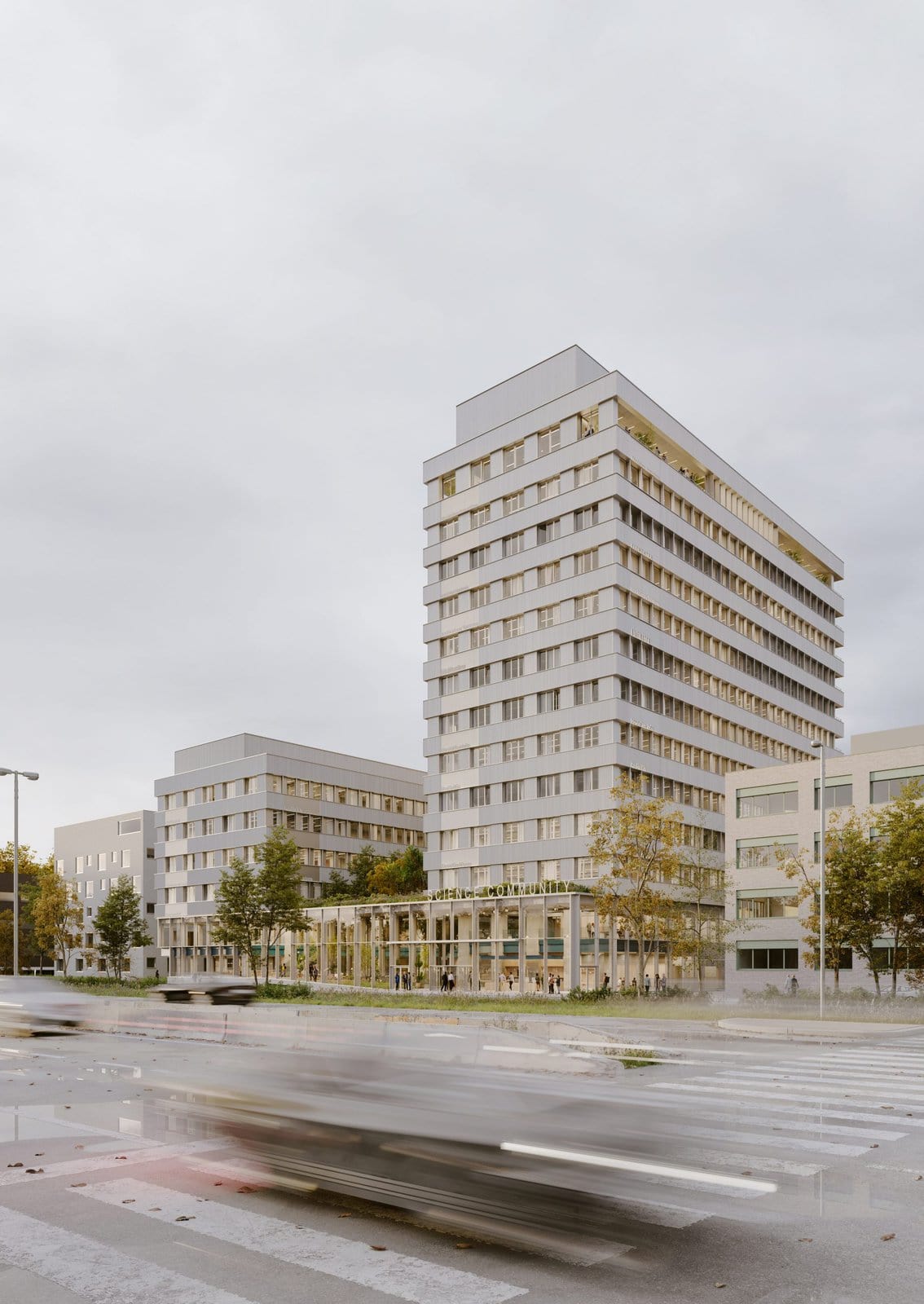
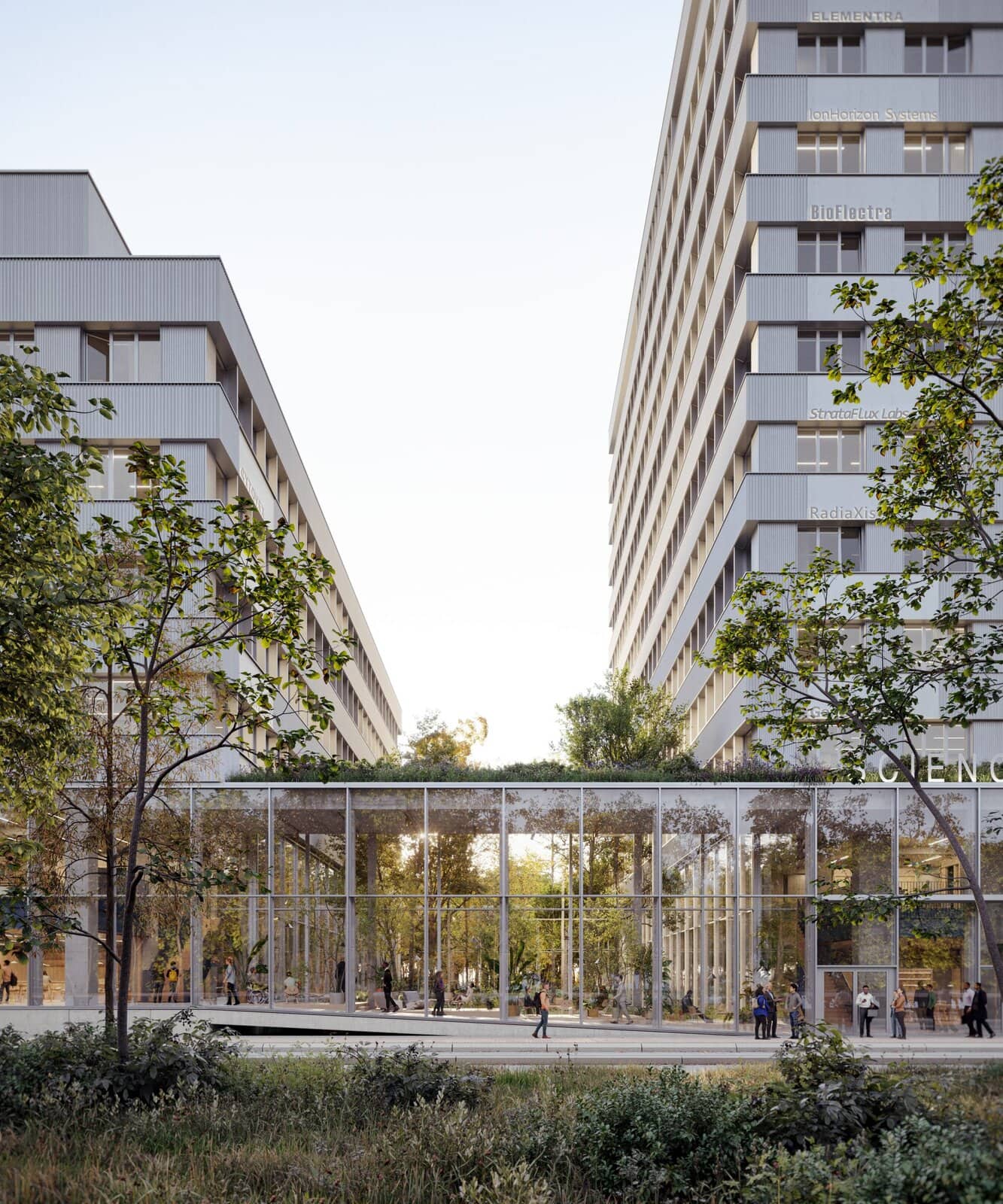
Recently, the first sod was turned for this complex on Gaston Geenslaan, a service road running alongside Koning Boudewijnlaan from Leuven to the E40. KULeuven is acting as the delegated client, although the actual client is Community Building BV. The community building provides communal spaces – a ‘hot spot’ – for campus users, but also offers plenty of office space for companies affiliated with the park.
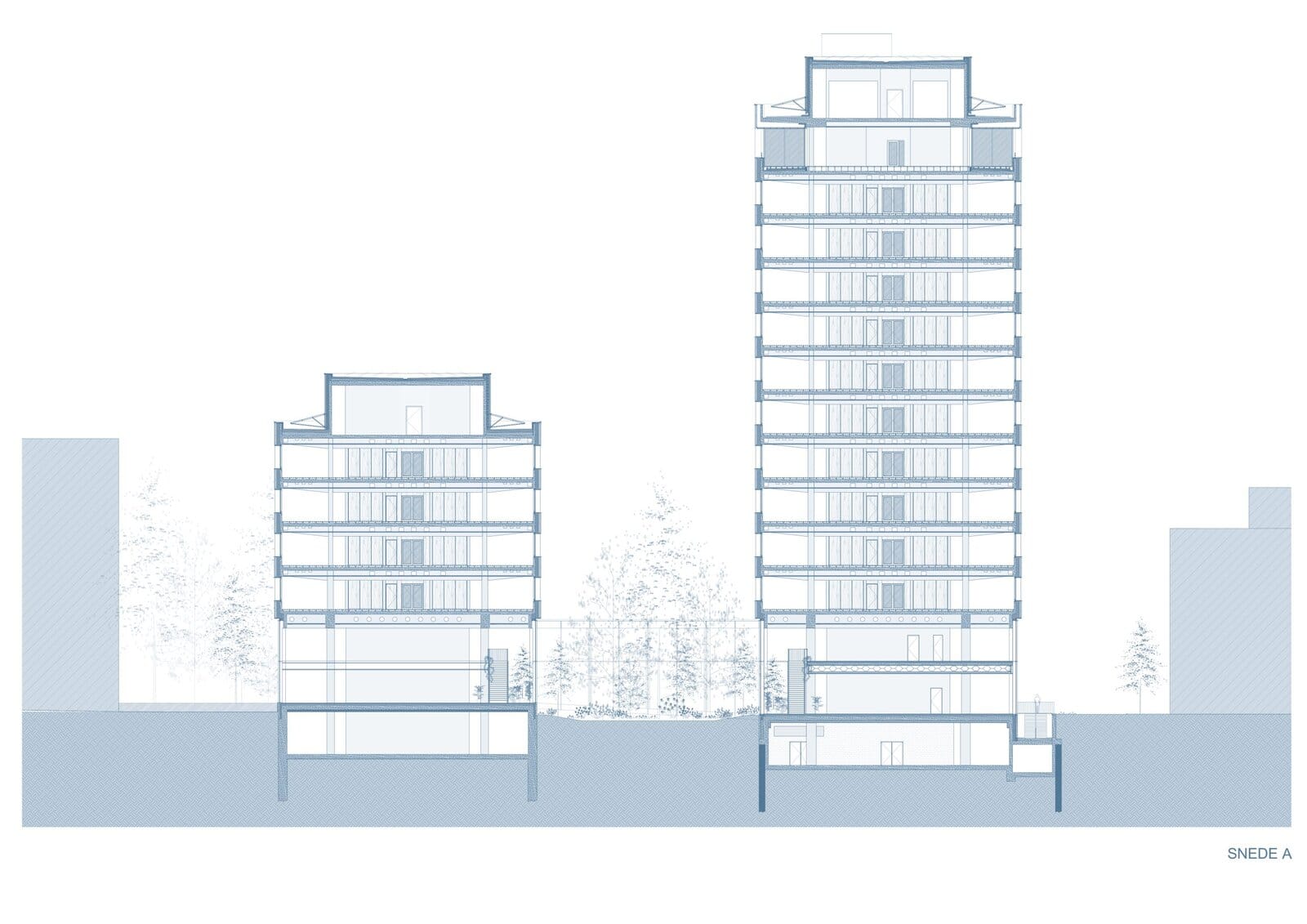
The project consists of two buildings. One, 60 metres high, with a footprint of approx. 25×50 m, has a double-height ground floor with a mezzanine, 10 freely configurable office floors around a core of lifts, staircases and sanitary facilities, and a top floor with terraces. Above this is a technical floor. The other block, some 20 m to the east, has the same footprint but comprises only four storeys above ground level. It will not be built immediately either.
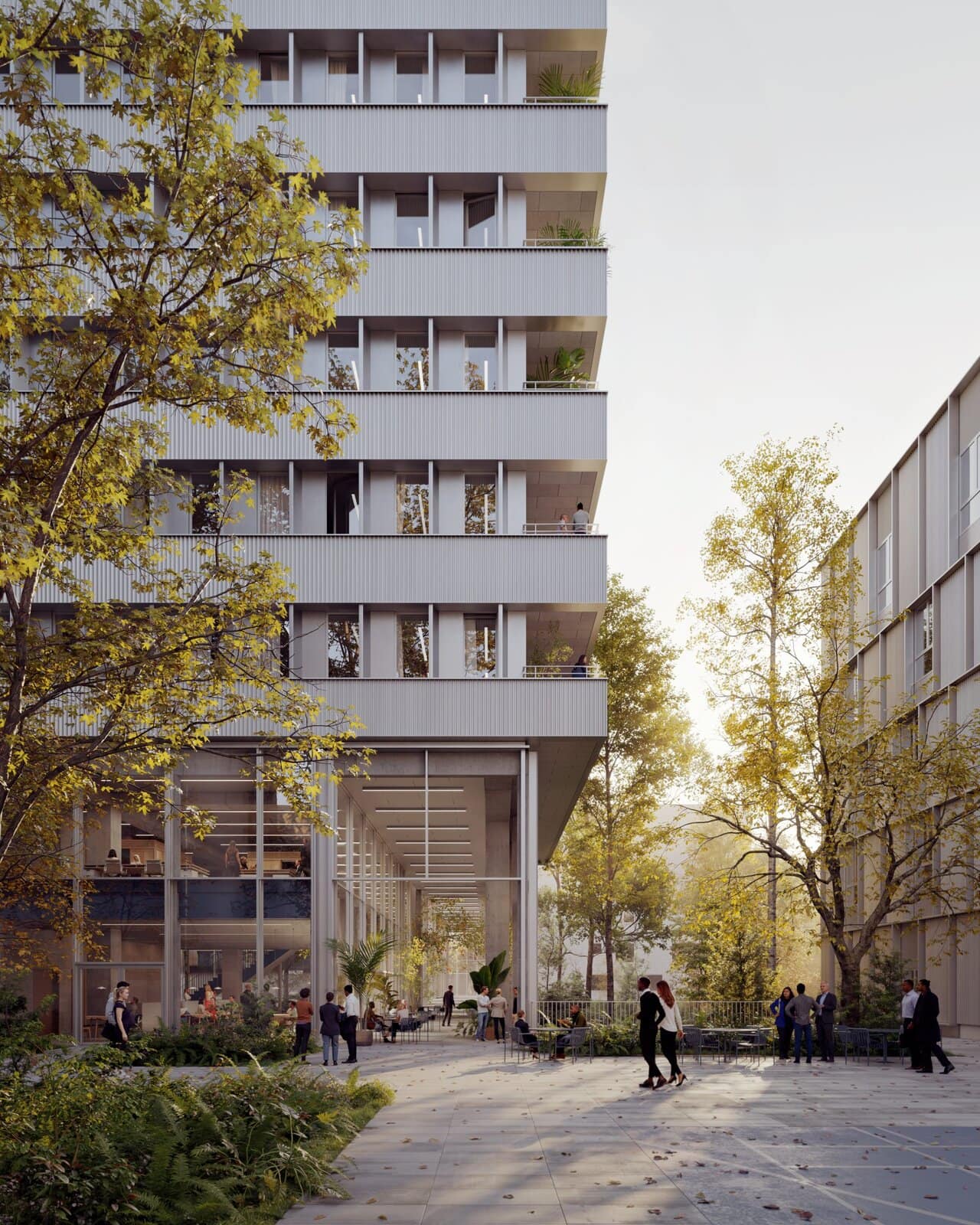
The project addresses the demand for more green spaces between the building blocks in a remarkable way. It appears as though the double-height ground floor has been pushed forward from beneath the taller storeys, towards the service road. This shift creates a tall and wide, covered terrace behind the building. The protruding volume, which forms the entrance to the complex, features walls over 8 m high that are almost entirely glazed. This view differs markedly from that of the rather enclosed upper storeys, which have deeply recessed windows and prominent aluminium parapets. This protruding plinth, partly due to its green roof, almost resembles a conservatory. In the separate, approximately 4-metre-wide strip to the right of the building, lush vegetation reinforces that impression. Here, two wide staircases lead to the mezzanine level.
The significance of this gesture will perhaps only become fully apparent once the two blocks are completed. The glass volume on the street side will then extend from one building to the other, thereby blocking out noise in the green space between the buildings. At the rear, a bridge will connect the recessed terraces. The ground in the space between the buildings slopes so steeply that it will run beneath that bridge. This courtyard thus remains connected to the green space behind the buildings. Thanks to the ‘side conservatory’ and the rear terrace, users can make full use of this ‘hot spot’, even when working on the mezzanine. It is likely to become a popular place to work and hold meetings.
The upper floors are, in terms of layout, unremarkable, but here the building stands out due to the careful treatment of the façades: users can open the windows. Transverse partitions between the windows and projecting parapets ensure excellent light control. On the south side, there are narrow terraces. These features, however unobtrusive, not only reduce the cooling load but also enhance the well-being of users on the floors.