
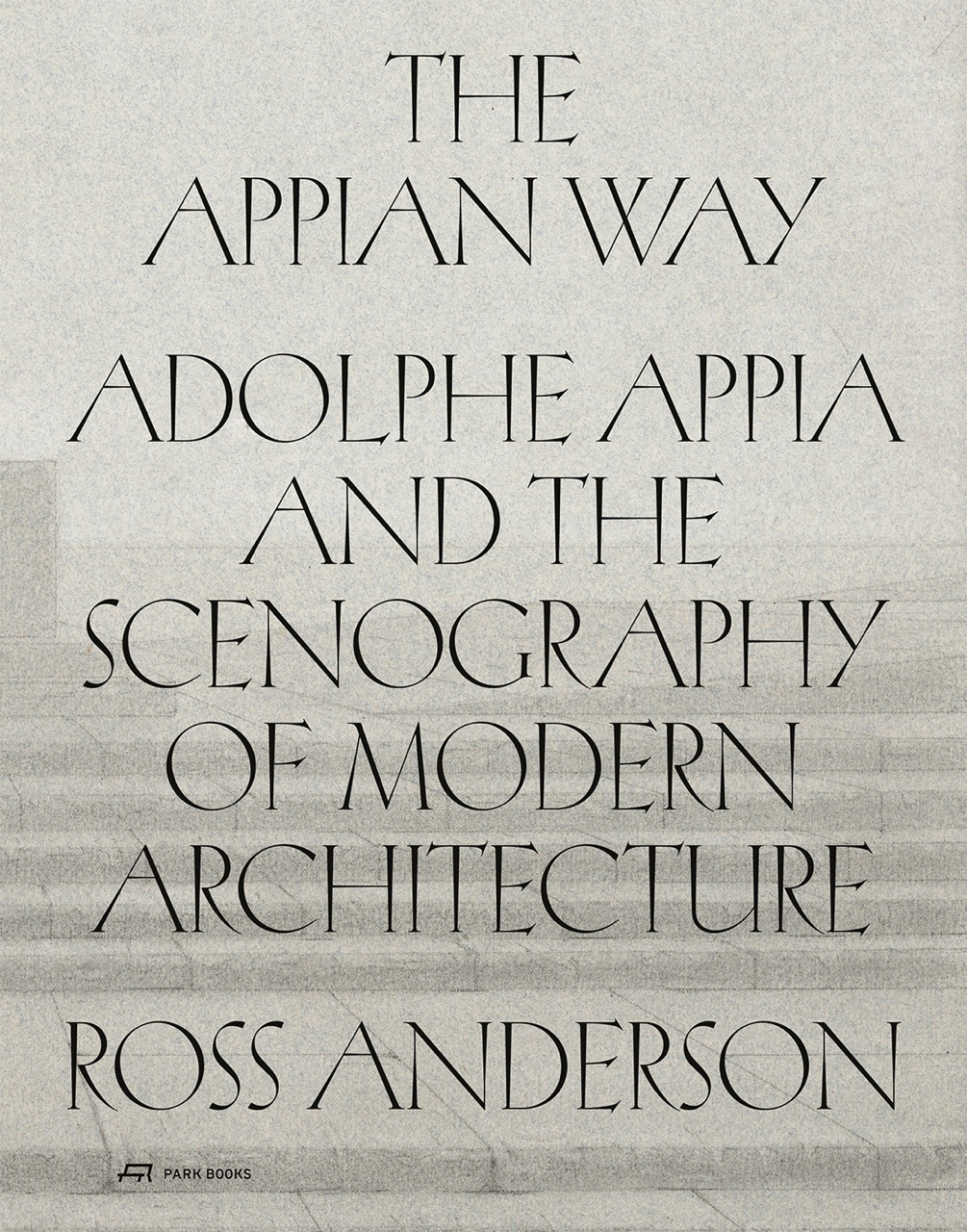
The Swiss scenographer Adolphe Appia (1862–1928) is little known among architects, but he also remained an illustrious unknown in the theatre world for a long time. Yet his designs and theoretical writings on scenography were revolutionary: he replaced the illusionist sets of the 19th century with architectural, evocatively lit three-dimensional sets. In *The Appian Way – Adolphe Appia and the scenography of modern architecture*, Ross Anderson, a professor at the University of Sydney, argues that his work inspired architects such as Mies van der Rohe and Le Corbusier. He does not provide concrete evidence, but his visual material does convincingly demonstrate the similarities.
Appia was born in Geneva into an orthodox Calvinist family. As soon as he had the chance, he went abroad to study music. Little came of it: he discovered his homosexuality, led a dissolute life and fell into a deep depression. Since then, he lived largely as a hermit and developed a great passion for Richard Wagner’s Wort-Ton-Drama. However, the scenography of Wagner opera performances repeatedly disappointed him deeply. Appia was convinced that the scenography, through the use of light and space, should evoke an atmosphere in keeping with the music, without literally illustrating the story. He worked for years on such an alternative scenography for the Ring of the Nibelung, and also wrote authoritative texts on the subject, but Cosima Wagner, the composer’s reactionary widow, flatly rejected him. She was wrong: after the Second World War, her grandson Wieland would implement Appia’s ideas in a half-baked manner.
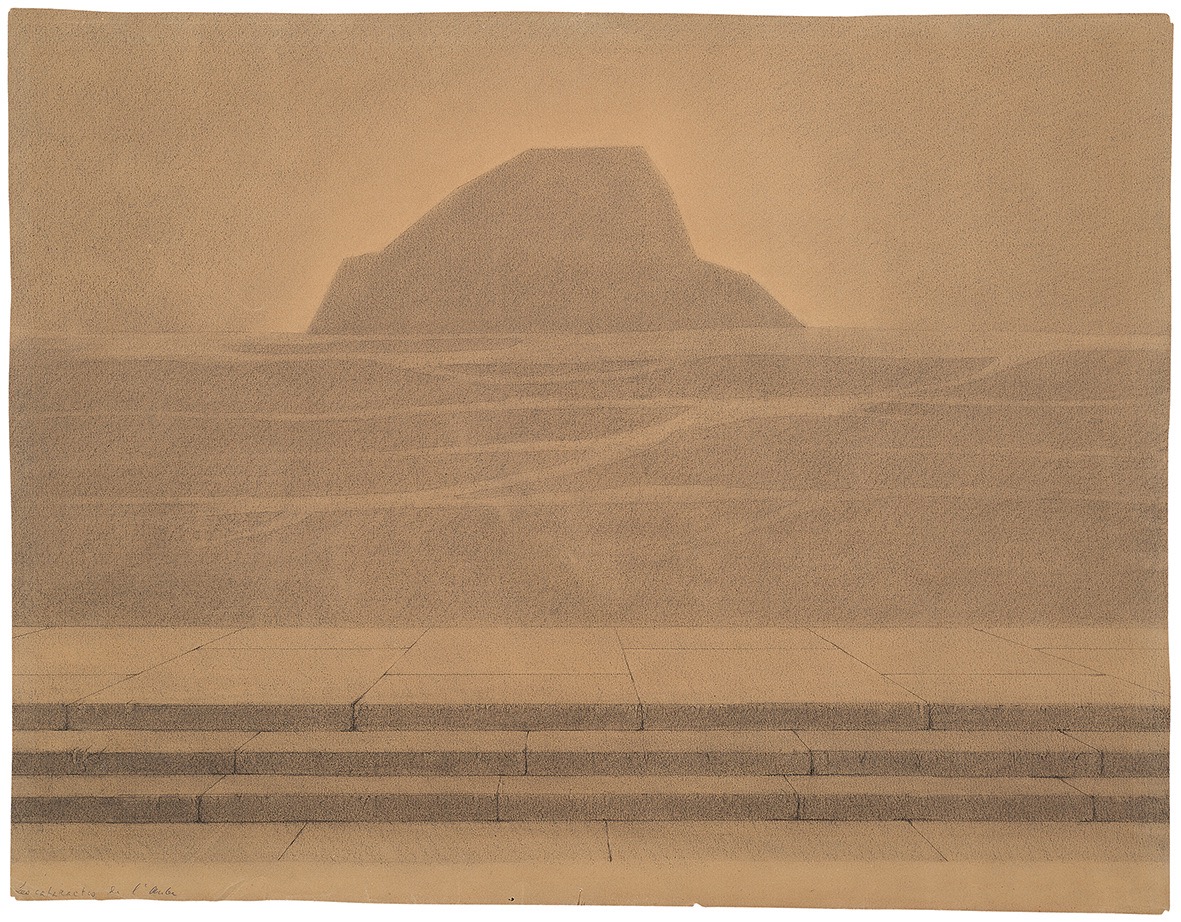
Appia’s fundamental insight is that an abstract scenography stimulates the viewer’s imagination. It must be three-dimensional, because it compels singers into real interaction; they become flesh-and-blood human beings rather than singing puppets. Appia drew inspiration for his sets primarily from Ancient Greece: imposing, abstract staircases, heavy columns and cypress trees bathed in an evocative play of light and shadow are the basic elements of his drawings in charcoal, pencil and white pastel on coloured sheets of paper. For Appia, therefore, innovation went hand in hand with a look back at brilliant examples from the past.
His career was given a new lease of life through his collaboration with the Swiss music educator Emile Jacques-Dalcroze. Appia saw the parallel between his own insights and Jacques-Dalcroze’s eurythmy, a method of music education based on the body’s natural sense of rhythm. When Jacques-Dalcroze was given a platform at the Bildungsanstalt in Hellerau, near Dresden – the cultural centre avant la lettre designed by Heinrich Tessenow – Appia’s work also gained international prominence. After all, between 1911 and 1914, Hellerau was the shining centre of the progressive European cultural scene. Appia developed a revolutionary lighting technique for that building. In doing so, he came as close as was technically feasible at the time to his ideal of a backlight that sets the mood. It would only become a standard tool among progressive theatre makers after the Second World War.
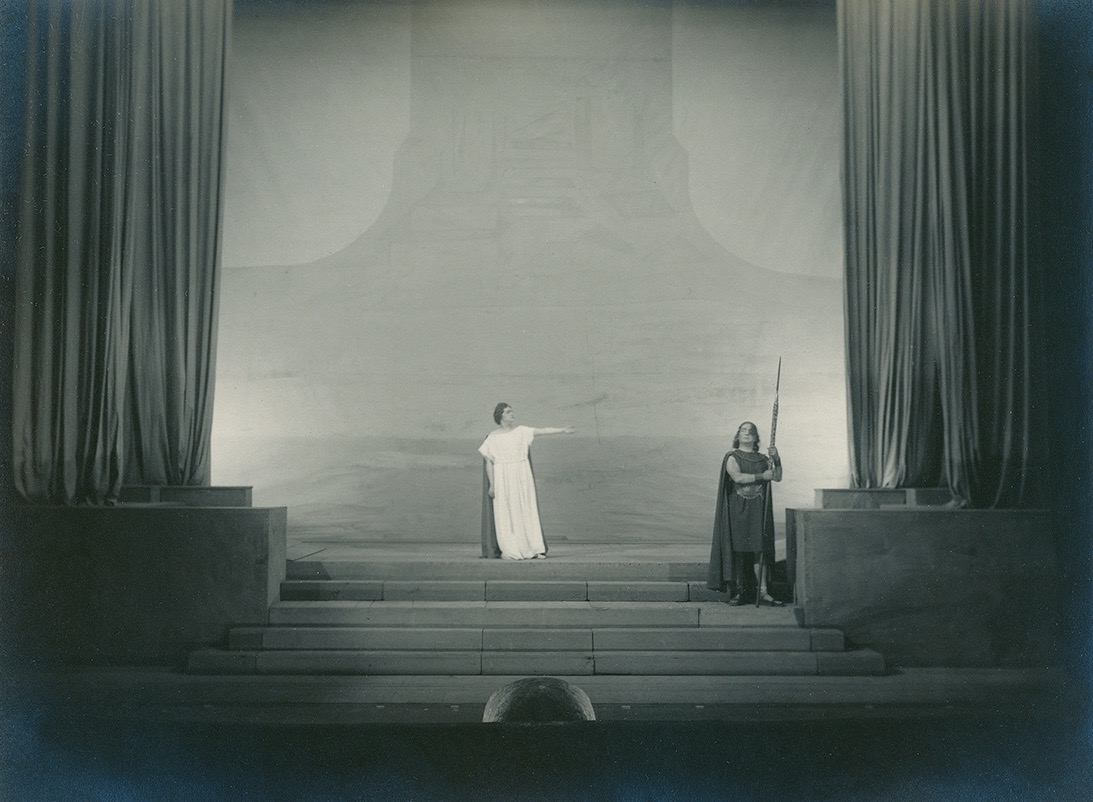
Appia’s oeuvre thus certainly foreshadows the abstraction that defined modernist architecture after the First World War. It was not the first time a scenographer had been at the forefront of architectural innovation. The Renaissance and Baroque periods are teeming with such examples. Moreover, many modernists, including Le Corbusier, Mies van der Rohe and Walter Gropius, visited the site on several occasions during Hellerau’s brief heyday. It is also undeniable that their innovations, just like Appia’s, found their legitimacy in ancient examples. Some of Le Corbusier’s designs, such as the penthouse of Charles de Beistegui in Paris, the chapel at Ronchamp or the church of the monastery at La Tourette, even show striking similarities to Appia’s drawings. However, the author cannot prove that there was a direct influence. He compensates for this with occasionally overly lengthy digressions on their work. Nevertheless, drawing on Appia’s oeuvre, he does provide an insight into the fascinating turning point of the period before and after the First World War, when culture bid farewell to the literal and figurative illusions of the nineteenth century.
The Appian Way / Adolphe Appia and the Scenography of Modern Architecture, Ross Anderson, 2025, Basel, Park Books. Hardback, 436 pp. ISBN 978-3-03860-405-1. Price approx. €50.90.
