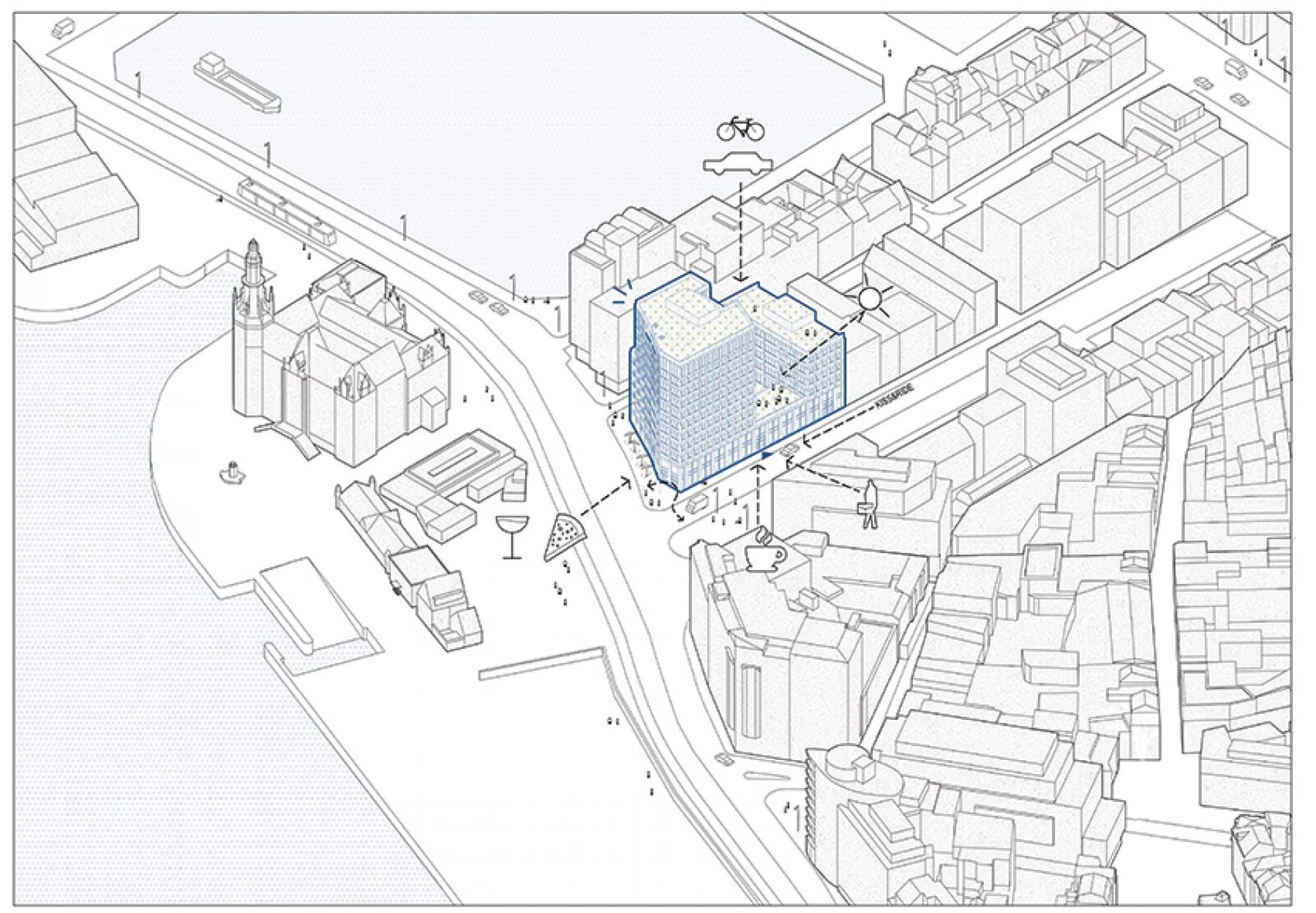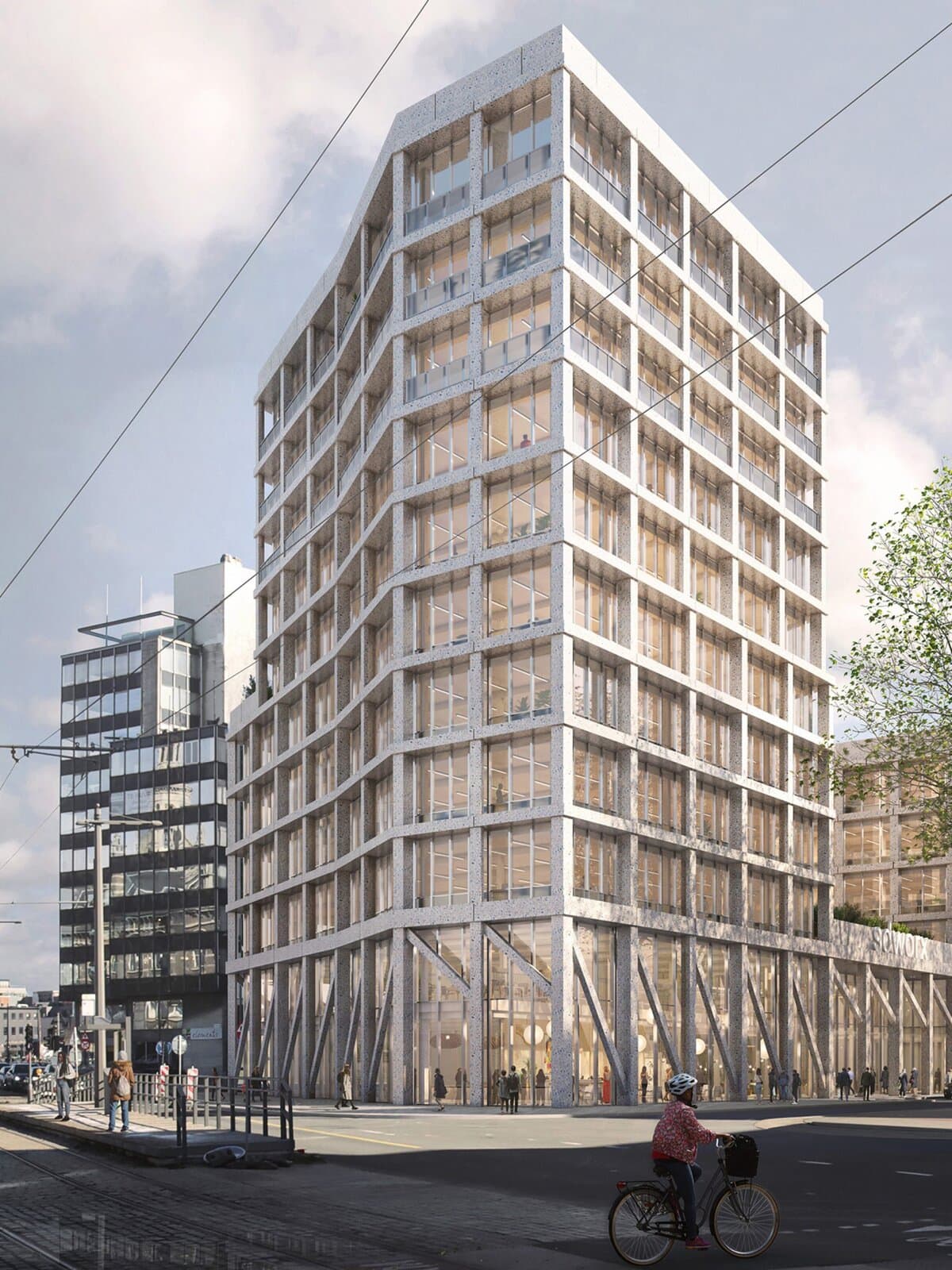
The competition for SD Worx’s new headquarters has been won by the team of London-based architects Sergison Bates, in collaboration with BULK architects. Once again, a winning combination of an international vision and that of local architects. The competition, won over a year ago, showcases a project occupying a prime location within Antwerp’s Het Eilandje district. On this compact site, along the east bank of the Scheldt, the architects are playing the now-inevitable sustainability card, with a building capable of adapting whilst offering a stable image for the city.
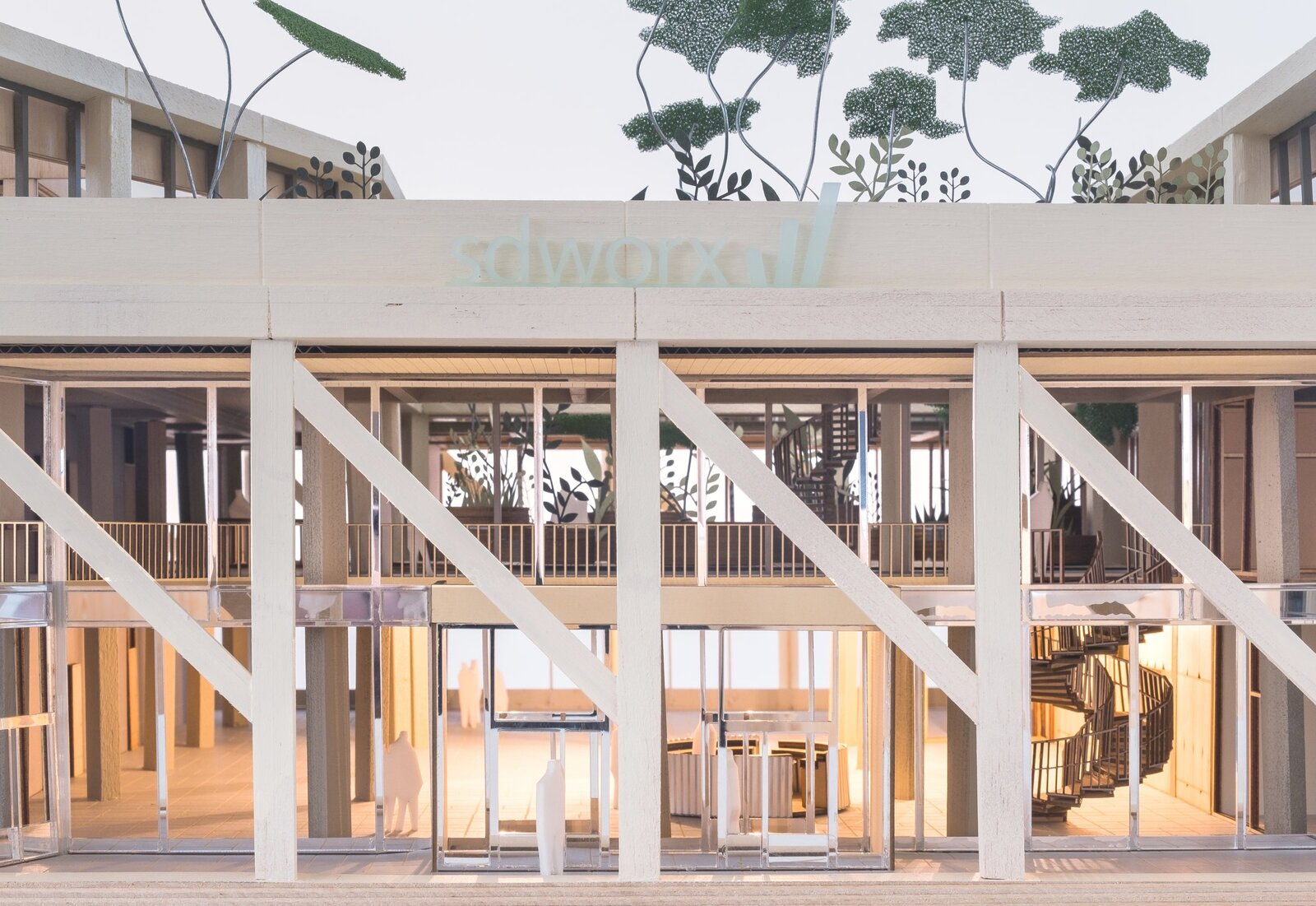
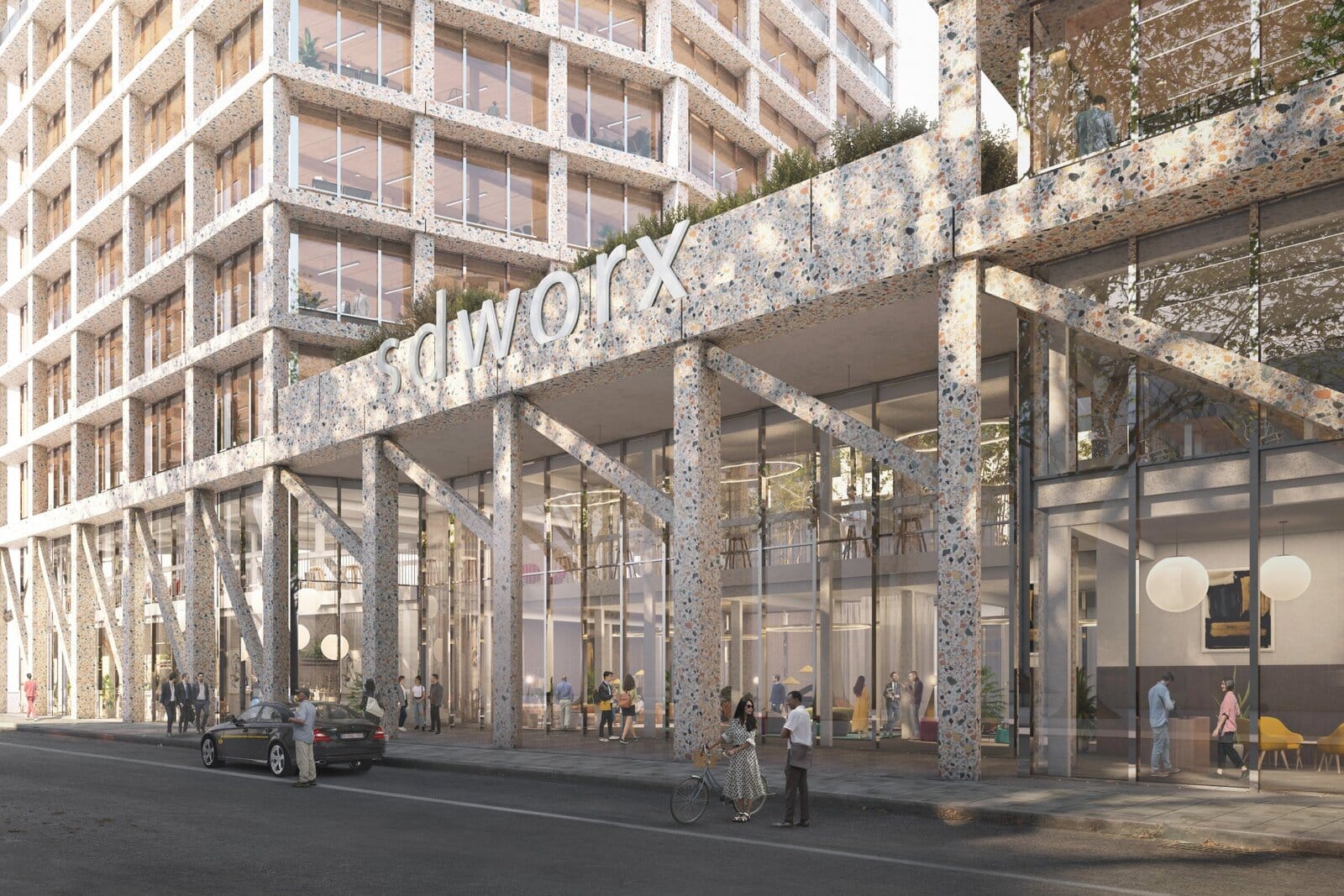
The building’s sustainability appears to be the primary concern. It is designed in tandem with a degree of flexibility that allows for the programme to evolve constantly. Indeed, whilst the project is intended for office use, it aims to leave the door open for a potential conversion into housing at a later date. The building must be capable of adapting to an uncertain future whilst being enveloped in a constant shell.
The construction model is hybrid. It combines a plinth for a communal hall made up of prefabricated concrete columns with bevelled edges and slabs cast in situ. Above this, two tower volumes of varying heights rise from the plinth, supported by a modular CLT skeleton and perforated floor slabs of the same material. The architectural choices are primarily driven by a focus on sustainability and user comfort. Overheating caused by solar radiation is minimised by the shading provided by sunshades, and the depth of the openings is adjusted to optimise light intake according to the orientation of each façade.
Workspaces are evolving. We are moving away from the traditional office model by creating a variety of more informal spaces, such as focus stations, anchor points, coffee corners, and so on. Users can therefore choose the environment best suited to the task they wish to perform and no longer remain stuck at their desks all day.
A network of green and open spaces has been created, featuring various elements such as a roof terrace above the base, as well as a winter garden, canopy, panoramic terrace, loggia, etc. This series plays an important role in the building’s water management and thermoregulatory mechanisms, as well as providing places to relax. The porous plinth allows people to pass through it, creating new pedestrian routes that flow seamlessly into the public space.
Behind this showcase of a new sustainable building, it is important not to overlook the significant decision to demolish the two existing buildings on the site. Built in the 1980s, they are deemed structurally unsuitable for the flexibility sought by the client and for meeting sustainability standards, according to the conversion analysis report carried out during the preliminary phase. However, their demolition requires the creation of an inventory to potentially reuse the materials in the future project or to reintroduce them into the reuse production chain.