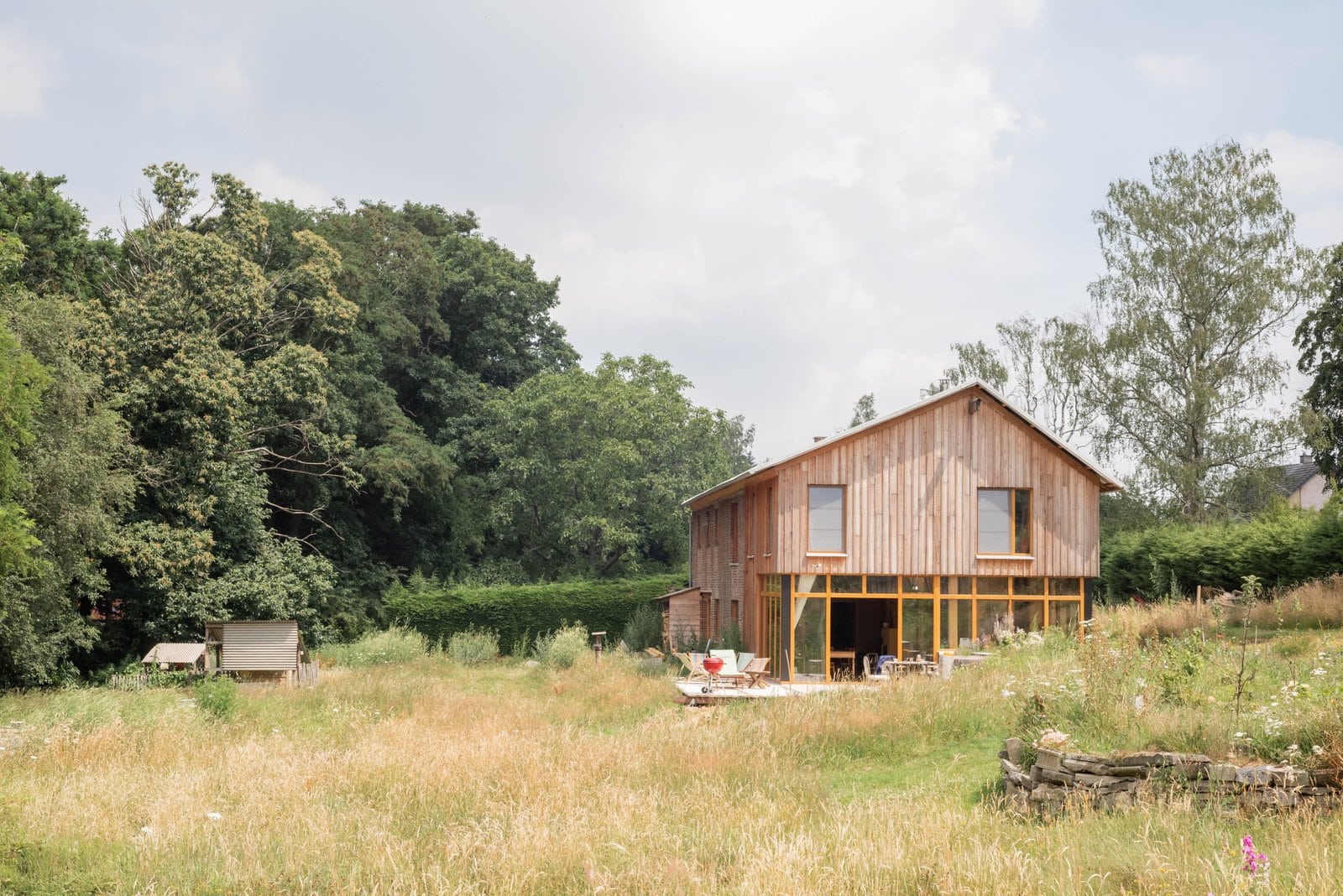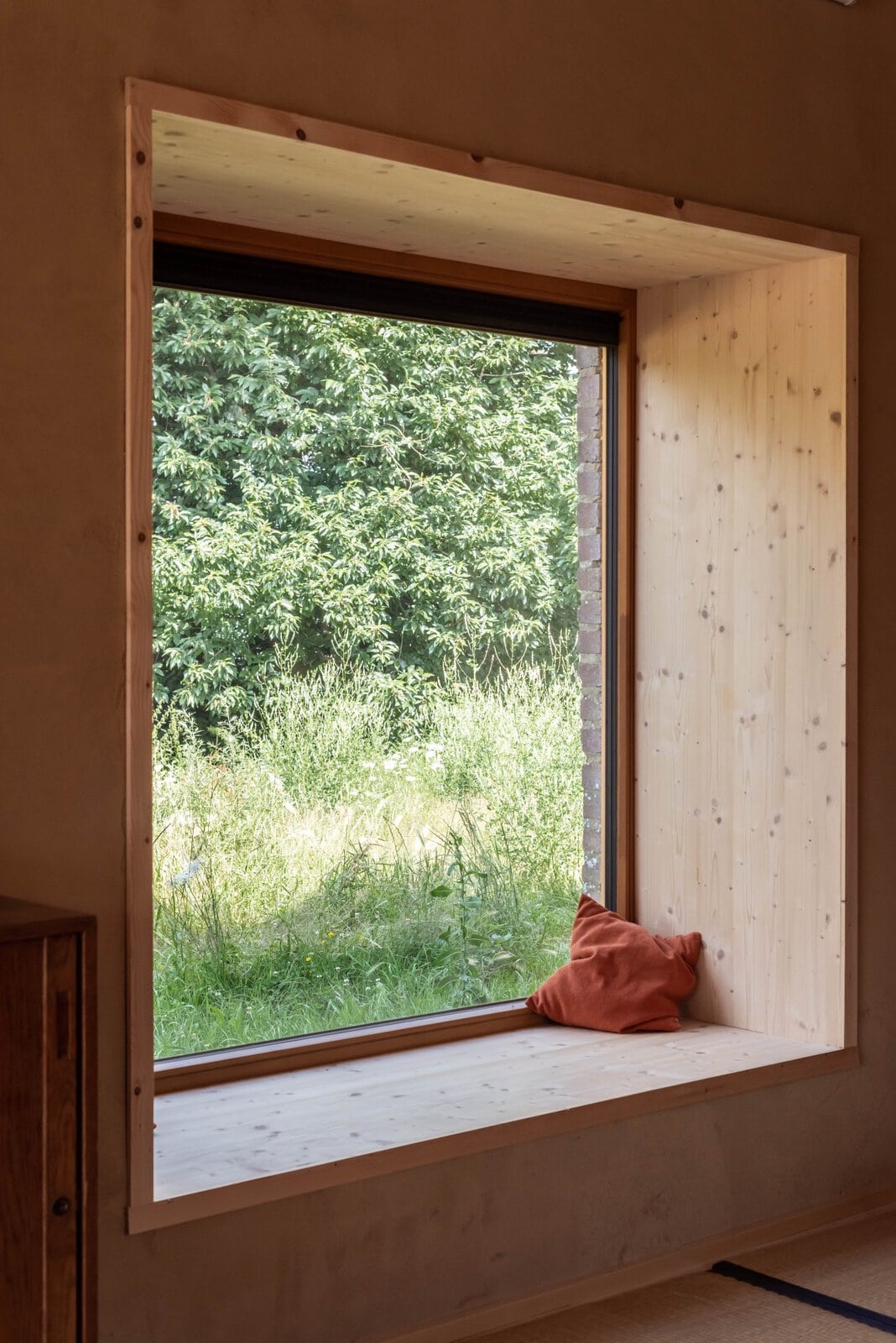
Situated on the edge of the woods below, the site of this detached house—which was long used as a farm—has resisted the encroachment of suburban development. The approach taken by the Karbon’ project, characterised by simplicity, is a renovation tailored to the context, seeking first and foremost to preserve the existing heritage. The remains of the farmhouse, built in a naive and unauthorised manner, form the starting point for the project.
The location of the old sheepfold is ideally suited to the sustainable single-family home sought by the residents. Indeed, its distance from the road and neighbouring buildings, situated on non-building land with a favourable topography, offers the benefit of a substantial wild garden. Like an enclave, the house is set amidst nature and the surrounding tranquillity.
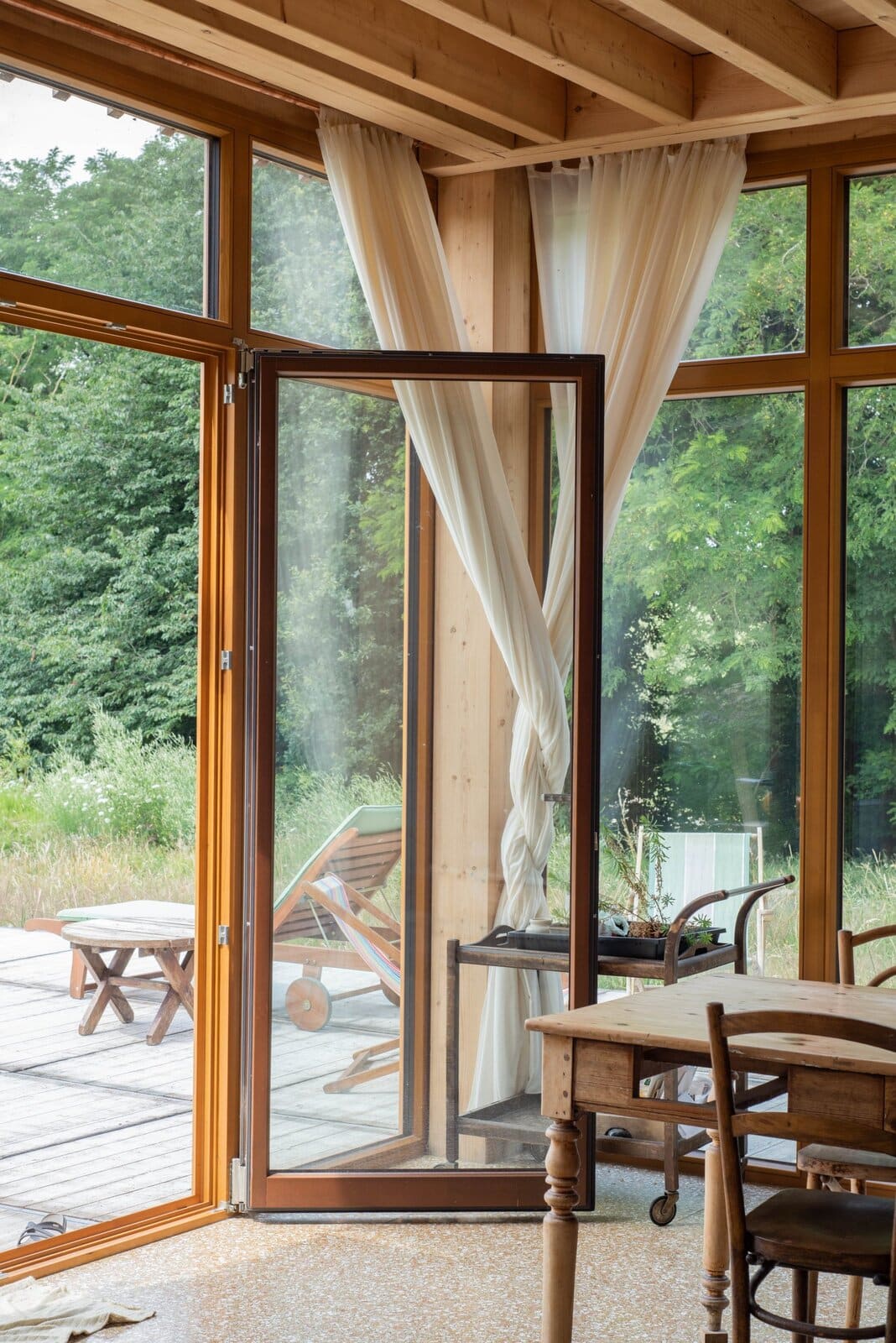
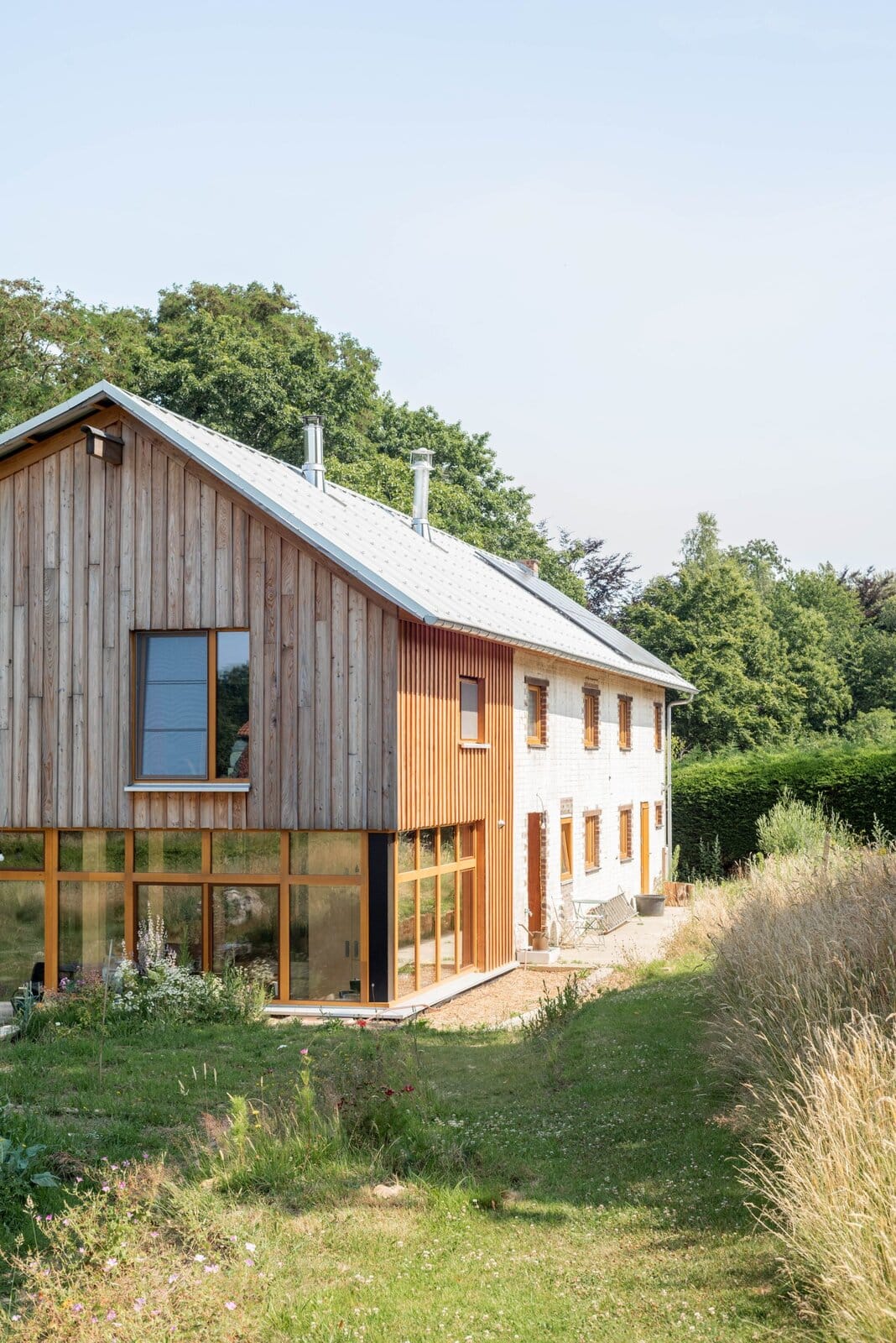
The new timber extension is attached lengthwise to the existing brick building. A shared roof unites them. Internal insulation made of straw bales has been added to supplement the building’s existing thermal mass. This addition does not compromise the building’s established structural system, which retains its original façades and suitable interior spaces.
The orientation of the sheepfold suggests the use of the space. A seasonal partitioning scheme is implemented, whereby only half of the house is insulated, whilst the majority is treated as a usable space. Designed as a workshop, its use intensifies when temperatures permit.
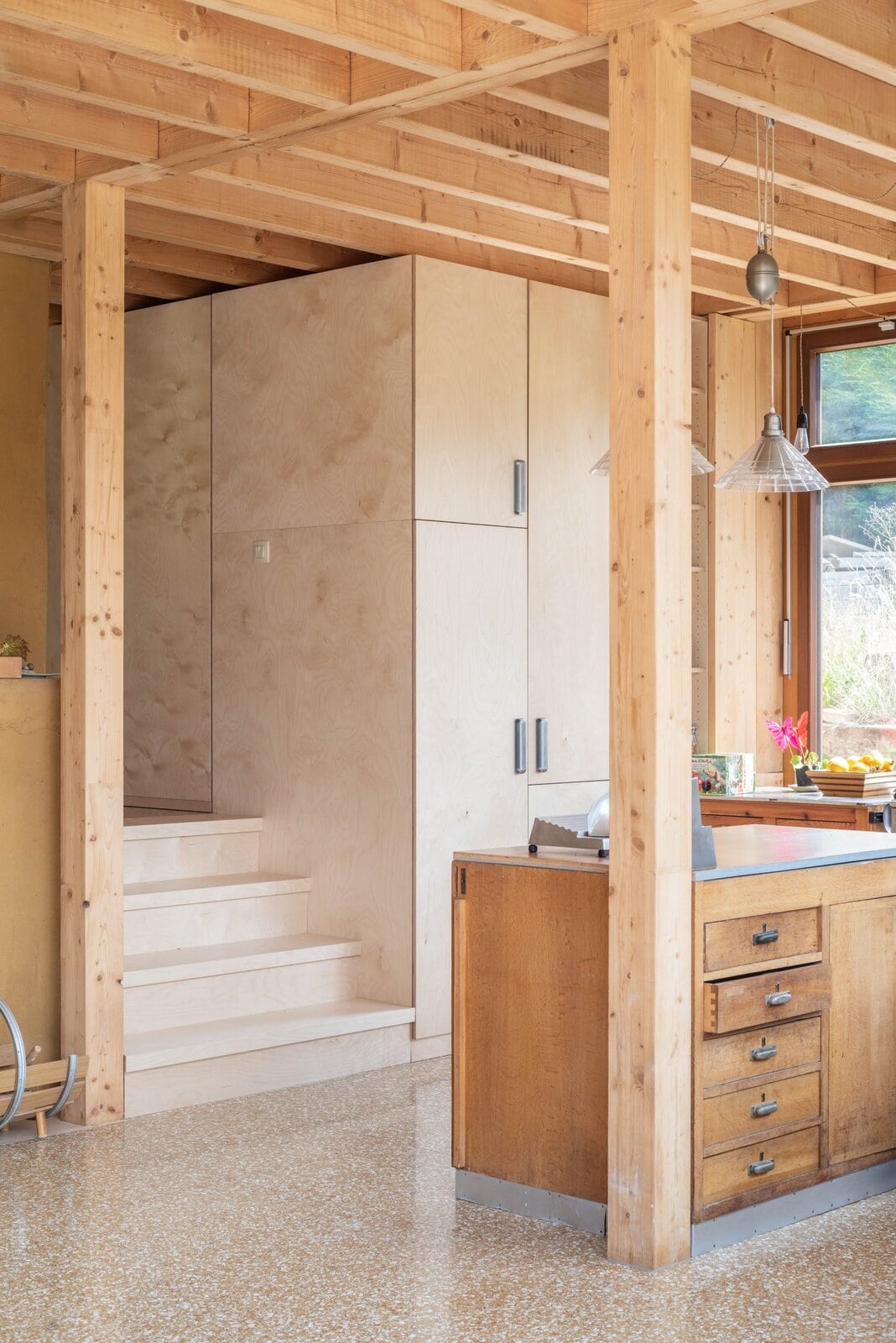
The use of natural and local materials is prioritised. The straw and hemp are from Wallonia, whilst the European larch frames are manufactured in the Ardennes. Some bricks dismantled on site are reused for the new masonry. The project thus stands as a model of sustainable construction that takes into account the value of materials within their context in order to use them appropriately.