
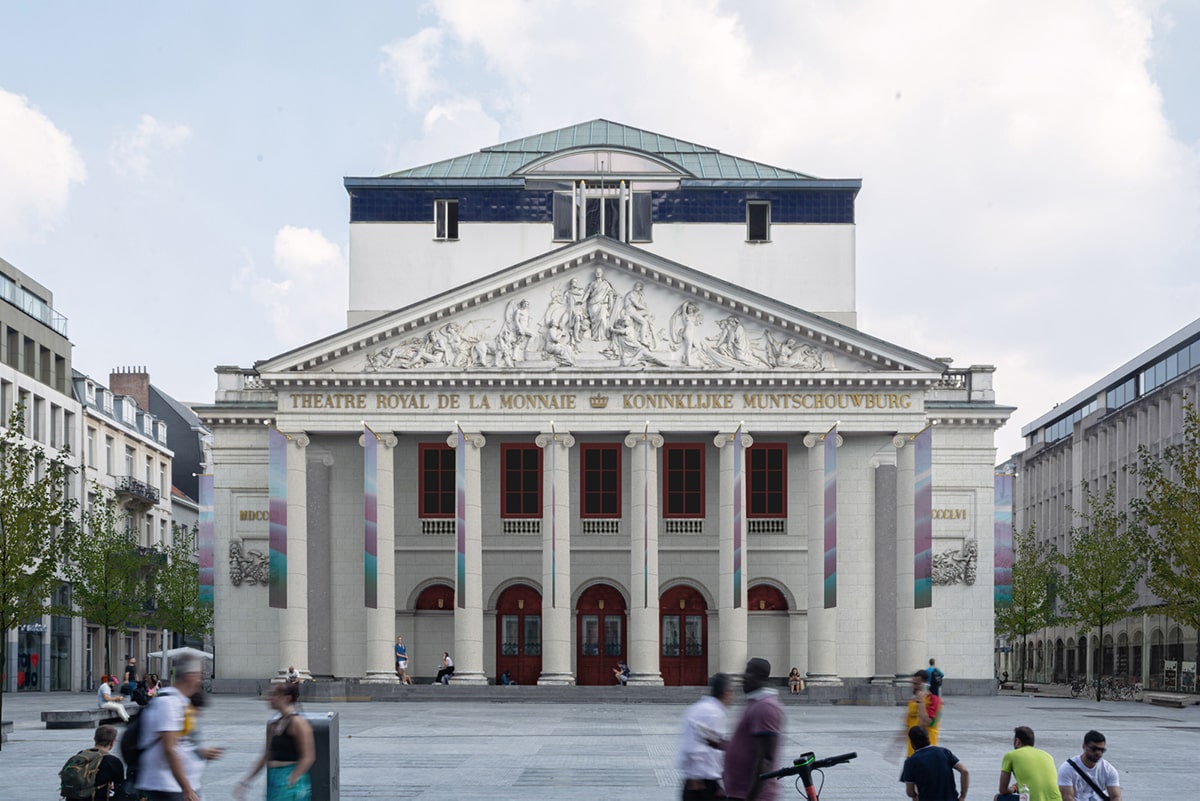
What approach should be taken to the restoration of the façades of a renowned opera house such as La Monnaie in Brussels? It is often no easy task to tackle heritage buildings, where every intervention seems like an addition that might disrupt a harmonious whole. This is why the architectural firm ALTSTADT chose to take on this challenge with humility, as their primary aim is to make the history of this heritage site legible. This is what enabled them to win the competition, in which the architectural firms P.HD, ORIGIN, RE-ST and VIA also took part.
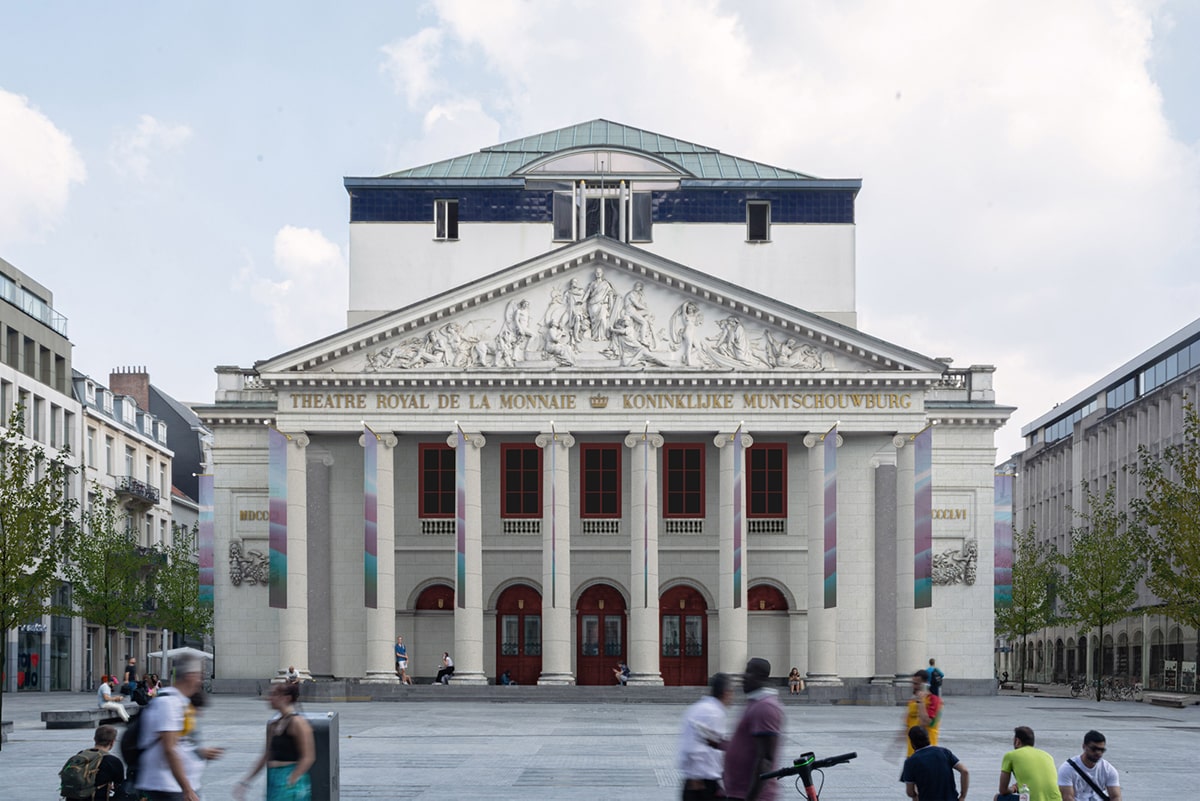
For the restoration of the façades, the work is being carried out in layers. By focusing on the building’s history, as well as the potentially unfulfilled ambitions of its designers, the interventions are beginning to take shape and are guiding the renovation project. It is true that the building has passed through many hands. From its design by Damesme in 1817, through to the postmodern style of AR2C, via Poelaert’s renovations following the fire of 1855 and the addition of a fourth storey by Bordiau in 1879. To understand this building, it is therefore useful to map out its history, to take stock of the situation and thus assess the damage on which to focus. Like a doctor with a patient, we are attempting to establish a diagnosis.
ALTSTADT’s aim is to uncover the natural stone and leave it exposed if it is in good condition beneath all the layers of paint. But it is impossible to know this until the demolition work has begun. The architects’ humility leads them to refrain from making too many predictions and even to question whether it is appropriate to expose the stone, given that the first coat of paint dates back to 1856. For the external joinery, they aim to return to the layout based on the foyer’s original design. The planning continues with detailed cross-sectional studies for the restoration of the façades and the insulation of the roof. The approach is more suggestive, rather than seeking to impose a ready-made solution.
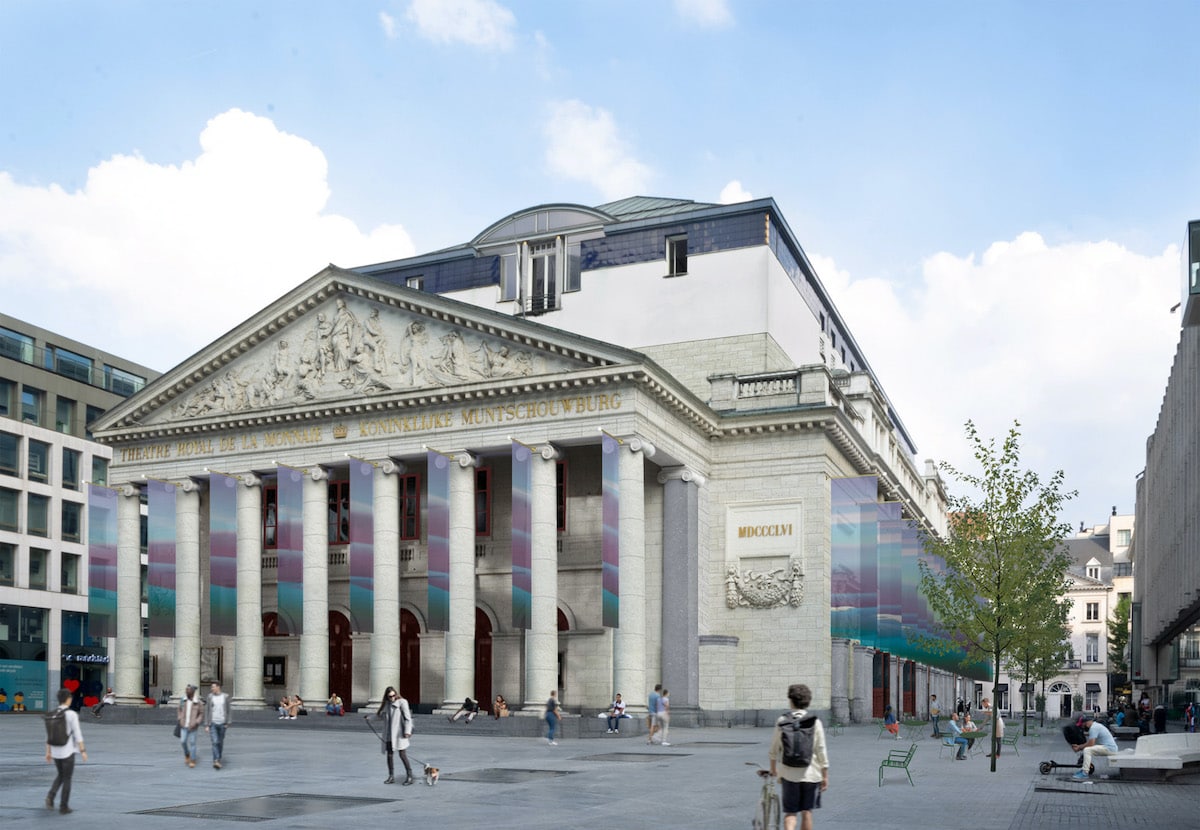
The other major focus of the project is to return the monument to the city. Through its central location in Brussels, the opera house is already an integral part of the city. By analysing programmes and flows using an analogy with the Nolli plan and mapping existing access points, the intention is to increase footfall. No single façade dominates the others, as the opera house’s layout allows it to be viewed from all sides. The base is revitalised by adding shops and restaurants. The trees are also the subject of a study; their existing alignment is extended to connect with the surrounding area.
Through the architecture, but also through other, more subtle means such as lighting and signage, a dialogue with the city and its passers-by is established. A new contemporary layer is added to the façade with suspended banners combined with points of light. The rhythm of the banners follows the composition of the façade and emphasises its structure. The temporary nature of these installations turns the opera house into a living monument.
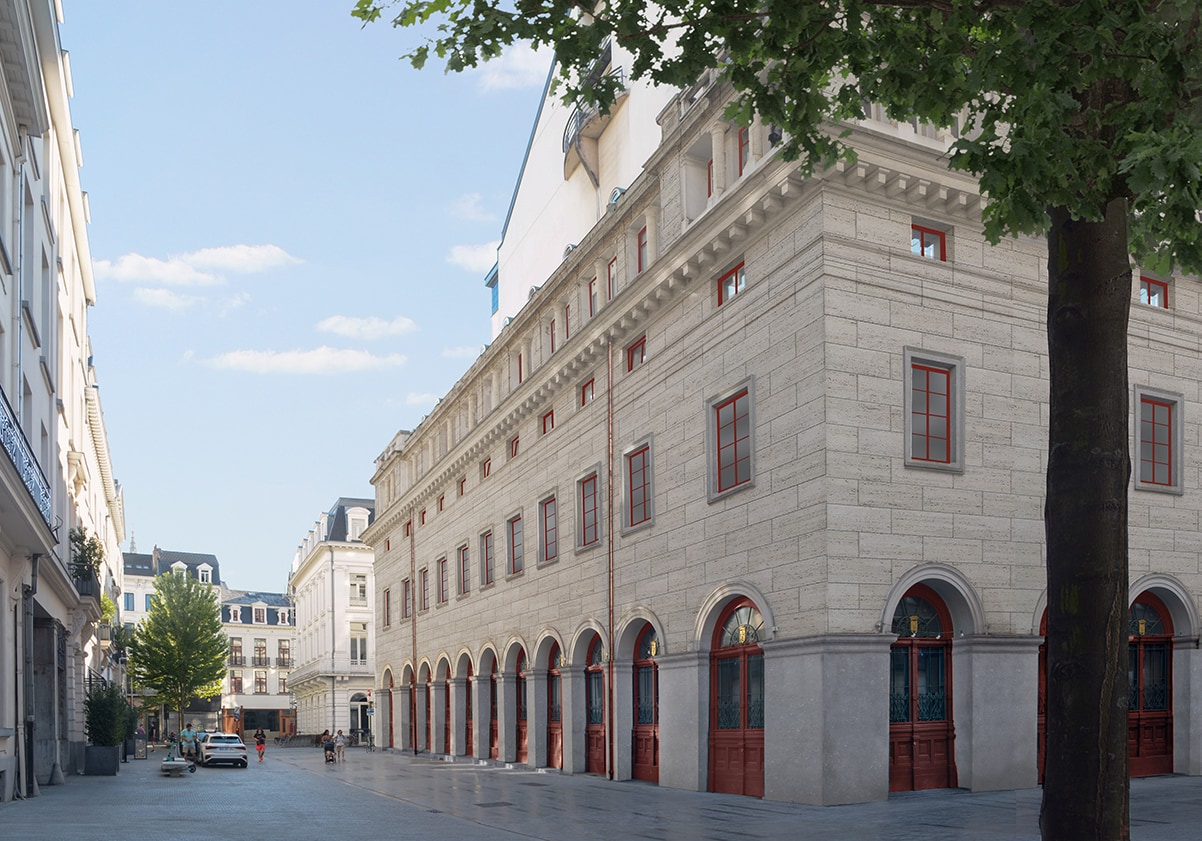
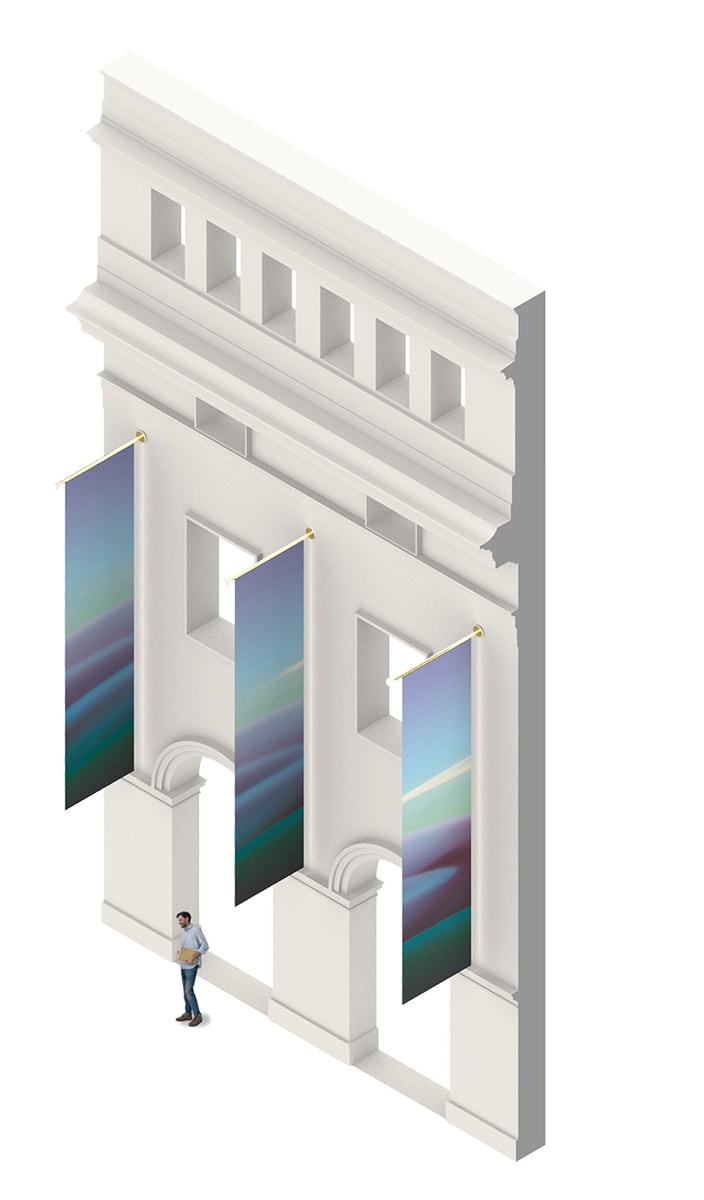
The intention of the project is to make the stratification tangible, through the renovation of the façades in layers. Through a quest for authenticity, whilst remaining open to the discoveries made during the process, the architects have achieved a harmonious composition that fuels the debate on contemporary cultural production.
www.beliris.be
