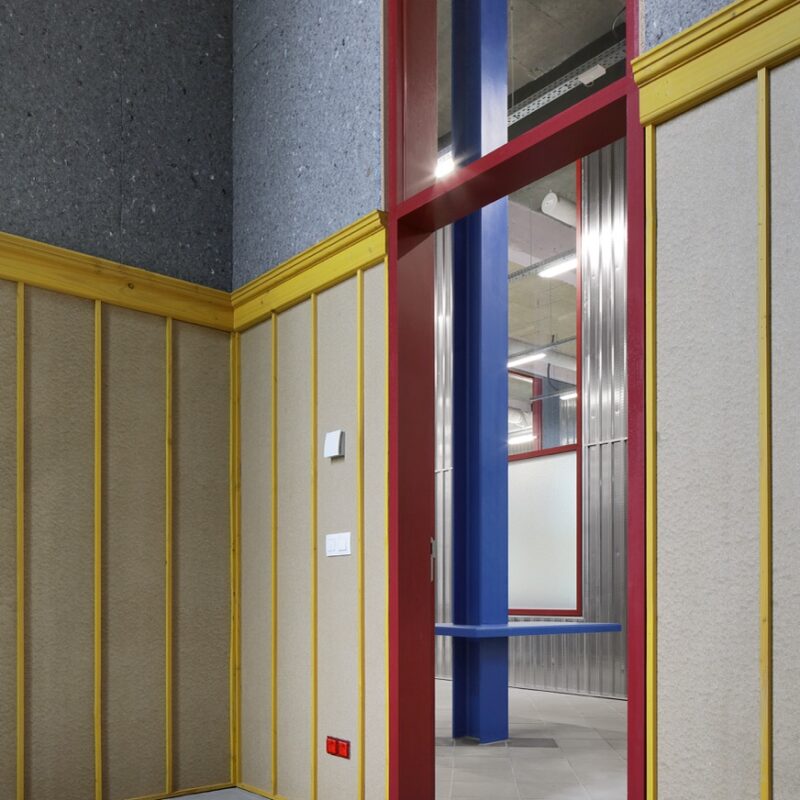
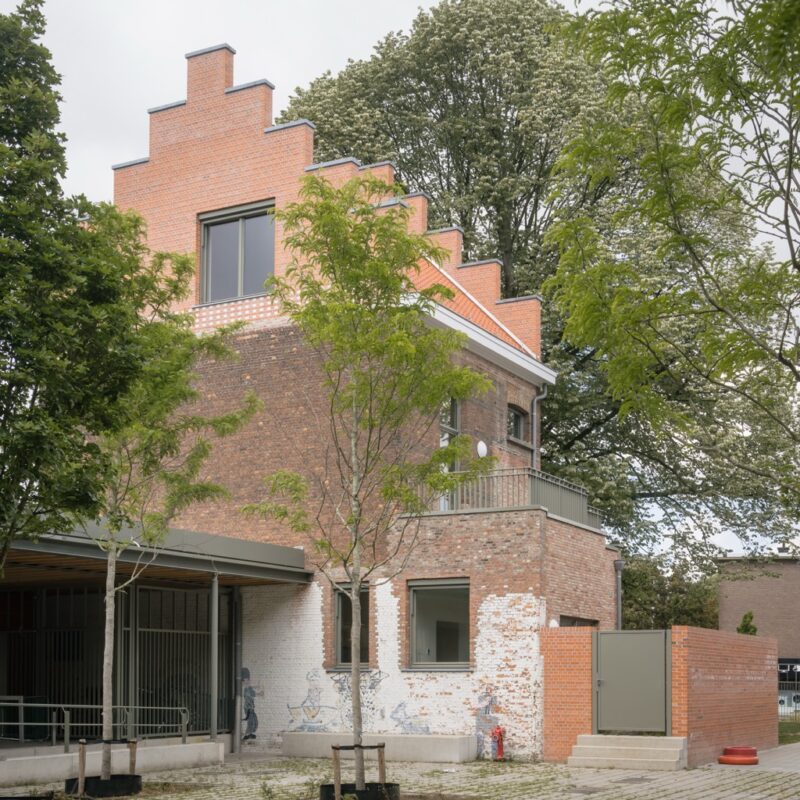
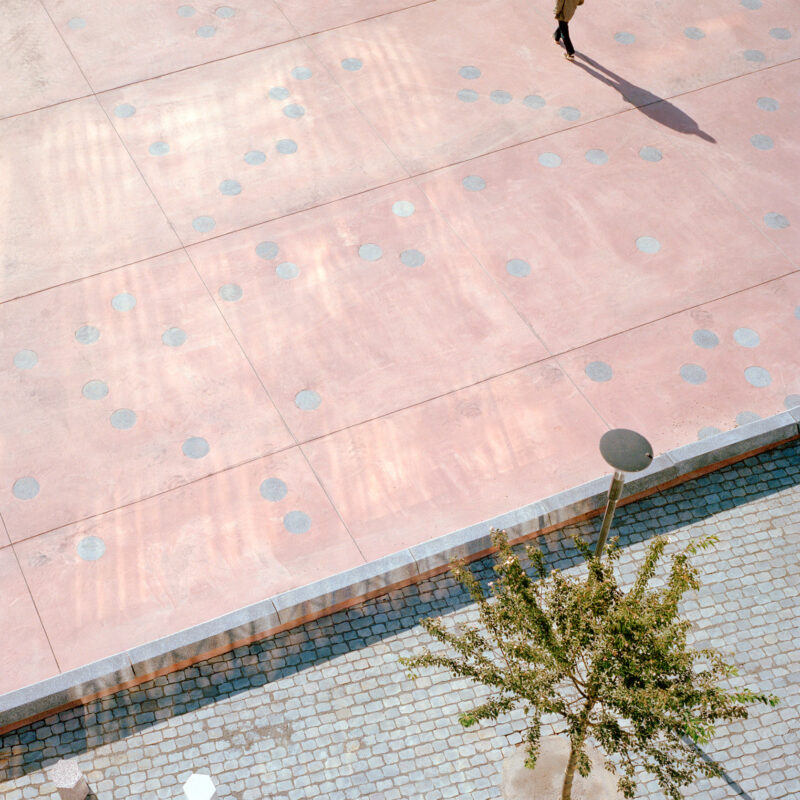
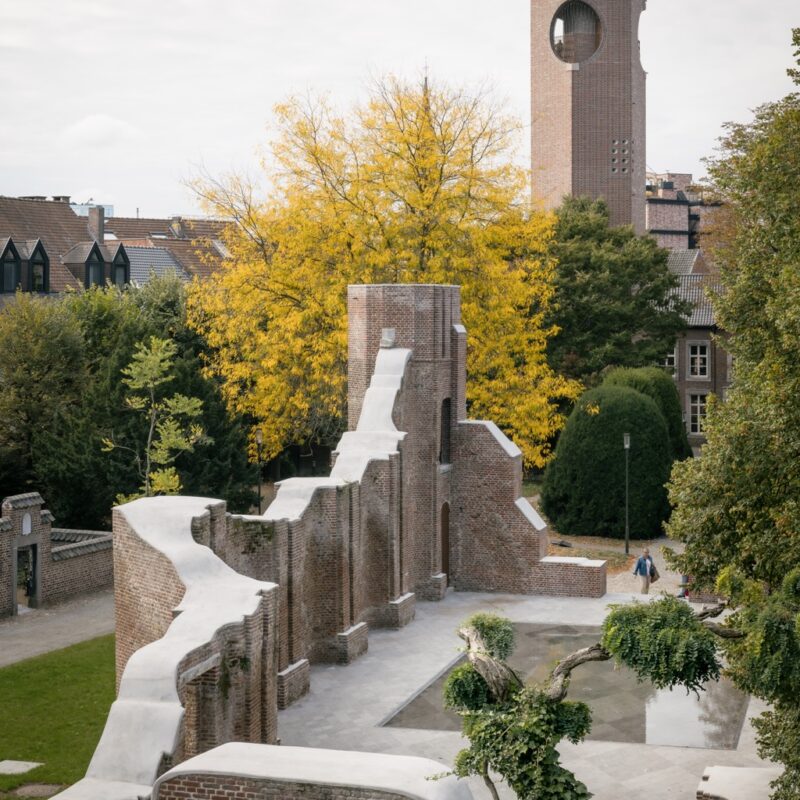
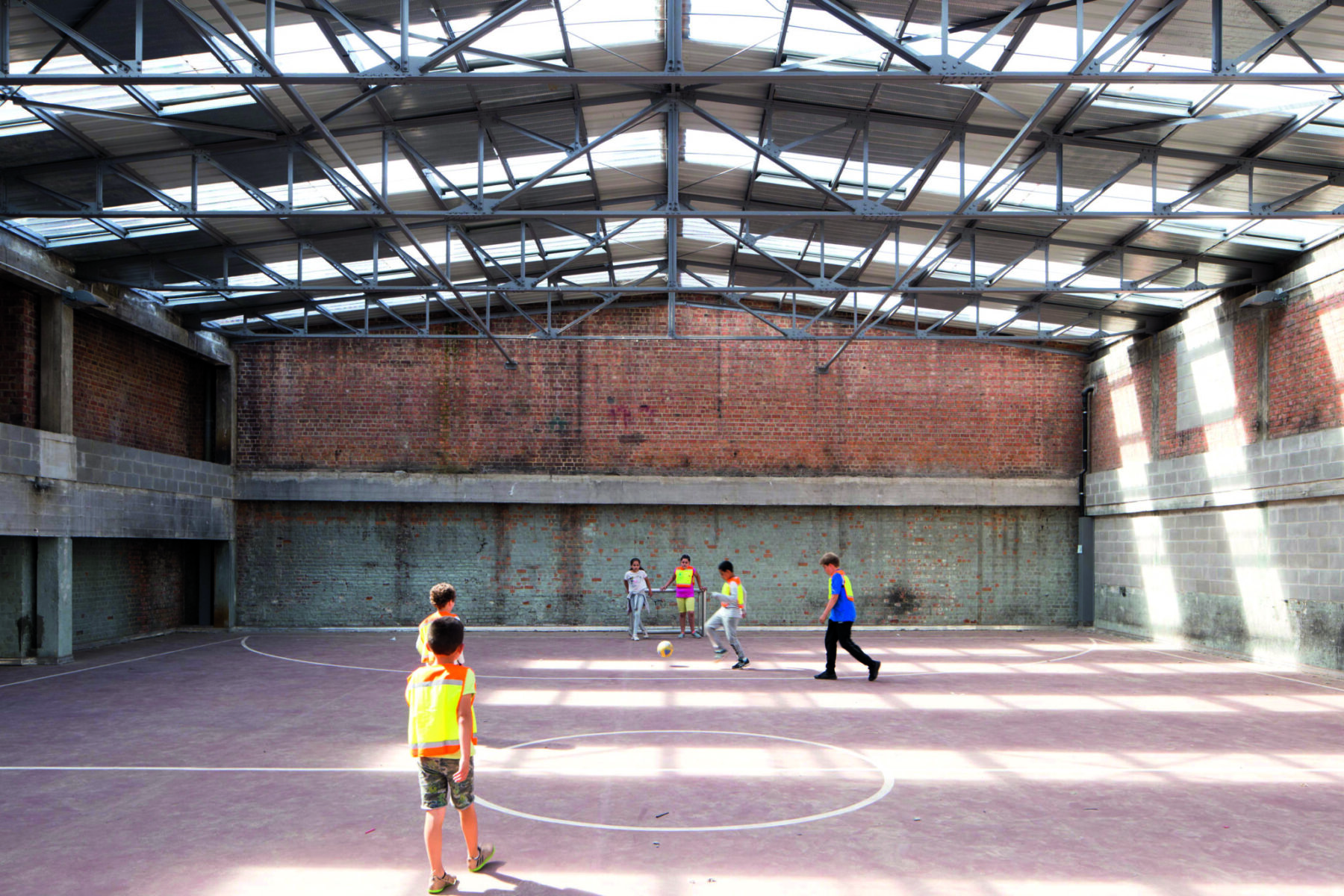
The Scepter neighbourhood contract was launched in April 2011 and drew up a list of various priority works for the municipality of Ixelles, including three housing projects. Of these, the Sans Souci housing estate was examined through a collaborative process bringing together specialists in urban issues and local residents. Their research highlights a neighbourhood of generous proportions which is, however, highly segmented, lacking in public space but rich in cultural diversity. Hence the formulation of two key concepts: on the one hand, the ‘school-culture-neighbourhood’ interface refers to the density of the cultural network through a multifunctional programme with the widest possible reach (in this case, a social housing block, a community facility and a reversible car park); on the other hand, the desire for sustainability is expressed through respect for the environment and certain standards (in this case, passive). Following the announcement of a commission in 2011, 34 applications were received, and three of these were invited to submit a tender. Following the presentation to the advisory committee, the R2D2 Beng consortium was declared the winner. Their focus on the existing conditions and long-term development was in line with the client’s expectations. As they prioritised quality over quantity, the project designers reduced the number of housing units to respect the scale of the neighbourhood, and also reduced the number of parking spaces in favour of a larger area of open space. Construction began in March 2014 and was completed two years later. Very quickly, the project proved to have a positive impact on the surrounding area, both in technical terms (measures to ensure connectivity between catchment areas) and socially (the provision of a sports ground and the paved esplanade).
Project