
Work continues on the future Kanal cultural centre within the former Citroën garage. At the same time, the Atelier Kanal team and the Kanal Foundation are continuing to develop their vision to turn this venue into an inclusive space dedicated to creativity and community. A few months ago, a competition was launched for the future bookshop, with Central’s proposal winning over the jury. At the end of 2022, another call for proposals was launched by Kanal and the BMA team, this time to design a bar-brasserie and a restaurant.
No fewer than 87 entries were received for the design of the bar-brasserie on the Quai des Péniches and the restaurant on the fifth floor of the Showroom. Five teams were commissioned to submit a proposal for the bar-brasserie, including Piovenefabi & Mannaert, Rotor & Fait maison & Construire, Ouest & Studio Ossidiana, studioemile and the winning team comprising Victoire Chancel, Carla Frick-Cloupet, Maïlys Gangloff and Aliki Loïzidis.
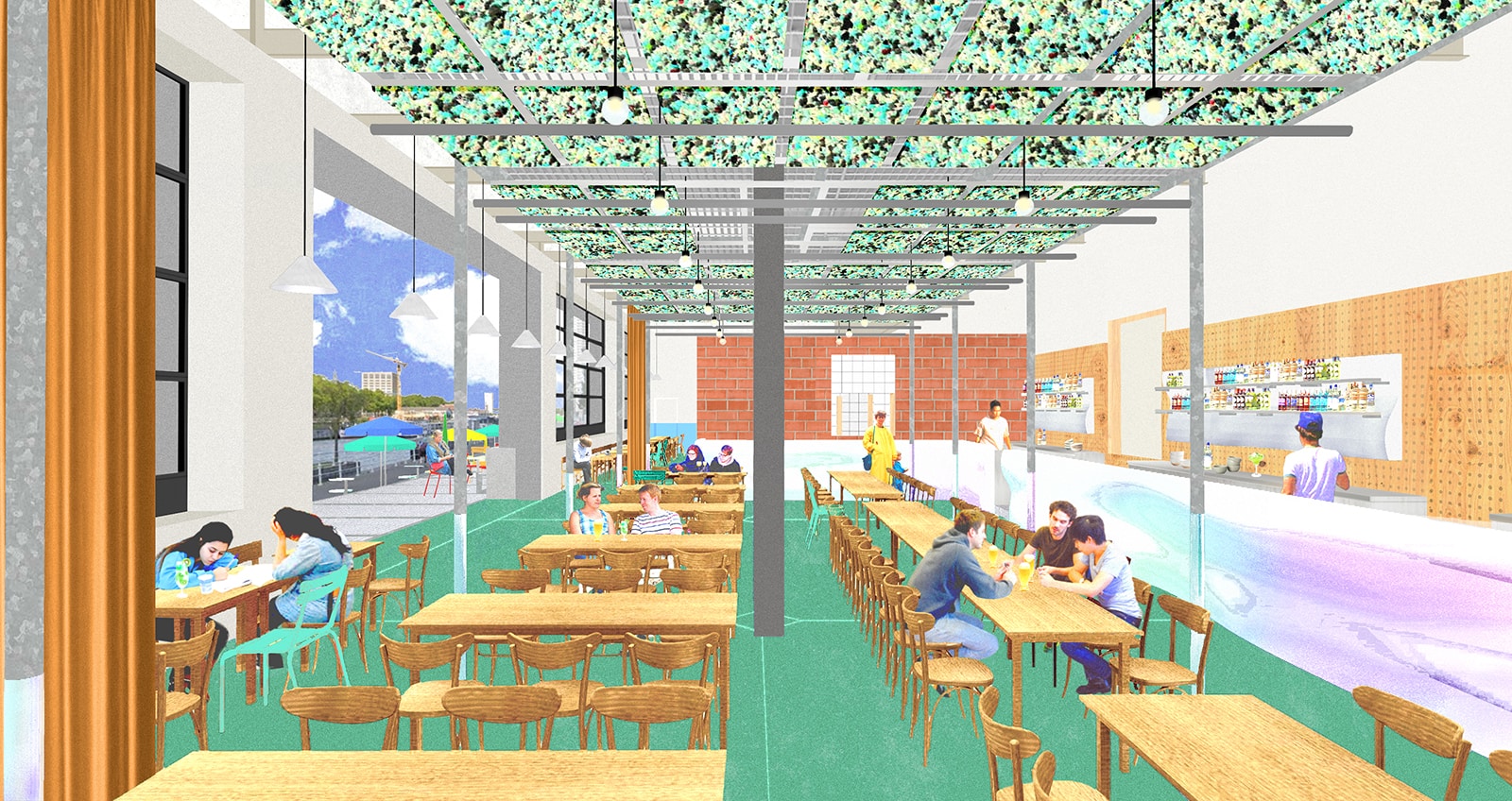
Their proposal for the bar-brasserie stems from a desire to create a space capable of fostering public gatherings. By being situated directly on the quay, it already creates a sense of proximity, acting as a link between the city and the museum. The approach draws inspiration from two classic public space designs: the covered square and the amphitheatre. The architectural interventions aim to allow for flexible usage scenarios. A distinctive feature of the project is the ambition to develop an aesthetic centred on local expertise—car tuning—through collaborations with the numerous body shops in the vicinity.
For the restaurant, the competition for the interior design was won by the Chantal collective, comprising Générale, Elmes, Sarah & Charles and Vormen. The other teams in the running were AHA & Laura Muyldermans & Louise Limontas, Doorzon interior architects & Theo De Meyer & Serban Ionescu, B-ILD & Johan Viladrich and ACME & Helen Decombes.
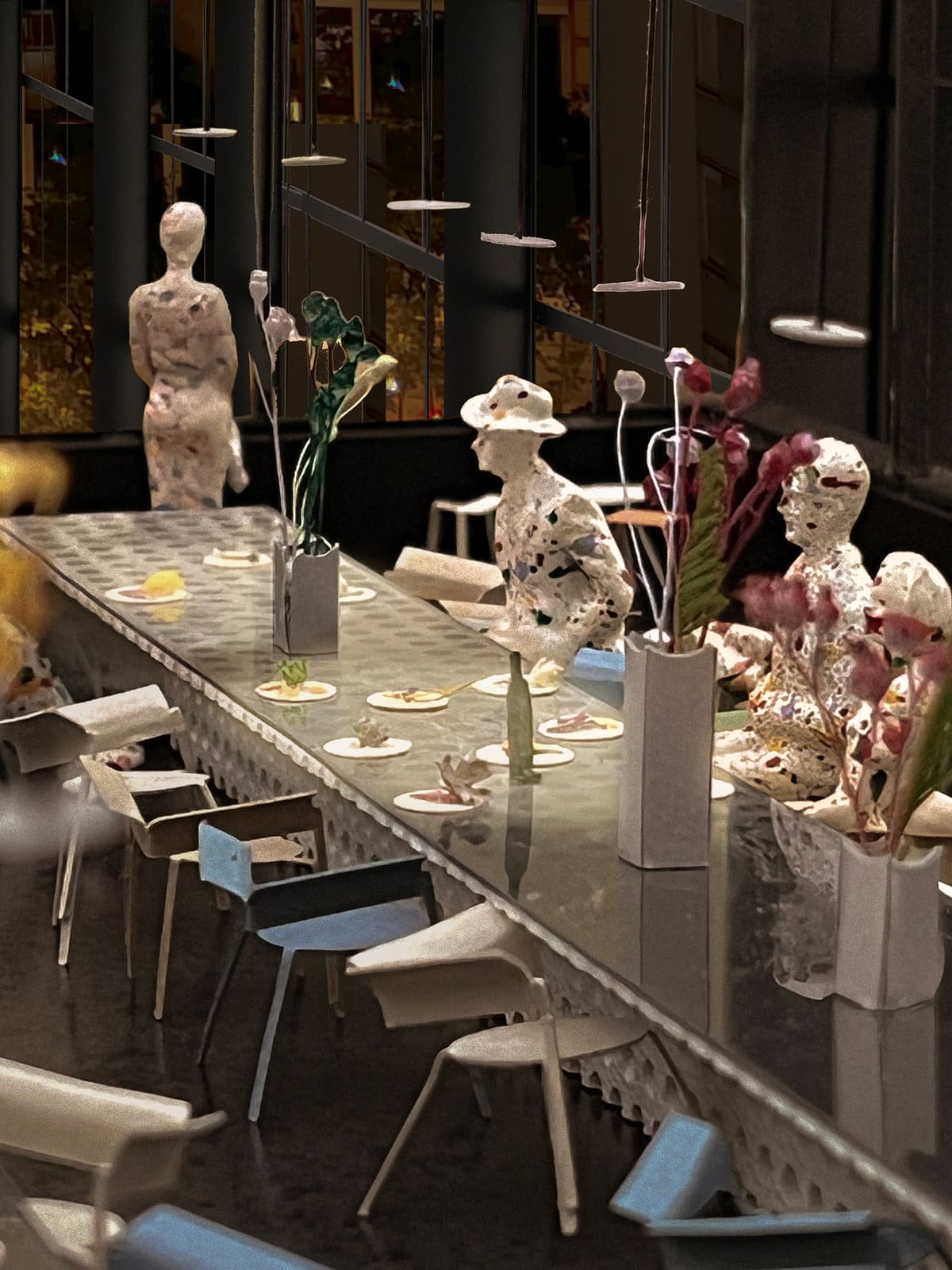
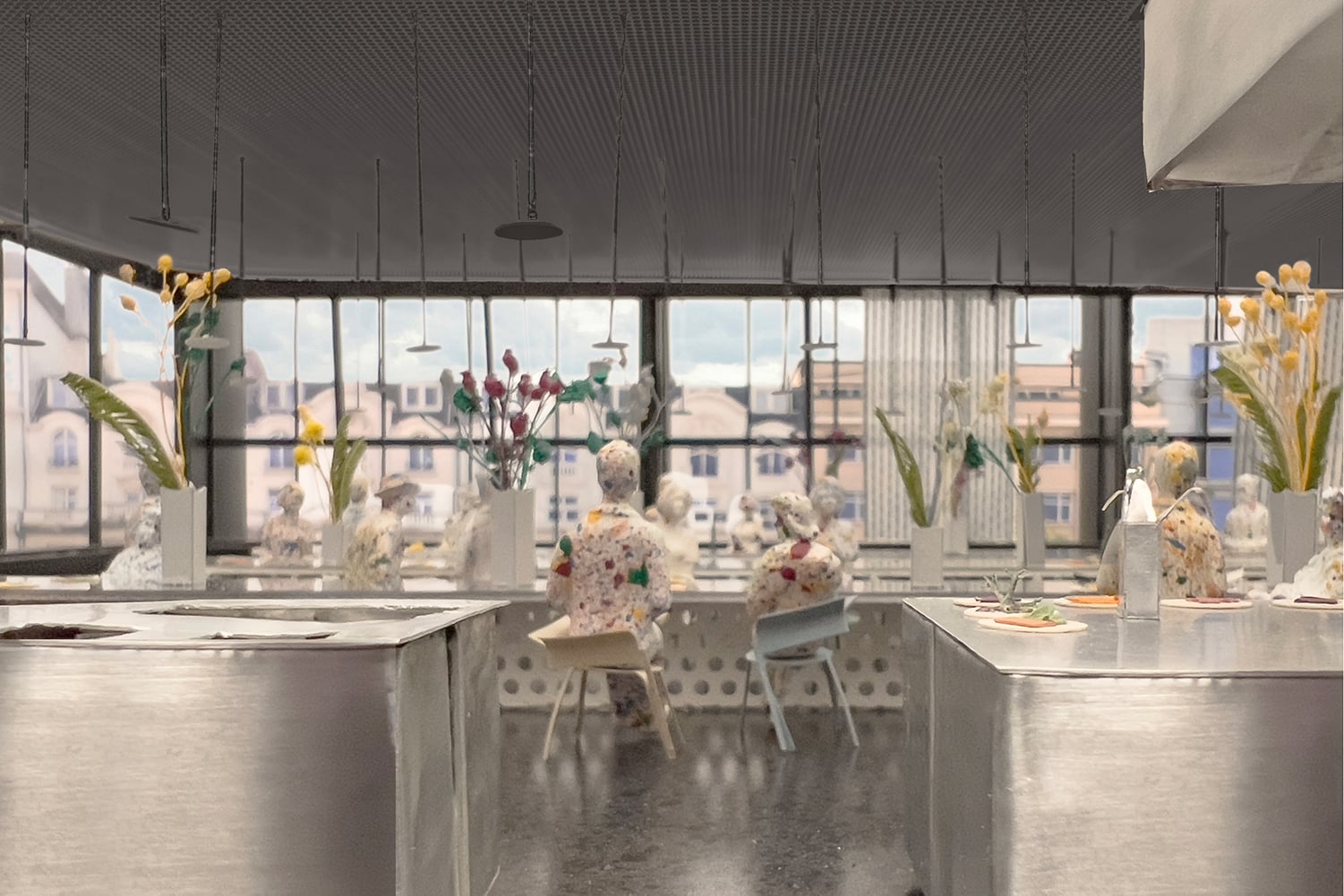
Their concerns converge. Above all, their aim is to demystify the world of gastronomy and its rigidity. Three oversized, continuous tables are positioned in the centre of the room. Their mirrored finish highlights the objects placed upon them. Rather than being hidden behind walls, the chef’s kitchen becomes like a domestic kitchen island situated at the heart of the dining room. The focus is on what creates the atmosphere of a meal: the light, the smells, the music at varying volumes—atmospheric elements that often have a greater impact on the memory of the meal than the architecture of the dining room itself. Movable tables and chairs allow for more intimate arrangements. As the evening progresses, one can move towards a table to admire the view of Place Sainctelette and take part in a movement that draws us out of the usual stillness of a meal.
Kanal is already a museum initiative that aims to be “a stage for Brussels”, open and inclusive for its users. The proposals for spaces being implemented within the museum programme are driven by the same concerns. The final result is intriguing and promises to offer a wealth of new ways of experiencing public space.
