
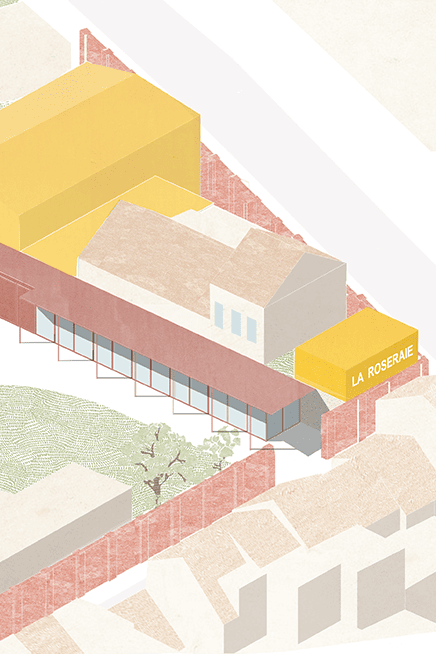
On the south-western edge of the Brussels Region, La Roseraie has a significant social impact. The site is situated along the Alsembergse Steenweg in Uccle, but is owned by the neighbouring municipality of Saint-Gilles. It consists of various pavilions set within a large garden. Through a competition organised by the Cellule Architecture, architects were asked to safeguard the future of the site and its heritage. The partnership of Architectures Parallèles and Manger Nielsen proved most convincing with an approach that protects the heritage and enhances the site’s qualities.
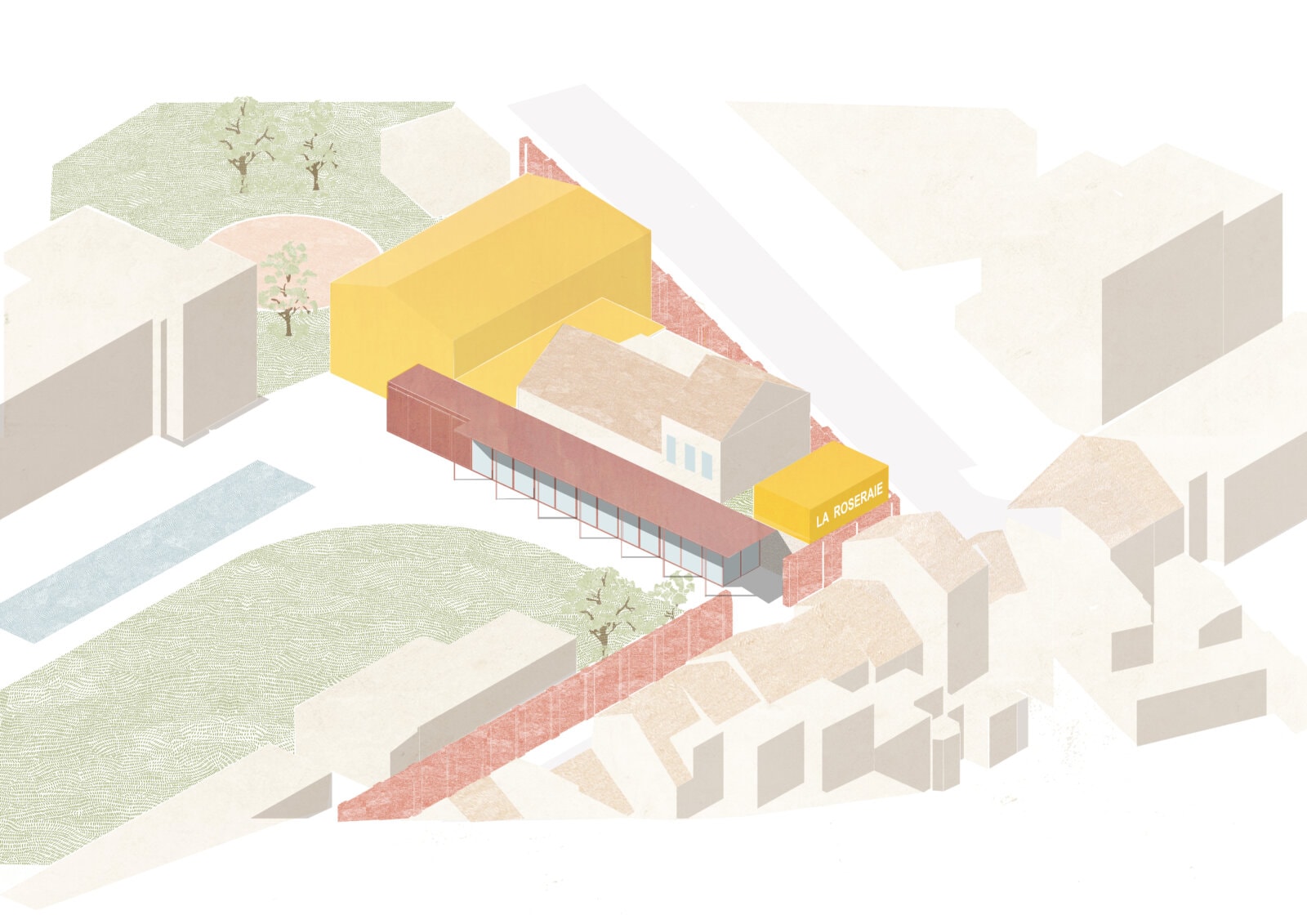
La Roseraie is a green oasis in the city; it is one of the few places exclusively intended for community use. Walled and mysterious from the street, the site turns its back somewhat on the city around it. It hosts a variety of social activities, ranging from after-school care provided by the local council to allotments. There is also space for a circus and short-term accommodation for the performers. Many of these activities take place under the auspices of the non-profit organisation ‘La Roseraie – Espace Cré-Action’. The pavilions from which the non-profit organisation operates are of great value and define the site’s character; some are fine examples of the Modern Movement. However, they no longer meet current standards and require extensive renovation.
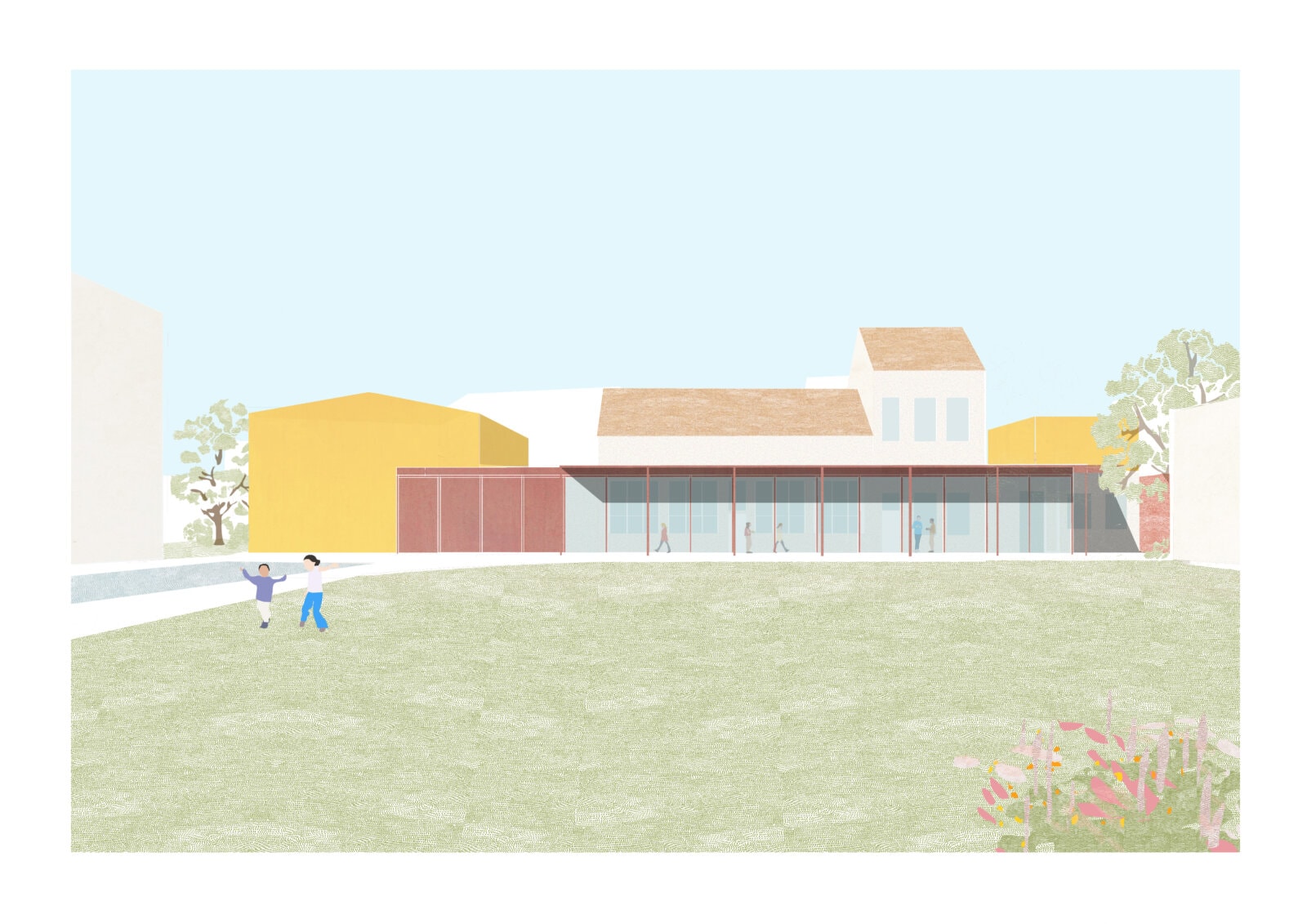
The two north-western buildings on the site are undoubtedly the most valuable. The designers are therefore not making any major alterations to the outer shell, but have opted to insulate the rooms on the inside with lime-hemp plaster. The most characteristic interior spaces, the corridors in the main building, remain uninsulated and thus unaltered. They serve as a vestibule to the classrooms, as an extension of the green square. Across the entire site, the architects were able to take advantage of its lack of listed status to replace the external joinery. In some cases, this enhances the qualities of the heritage. By setting back the new timber curtain wall beneath the canopy, the team emphasises the strength of the former canopy typology with outdoor classrooms.
At the client’s request, the works are being carried out in phases. Following the renovation of the two pavilions, the designers are transforming the corner building into a proper reception area and a venue for various types of performances. At right angles to the wall, next to the existing opening, a light canopy structure leads to two auditoriums, one in the existing building and one in a new volume. The entrance is marked by an extension above the offices. The building, which originally had a two-tiered gable roof, becomes an intriguing volume with various crowning features.
Through these interventions, the team has better integrated La Roseraie into the urban fabric. Via the clearly marked entrance, more people will find their way to what is happening within its walls. The programme has been clearly assigned a place on the site, within its characteristic structure. The future is assured for La Roseraie, in an improved version of the oasis it has been for decades.
