
Kanal – Centre Pompidou is set to open on 28 November. In the coming months, Kanal Architecture (formerly CIVA Stichting) will move there and become the largest organisation dedicated to architecture, architectural exhibitions and cultural activities in the Brussels Region, and even in Belgium.
Kanal Architecture is the new name adopted in the winter of 2025 by Fondation CIVA Stichting ahead of its integration into Kanal, the Brussels cultural complex housed in the former Citroën garage at Yser. Moving from Rue de l’Ermitage, Kanal Architecture will gain new exhibition, mediation, and archiving spaces that are far more extensive than those the institution has previously enjoyed. But beyond these new premises and name, an entire cultural heritage is being relocated – a heritage that was born of a chance discovery in 1968.
The history of architecture exhibitions in Brussels began in the area between Rue Paul Spaak – which runs alongside Rue de l’Ermitage – the Musée d’Ixelles and the La Cambre School. In 1968, the architect Maurice Culot discovered drawings by Fernand Bodson and Antoine Pompe in the cellar of his house. Thrilled by their modernism, he suggested to his friend François Terlinden that they organise, with the support of La Cambre and its director Robert L. Delevoy, an exhibition entitled Antoine Pompe and the Modern Movement in Belgium 1890–1940. Presented at the Musée d’Ixelles in 1969, the event was a resounding success.
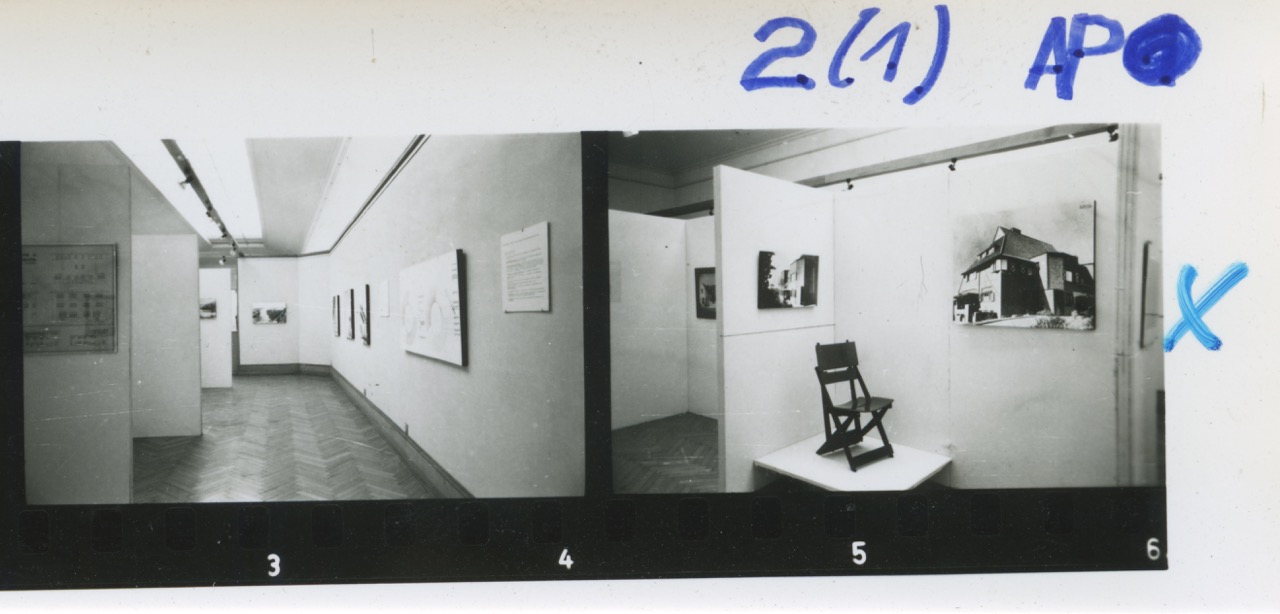
Etymologically, ‘to “ex-pose” means to bring out and then arrange in such a way as to reveal something that had previously remained hidden.’1 Thus, on the occasion of the exhibition Antoine Pompe and the Modern Movement in Belgium 1890–1940, the works of modernist architects who had long remained unknown were exhibited for the first time, including graphic documents, works of art, photographs, posters and furniture. This exhibition was the result of meticulous research carried out by Maurice Culot and François Terlinden into architects who had almost entirely been forgotten. 1 Stéphanie Dadour et Léa-Catherine Szacka, «Exposer l’architecture : Enjeux, institutionnalisation et historisation », Cahiers du Musée National d’Art Moderne, no 129, octobre 2014.
Following this event, the Archives d’Architecture Moderne (AAM) were founded in 1969. Supported by La Cambre, the association set itself the task of collecting, preserving and promoting archives, notably by organising frequent exhibitions. According to Maurice Culot, the ambition was to ‘lay the foundations for a future museum of architecture. Alongside this aim was the desire to build a living archive that would be accessible to both researchers and the wider public.’ 2However, the AAM did not limit themselves to organising exhibitions and building an archive; they also fostered interactions that brought out the ideas of a generation, an era and a city. In this way, they created places and moments, in Brussels, that were conducive to encounters and exchanges between the many actors in the world of architecture and the city. 2 Maurice Culot, « Édito », AAM, no 1, 1975, p. 1.
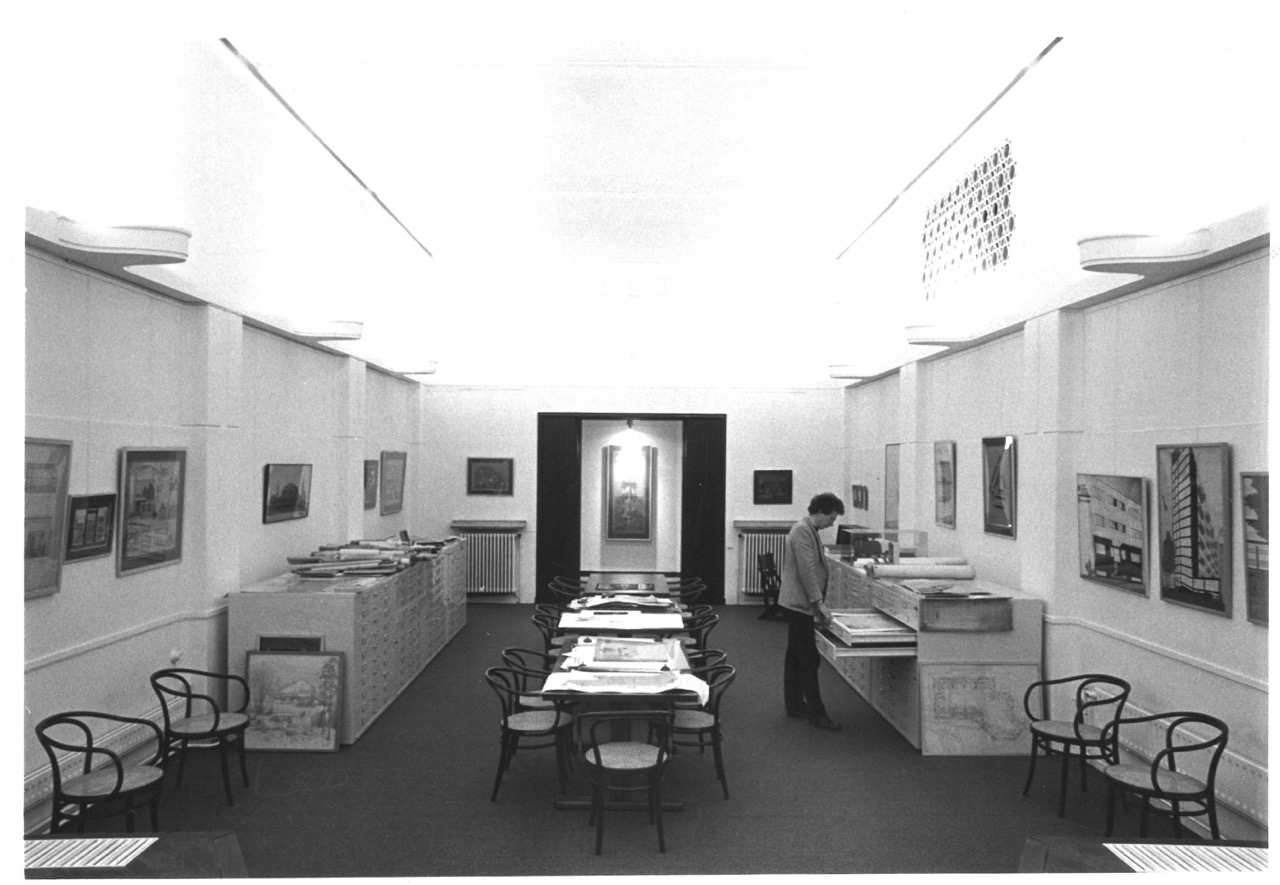
After Antoine Pompe and the Modern Movement in Belgium 1890–1940, the AAM organised exhibitions at the Hôtel van de Velde for 10 years, with the support of the La Cambre School and the assistance of its students. They collected and shared the archives of a vast number of Belgian architects, whilst forging links across Europe with foreign institutions and practitioners. For the AAM, curatorial and archival practices are two sides of the same coin. For decades, their approach has been to collect original documents, exhibit them to share the stories they contain, thereby fostering trust and enthusiasm that in turn generate new bequests, organise an event to thank the donors, and then start the process all over again. The AAMs have thus become the custodians of a large part of the recent history of Belgian architecture, which they recount through the documents they preserve. Through this system, they have gained significant authority over the narratives that shape the world of architecture in (French-speaking) Brussels and Belgium.
In this exciting environment, people such as Anne Van Loo, Caroline Mierop, Elie Levy, Michel Louis, Philippe Lefebvre, Pierre Lenain and Jean-Pierre Hoa played a significant role, initially as students and later as teaching assistants. Convinced that architectural practices should evolve and that cities should not be taken over by speculation, they devoted themselves fully to La Cambre whilst working voluntarily for the AAM. When the Battle of La Cambre took place in the autumn of 19793, the cultural initiatives championed by the AAM were shattered. Without La Cambre’s support, the association was forced to disband, even though in 1978, at the height of its success, it had set up its offices in a townhouse and established the Study and Documentation Centre for Architecture and Politics. 3 Pauline Fockedey, « Projets doctrinaires et politiques : l’enseignement de l’architecture en Belgique entre 1970 et 1990. L’exemple de La Cambre », Politiques de la culture, août 2021.
In the wake of this chaos, the history of the AAM might well have come to an end. But the association and its members did not give up. During a few years of uncertainty, the AAM’s members took part in the first Venice Architecture Biennale (1980) and went on to establish a Museum of Modern Architecture Archives in the Masonic Lodge on Rue Paul Spaak (1984). Finally, the Fondation pour l’Architecture was established in a building belonging to the Brussels Intermunicipal Water Company at 55 Rue de l’Ermitage. The aim of this cultural organisation was to preserve all the archives collected up to that point and to provide a space for exhibiting and interpreting its collections. Its funding came largely from Philippe Rotthier. Over the years, this was supplemented by grants from the French Community of Belgium. On 21 June 1986, the Fondation pour l’Architecture opened its doors to the public with the exhibition Paysage d’Architecture 1886–1986. Until 1999, the organisation staged a great many exhibitions. It was successively led by Caroline Mierop, Diane Hennebert, Caroline David, Sandrine Alouf and Nathalie Filser. All of them ensured close collaboration between the Fondation pour l’Architecture and the AAM. The curatorial programme was quite eclectic – Maroc, 1993 (1993), L’Utopie du tout Plastique (1994), Les Constructions du Ciel 1900-1958 & Panamarenko (1994), The Act of Seeing (Urban Space) I (1994), Les Plaisirs et les Ombres. Carte blanche à Raoul Vaneigem (1996), L’Éloge de la Simplicité (1996) – but the archives and their modernist architecture retained a powerful presence.
By the late 1990s, the AAM and the Fondation pour l’Architecture were facing bankruptcy. Maurice Culot therefore approached Hervé Hasquin, Minister for Regional Planning, Public Works and Transport for the Brussels Region and Chair of the COCOF Executive Committee. His aim was to secure a grant to save the archives. However, rather than offering one-off financial assistance, Hervé Hasquin proposed setting up an association that would bring together several organisations dedicated to the study of architecture, the city and the landscape, and to raising their profile. Thus, the CIVA – Centre International pour la Ville, l’Architecture et le paysage – was born: an institution funded by the French Community, bringing together the AAM, the Fondation pour l’Architecture, the Fondation Philippe Rotthier pour l’Architecture, the Centre Paul Duvigneaud de Documentation Écologique, the association Espaces Verts et Art du Paysage and the Fondation Martiny. All these organisations moved into Rue de l’Ermitage, into the building previously occupied by the Foundation pour l’Architecture, which was refurbished and extended for the occasion. For over 15 years, the CIVA was directed by Christophe Pourtois. At a time of significant professional upheaval, the institution was torn between the cultural initiatives that had seen it grow and the ambition to offer new curatorial practices whilst addressing contemporary challenges in architecture.
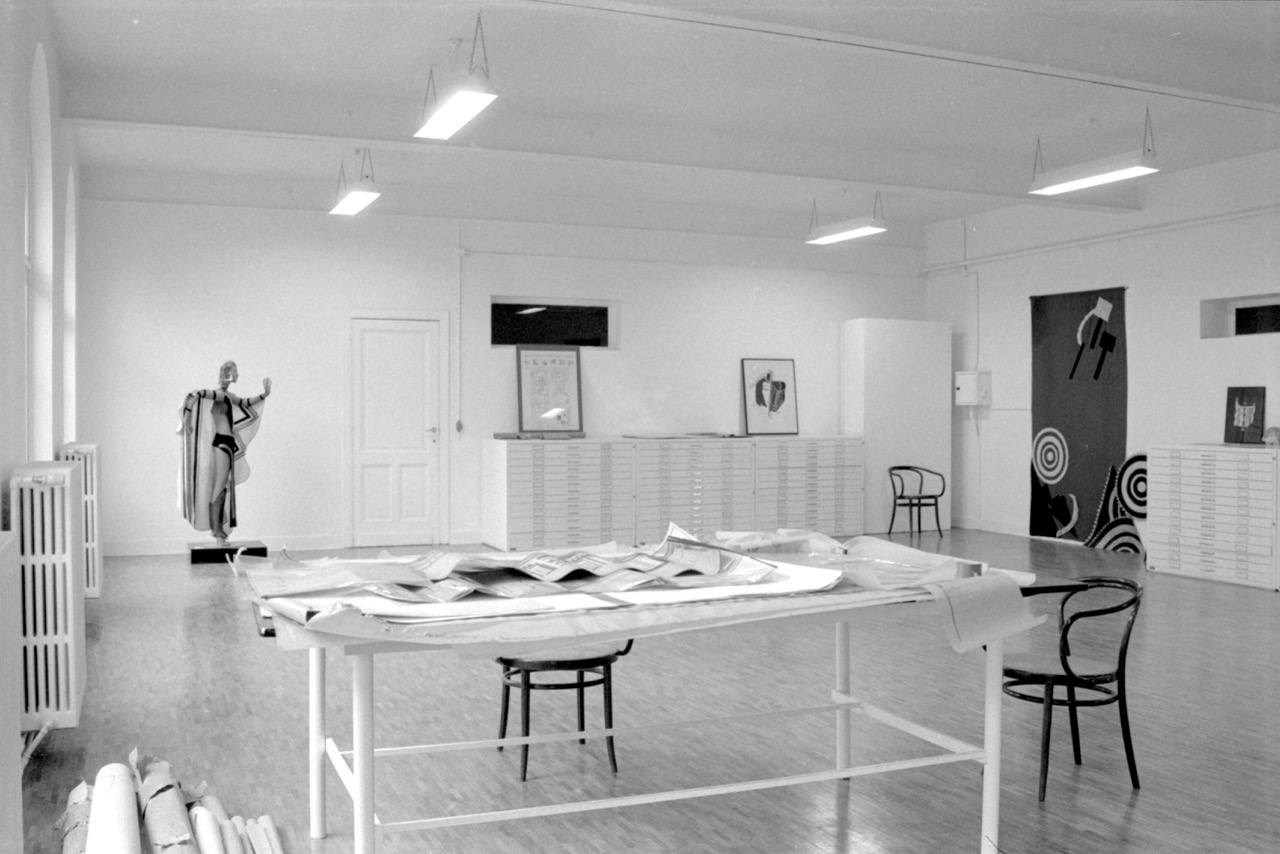
In 2016, the Wallonia-Brussels Federation withdrew its structural funding for the CIVA. The institution thus came under the authority of the Brussels Region and became the Fondation CIVA Stichting. Whilst the name of the association established in 2000 is simply bookended by the terms ‘fondation’ and ‘stichting’, it clearly distances itself from the organisation formerly run by the French Community and, to an even greater extent, from the associations from which it originated – the AAM and the Fondation pour l’Architecture. Archives and exhibition spaces do still coexist within the institution; however, the interconnection that once linked them is now much less pronounced. The cultural programme, as intended by the original CIVA, focuses on architectural practices and international issues. And when it comes to Brussels, the old obsessions resurface – urban struggles being the foremost among them.
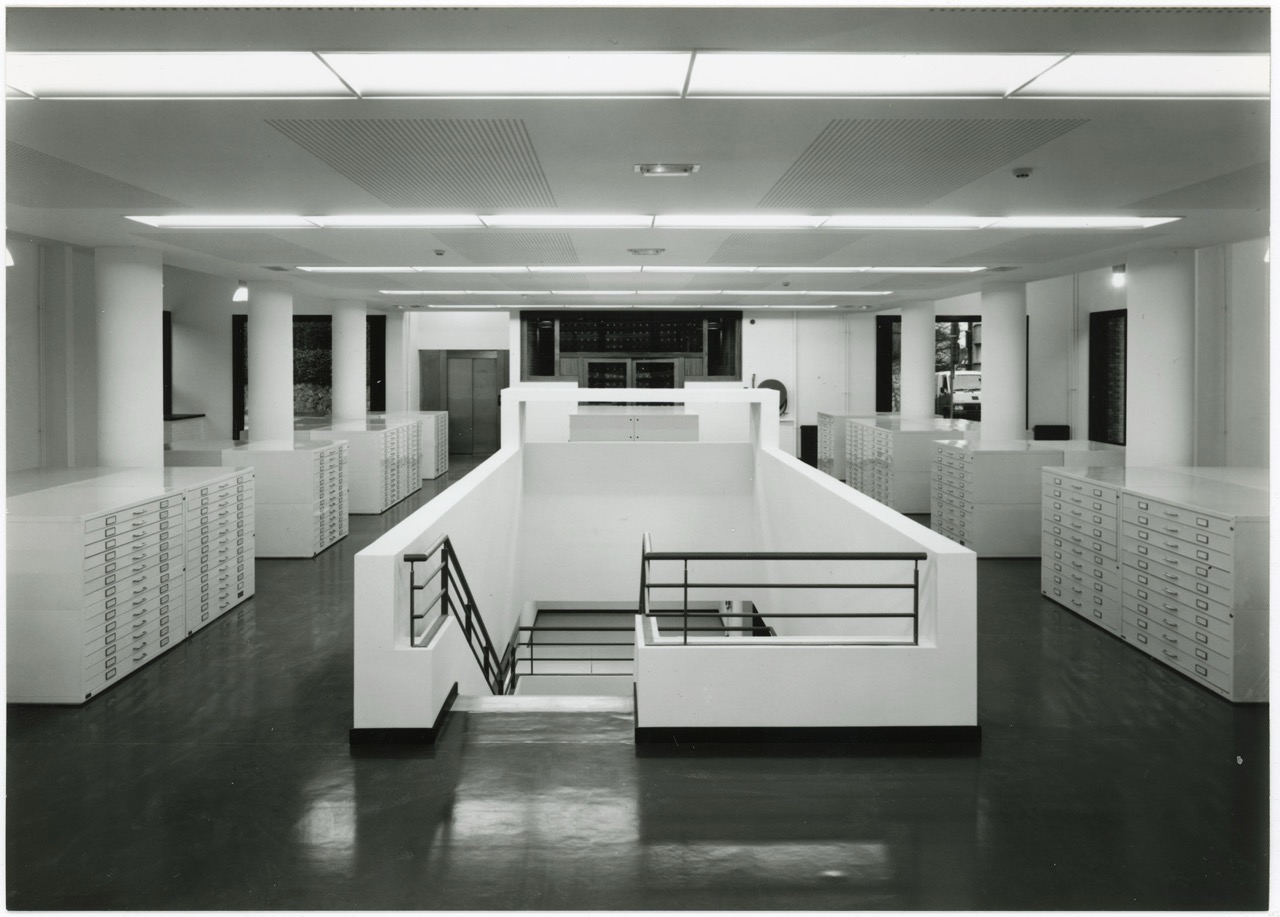
In 2027, almost 60 years after the AAM’s first exhibition, Kanal Architecture will move into a brand-new venue – along with its collections and staff – one that holds great promise for architecture and architectural culture. May the archives gathered since 1969, together with all the curatorial practices that constitute an inexhaustible legacy, be revealed as treasures that have hitherto remained hidden, and offer new narratives so vital to both the profession and the public.
