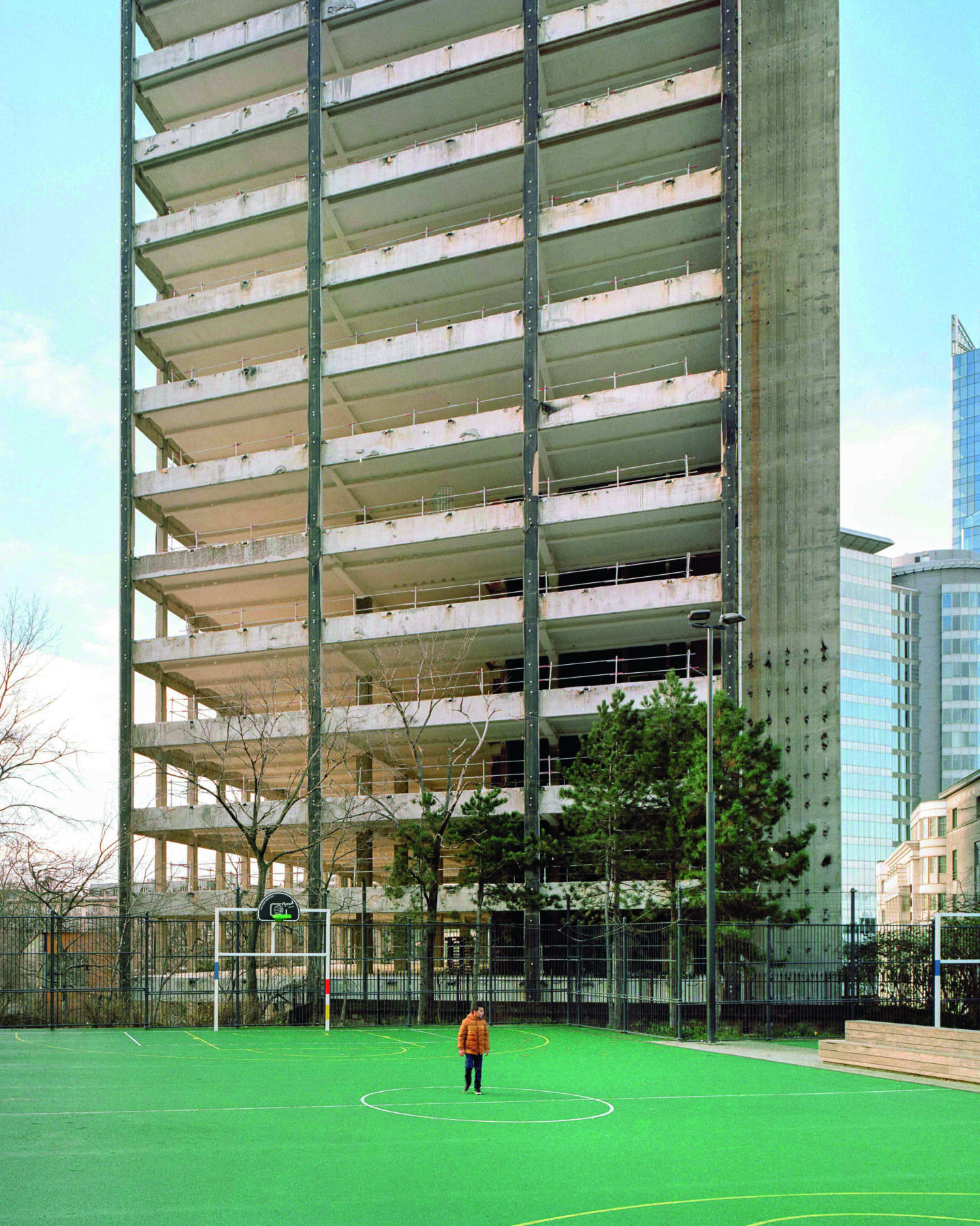
Transformation, ‘Umbau’, upcycling, circular building. For several decades now, a new vocabulary has been seeping into architectural culture. While ecological and social transitions demand a paradigm shift from the architectural profession, real-estate development has seized the opportunity to reorient its own market, often in collaboration with architectural offices identified as forerunners of sustainable building. The recent renovation by 51N4E of the IBM Tower puts this evolution in perspective.
Built in Brussels in 1978 to serve as the Belgian headquarters of the American multinational IBM, the black-and-white striped tower was conceived as a structural and functional office building. Today, standing between the North Station and the Botanical Garden, the IBM Tower belongs to both the 1950s dream of a vibrant Brussels business district and the harsh reality of Brussels as arrival city. After years of neglect, a series of recent projects have sought to repair the fragile urban tissue of the area. One might think of the new Place Rogier by XDGA Architects and the redevelopment of the public square of Sint-Lazaruslaan in Saint-Josse-ten-Noode by Bas Smets. The renovation of the IBM Tower clearly draws upon these recent renewal efforts.