
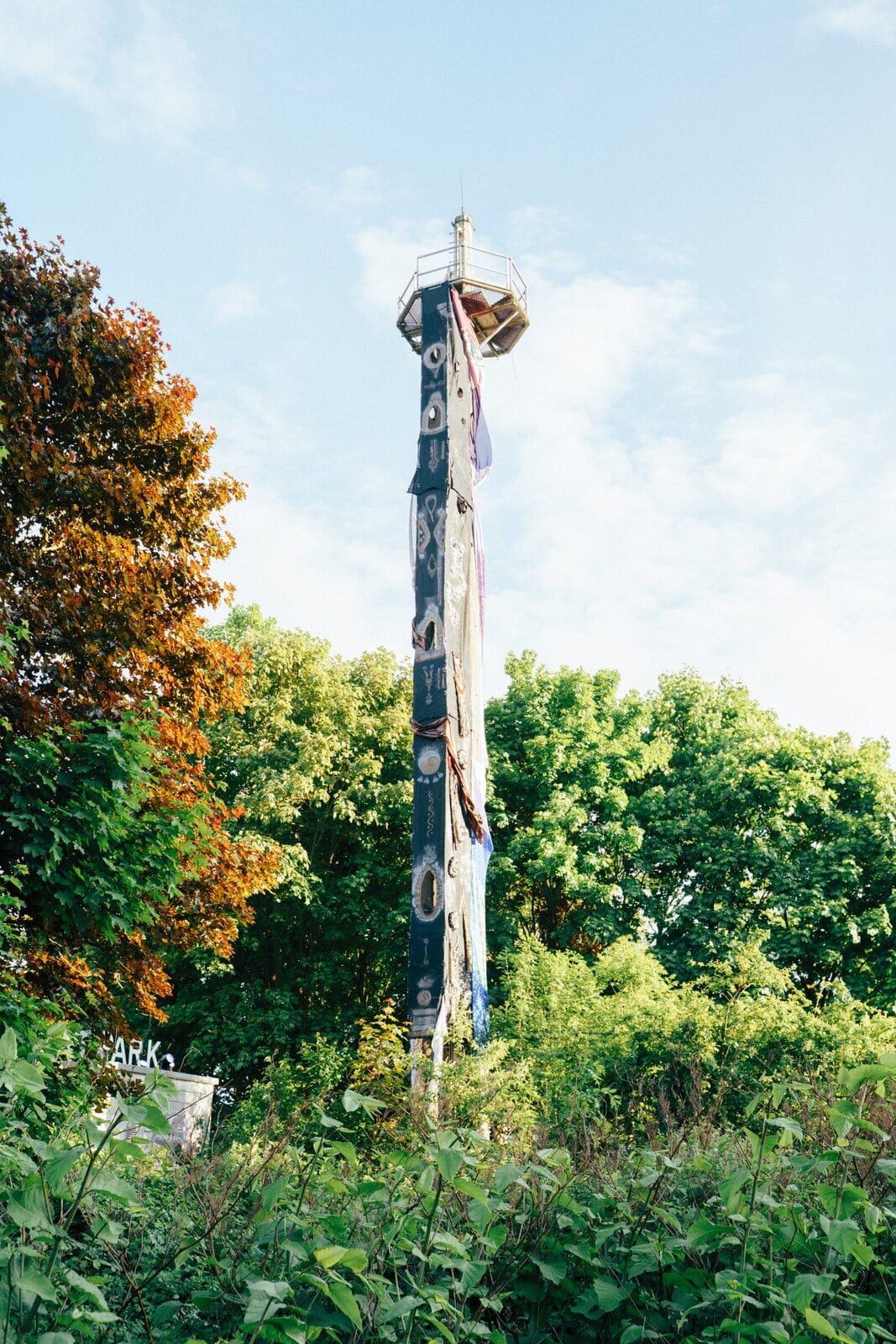
Horst Expo bears some resemblance to the famous Insel Hombroich near Neuss in North Rhine-Westphalia, Germany: a natural landscape dedicated to contemporary art and architecture on a former military site. However, the differences are just as great as the similarities. Insel Hombroich received massive support from a collector, the city of Neuss and North Rhine-Westphalia, and was thus able to call upon the crème de la crème of international architects and artists. The Asiat Park, a decommissioned base, stood empty for years, until it emerged that young people had turned it into ‘their’ spot by holding rave parties there. The city of Vilvoorde purchased the site and granted it on long-term loan to the Horst Festival. The festival had already made its mark on the grounds of Horst Castle as both a rave festival and an art and architecture exhibition. It is a thoroughly Belgian organisation: no money, but top quality, thanks to the inventiveness and dedication of volunteers and locals. Without (very) big names, but with art and social initiatives that matter. It realises the dream of the avant-garde: art and architecture that merge with life.
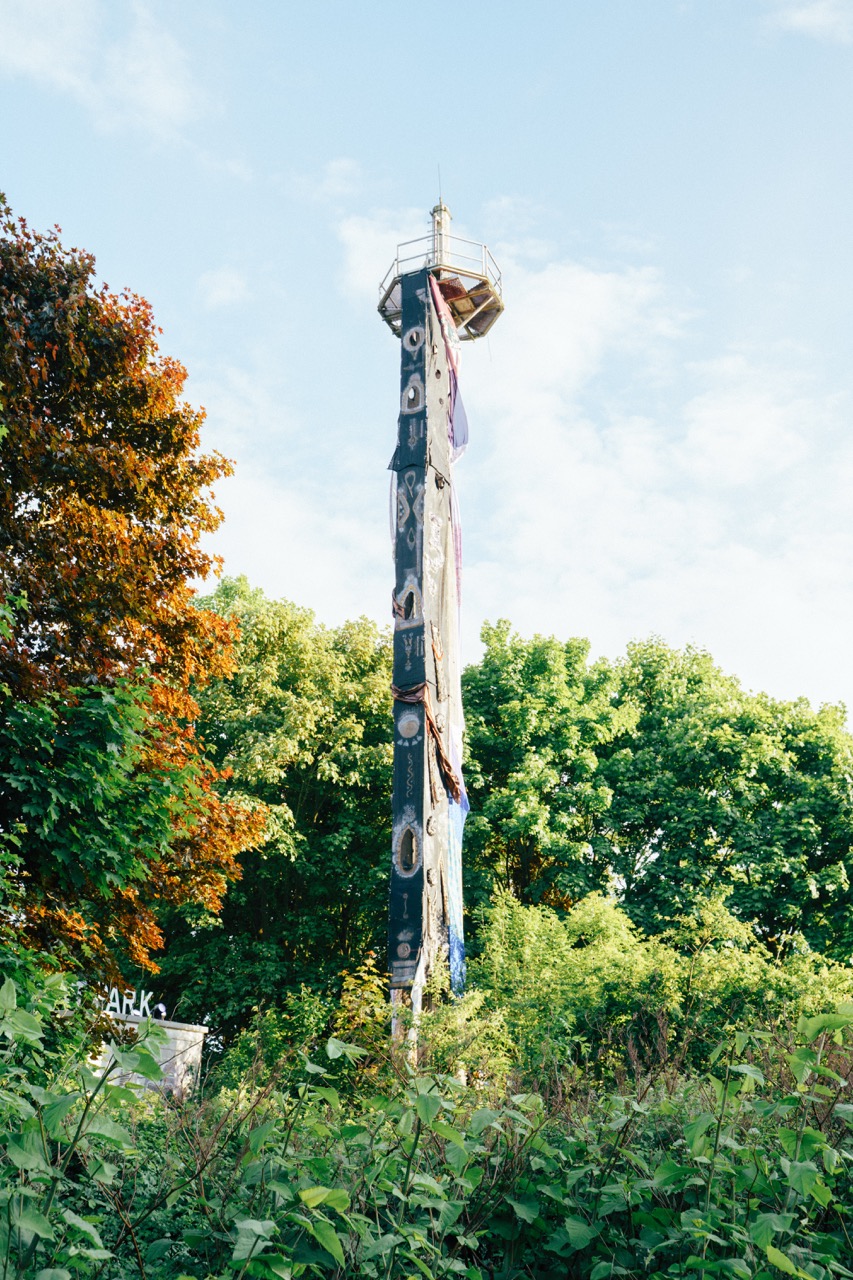
‘There will be soft rains’ is the motto of this year’s Horst Expo. It is taken from a poem by the American poet Sara Teasdale, a response to the scourge of the Spanish Flu in 1918 (the coronavirus pandemic was small fry by comparison). Initially, the organisers wanted to take over the Darse site this year – a plot of land on the other side of the Senne, which forms the north-western boundary of the site – but that plan was delayed. However, another site, to the east of Asiat Park, was secured for Dark Skies. That spot literally provides a home for rave parties.
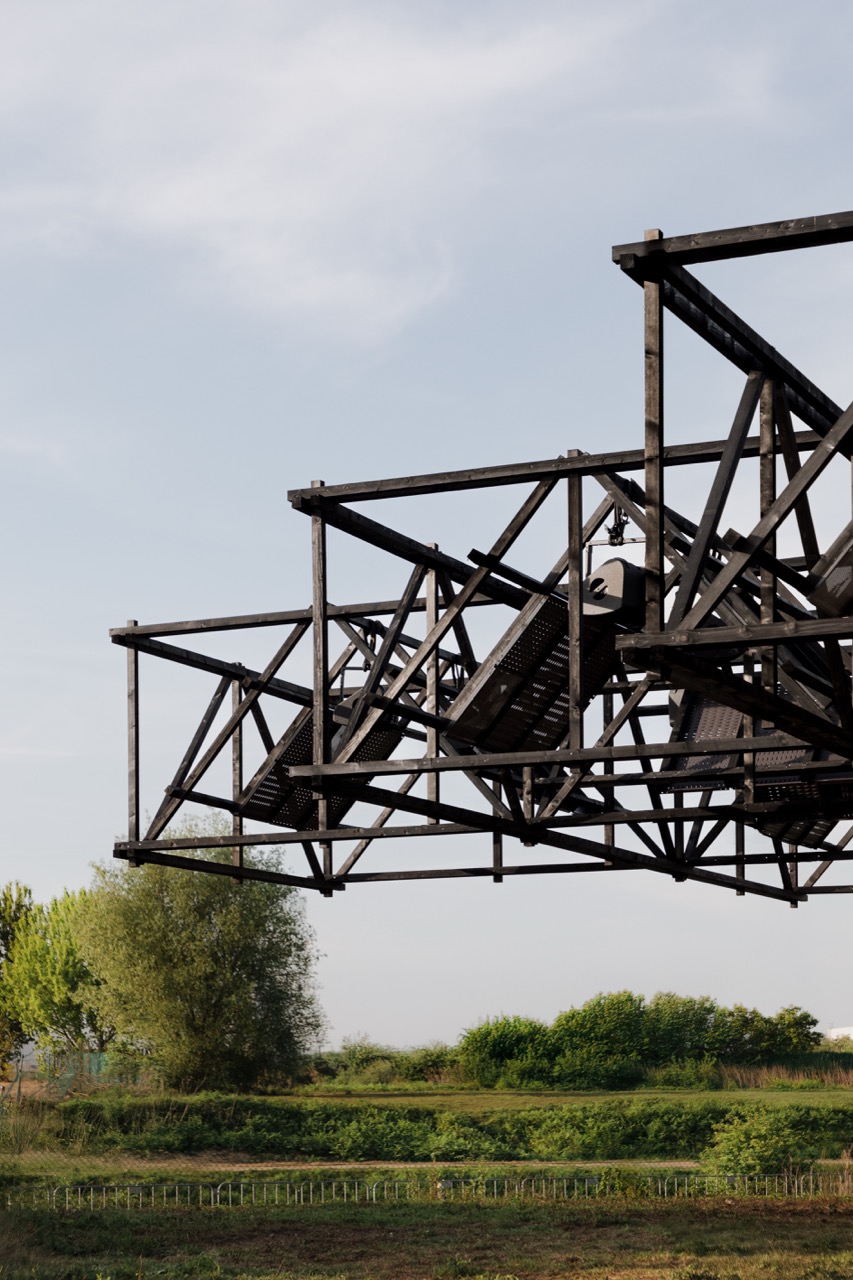
Dark Skies is an unlikely structure. It is constructed from dark-stained rafters, assembled into trusses that form a diamond-shaped ‘roof’ in a grid of approximately 3 by 3 metres. This hovers about four metres above the ground. Recycled steel sheets with indented grooves reflect the sound beneath that ‘dark sky’. In four places, gazebos have been incorporated into the roof where DJs and lighting technicians can oversee the party during their set. Originally, just twelve columns of steel and rafters, placed rather randomly, were to hold the diamond-shaped structure with a diagonal of approximately 27 metres aloft. That seemed a little too risky to Horst Expo. They added a further 26 struts to support the weight of the lighting and sound installation. This does nothing to detract from the visual impact of this installation by Leopold Banchini and Giona Bierens de Haan, in collaboration with DJ DVS1. I do not know if it is intentional, but the resemblance to New Babylon, Constant (Nieuwenhuys)’s utopian project from the early 1960s for a world freed from the burden of work, is striking.
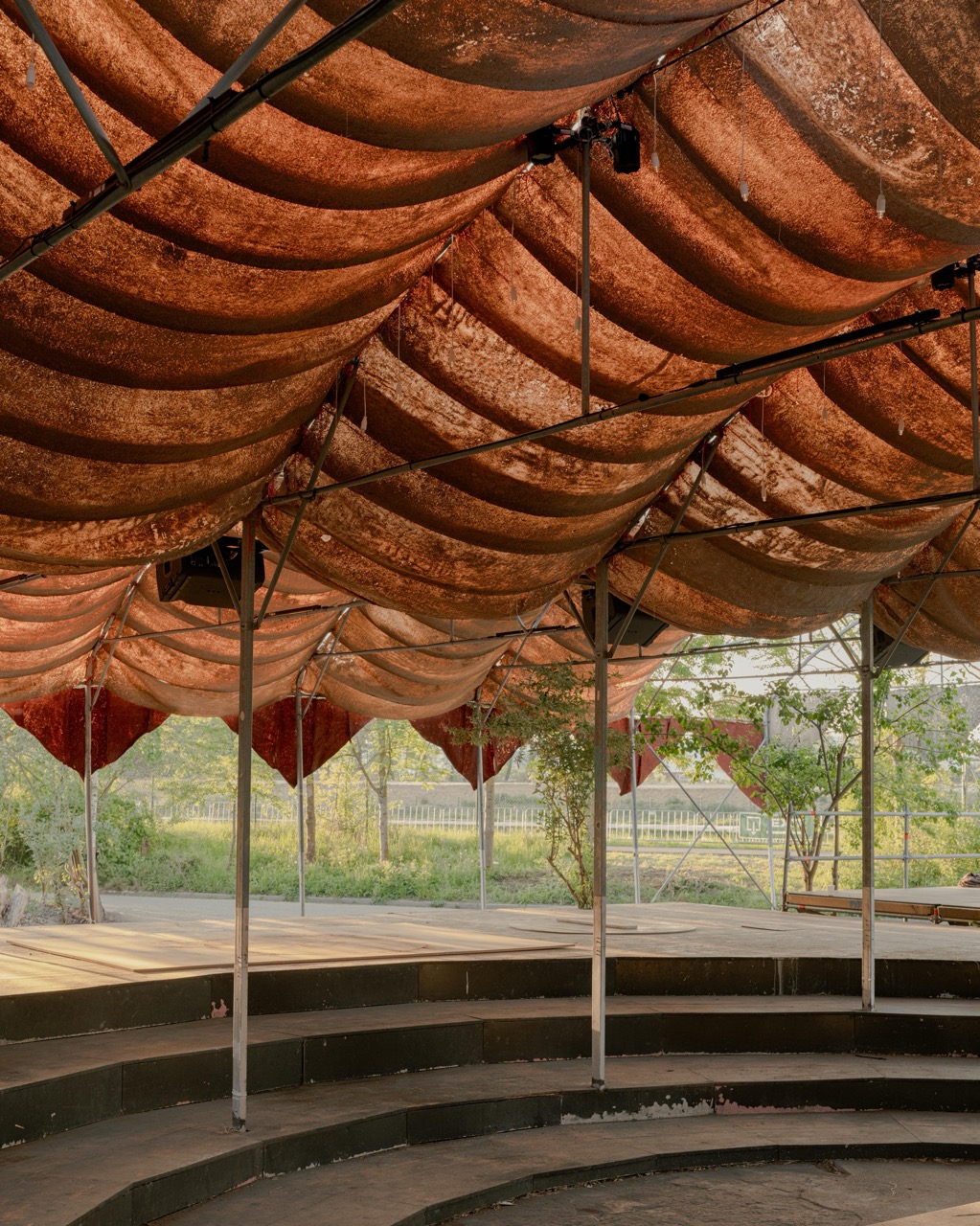
Less spectacular, but equally intriguing, is Weaving weeds by Berlin-based Atelier Fanelsa and the Technical University of Munich (TUM). Beneath the greenhouse that Rotor built a few years earlier, they hung canopies made of strips of jute and remnants of Japanese knotweed, which elsewhere overgrows the site. In time, a carpet of moss might form on that substrate, though the plastic sheeting on top of the greenhouse frame is holding it at bay for now.
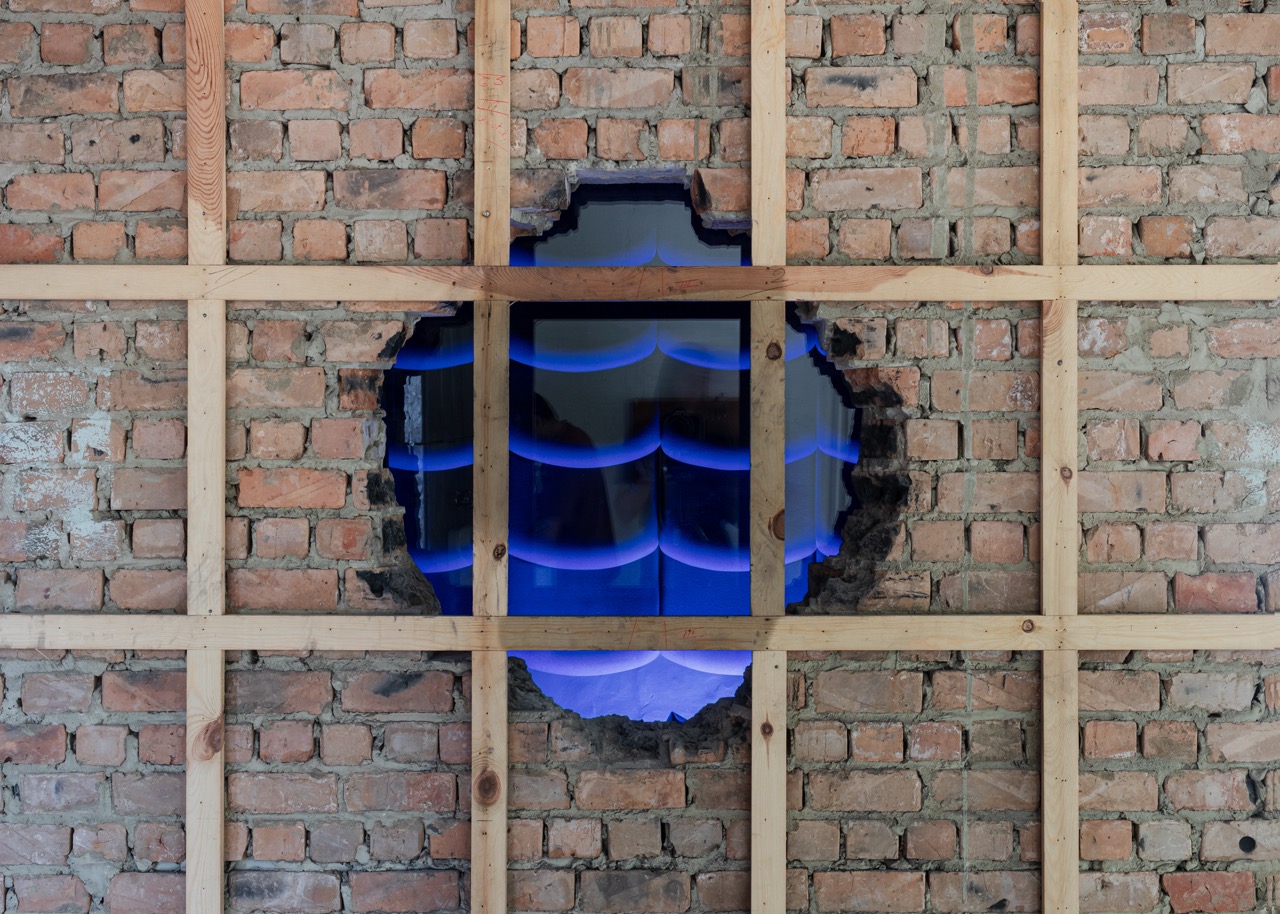
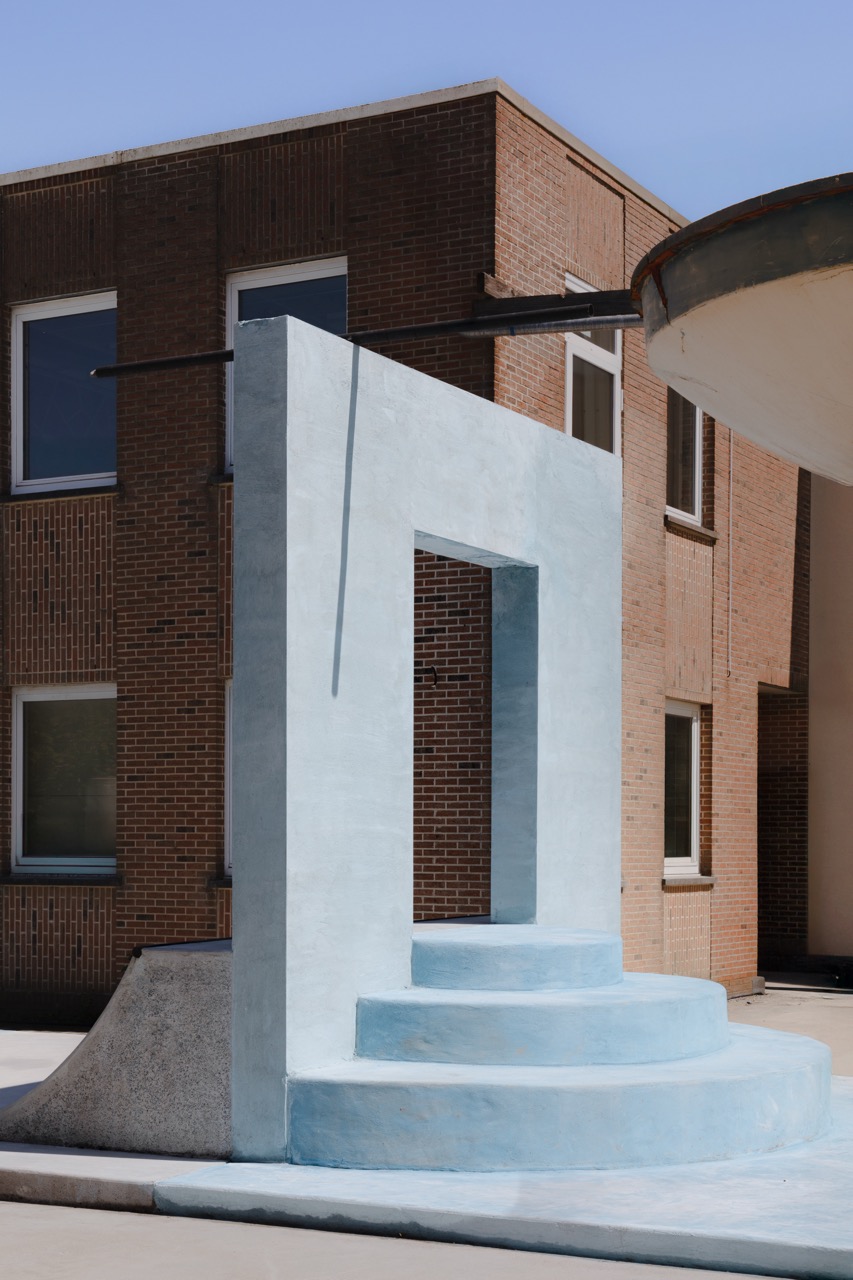
Two architectural projects are aimed directly at the user. Leporello by Jean-Benoît Vétillard can be read as a seven-step development of a complex spatial form: a gateway with a flight of steps. This work, made partly from recycled concrete, is also a skatepark to which local skaters have contributed. Niteshop by Alter & Baukreisel, at the head of block 16, has been set up as a meeting place for local young people. The designers stripped this former first-aid room of all its partition walls and screens, leaving only a central brick block. Within this, they created a sound studio with sound-absorbing walls made from the seats of discarded EU chairs. Through a boldly cut-out hole in the wall, the studio looks out onto the rest of the space. There too, the interior consists exclusively of recycled materials; steel electrical conduits, for example, were used as clothes hangers.
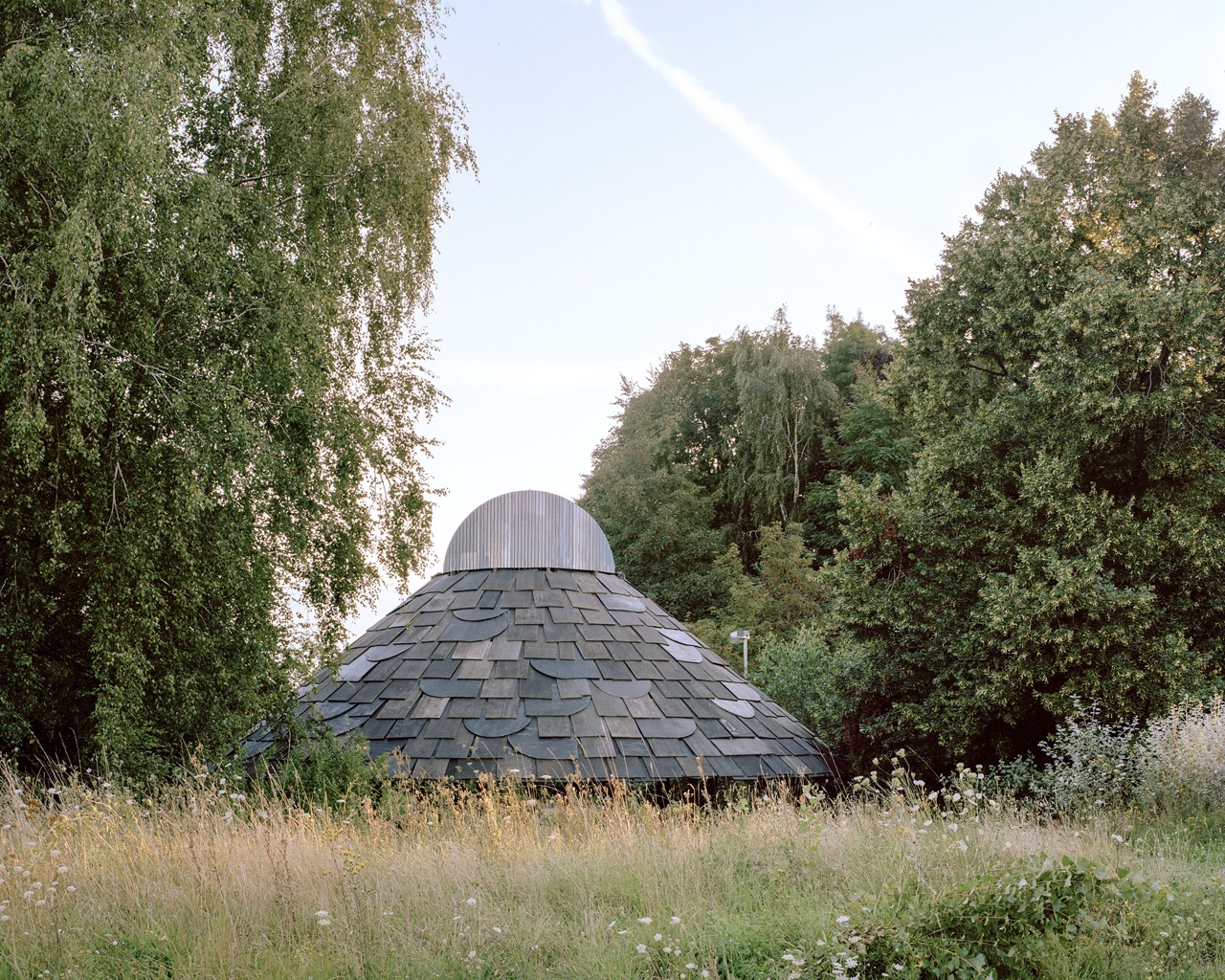
This year, you can also admire Leopold Banchini’s marvellous Moon-ra tipi for the last time. The installation will be removed next year. The Ring by PioveniFabi, on the other hand, will remain for a while longer. Furthermore, there is plenty more art to see at the Asiat site that has nothing to do with architecture, but is no less interesting for that. See the Horst Art and Music website.
