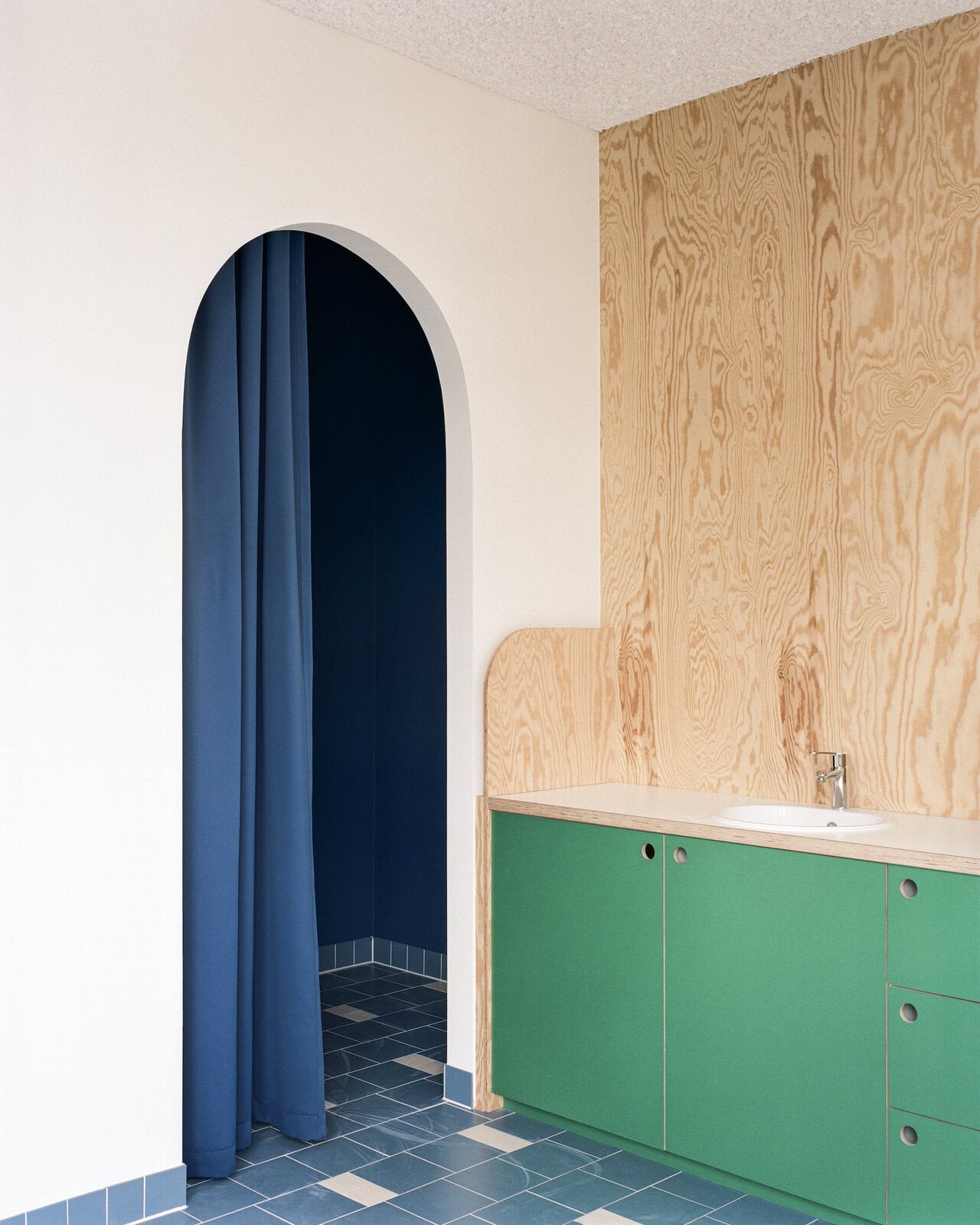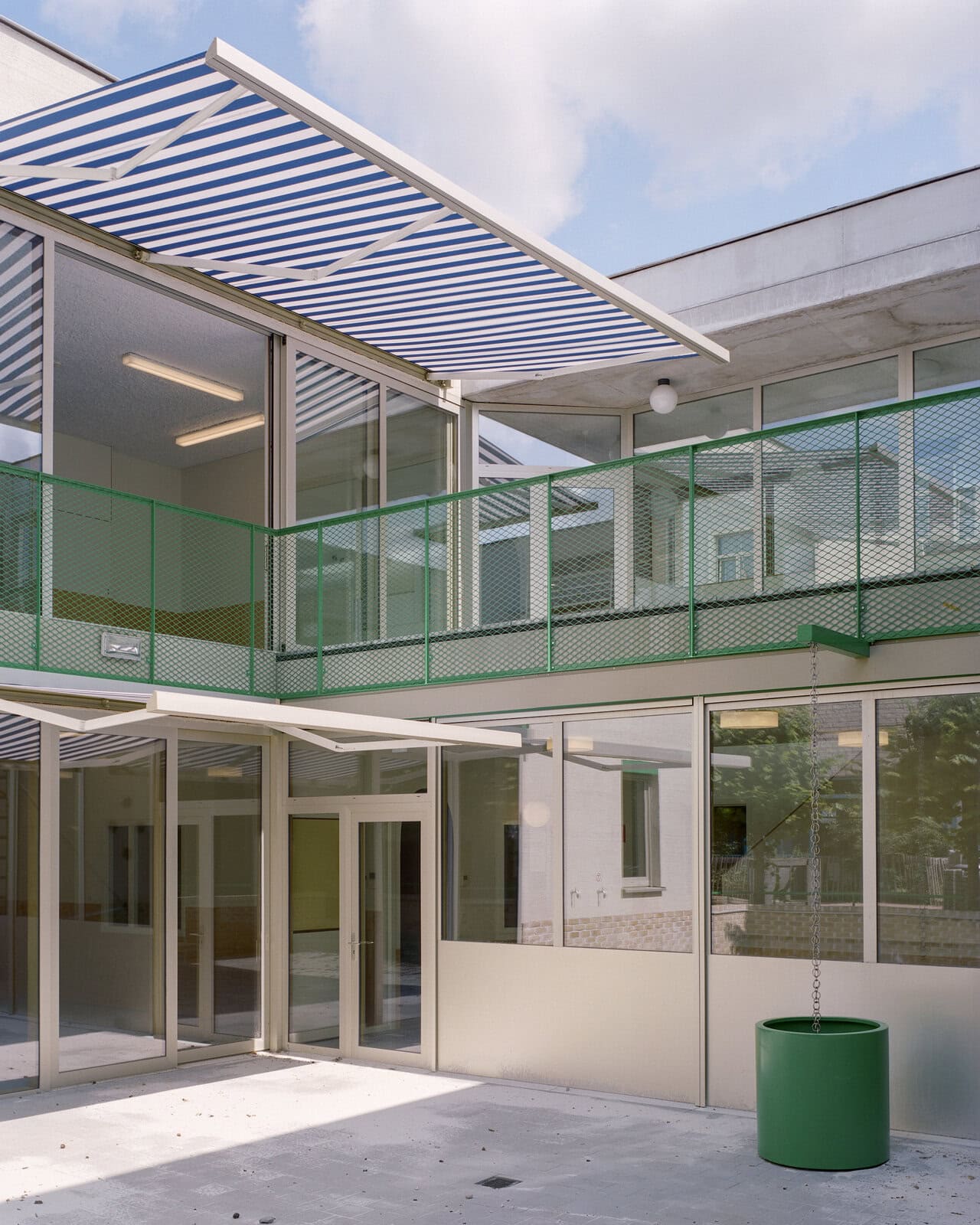
Rue Bronze, which links the centre of Anderlecht with the Canal, is home to a building that stands out: the Maison des Artistes. This former mansion, with its intricate mouldings, serves as the starting point for the new nursery that stands alongside it. A dialogue has begun between these two projects, which have no apparent intuitive link. Yet it is indeed the pursuit of social cohesion that drives the project by agmen and Carton 123, seeking to foster encounters between the communities it brings together: families, toddlers, artists and passers-by.
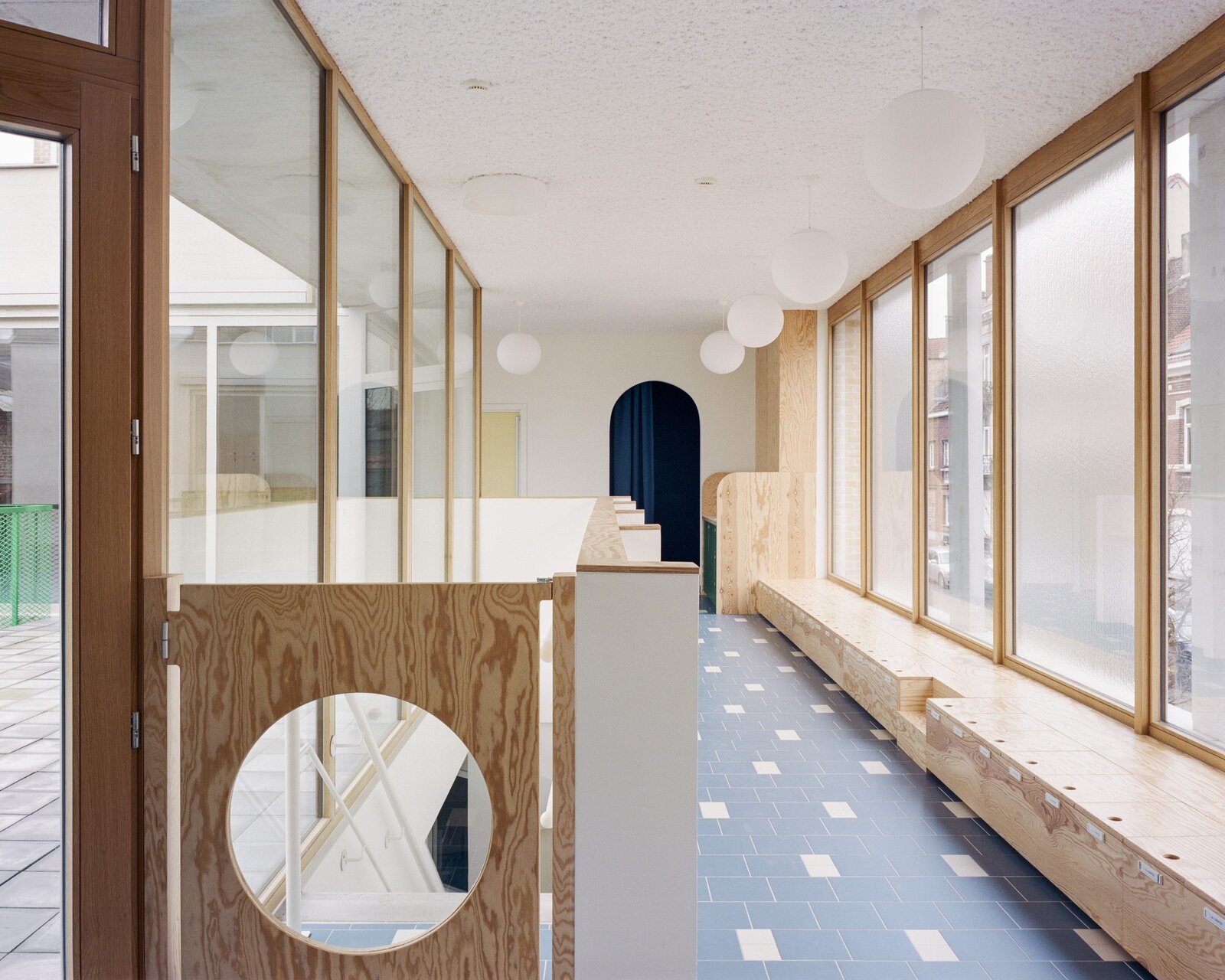
Building on this desire for cohesion, the urban connection between the two buildings begins to take shape. It is intended to be modest, stepping back from the striking Maison des Artistes building. But above all, it acts as a conduit for connection, with a form that seeks to link the two spaces. The nursery’s façade is set back from the street line. This choice creates, like an antechamber, an entrance patio that forms a subtle link with the city, catching the eye of passers-by through the simple interplay of a column and a blue powder-coated steel beam. An accordion-style metal screen unfolds when the entrance needs to be closed, but when folded, it seems to disappear. This very open threshold thus invites one to enter an initial outdoor space that encourages encounters and reinforces the significance of the place: a side street in a rapidly developing neighbourhood.
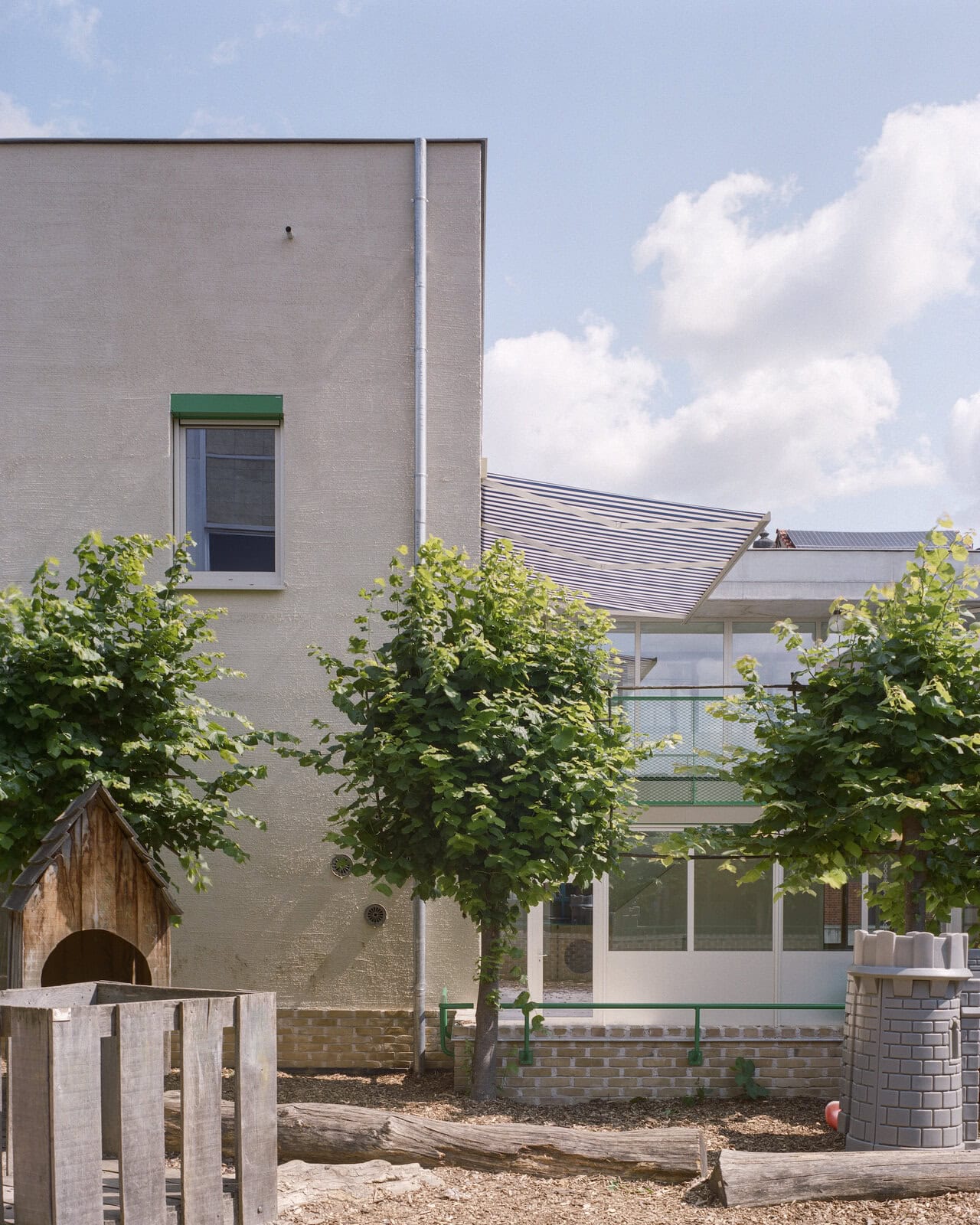
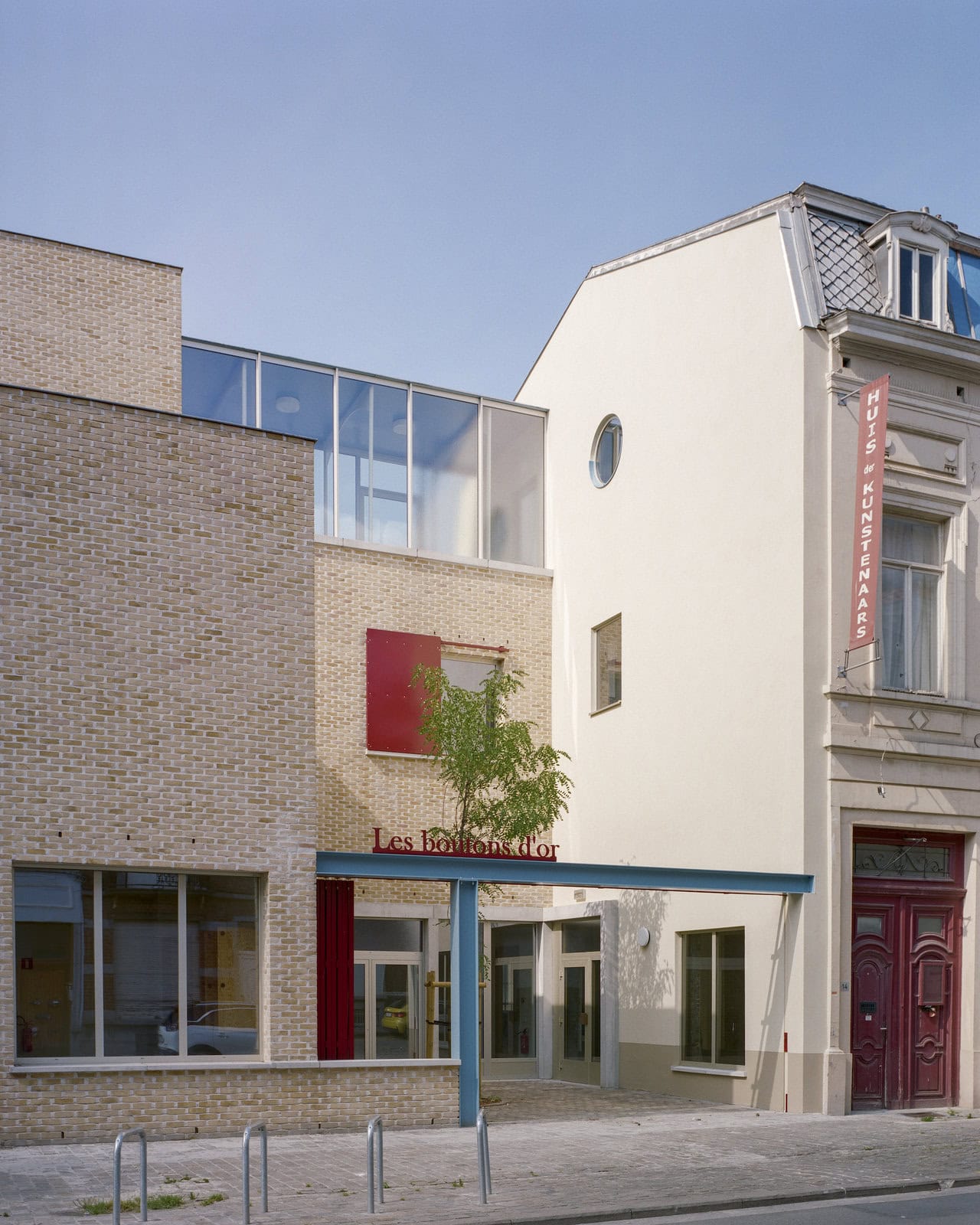
The designers place great importance on the articulation of transitions. The clear, transparent walkway opens out towards both the street and the school playground within the block. It leads to spaces—both indoor and outdoor—that give users the freedom to make them their own. They are spaces of possibility, yet possess their own architectural language. This playful, colourful architectural language suggests activities linked to its occupants, primarily young children. The awnings, with their striped fabrics, enliven the façade facing the courtyard as the sun’s rays shift.
This language, characteristic of contemporary Belgian architecture, makes the building’s structural elements and their interplay visible. It responds to the structural reality of the materials by highlighting them. Meanwhile, the interior materials, which are mainly natural, emphasise the sense of touch. Wood becomes a texture that is integral to the furniture. This meticulous choice of materials, where no element is left to chance, forms part of the architects’ overall design concept. A grammar of reality where materials are chosen according to their use and their tactile qualities.