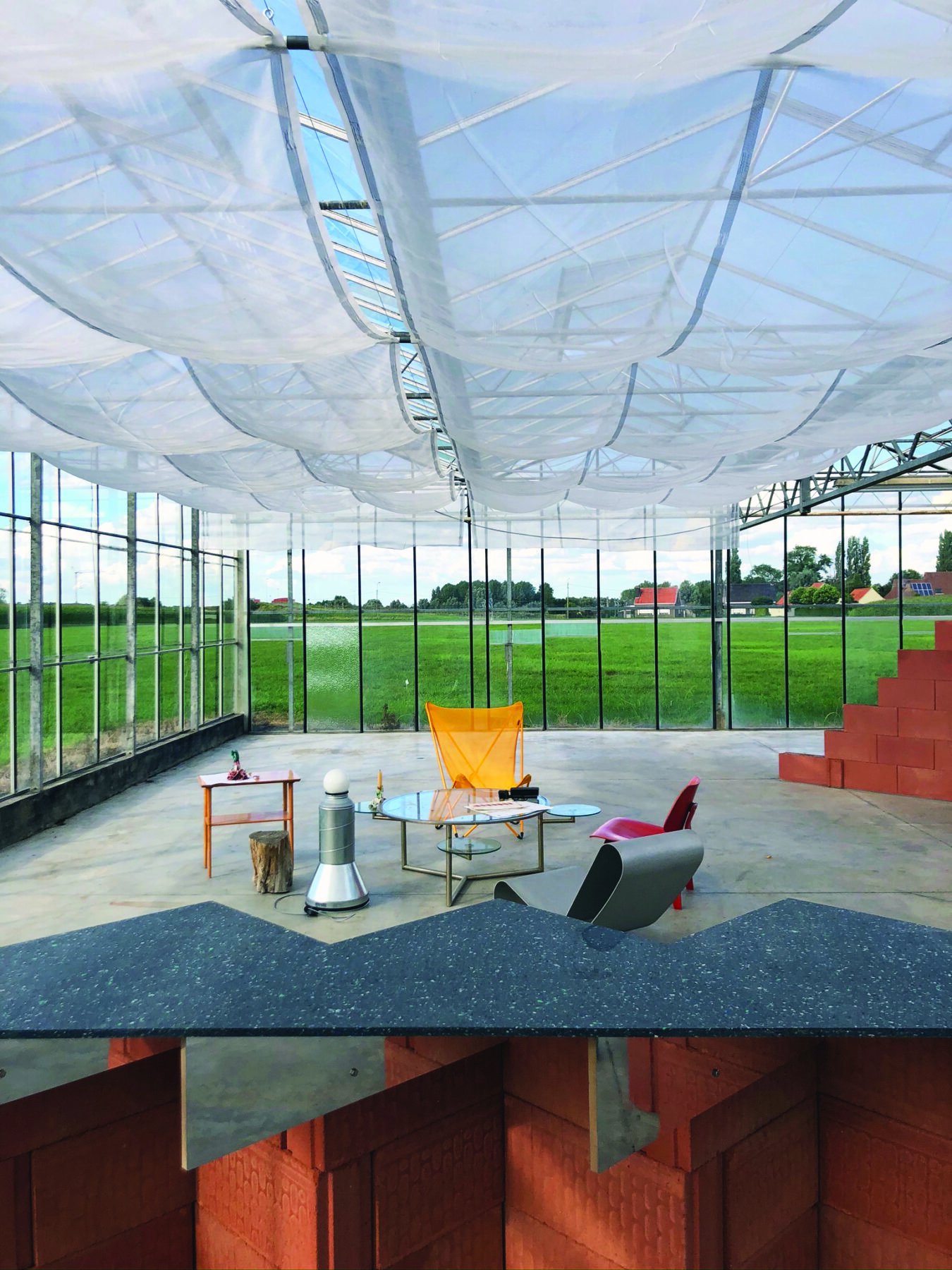
“Oh yes, those ‘tiny houses’…” I often get this pejorative, simplistic response when I talk to fellow architects about light forms of housing1. They do not correspond to the aesthetic canon that applies within our discipline, which means that their many complex challenges are often overlooked. 1 Light forms of housing is one of the ’45 actions’ selected in Inventaires #3 architectures Wallonie-Bruxelles 2016–2020, a book compiled under the direction of Gilles Debrun and Pauline de La Boulaye and published in November 2020.
According to the ‘Réseau brabançon pour le droit au logement’ (RBDL, or Brabant network for the right to housing), around 25,000 Walloons chose a different way of living, either of their own free will or sometimes because they had no other choice. They are divided into three groups: 12,000 people living on recreational land (mobile homes, chalets), 10,000 travellers and nomads, and 3,000 residents of so-called ‘alternative’ dwellings (yurts, tiny houses, caravans, etc.)2. 2 Teret, Céline, ‘Habitat léger : premier jalon d’une reconnaissance juridique’, Alter Échos, no. 474, June 2019. According to housing law experts Vincent Wattiez of the RBDL and Anaïs Angéras, a doctoral student at UCLouvain, these lightweight forms of housing are “considered by some to be temporary, by others to be the result of a change in lifestyle and, finally, by all to be an adequate response to their needs. The economic aspect, linked to the housing crisis, certainly plays a role. However, the growing proportion of micro-homes is also linked to a search for a smaller ecological footprint. These types of housing also encourage more dynamic social contacts, if only because of the self-build principle, which often involves friends.”