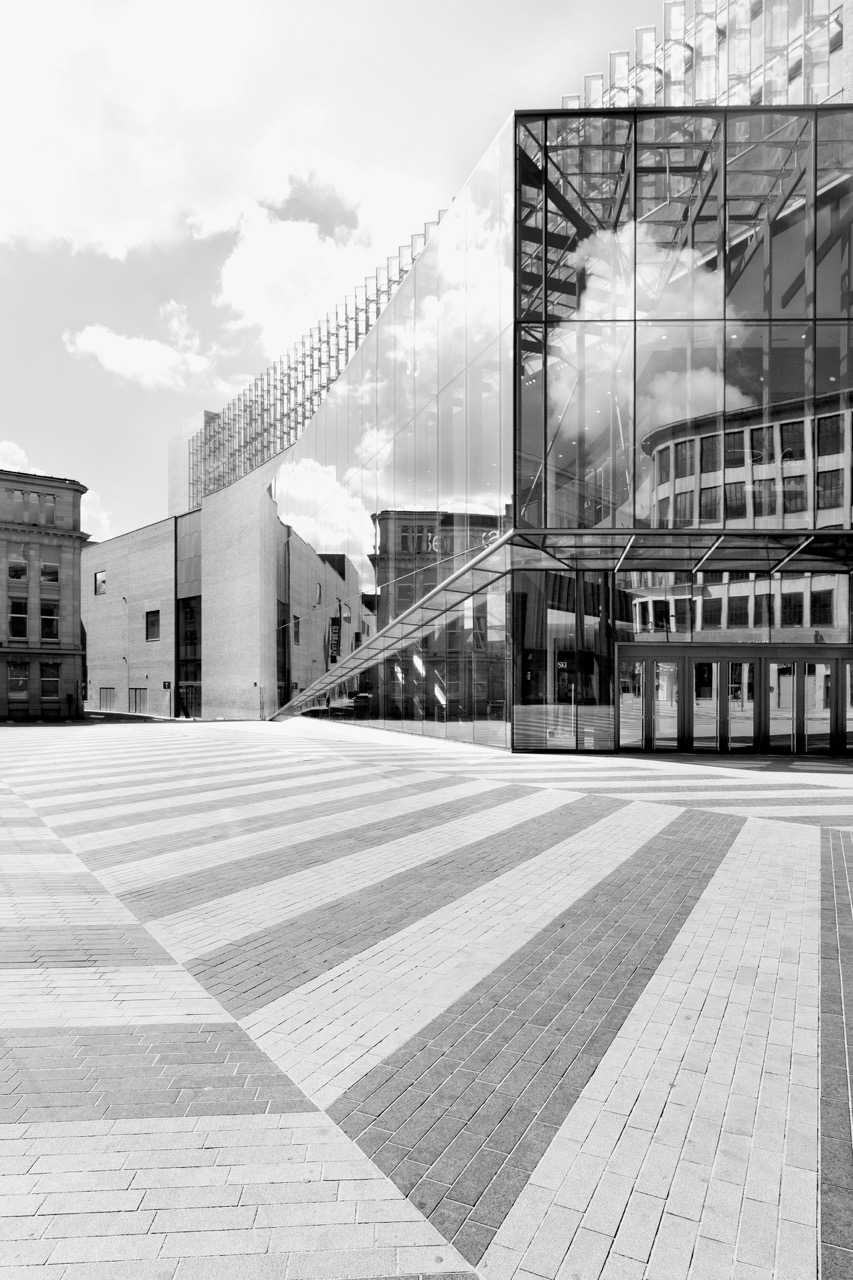
Two iconic shopping centres have recently been completed in Wallonia: Rive Gauche in Charleroi and Médiacité in Liège. Both are situated within a compact urban fabric and close to the city centre. The press, politicians and developers were enthusiastic because they breathed new life into the neighbourhood, but their location raises serious questions about the way urban development is currently being carried out.
The Liège shopping centre Médiacité, which opened in 2009, was built on the industrial brownfield site of Espérance, on the edge of the Longdoz neighbourhood. When construction began, this site was adjacent to the ageing and gradually declining Longdoz shopping arcade. The first discussions between the property developer and the city council took place in 1996. Very soon, the focus shifted to the creation of an internal street designed to link the two shopping centres into a single entity, as this was commercially viable. This could only be achieved by cutting off a section of the street and, consequently, privatising part of the public domain. The project consequently provoked a great deal of opposition. A major access road to the neighbourhood would be lost and buses would have to take a detour. There were alternatives1, but the authorities failed to offer sufficient resistance to the enormous pressure from the developer. Ultimately, this solution was incorporated into the final design. 1 Thérèse Jamin, ‘Le Serpent. Du complexe du Longdoz à la Médiacité’, online newspaper Le Chaînon manquant, 17 May 2009, http://lechainonmanquant.be/en-ville/le-serpent.html.