The competition for the conversion of the Etterbeek municipal workshops has been won by the team comprising V and NO90 (NOTAN Nonante). This renovation of the building will accommodate both the municipal workshops on the ground floor and the ‘Espace Libellule’ community centre on the upper floors. Through six distinct interventions, the architects have focused on improving the liveability and inclusivity of the site by striving to bring coherence to the whole. This project stood out against those of the other competing participants: Aa-ar – Alain Richard’s architecture studio on the one hand, and the joint venture between Mamout and Carton 123 on the other.
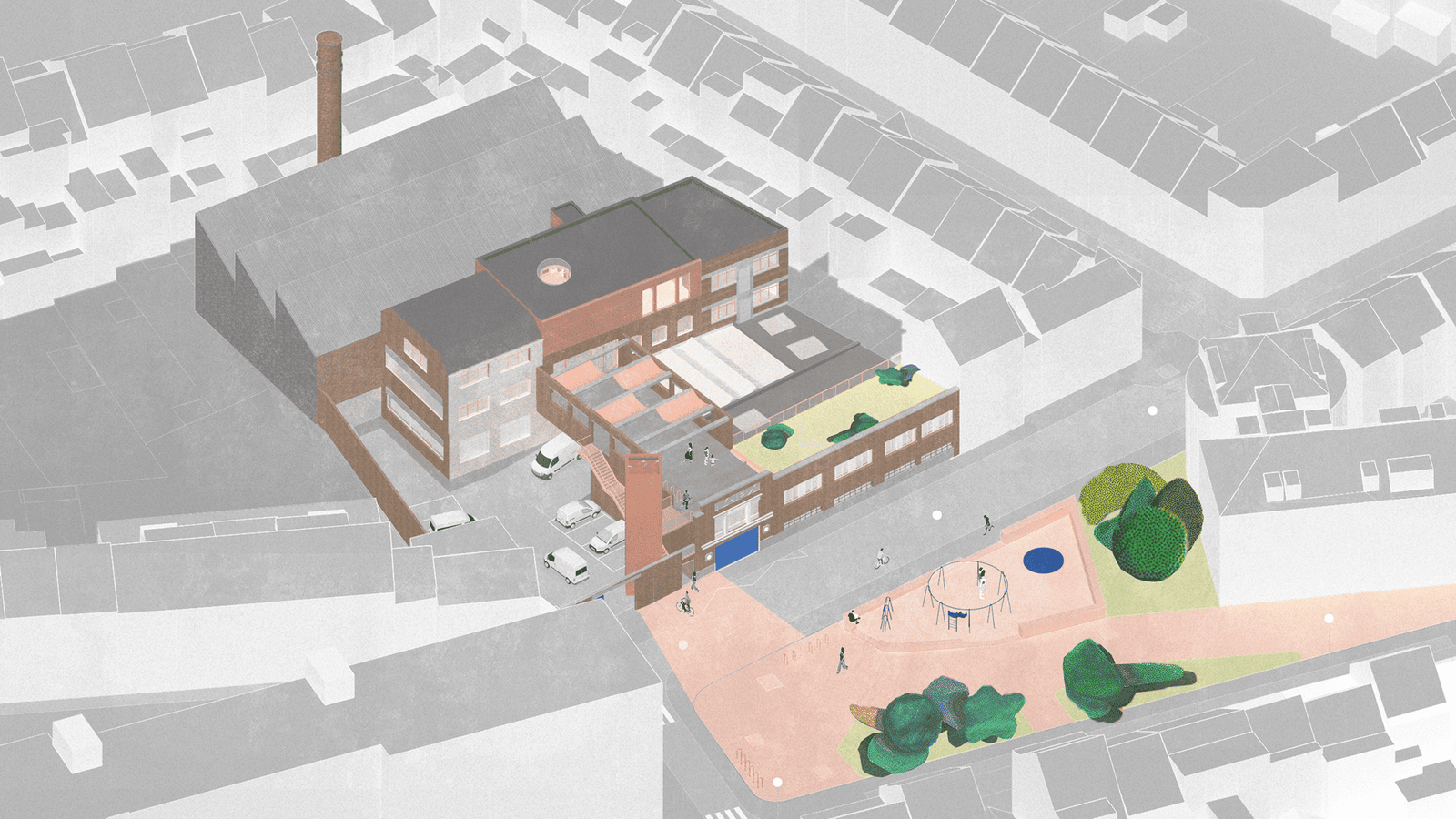
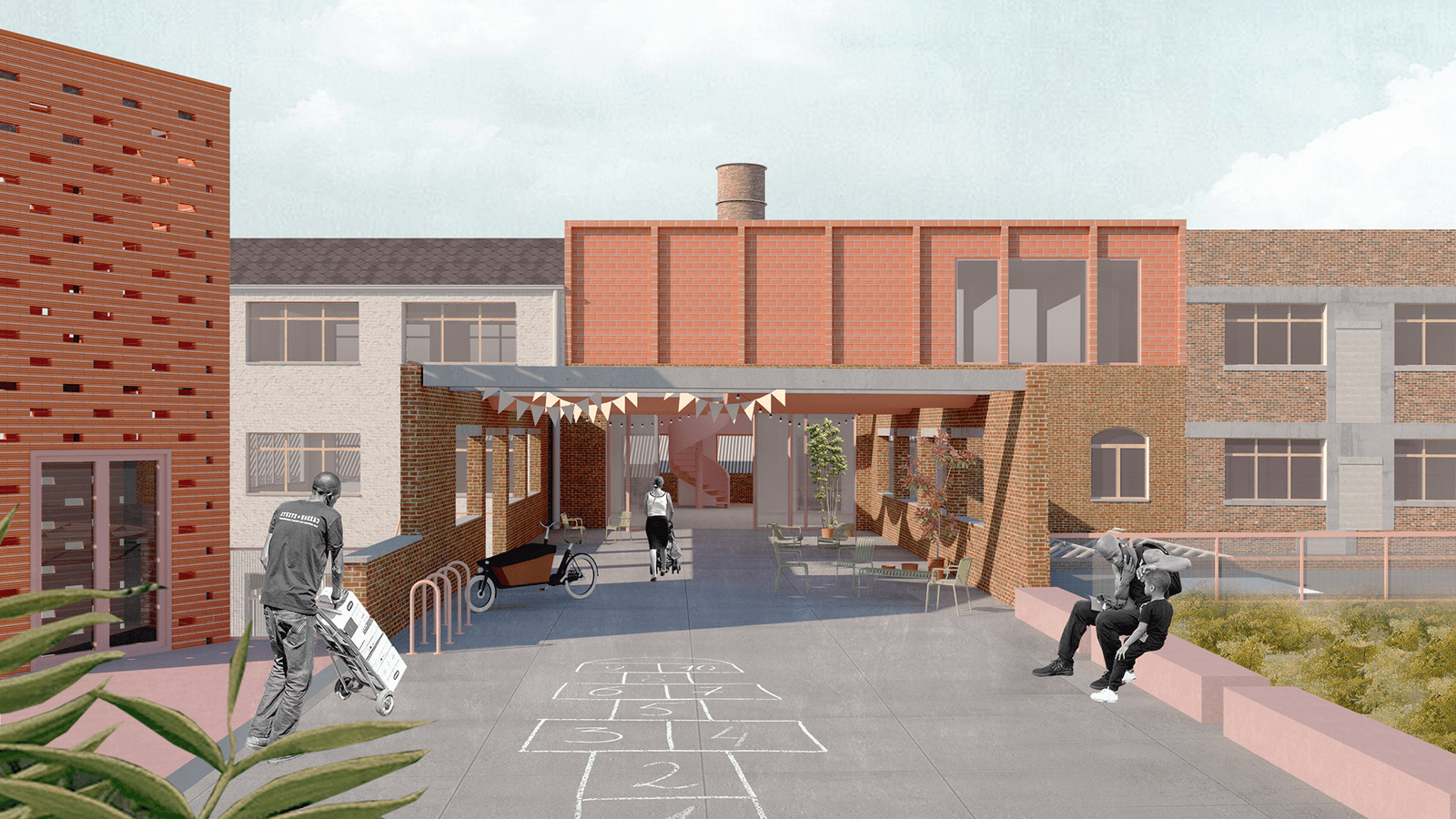
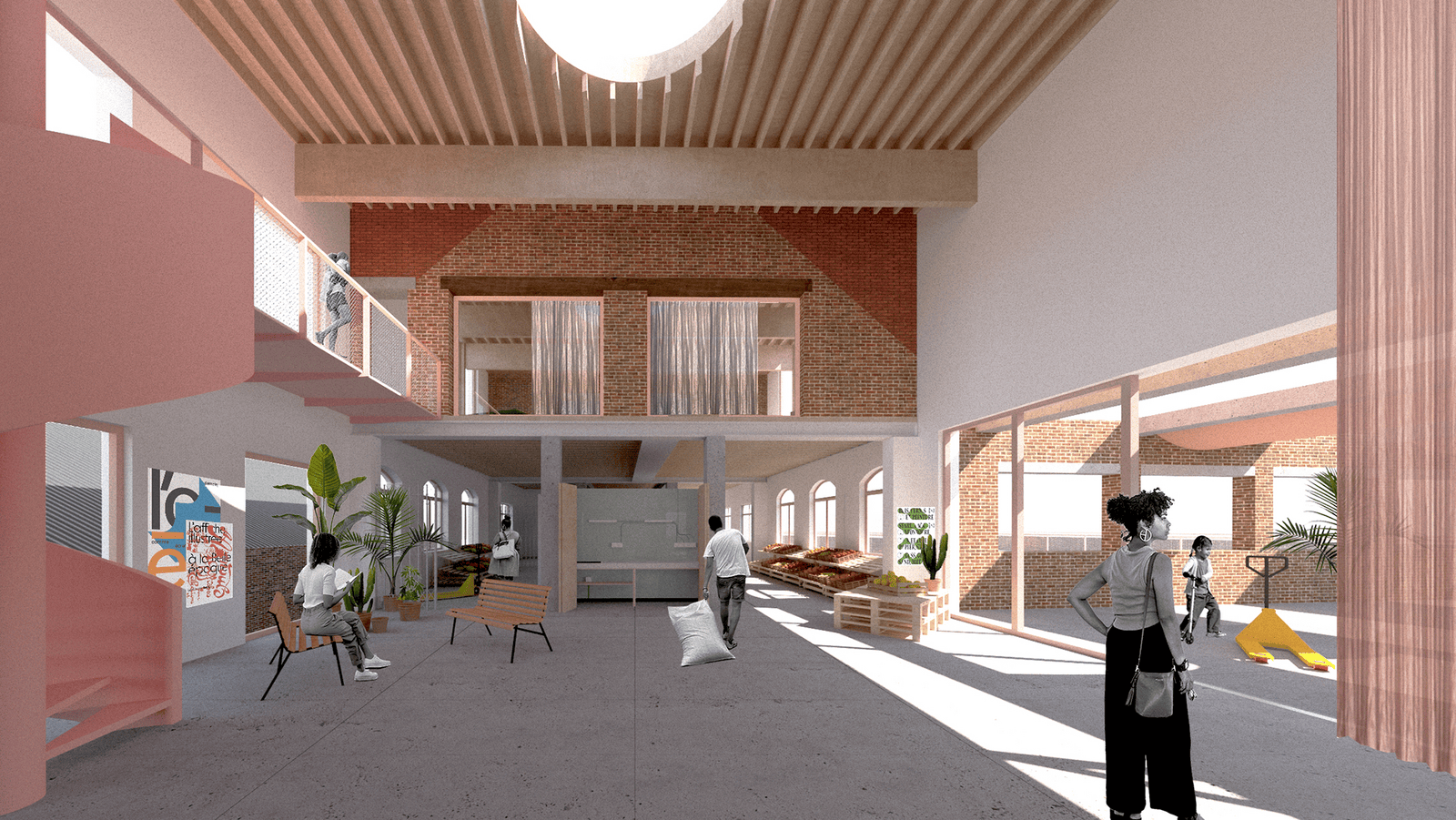
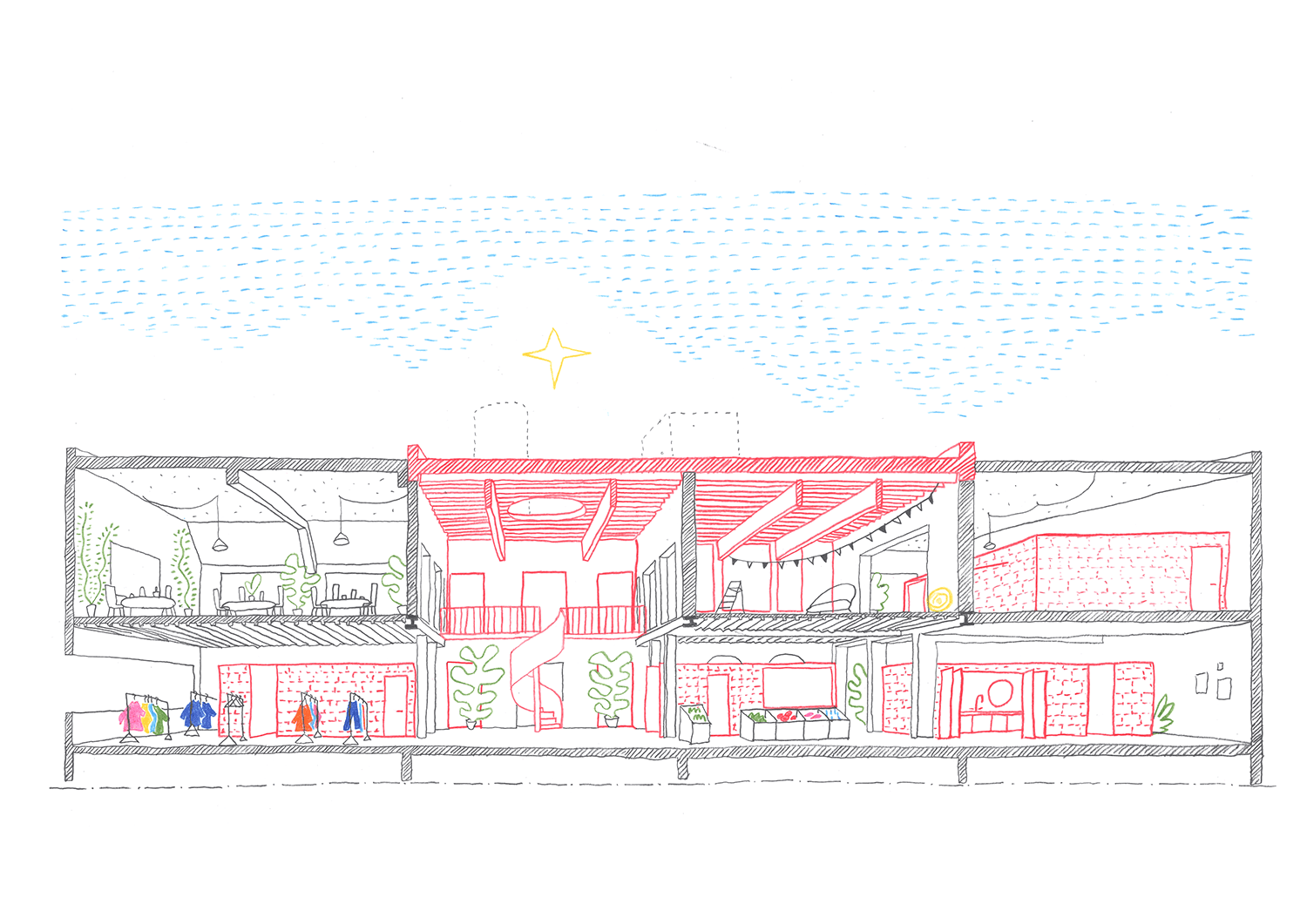
To ensure the independence of the two programmes, two circulation cores have been created around a central atrium. This serves as a meeting point, particularly during public events. From a structural perspective, the interventions are limited to the essentials. All elements that can be preserved remain as they are. Meanwhile, the additions are clearly juxtaposed, thus revealing the building’s successive developments. In the Espace Libellule, a social grocery shop and a second-hand clothes shop are situated on either side of the central foyer, thereby facilitating interaction between their users.
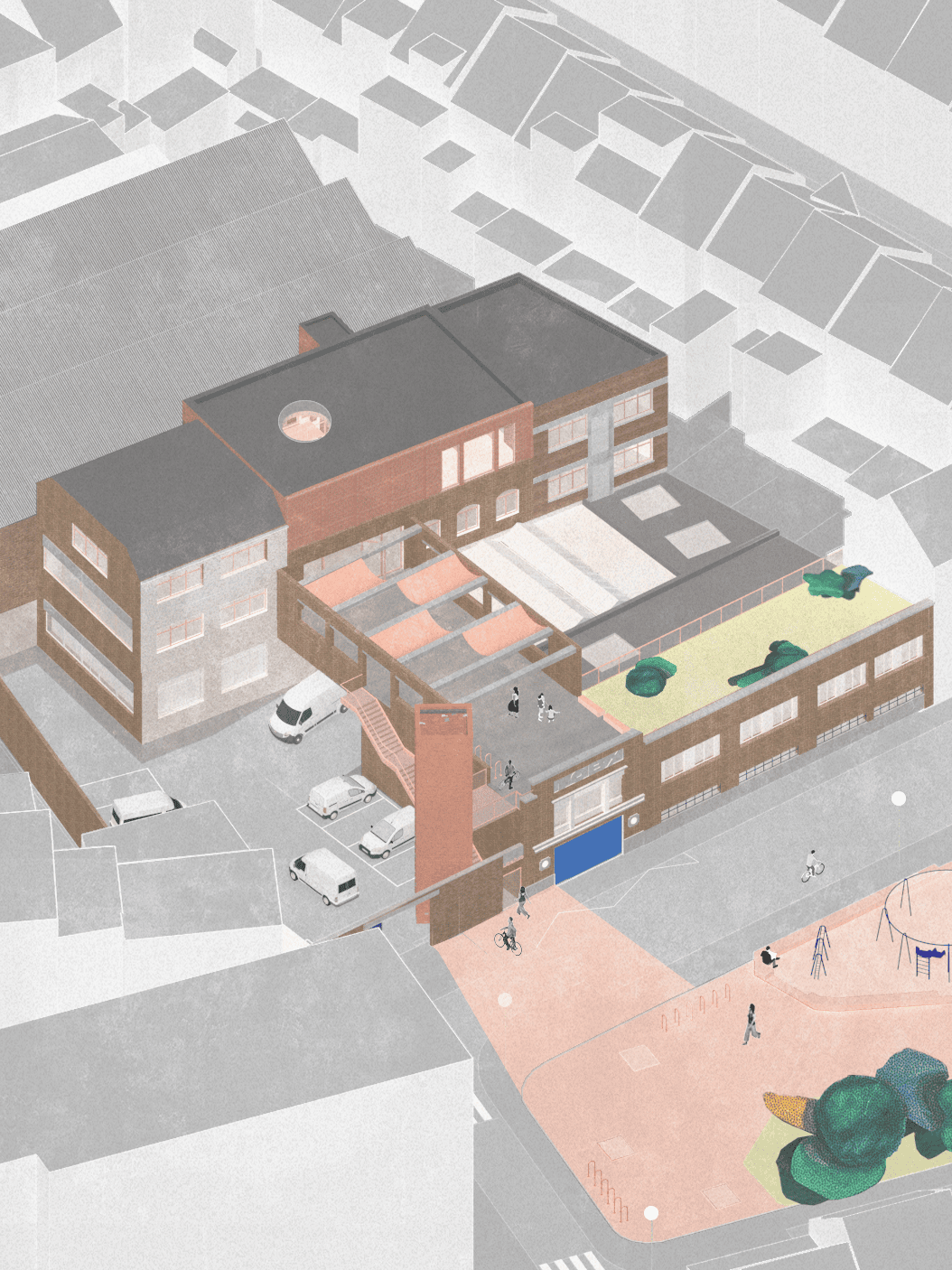
New outdoor public spaces are created, with a terrace and a hanging garden extending across the roof of the workshops. The elevated terrace space is defined by the existing brick walls that have been retained, along with their openings which frame views of the landscape. The garden, which is not accessible, faces the public square built by Grue on the other side of the street.
The project also addresses circulation. A lift tower, described by its designers as resembling a bell tower, signals its public purpose from the street. Connected to it, an external staircase runs along the façade, linking the square with the outdoor public spaces on the roof.
The interventions also involve the creation of multi-purpose spaces, to offer greater opportunities for use. This is the case with the double-height foyer. Meanwhile, the units housing technical services, sanitary facilities and storage spaces take the form of enclosed volumes, thereby freeing up the façades to allow more light into the building.
The most invasive intervention involves removing part of the roof and adding a timber structure to raise it, thereby increasing the ceiling height. The new façade, meanwhile, features a large window, drawing the eye towards the city whilst also inviting anyone to approach it.
Through a judicious use of resources, with targeted interventions designed to be sensible, the project aims for social inclusivity to meet the needs of the community. The result is a composition that emerges from this work on the existing structure, where adding, removing and transforming ultimately come together in a harmonious blend between the preserved industrial past and the new building with its own distinct character.