
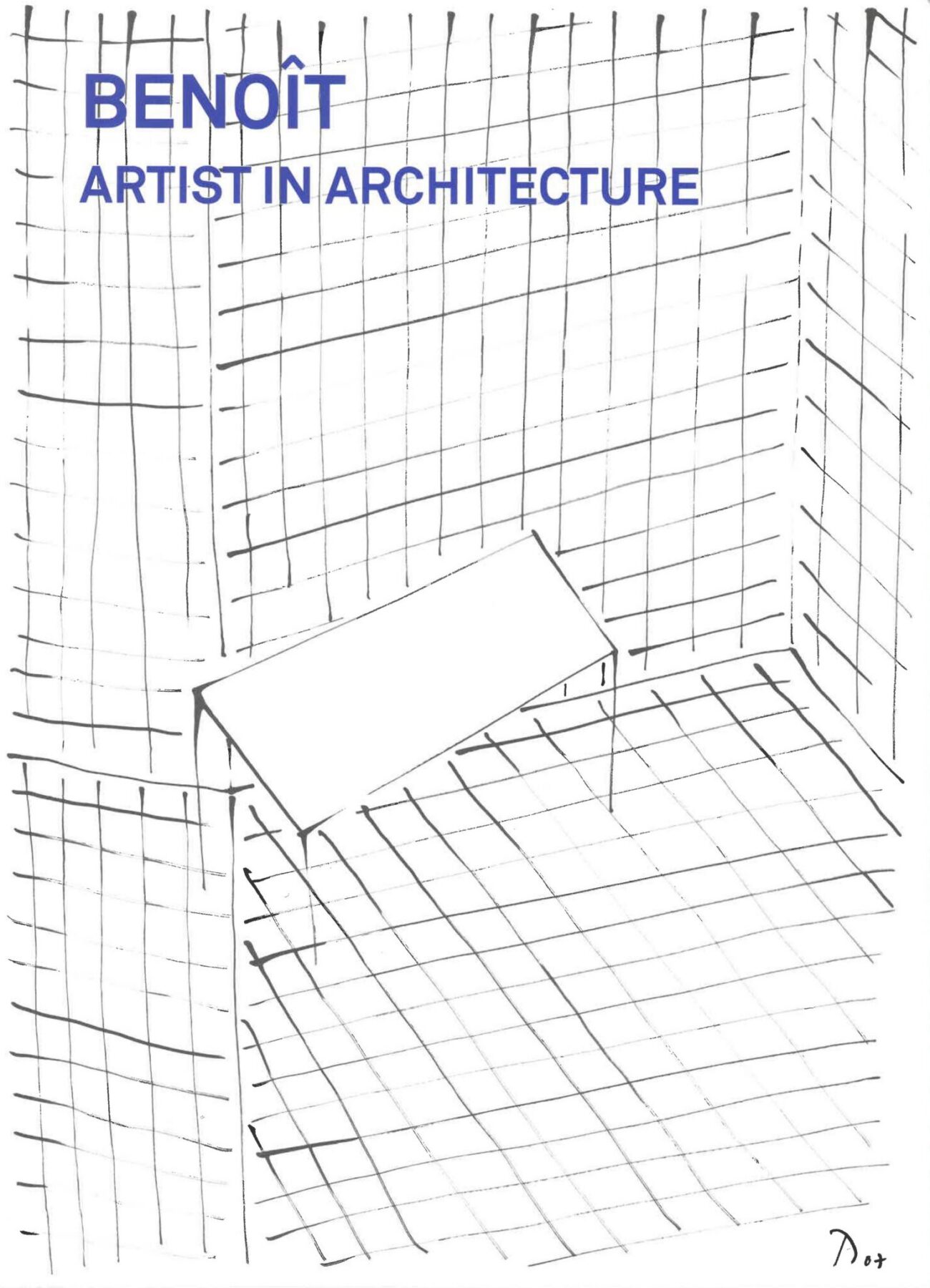
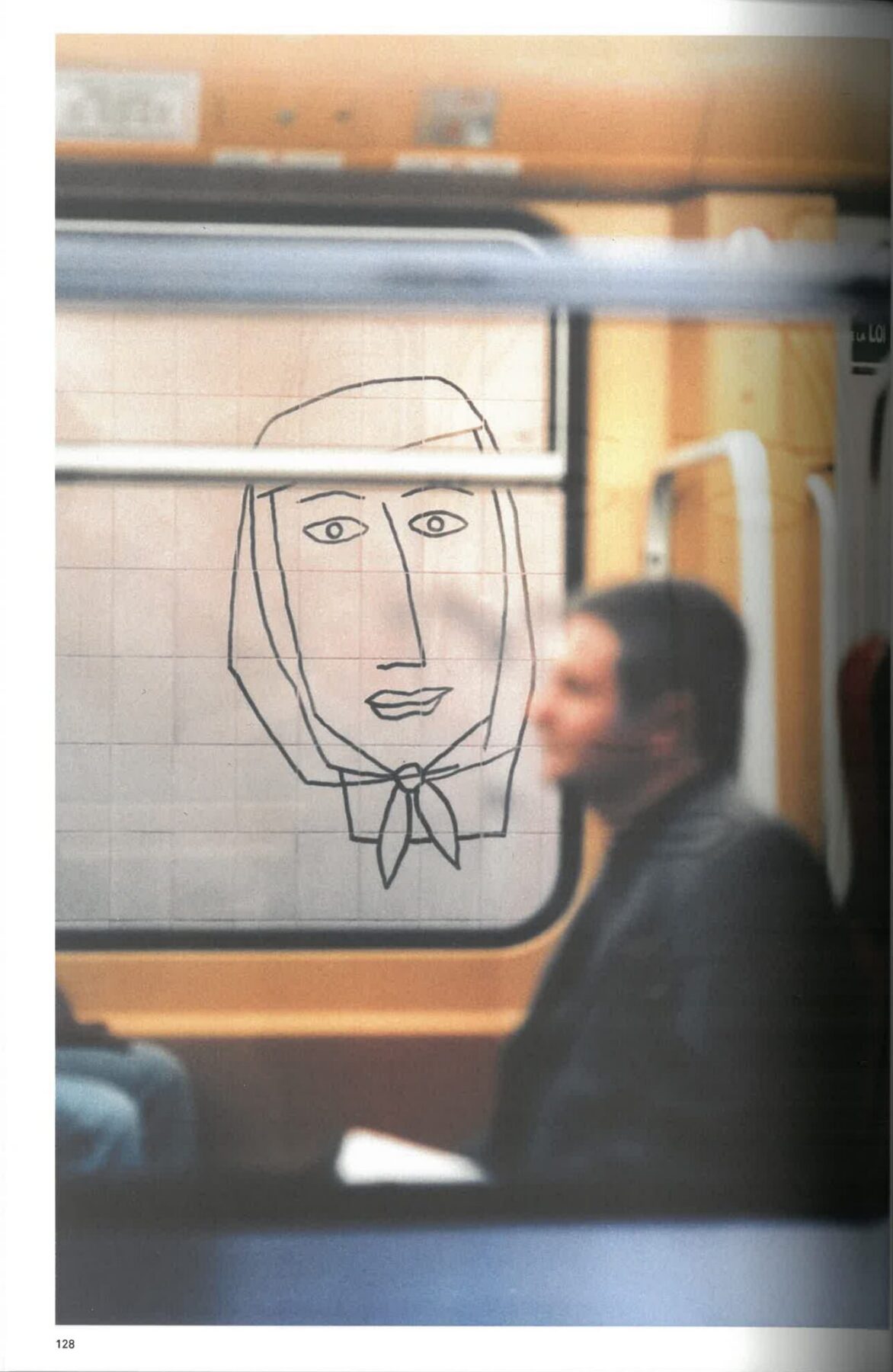
Beneath Rue de la Loi in Brussels, in the Maelbeek metro station, visual artist Benoît van Innis collaborated with architects for the first time in 1995. He remained closely connected to the discipline until his death in 2024. Spanning a period of almost thirty years, Benoît painted, drew, and etched his way into Belgian architectural history. On floors, walls, columns, and windows, he created a body of work that, according to art historian Philip Ursprung, does not follow the logic of painting nor conform to the constraints of architecture1. 1 Benoît – Artist in architecture
In their book, architects An Fonteyne and Elke Schoonen write about the Bruges artist’s interconnection with architecture. A total of nine projects and texts by guest authors introduce us to Benoît’s techniques, his sources of inspiration, creativity, and personality. A football fanatic and a master craftsman. Always curious and eager to engage with the people he met, yet also direct and self-assured. It was not uncommon for his first proposal to hit the mark right away—a rare occurrence in architecture.
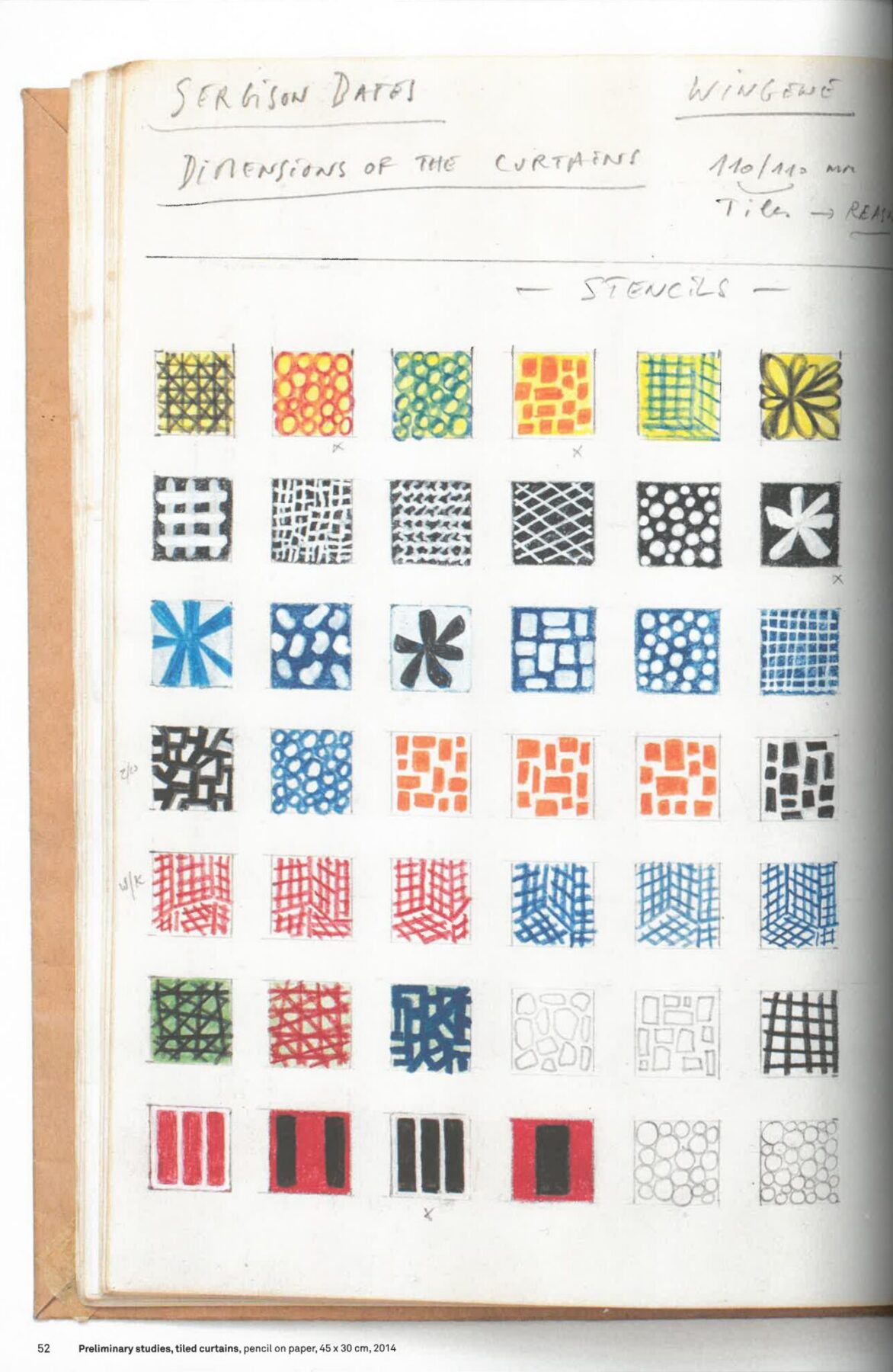
Benoît’s architectural journey began in the Brussels metro and made several stops throughout Belgium. Along the way, he met architects with whom he would collaborate on a single or multiple occasions. With noAarchitecten, Benoît designed wallpaper for the town hall in Menen, painted tiles for Bistro Refter in Bruges and the Hasselt University City Campus, created a facade and colour study for the Plantin-Moretus Museum in Antwerp, and painted murals in the garden of his own studio in Anderlecht. This site does not only house Benoît’s studio but also the office of noAarchitecten; it is the spatial embodiment of the close bond they have built together. Projects with De Smet Vermeulen, Marie-José Van Hee, Robbrecht and Daem, Jo Taillieu / advvt, Kraaijvanger, Sergison Bates, and EM2N also take centre stage in the book.
In A+319 Reclaiming Beauty, Saar Meganck makes a case for the epithet as a critical tool for describing beauty in architecture—a way to express a spatial experience when you have only 26 letters at your disposal. Glaze-gleaming or smile-inducing beauty are a few examples that come to mind when seeing Benoît’s brushstrokes on Portuguese tiles.
The authors did not yet have the epithet as a tool when writing this book, but with powerful, concise sentences—rich in adjectives and sometimes even composed entirely of them—they do paint vivid atmospheric pictures of Benoît’s work. This gives the reader a first impression of what it feels like to enter these spaces, without rendering an actual visit unnecessary. Since most of the projects are open to the public, the book also serves as an art guide for day trips to places like Brussels, Antwerp, or Bruges.
In addition to the text, the book is richly illustrated with images. Early design sketches, experiments, paintings, and cartoons are given just as much space as photographs of the completed building projects. This opens up a humorous and colourful world—sometimes figurative, sometimes abstract, but always unmistakably Benoît.
Benoît — Artist in Architecture, An Fonteyne, Elke Schoonen, Scheidegger & Spiess, 2026. ISBN: 9783039423668. Also available in Dutch and French.
