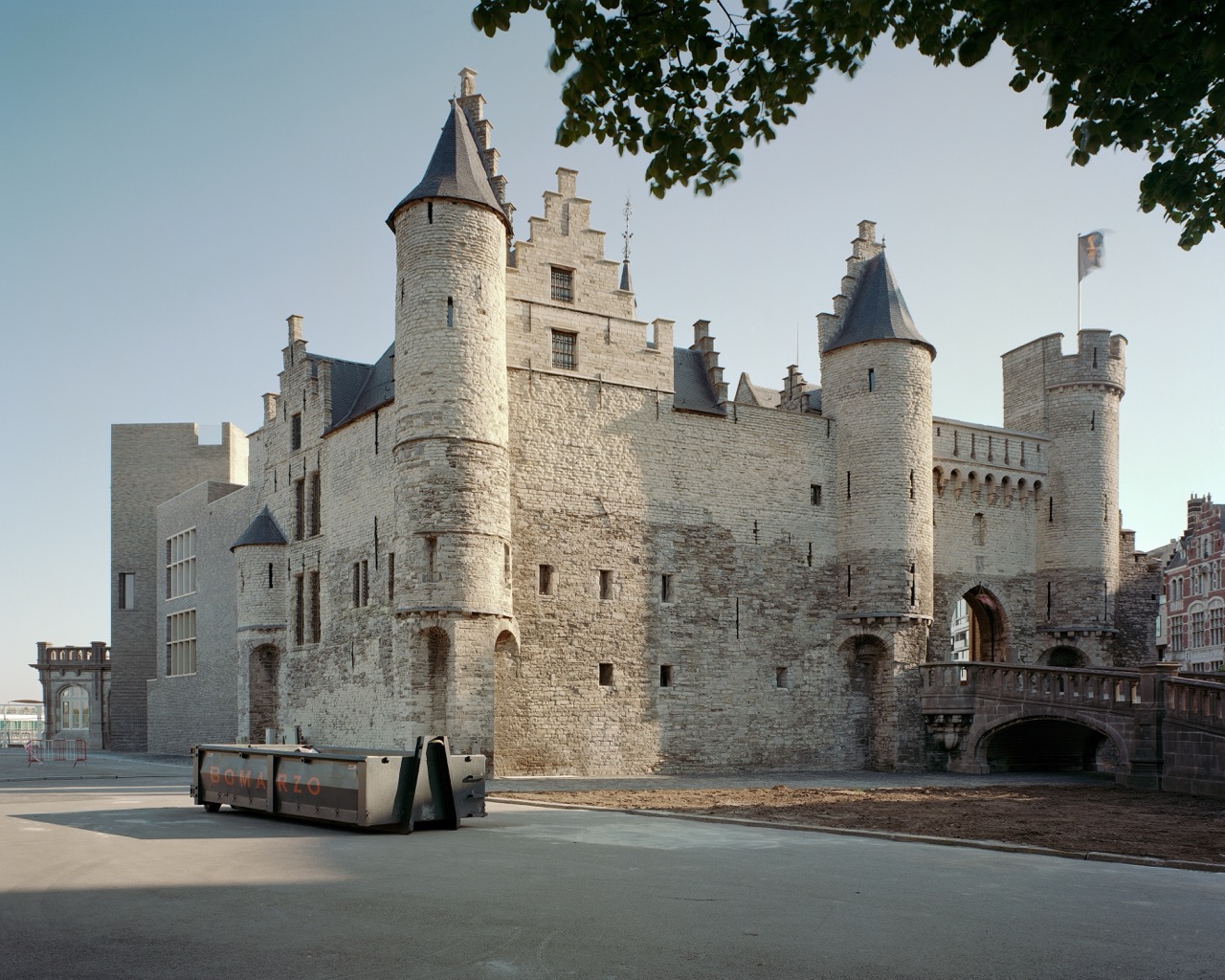
When it opened in 2022, the Steen in Antwerp, renovated by NoAarchitecten into a visitor centre and cruise terminal, caused quite a stir. Since then, things have calmed down. Little by little, it has become clear that this project offers an inspiring and thought-provoking vision of how we approach monuments.
The Steen was built in the 8th century to serve as a fortified gate in the city walls of Antwerp. It was subsequently converted and enlarged on numerous occasions, becoming a prison, a sawmill and barracks, among other things. It was not until the 19th century that the building’s historical significance was rediscovered. Around 1860, the city restored it to give it the appearance of a stronghold as it was imagined to have been in the past. A museum was established there. Shortly afterwards, in 1877, the quays of the Scheldt were rectified. The Steen then found itself isolated, obstructing the pedestrian terraces that were supposed to re-establish the connection between the city and the river. In 1883, architect Ferdinand Truyman came up with an elegant solution to connect the north and south terraces. From the old entrance gate, he had a ramp built with a wide turn passing under the new wing to reach the north terrace. A few hundred metres upstream, the south terrace was also given a similar slope. The Steen square was then located between the two inclined planes. Ferdinand Truyman not only saved the monument, but also turned it into a tourist attraction. Unfortunately, in 1950, part of his project had to make way for a relatively austere naval museum. This episode sounded the death knell for the unity of the complex.