
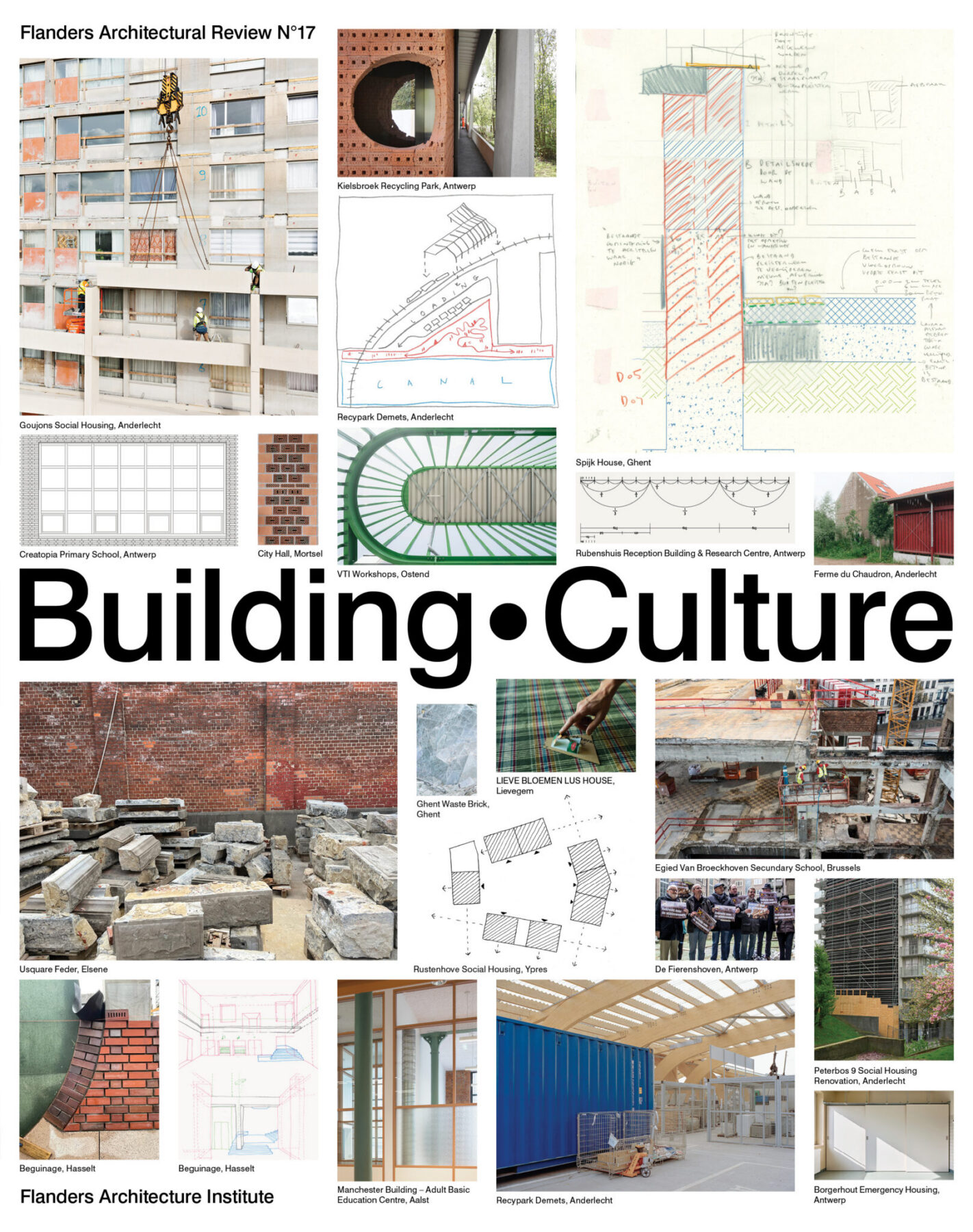
The seventeenth Vlaamse Architectuurboek review is being published at a difficult time: whilst Dennis Pohl, in a remarkable contribution, analyses how the autonomous architectural culture in Flanders has led to a Baukultur that recognises architecture as a social necessity, the VAi – of which he is the director – has been hit hard by severe budget cuts. Although these cuts had not yet been announced whilst the review was in the making, the tone remains sombre, with only a few rays of hope.
The VAi’s architectural reviews aim to take stock of architectural output in Flanders and, on this basis, to identify underlying trends and insights. In the previous review, for instance, the precarious state of the profession was strongly highlighted. At least one contribution, by a group of young authors, indicates that the Flemish Council of the Order is gradually taking this on board, although there is still a long way to go.
In the introduction, however, Petrus Kemme and Dennis Pohl argue that it is becoming increasingly apparent that the autonomy of the discipline is a fiction: friction with the context exerts too strong an influence on production, and this influence is growing. “Architecture [is] less the realisation of singular visions than the temporary stabilisation of competing forces.” The jury therefore engaged in heated discussions about architectural quality today. The eighteen critical contributions to the review thus reflect at least as much on processes and working frameworks as on the buildings themselves.
Some essays address familiar themes, such as the stumbling blocks on the path to innovative or circular building practices. Others deal with specific contexts or programmes, such as schools, social housing or the question of what ‘village-style’ architecture might be. A number of noteworthy contributions focus on the institutional context of the Baukultur. Maarten Van Acker highlights the challenges facing an institution such as the Government Architect, whilst Dennis Pohl examines the history of architectural culture and Baukultur in Flanders against the backdrop of international developments. Hulya Ertas reflects on the place and role of architectural exhibitions within a turbulent political and social context.
Then, of course, there are the projects. Most of these have already been discussed in A+. Eight are highlighted here because they touch on several issues that the authors consider significant. However, ‘U-square’ by evr-architecten, BC Architects & Studies, and Callebaut Architecten was the only project to receive unanimous approval from all the jury members. In addition, 55 other projects are described (sometimes all too) briefly, often as part of a critical examination of a specific theme. There is hardly any actual critique of the projects themselves. In light of the repeated, impassioned calls for architectural criticism, this is something of a missed opportunity. Nevertheless, this review convincingly demonstrates that architectural practice in Flanders today is at a turning point, given all the social and ecological challenges that we are facing.
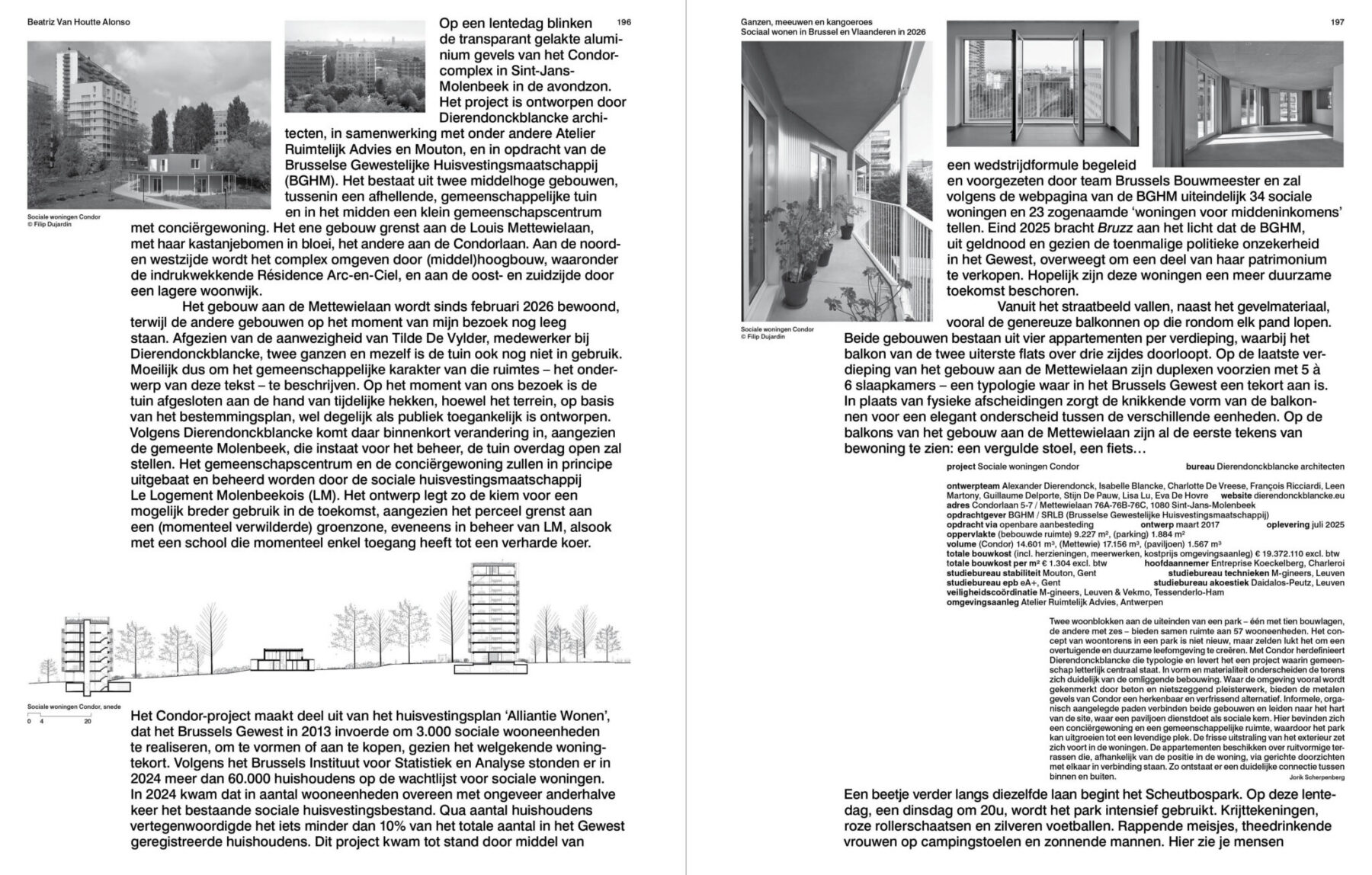
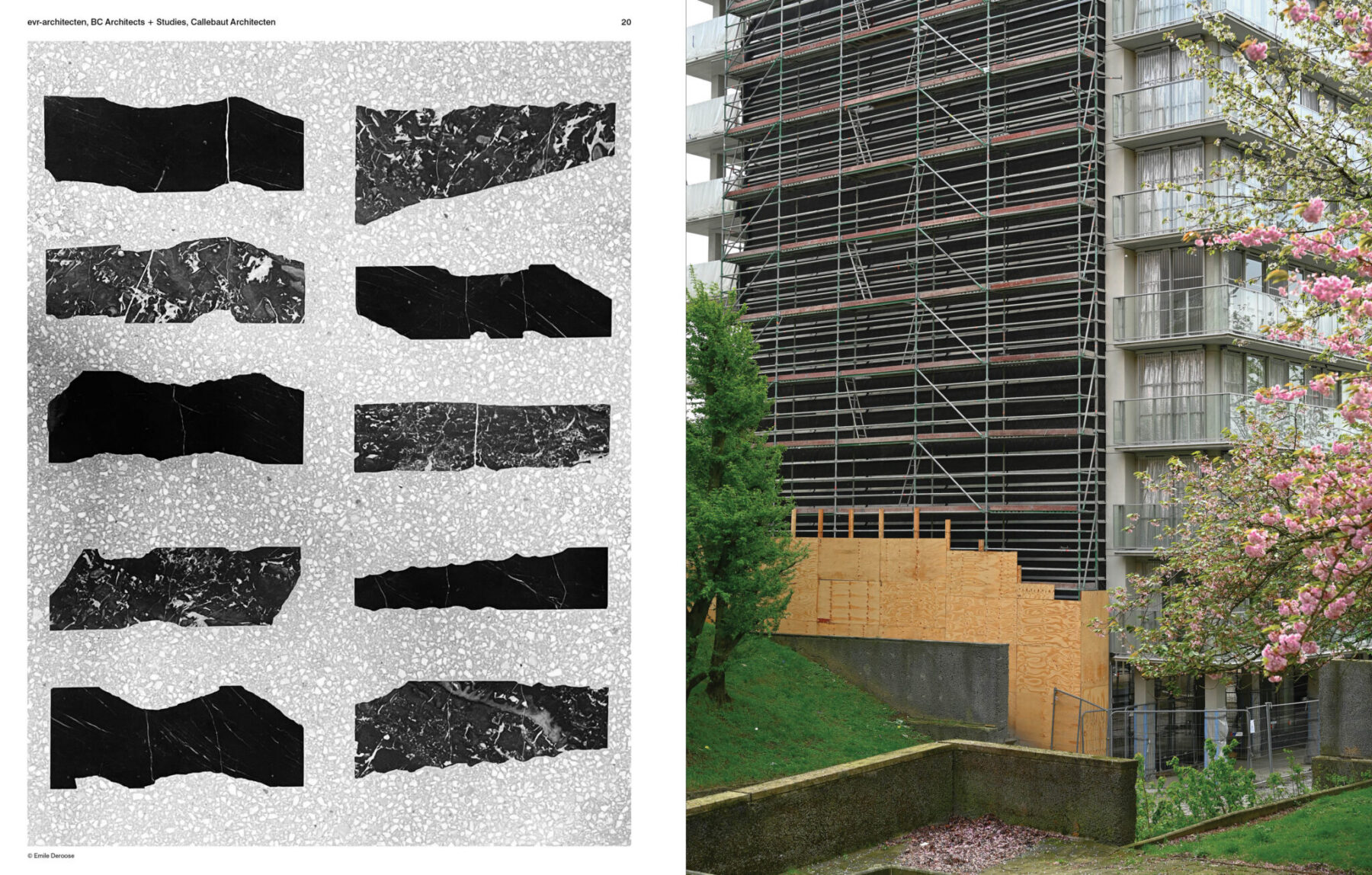
Vlaamse Architectuurboek n°17 Culture • Building, edited by VAi, Antwerp, 2026. ISBN 978 94 9256 744 4.
