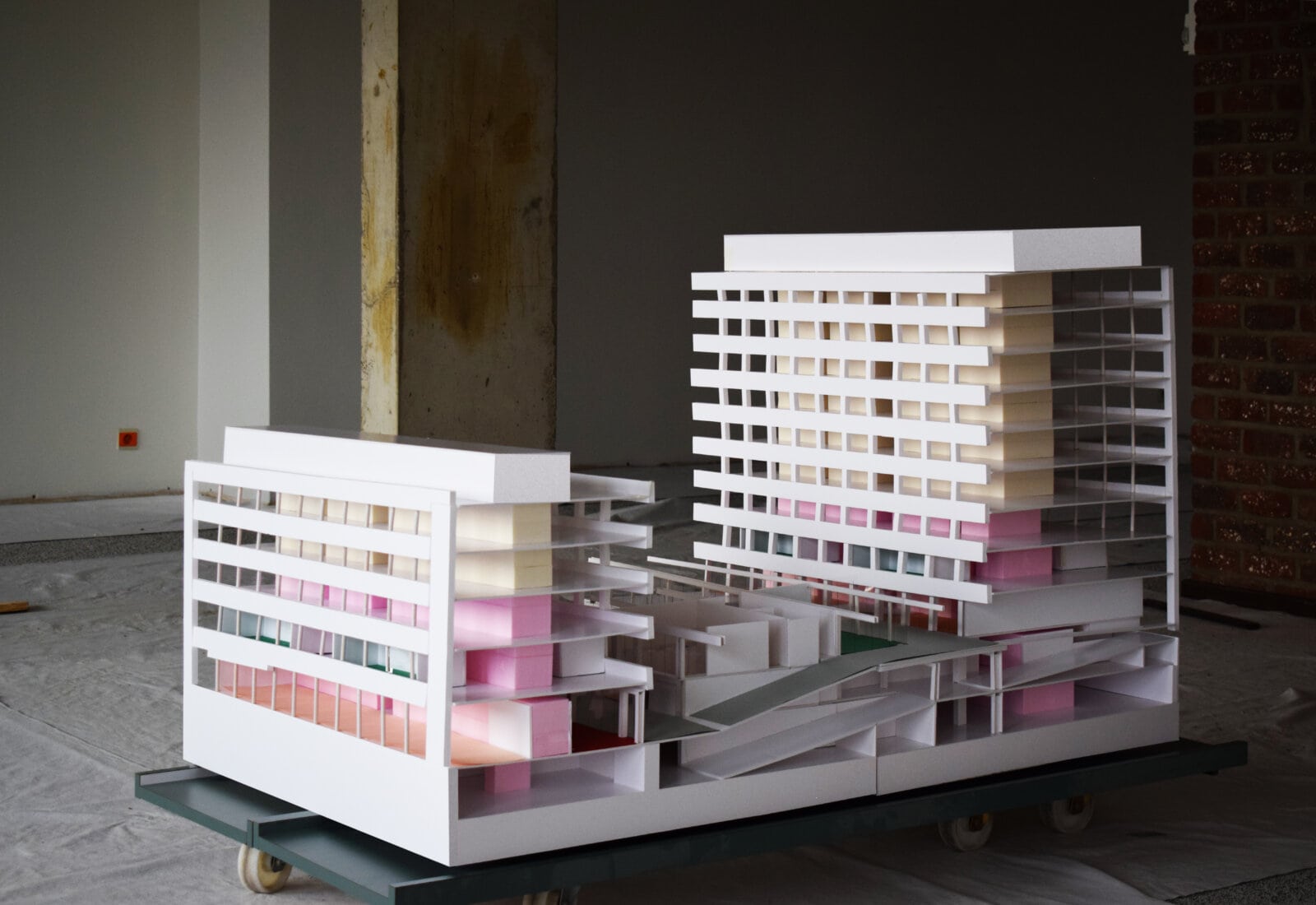
As key players in Brussels’ built environment, the project leaders—SLRB, talent.brussels and SASLS—are aiming for a design for their new headquarters that reflects their architectural priorities. The two existing buildings, situated on a plot bordering Avenue de la Toison d’Or on one side and Rue Jourdan on the other, are located at the heart of bustling Brussels, not far from the shopping district of Avenue Louise. This central location implies a high building density, which the team comprising AgwA and Matador has used to highlight the site’s qualities and seize the opportunity to create a project committed to issues of reuse. The other participants in the competition were Baukunst, DXA, Low architecten and Marger Nielsen.
The guiding principle is not to destroy but to deconstruct, making use of what already exists by ‘reworking’ it. In this way, we deconstruct not only the building but also the preconceived notion that renovation necessarily entails demolition. Here, the aim is to reuse as many elements as possible: doors, window frames, partitions, etc. In Belgium, the country where the Rotor collective was founded—a pioneer of reuse on the international stage—it remains difficult, yet essential, to continue the work they began. This approach, which listens to what is already there, is today the ‘foundation of a new aesthetic’ according to Matador. We can therefore bring out the qualities of a site simply by weaving connections between the existing elements. The project thus seeks to connect the two existing buildings, which already possess a substantial formal and spatial identity, by reinforcing this density.
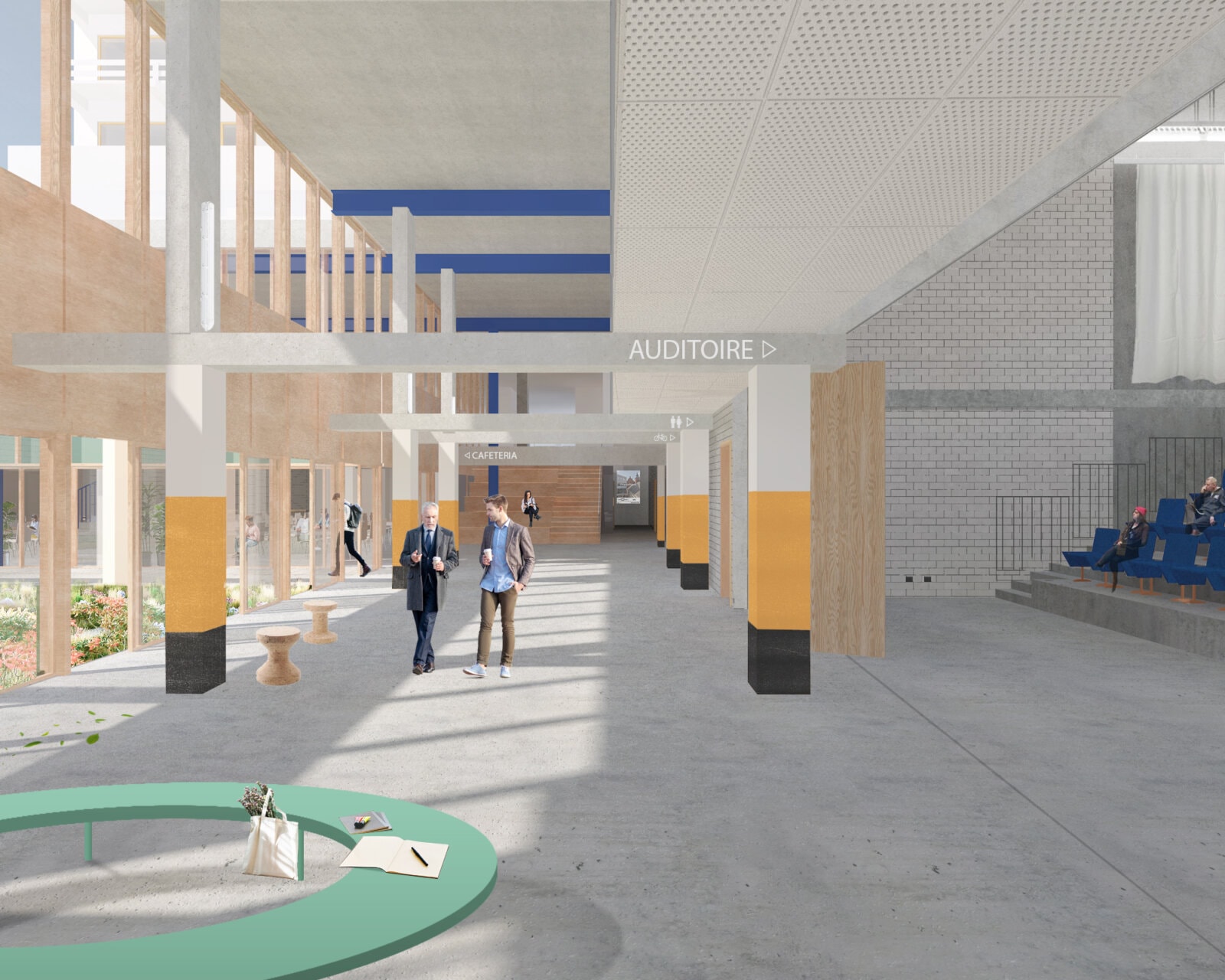
The intervention is mainly situated in the plinth that connects the two buildings and creates a communal space. This plinth houses the communal spaces and retains the existing structure. However, this has been reworked by removing certain slabs to create a double-height gallery, necessary for the connection between the two buildings. This approach by the collective continues onto the roof of this new plinth. A proposal for a shared outdoor terrace provides a passageway between the two buildings and, more broadly, an opening between Avenue de la Toison d’Or and Rue Jourdan.
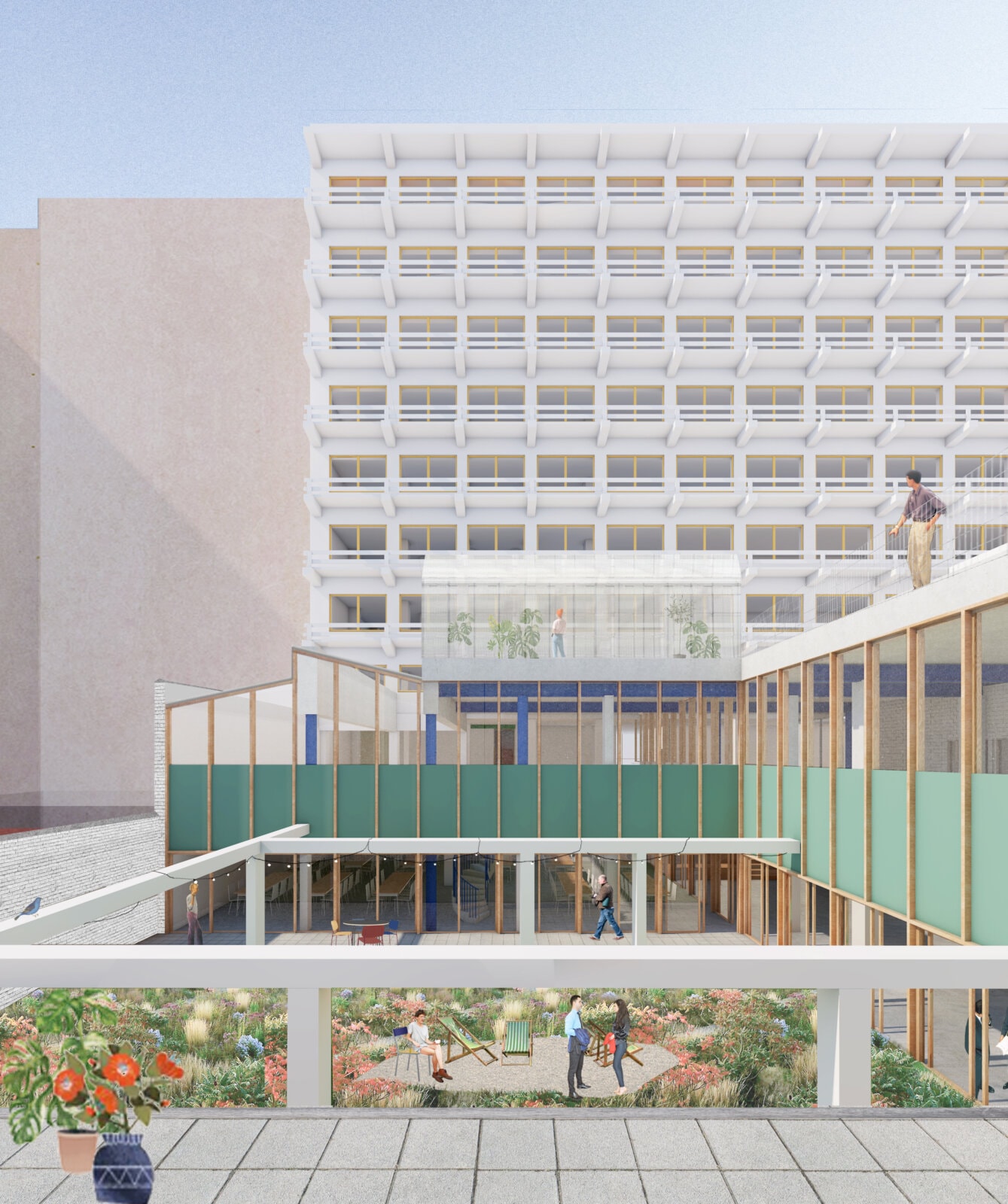
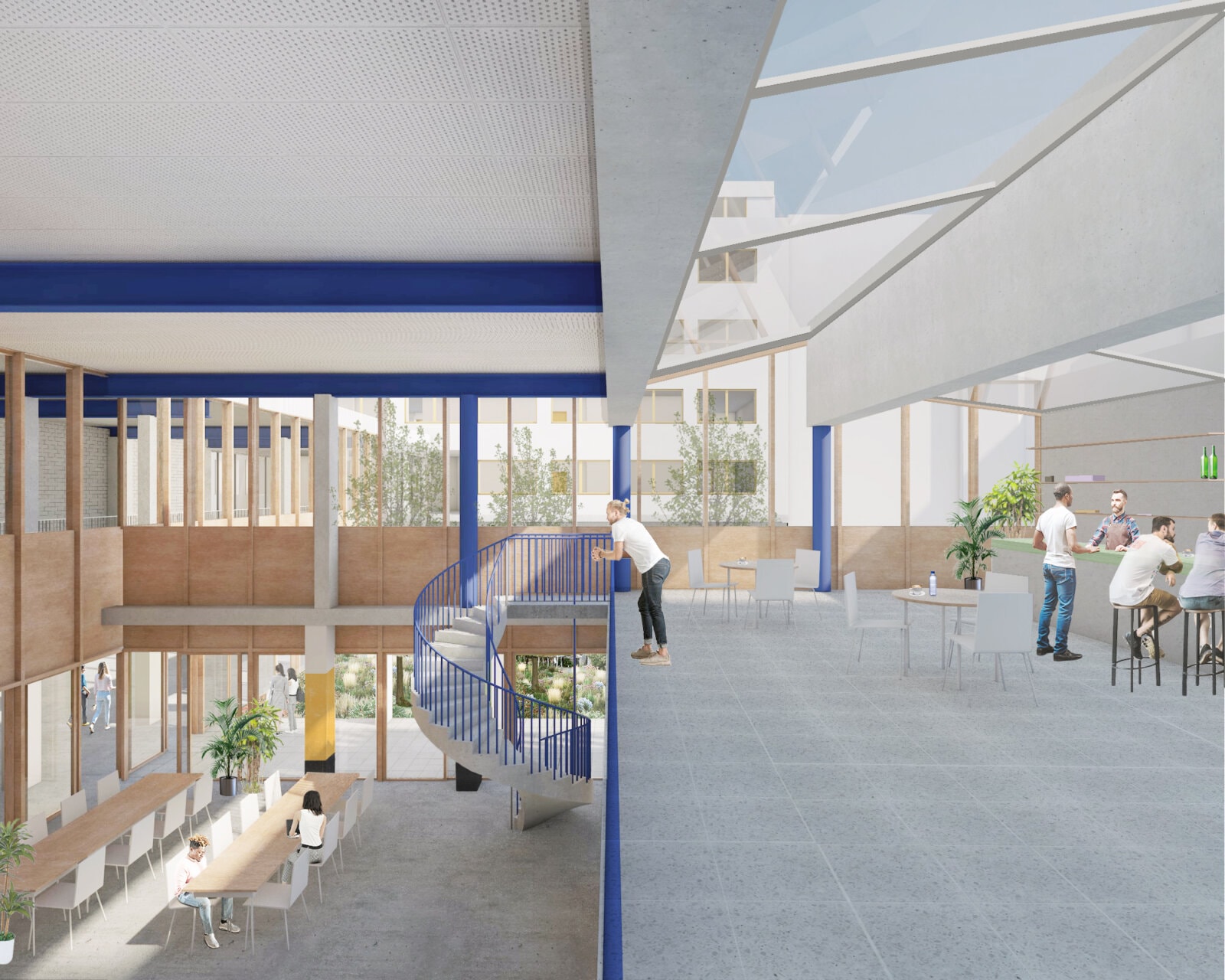
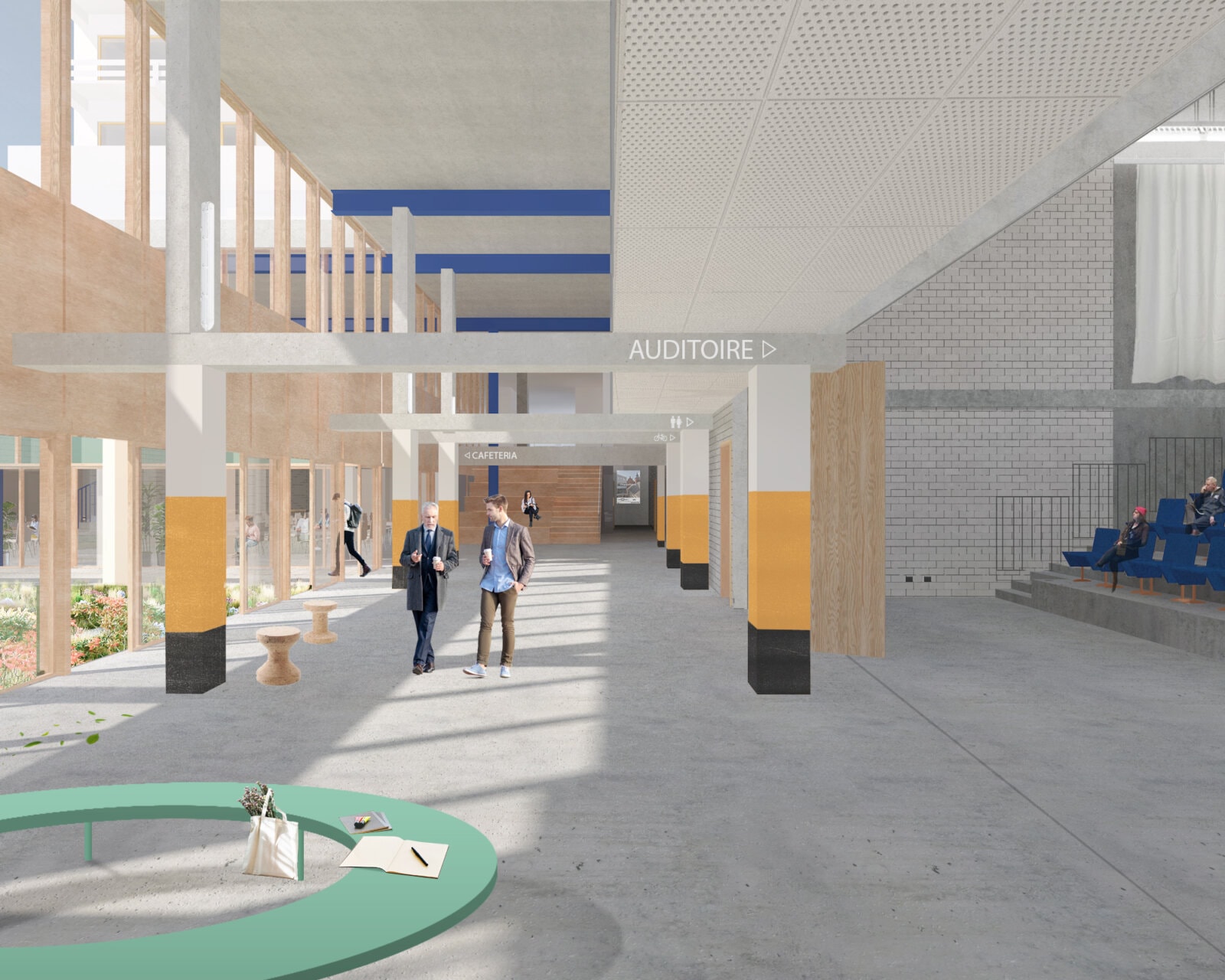
On the upper floors, the project operates by subtraction. The existing structure is to be retained, with the surplus removed to create greater openness through large open-plan areas. By simply removing or relocating certain partitions, permeability is achieved through new openings onto circulation spaces. Within this grid of columns, a combination of ‘architectural spaces’ finds its place within a single form. Among them are gardens, patios, a cafeteria, an auditorium, a HUB, an exhibition hall, etc., each space asserting its own identity. An open courtyard opening onto the circulation spaces helps to open up and illuminate the passageways.
As construction of the Charleroi Exhibition Centre nears completion (designed by Agwa and de vylder vinck taillieu), the team from AgwA and Matador echoes this project here, reusing the same principles of preserving the existing structure to create a space that offers multiple potential uses and invites people to make it their own. The team demonstrates that by subtracting—in other words, by doing less—one can offer more.