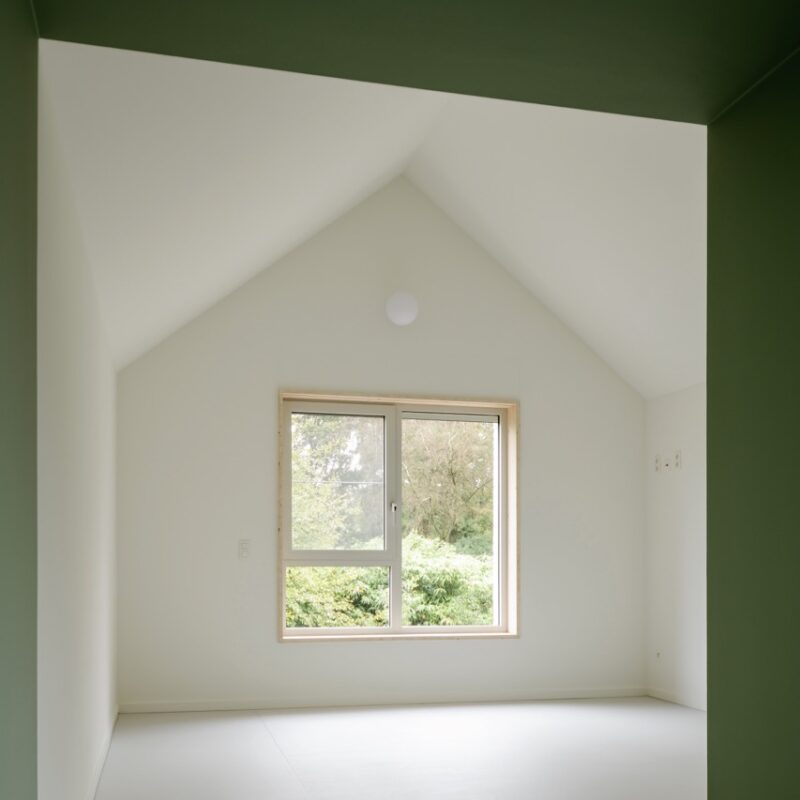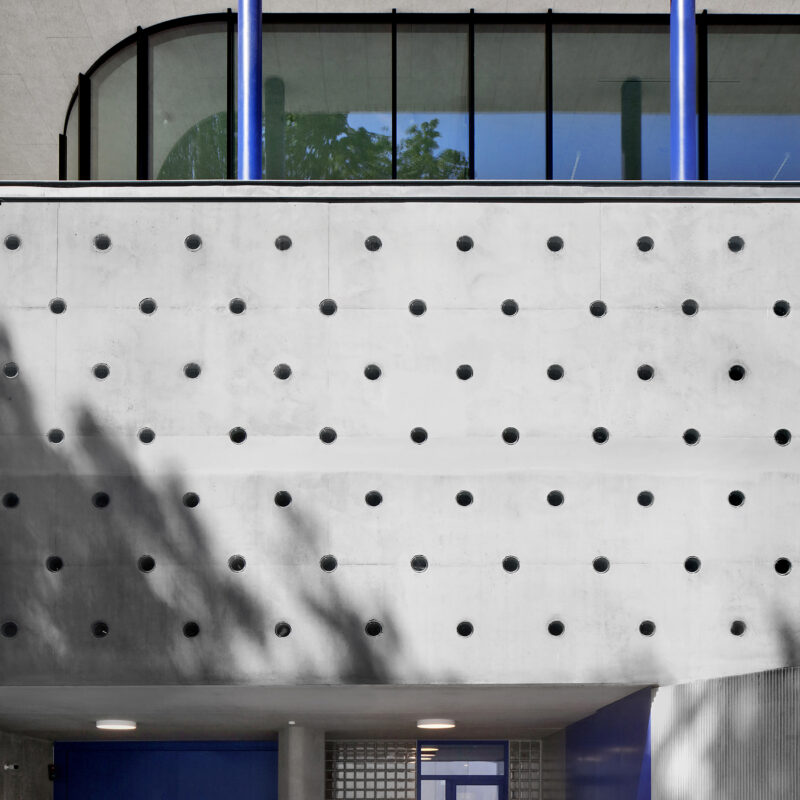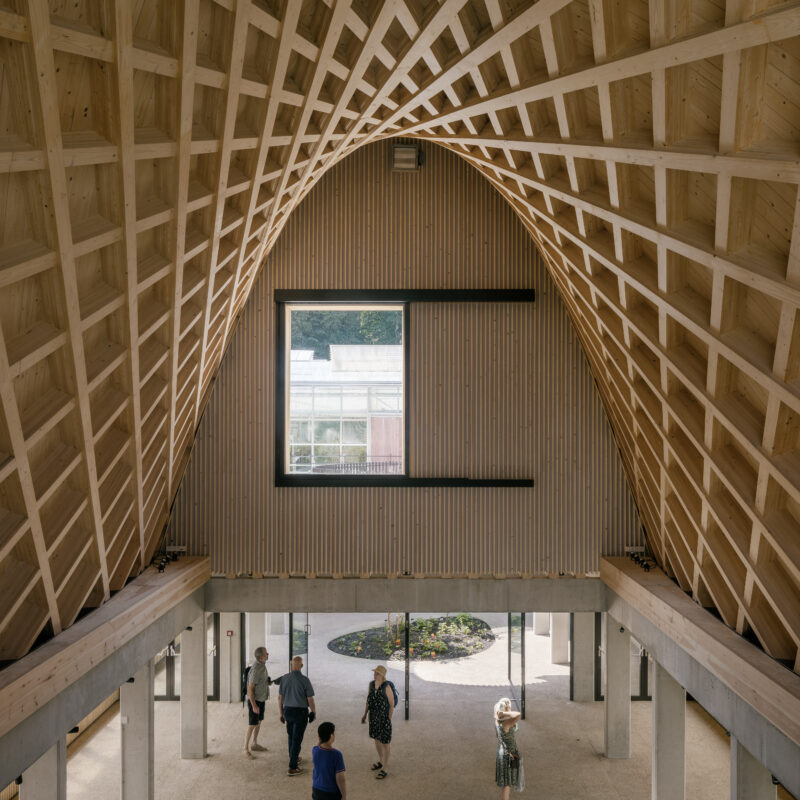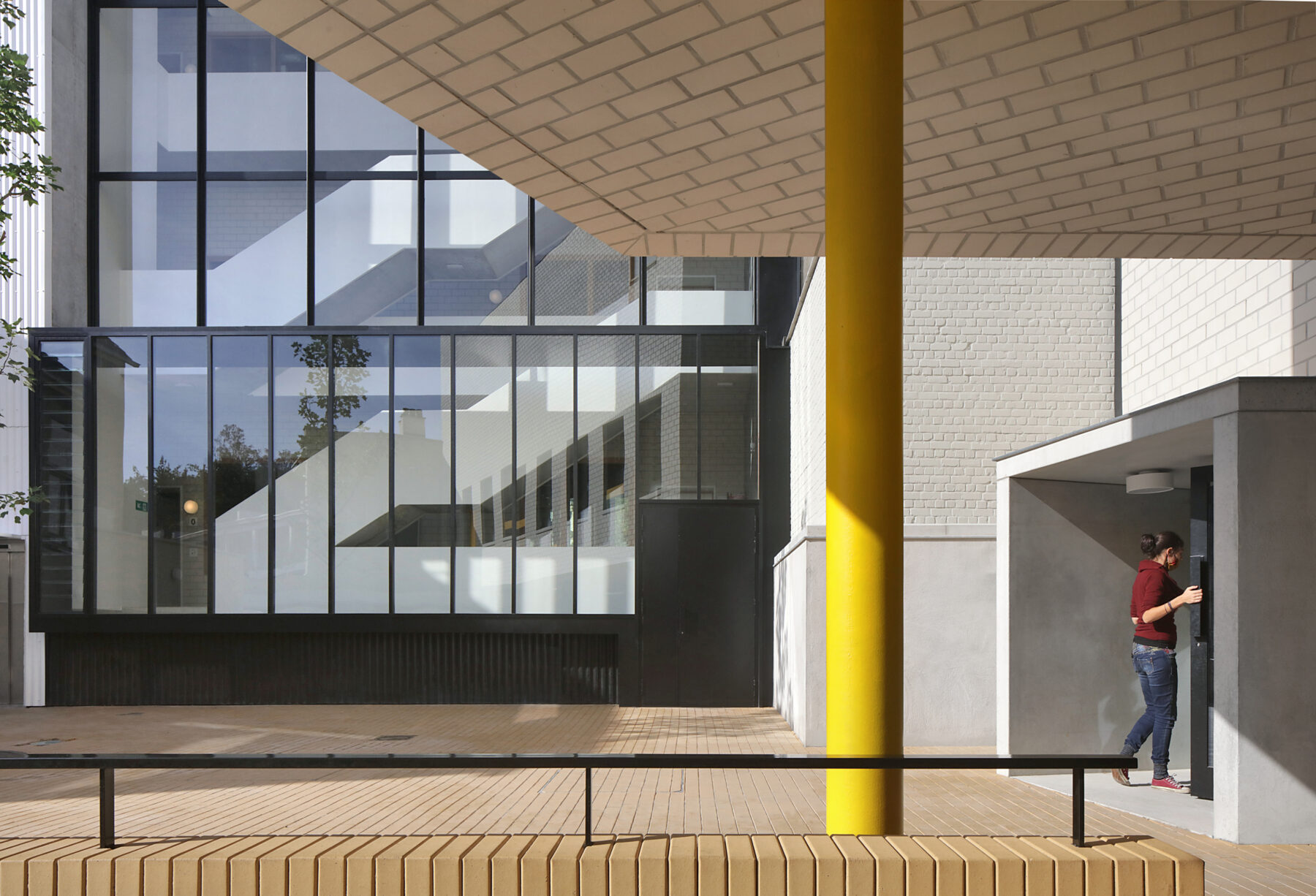
URA built a school at a difficult spot in Laken which for this very reason fires the imagination. In the corner of a triangular plot, the building is a twofold entity, like a series of spaces that stand alone yet belong together.
For various reasons – be it acoustics, accessibility or screening – the relation of a school to the surrounding buildings demands more attention than in other projects. Very often, especially in densely built-up, urbanized countries like Belgium, the context dominates other aspects of the programme and composition. The kind of freedom available to Alison and Peter Smithson when they designed the Hunstanton School in 1949, on a large open site in Norwich, would count as an exceptional privilege in 2023. In the competition report at the time, they wrote that the form of the school was dictated by ‘a close study of educational needs and purely formal requirements rather than by precedent’. The ability, or at least the willingness, to work from a blank sheet (both literally and figuratively) typifies the post-World War II period. Today, every sheet of paper that lands on a desk in an architecture office is already at least half-filled.