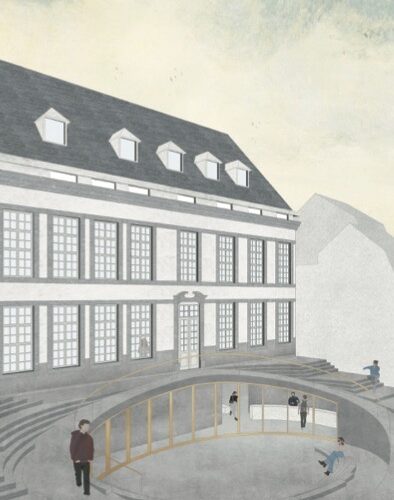
In their final-year project, Marie-Sophie Vindevogel and Arnaud Vander Donckt, Master’s students at KU Leuven, investigated architecture and urban planning by and for homeless people in Brussels. Working closely with local organisations, they examined the spatial implications of living on the streets, guided by a seemingly simple question: how does one live without a home?
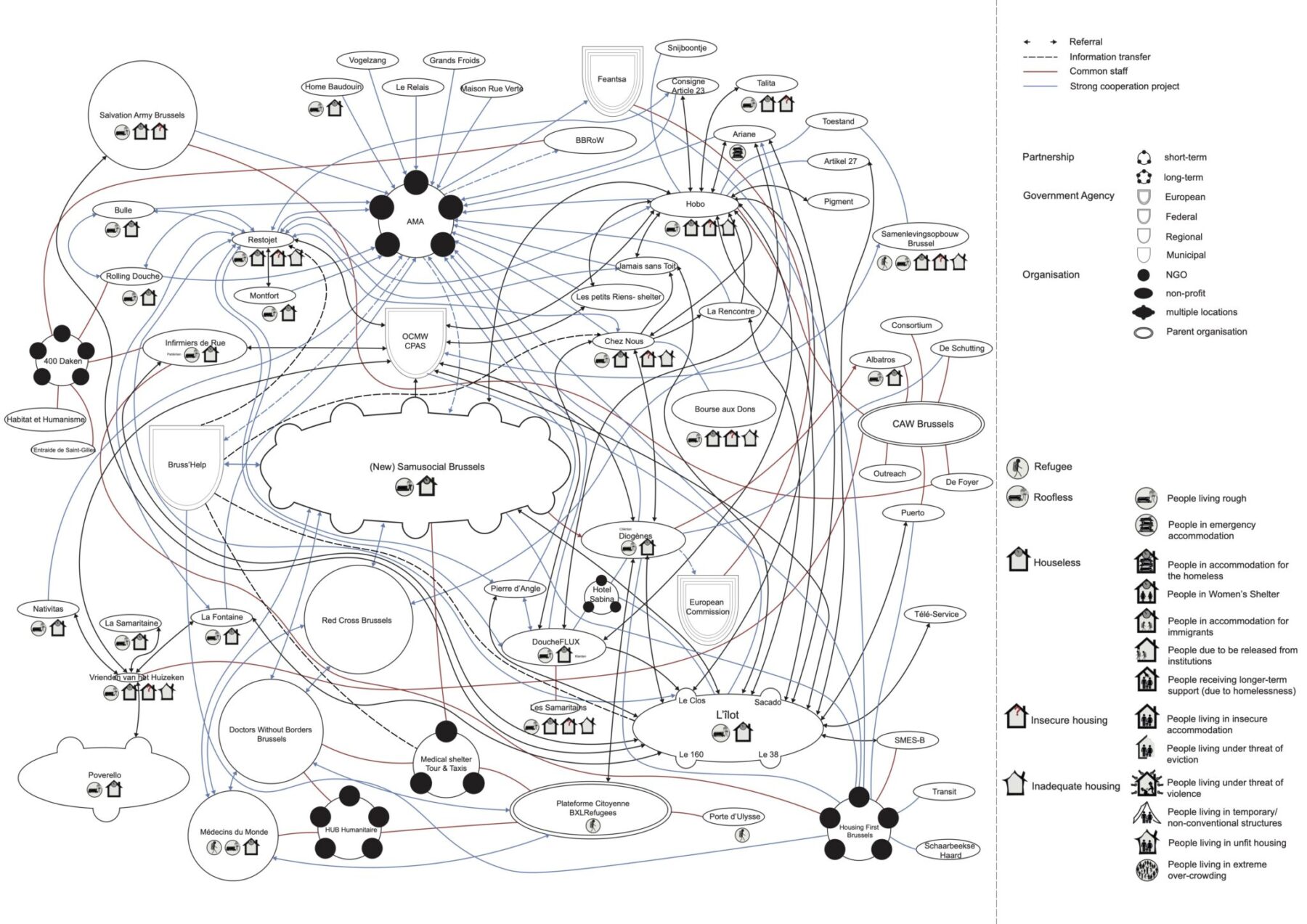
The students took to the streets at night with La Strada for the annual homeless count. Wearing face masks, hairnets and latex gloves, they went begging for food at the South Station, sorting clothes at the Huizeke, and mopping at Doucheflux. In this way, they became familiar with the daily concerns of both Brussels’ homeless population and the complex network of social organisations striving to restore their dignity.Their research into the historical roots of homelessness in the built environment takes the form of a visual atlas. Although homelessness is, by definition, characterised by a lack of architecture, the students were nevertheless able to map out the hidden and concealed world of homelessness in its architectural manifestations. As they drew, they analysed sporadic squatting, mobile facilities and temporary use of space. Such as a seating area improvised with folding tables and chairs to hand out steaming soup at Zuidstation, an unused flat where coffee is brewed, a vacant office building in Anderlecht that has been converted into an informal dormitory, and the Begijnhof Church, which has been transformed with camp beds and spread-out blankets into a bastion of social resistance.