
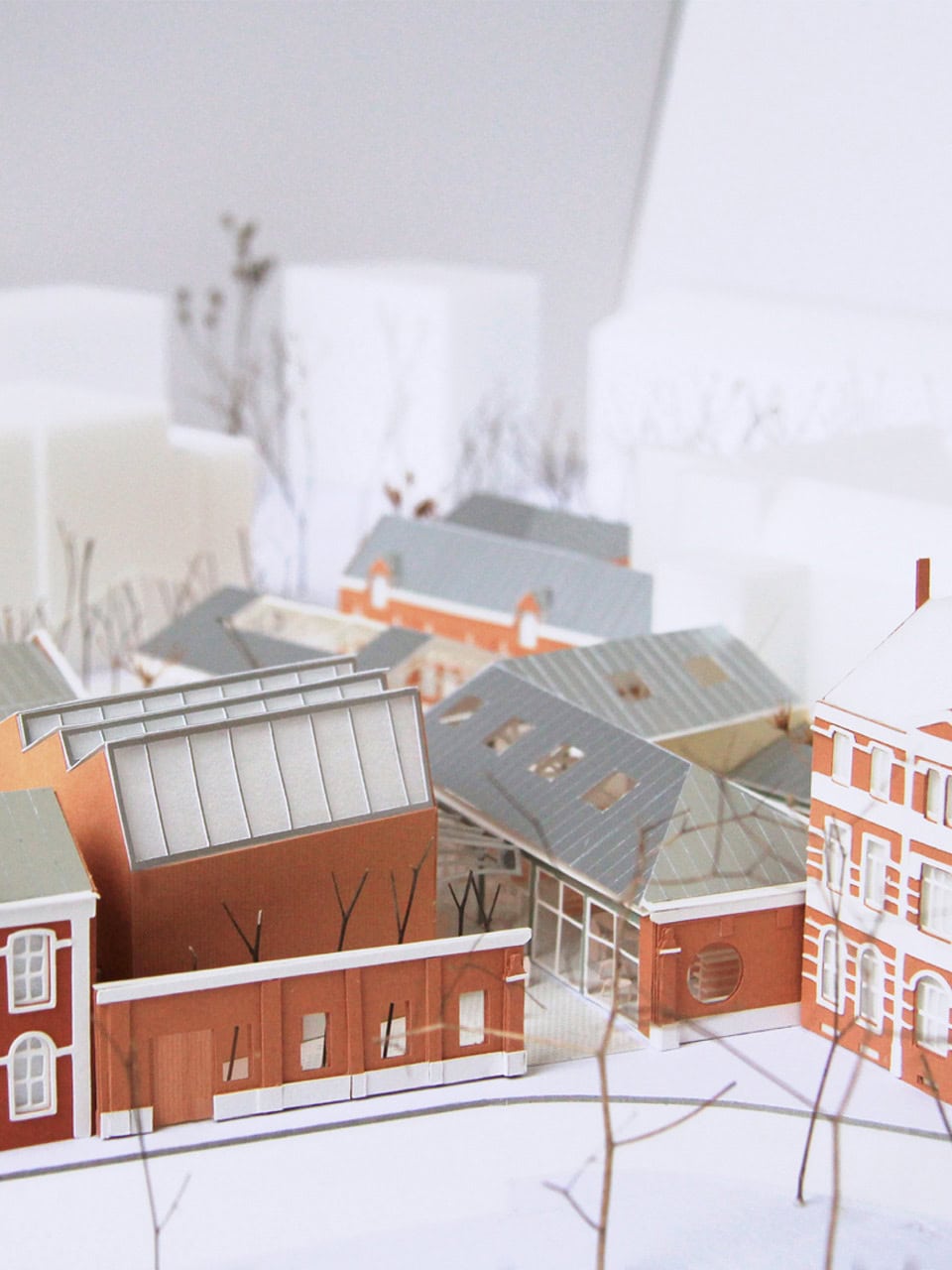
In the western corner of Sint-Andriesplaats, in the centre of Antwerp, lies the Sint-Andries Cultural Meeting Centre — or coStA for short. Various cultural and social organisations welcome local young people there in a mix of historic and newer buildings. This infrastructure is outdated and hinders the city council’s future plans for the meeting place. The city therefore organised a design competition, which was won by URA Yves Malysse Kiki Verbeeck and Altstadt. Their design stood out from those of the other participants: TM Callebaut architects-Murmuur architects-Poot architecture, Dierendockblancke Architects, Assemble Czvek Rigby, and Bovenbouw Architecture. By selectively removing and adding volumes, URA and Altstadt enhance the inherent qualities of the heritage.
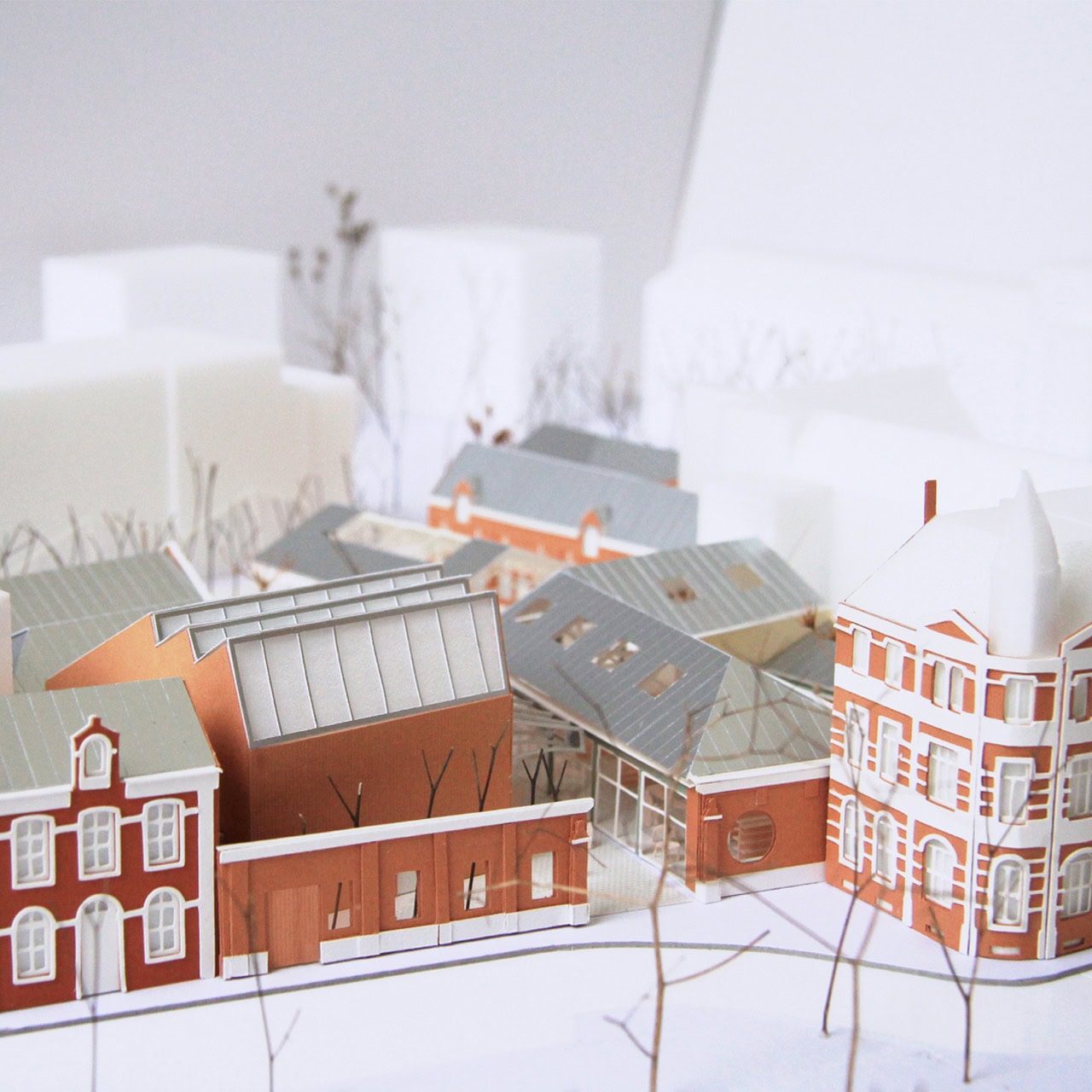
The complex was built from the last quarter of the 19th century onwards under successive city architects for the municipal Public Cleaning Service. The site features various hangars and stables, mostly iron structures with gable roofs on slender trusses. The director’s residence, set forward from the complex, prominently announces the complex on the square. Of the site, which once connected Sint-Andriesplaats with the Prekersstraat behind it, only the part bordering the square has been preserved following the construction of two residential buildings. Of a later date and lacking heritage value are the connecting structures between the historic halls. They primarily encumber the scarce space within the inner area.
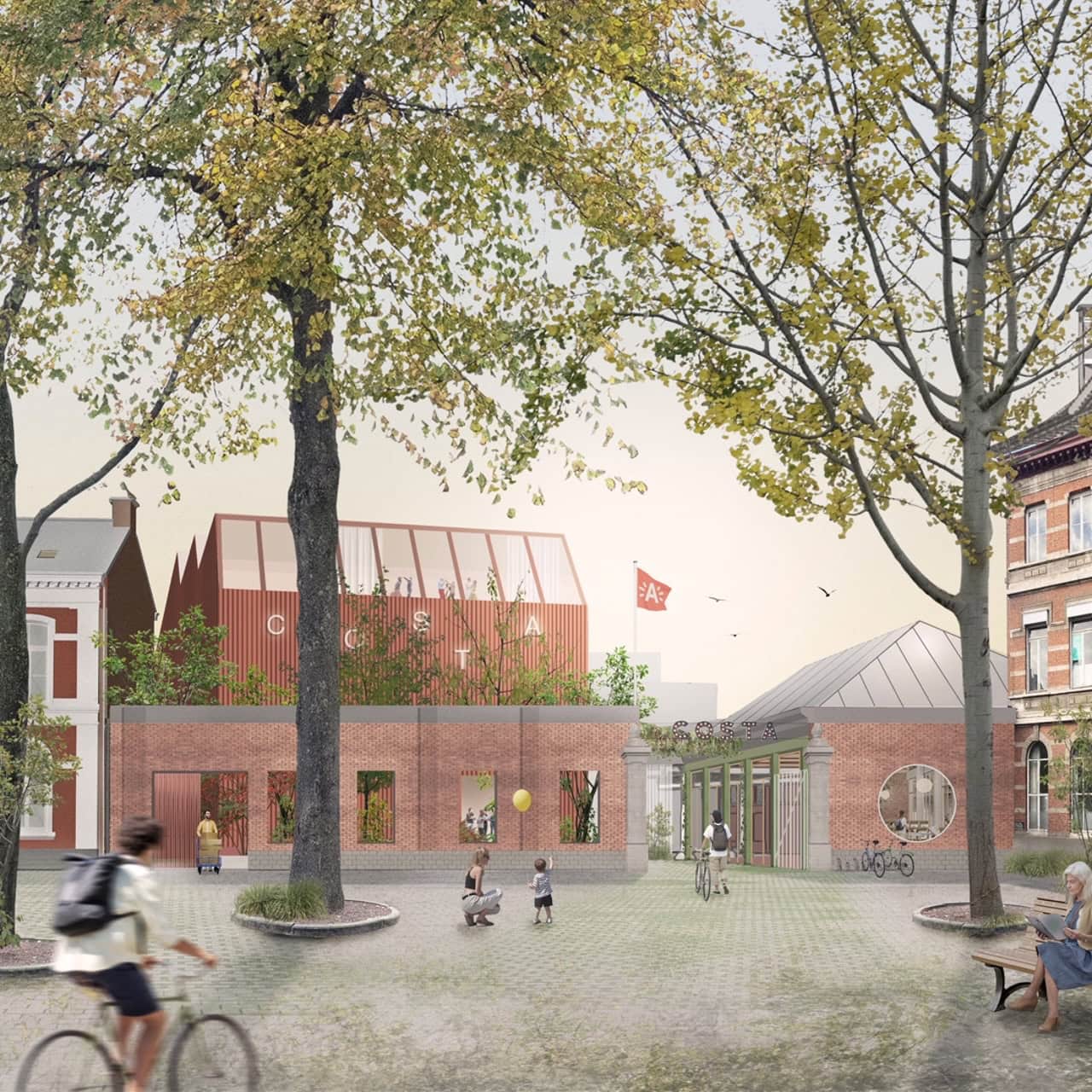
It is therefore not surprising that the TM URA-ALTSTADT is removing these buildings. By demolishing a large hall, a section of a building and an uninteresting extension, the design team creates a connection with the park on Prekersstraat. The 19th-century connection is restored, albeit indirectly and for soft traffic. The entrance along the park is flanked by a pavilion. The team also makes the entrance along the square more inviting by demolishing the two-storey building there. What remains is part of the façade, which acts as a permeable screen indicating where the courtyard garden merges into the public domain. A striking window provides a visual link between Sint-Andriesplaats and the foyer in the northern hall. In the background, the new performance building arouses curiosity.
The interventions create two types of meeting spaces in and around the hangars, referred to by the team as the inner and outer agoras. The inner agora comprises the foyer, the library and the café and is situated in the L-shaped hangar, which is being converted into a circulation route by a new wing. It is the focal point and the planned social heart of the site. The outdoor space is narrow at the two entrances, but in the centre it offers generous space for play. A pavilion in the middle provides shelter and guides visitors to either side of the garden. The garden wraps around the new theatre and music building, a striking tribute to industrial heritage. The sawtooth roof is the crowning glory of what the designers call a vibrant roofscape.
That landscape, a fruitful interweaving of old and new, emphasises the site’s historical qualities. By maximising the greenery of the outdoor agora and opening it up to public passage, coStA is given a prominent place on the square. The project embeds the once-enclosed site within the urban fabric, thereby giving new impetus to a key player in the city centre.
