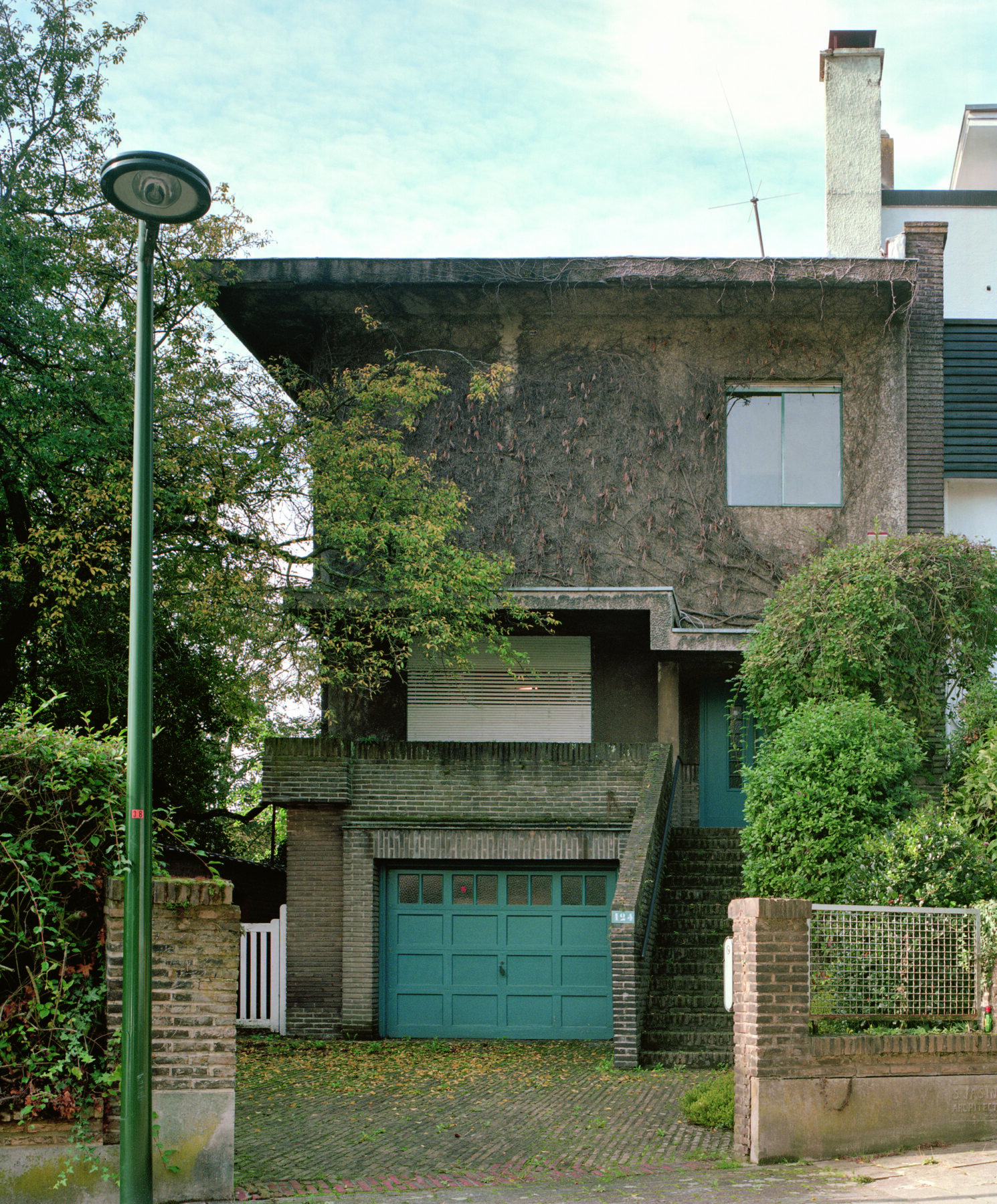
The Parcours d’architectes series aims to showcase the work of Belgian architects whose output after the First World War is still relatively unknown to the general public. The first volume in this series has just been published. It is devoted to Stanislas Jasinski and invites us to rediscover a part of Brussels’ modernist epic through an inventory of his work between the 1920s and 1960s.
Stanislas Jasinski is one of those architects who contributed significantly to the shift in our living habits towards single-storey apartments. Indeed, his career began in the interwar period, at a time marked by the massive development of collective housing buildings in Brussels, a type of building that was then taking precedence over detached houses. Jasinski embraced this typological evolution with enthusiasm and inventiveness. At the end of the 1950s, he summarised his thinking in an article published in La Maison, in which he vigorously asserted that “apartments civilise”. According to him, it was necessary to put an end to the “cornice dispute” and allow the construction of high-rise buildings in the city, just as it was necessary to develop single-storey housing, which was more in keeping with modern life. Throughout his life, Jasinski worked tirelessly to improve the design of the ideal flat.