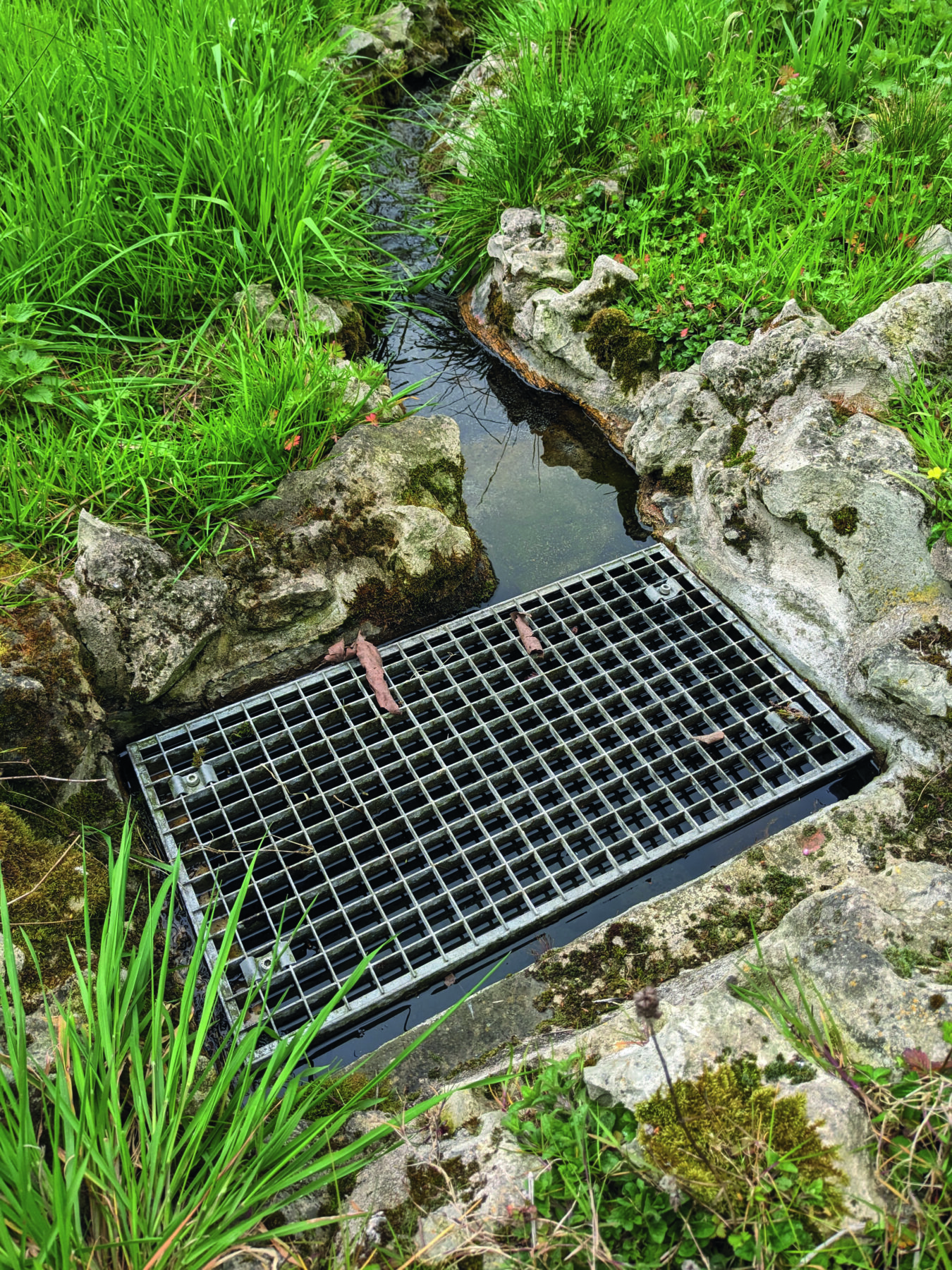
You can still hear it in the name of the city: Brussels – Broek-zele – originated as a ‘settlement by the marsh’. The marshy ground beneath the streets of our capital is caused by hundreds of springs that bubble up in the Capital Region and feed the many watercourses in the Senne basin (the Woluwe, the Maalbeek, the Molenbeek, etc.). Apart from the place names, there is little evidence of this water-rich landscape in the streetscape. The history of the urbanisation of the Region is also a history of covering up or draining the underlying natural wealth, and anyone who hears today that spring water still flows beneath their feet will be surprised.
This is not surprising. From the 19th century onwards, with the construction of the combined sewer system, more and more springs disappeared directly into the sewer system. As ‘parasitic water’1, spring water places a greater burden on the sewer system (in dry weather, approximately 120,000 m2 per day in winter and approximately 40,000 m2 per day in summer), which leads to more overflows during heavy rainfall. In addition, the relatively pure spring water dilutes the waste water, making the water treatment plants less efficient. And finally, it is also a waste of raw materials – it is water that could be put to good use. 1 ‘Parasitic water’ includes not only spring water but also river water that ends up in the sewer system, seeping groundwater and extracted water.