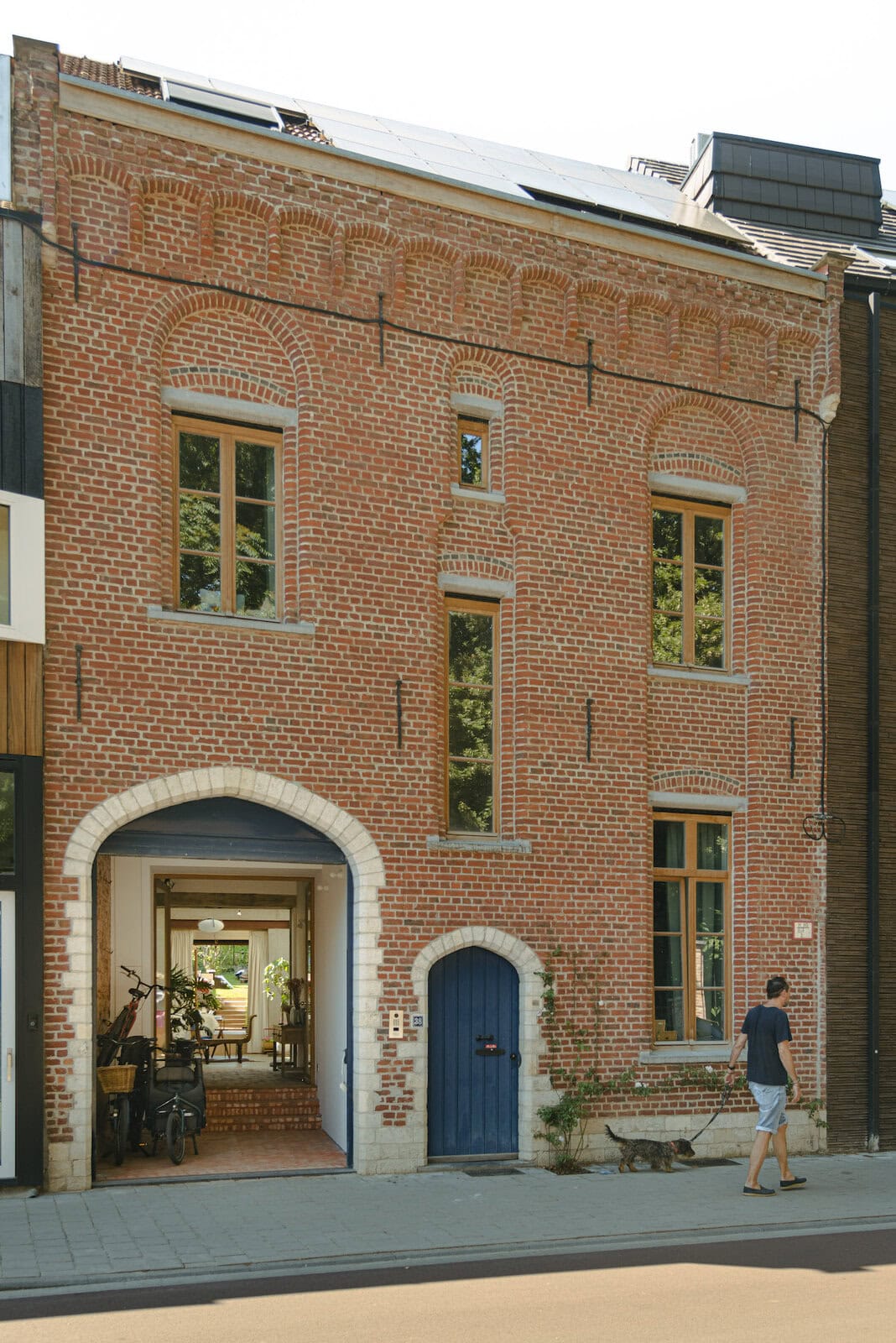
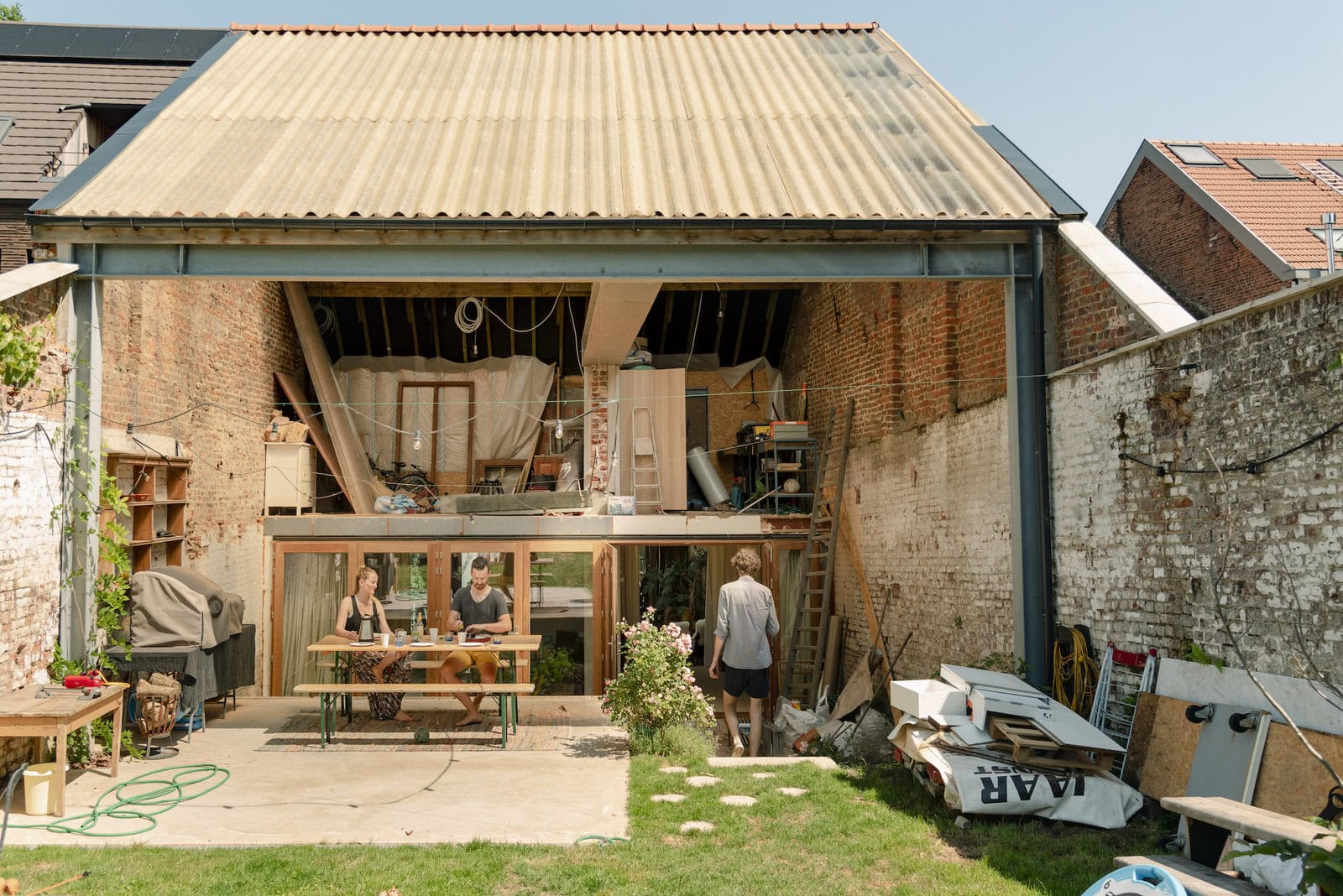
This townhouse in Leuven is striking for the way it blends rural and urban elements. The neo-Gothic brick street-facing façade contrasts with the rear section, which resembles a barn, featuring a habitable loft that opens fully onto the garden. The house conceals an equally surprising interior where the boundaries between inside and outside become less rigid.
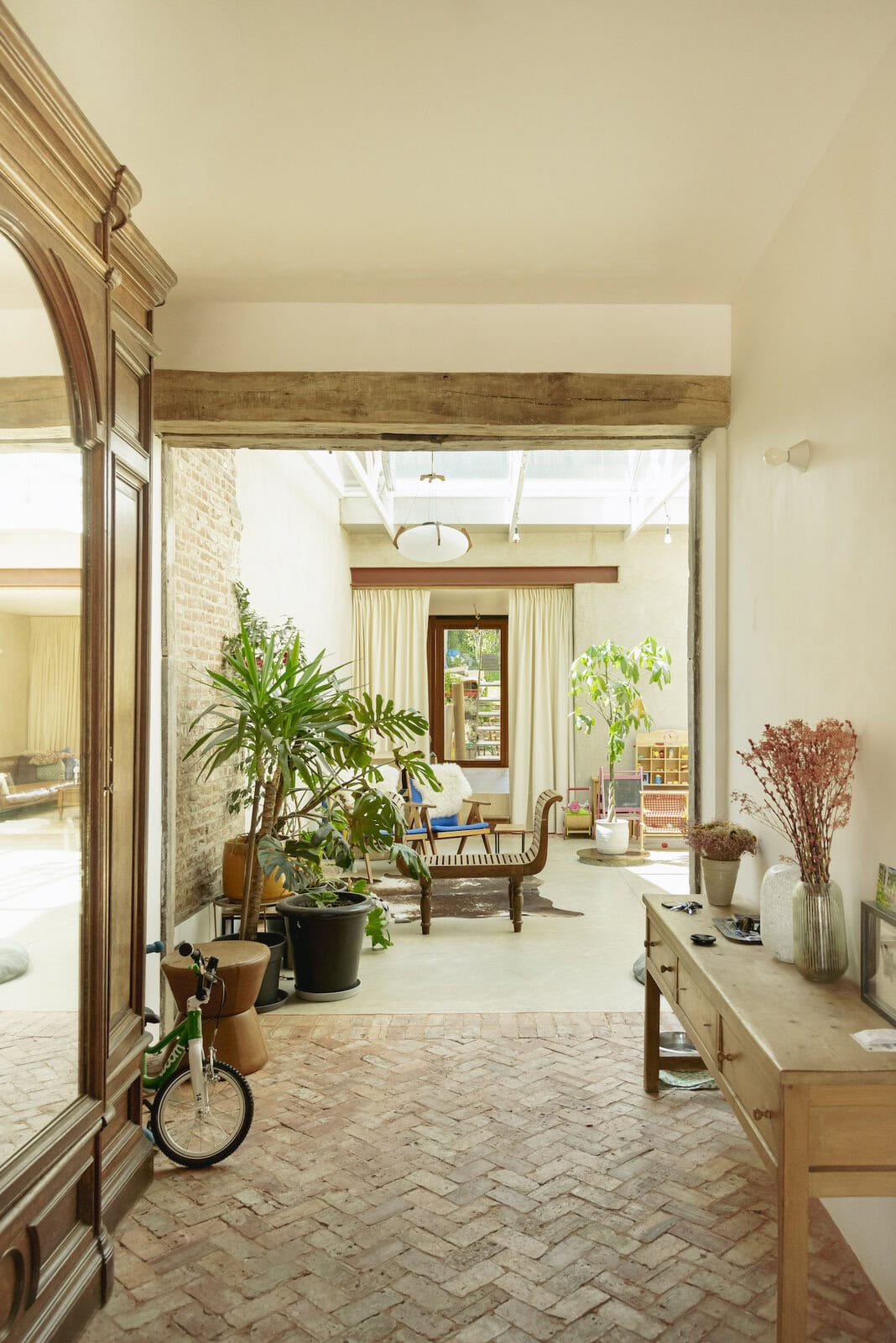
From the street, an arched opening dominates the façade’s composition. When this door is open, it provides a passageway that forms a through-opening to the garden. Indeed, the sequence of rooms extends the length of the house, connecting the street to the garden.
This opening emphasises the importance of the project’s longitudinal section, which plays on the difference in levels between the street and the garden. It is achieved through a series of terraces that contribute to the project’s sequence. The three brick steps at the entrance mark the transition between the outdoor space—which still belongs to the street and serves notably as a bicycle garage—and the interior of the house, designed for more intimate domestic life. The rear section, resembling a barn, is like a project left unfinished, a space completely open to the garden, which gives the house a surprisingly rural atmosphere right in the heart of the city. In the West project, the barn has been cleared out to create a floor for the guest bedroom.
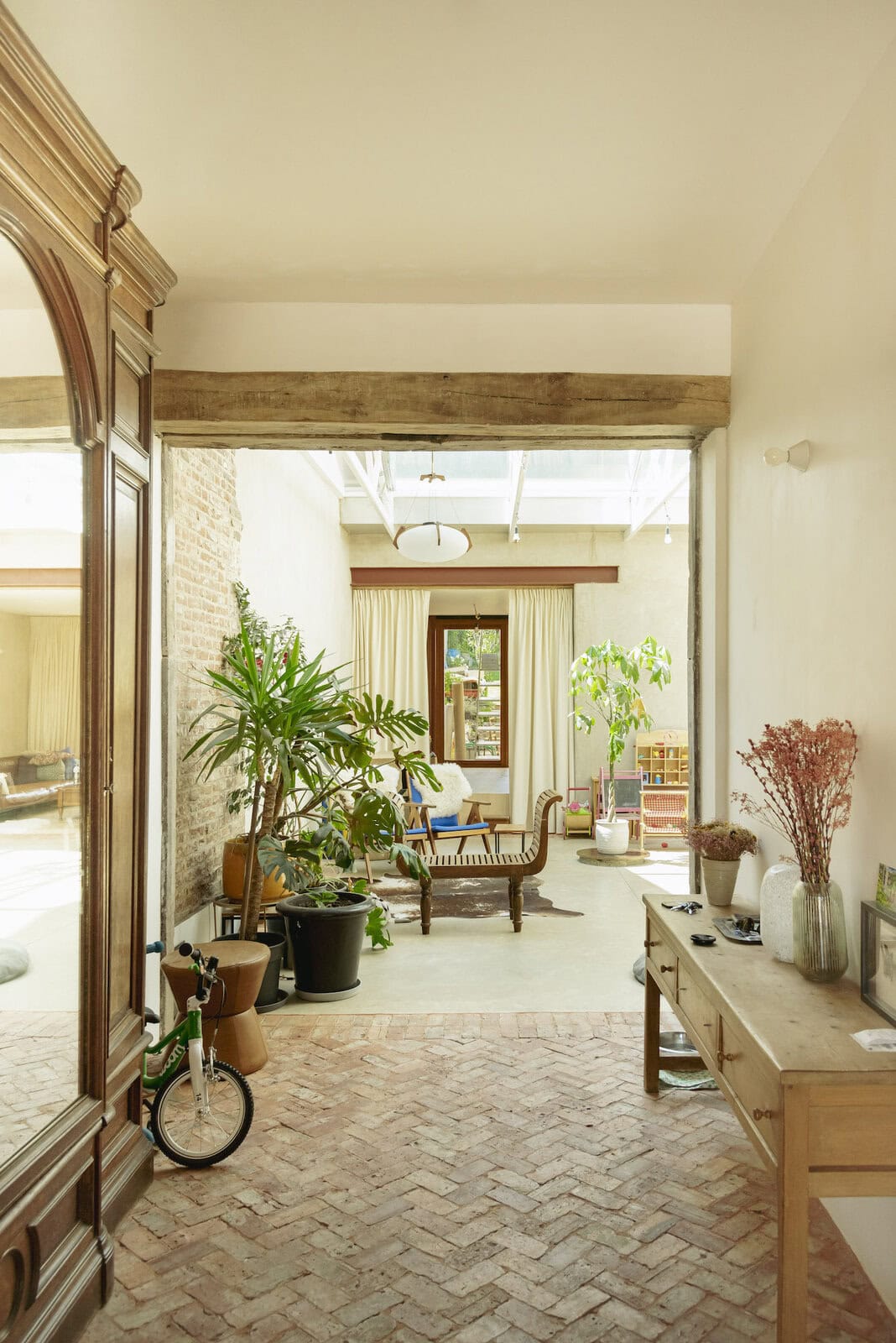
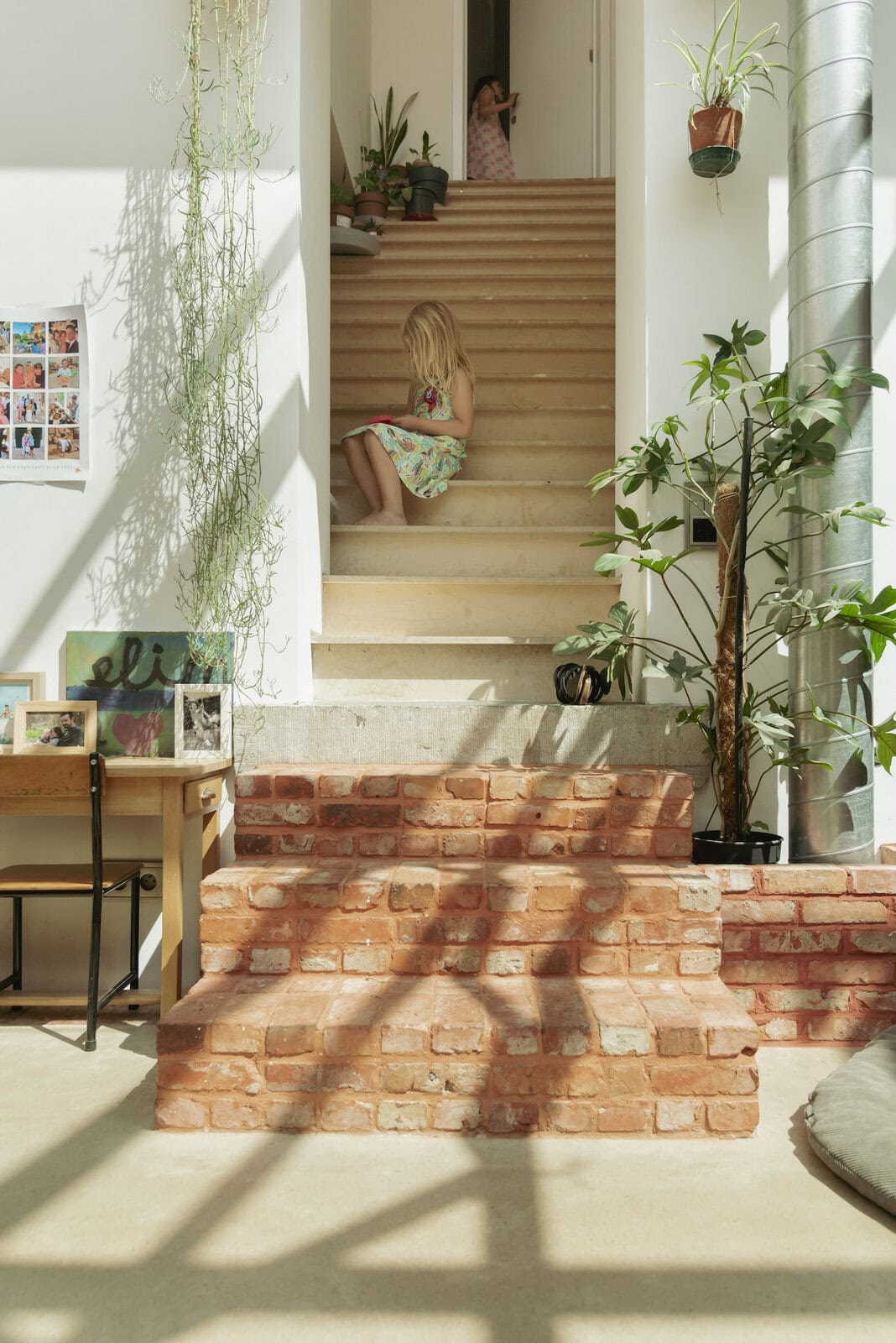
At the centre of the house, a unique space resembling a greenhouse with its glass roof bathes the room in vibrant light and connects the two parts of the house. The typical architecture of the greenhouse, a form foreign to the domestic setting, nevertheless brings unique qualities to the home. The adaptation of the architectural elements specific to the greenhouse gives way to a warm, light-filled living space where plants thrive.
The central space of the house is significant due to its position, as the other smaller rooms—the entrance hall, kitchen, living room and garden room—are arranged around it, thus serving a distributive function. But it also asserts its importance through the care taken with its finishes: a cement render covers the room’s walls; curtains offer greater flexibility in partitioning the spaces beneath the exposed lintels; the thresholds marking the boundary of this central room are elegantly defined by a row of bricks flush with the concrete screed.
The brickwork that dominates the façade continues into the interior of the building. It is all about striking the right balance between the new and the old. The choice of materials reinforces the dual rural and urban character. Meanwhile, the permeability between interior and exterior spaces, between private and public spheres, is not achieved at the expense of comfort, well-being and a sense of belonging.