
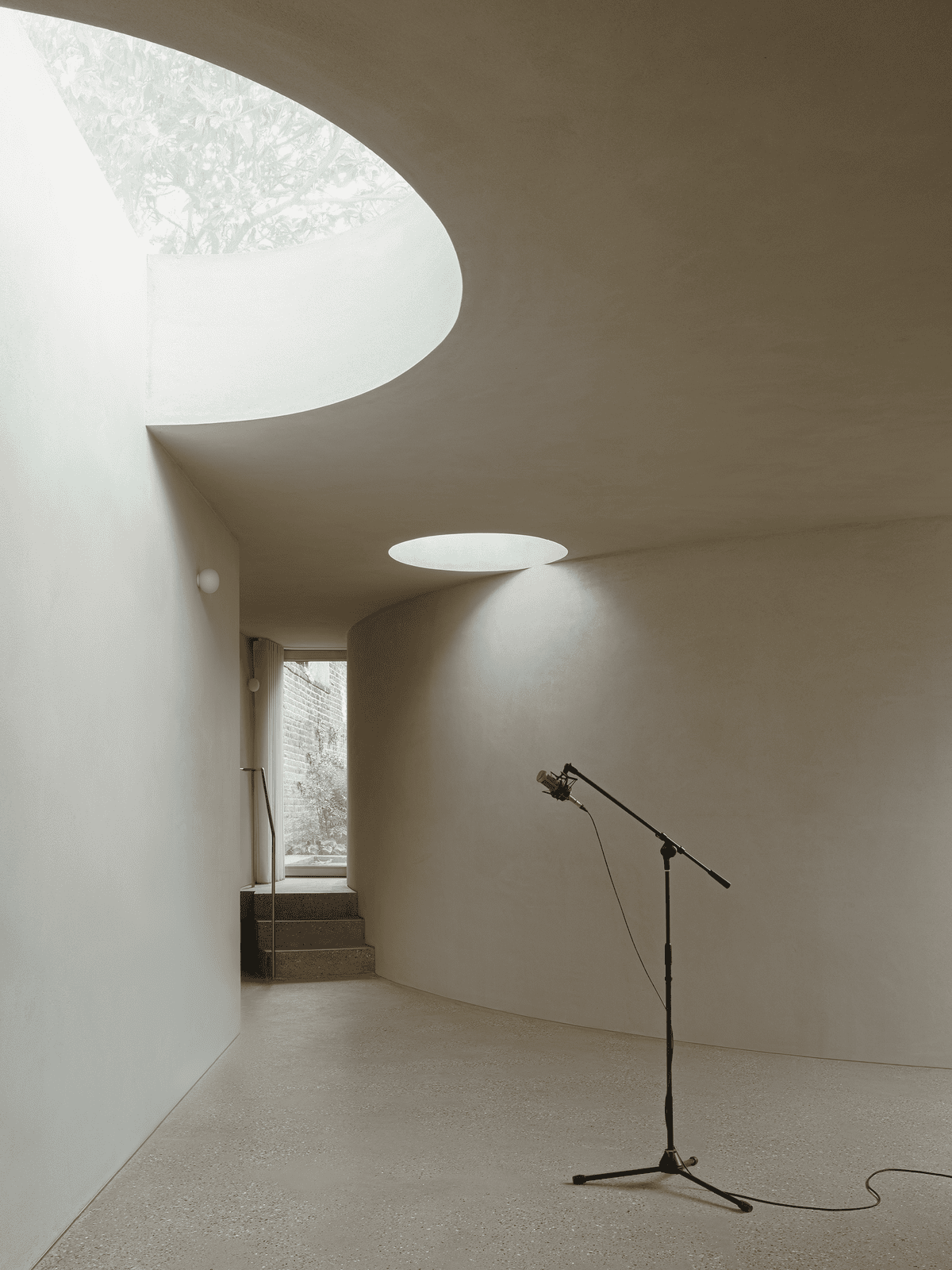
Since 2017, Mary Duggan has been working on small-scale architecture from her London-based practice. Ahead of her lecture on Thursday 16 November, Lisa De Visscher, editor-in-chief of A+, spoke with Mary Duggan about the ambitions and prospects of her young practice.
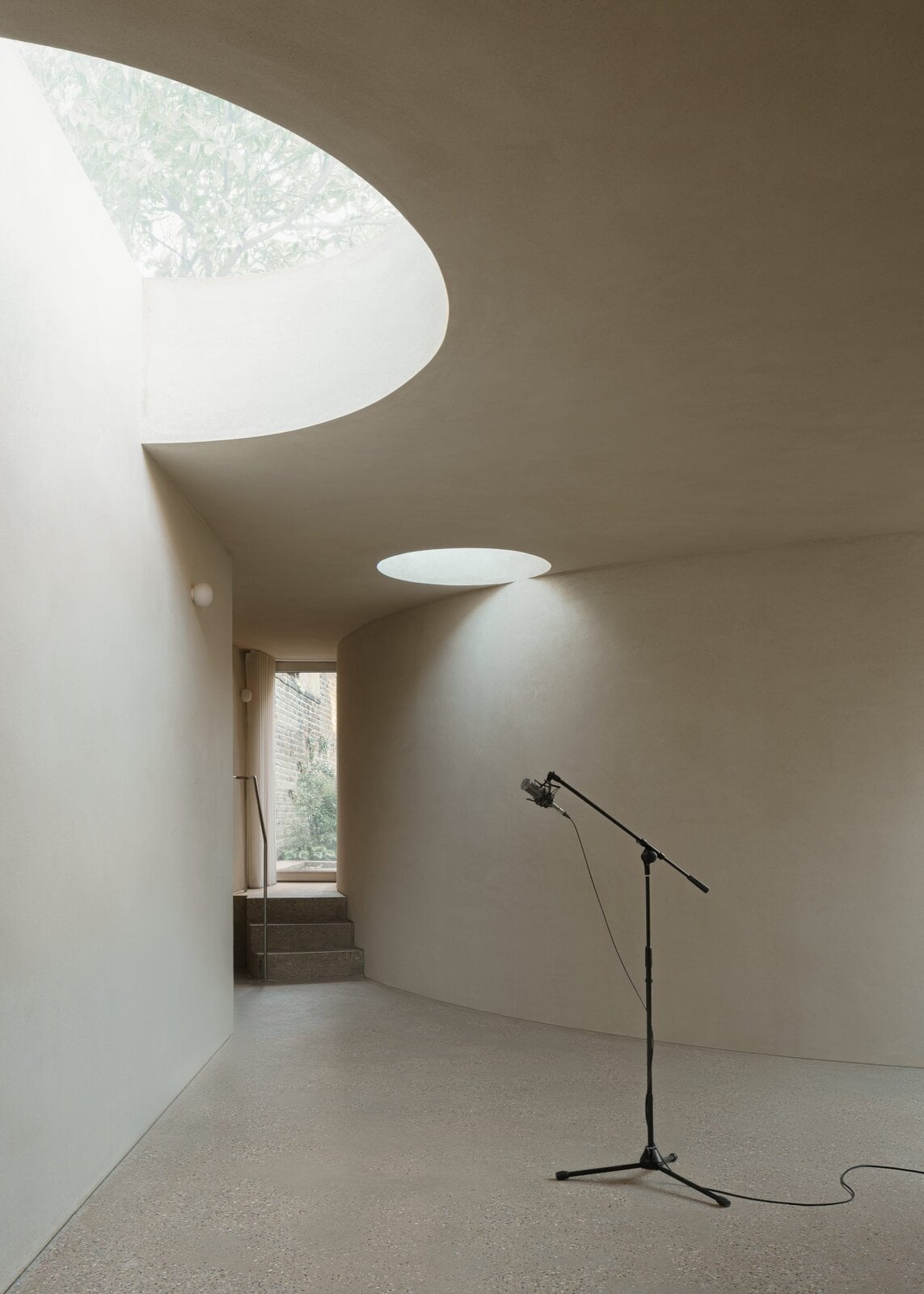
A+ You ran the large London practice Duggan-Morris for 13 years. What was your approach when you launched your new practice under your own name six years ago?
Mary Duggan – When Joe Morris and I set up a practice together in 2004, we were young and ambitious and wanted to grow as quickly as possible. Like so many young practices, we worked very hard – perhaps too hard – but it paid off. We came to the attention of various developers investing in housing and realised many large-scale commercial residential projects. The agency grew alongside us and, by the end, we had around fifty employees. Joe Morris took on more of the commercial and client-facing role, whilst I led the design team within the firm. When you have fifty staff, that mainly means a lot of management. You get an overview of the various projects, but you’re hardly part of the design and construction process anymore. We worked with fantastic project managers who did an excellent job, but I missed designing, solving spatial and technical problems, and being fully immersed in a project. For the new practice, I’ve opted for a radical downsizing. We’re now a team of five, and we don’t need to grow beyond ten. Only then can you, as the practice manager, remain truly involved in every project. We are a young, small practice, but at the same time I bring two decades of experience to the table, which allows us to work more efficiently. I no longer fall into the pitfalls of 15 years ago; we can make decisions faster, know what we want, and don’t have to work through the night to achieve it. The firm’s focus is entirely on the cultural sector. If possible, I’d rather not do commercial housing projects anymore. They quickly force you into a lot of repetition, a sort of ‘copy-paste’ architecture as the sole strategy within the strict constraints of budget and timing. I want to work more with today’s social concerns, such as reuse and research into the right building materials.
A+ Is that why you took part in the ‘Bap! Biennale d’architecture et de paysage d’Ile-de-France’ in Versailles last year, centred on the theme ‘Terres et Villes’?
MD Indeed. This type of commission was new to me; the whole cultural and academic setting also brought with it different conditions. For instance, the entire project was set up as an art project: a direct commission, not a competition and not a tender. The project definition was largely in my own hands and I had complete control over the design and execution. It gave me the opportunity to experiment with materials and venture into uncharted territory. I decided to build a pavilion as an installation that charts the design process through a sequence of material- and technique-related decisions. ‘For the love of materials’ became part of the exhibition ‘Visible Invisible’ at the Versailles School of Architecture. The pavilion consists of plaster walls that are deliberately tall and thin, pushed to the limit of their fragility. The most vulnerable areas are supported by wooden struts, which in turn are held in place by carved marble rosettes and a large boulder from my sister’s garden. Each material is a response to another and an ode to the craft from which it originated. The pavilion is demountable and every component can be reused elsewhere.
A+ Did this project serve as a source of inspiration for other projects within the sector?
MD The commission for the Biennale in Versailles gave the studio a great deal of energy and made us reflect on materials and how best to utilise them. It was certainly a source of inspiration for the project we are working on today, the pavilion for the Garden Museum in London. When St Mary-at-Lambeth Church was repurposed as a museum, the church building proved too small for the various ancillary facilities such as a meeting room, workshop space or storage area. A competition was launched for this, which we won last year with a project consisting of a series of walls and volumes that form the perimeter of the museum’s garden. All the walls are made from recycled materials, reused pieces of concrete and brick sourced from demolition works in the neighbourhood. We have just submitted the planning application and hope to start construction next year.
A+ You said you no longer wanted to undertake large-scale housing projects, yet Lion Green Road has just been completed. What makes this project different from other commercial housing projects?
MD Lion Green Road is not a purely commercial project. We were commissioned just before the COVID crisis. Due to the consequences of first Brexit and then the pandemic, the client, a municipal development company, went bankrupt. On top of that, construction costs rose dramatically. This marked the start of a complex period during which, in order to save the project, we had to build much more efficiently.
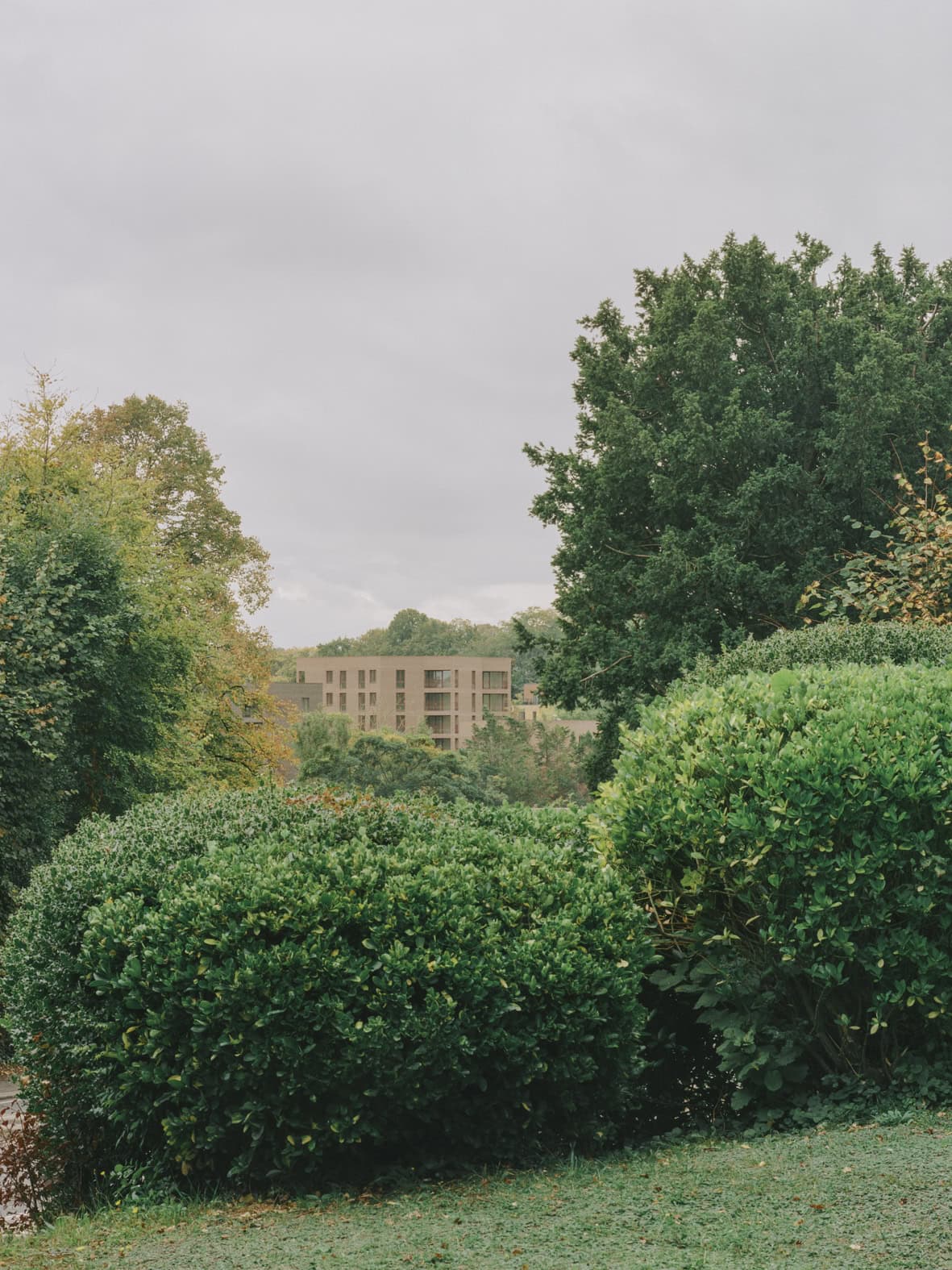
The original brief consisted of 80 low-rise residential units spread across a sloping site. It was a beautiful plot that had long been undeveloped and was therefore full of mature trees. Under the initial masterplan, these were all set to be removed, even though they were precisely the site’s most important feature. We seized on the requirement to build more efficiently – and thus increase the number of residential units – as an opportunity to radically alter the masterplan and move away from the typical suburban typology of the single-family home. We proposed a project that was entirely based on the site’s qualities: the undulating terrain, the trees and the sweeping views over the surrounding landscape. This resulted in five strategically placed buildings, at least five storeys high, with a central circulation around which four to seven dwellings are arranged like a fan. In total, we created 157 dwellings and succeeded in preserving the site’s most important natural features. We did not level the hill, as is so often the practice, but allowed the buildings to follow the contours of the terrain so that every flat has a beautiful view. We designed the open space so that part of it is public, like a park for the whole neighbourhood, and another part is private, like a garden for the residents. There is a playground for toddlers and for slightly older children. We created a hangout spot for young people ourselves. The buildings are constructed from brick, once again emphasising the craftsmanship of the brickwork, and we worked hard on details that make living there more pleasant, such as well-designed outdoor spaces for each flat, tall windows that let in plenty of light, and high ceilings. The design is fully tailored to the site and the specific requirements of the brief. That is precisely what sets it apart from conventional commercial housing development: no copy-paste!
