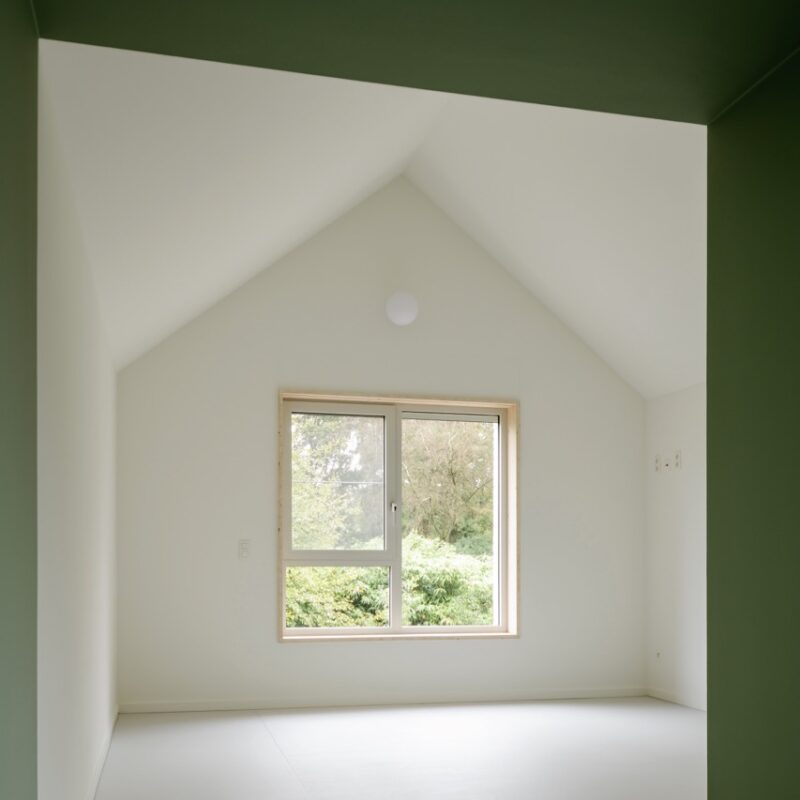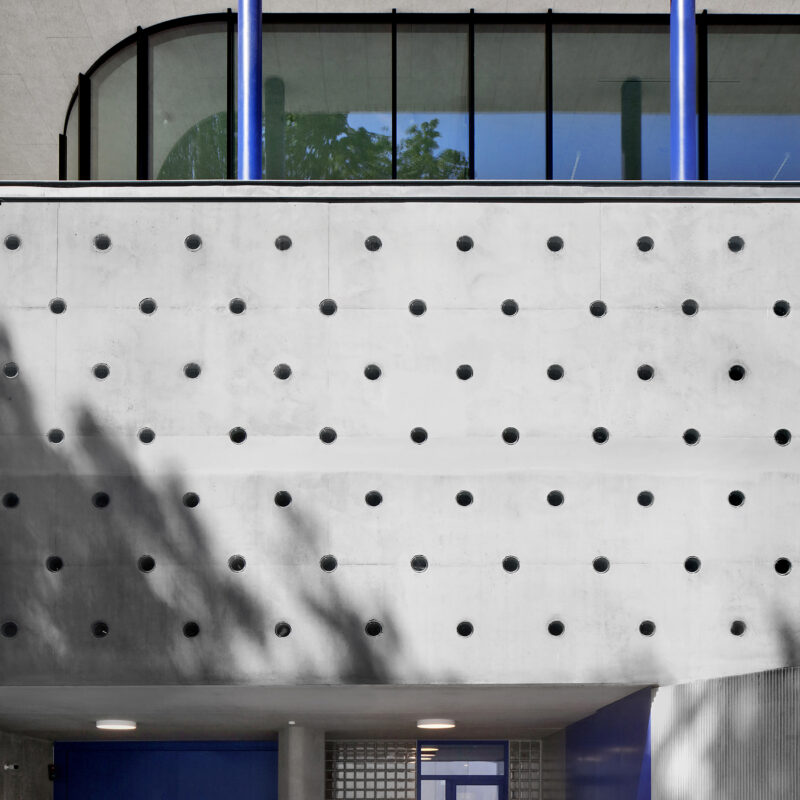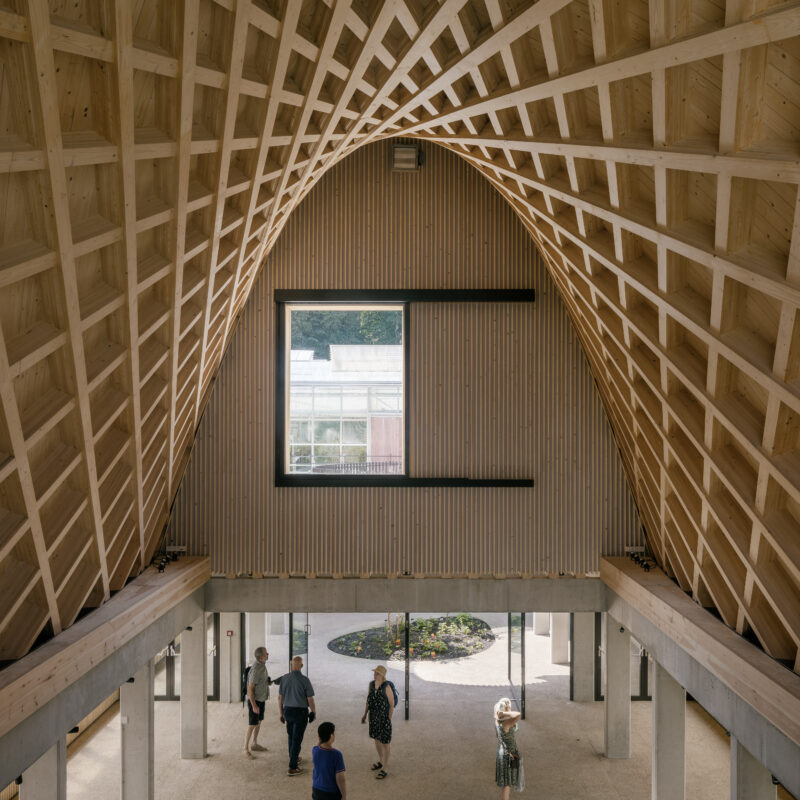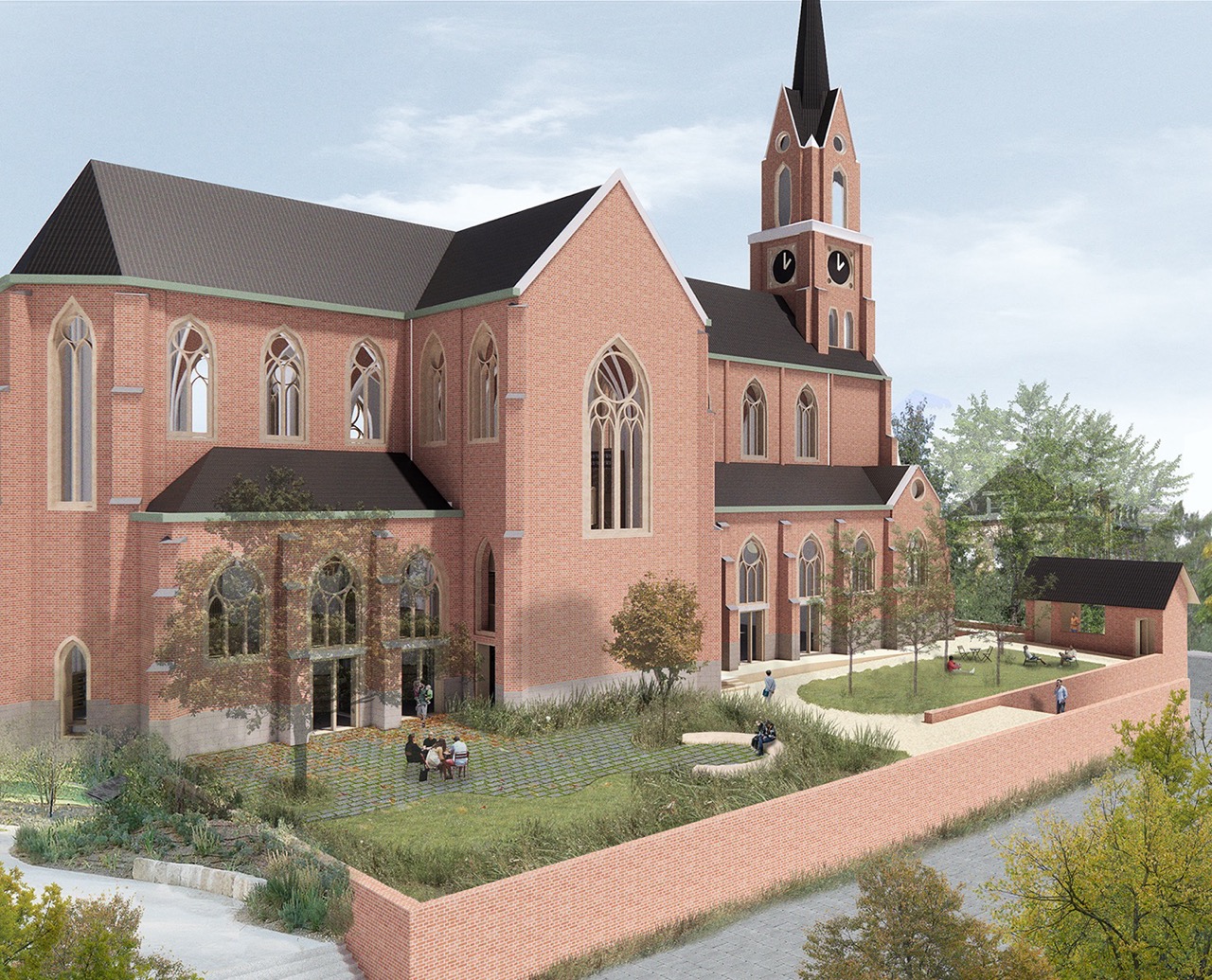
The challenging task of renovating and repurposing the St Amandus Church in Strombeek-Bever, a borough of Grimbergen on the outskirts of Brussels, seems almost like an attempt to refute the ominous prediction in Victor Hugo’s Notre-Dame de Paris (1832), namely the prophecy of Archdeacon Frollo, who, while comparing a book to his beloved cathedral, says: ‘Ceci tuera cela’ (‘This will kill that’) – the book, and by extension the art of printing, will replace the cathedral.
The council of Grimbergen has asked to combine the functions of library and prayer room in the late 19th-century neo-Gothic church building, which has become too large for purely liturgical purposes. The three-aisled brick church is surrounded by greenery, a faint reminder of the cemetery. The larger surroundings are typical of a Flemish village. On one side are the remnants of the church’s historical anchoring in the village fabric: the classic presbytery and school opposite the church tower and a tree-lined street with a number of cafés – once the setting for Sunday morning village life and repasts after funerals. On the other hand, the church looks deserted and isolated, on a raised plateau in what is called a square but was never really designed as such: an urban service area where the bus stops and people mostly park their cars.