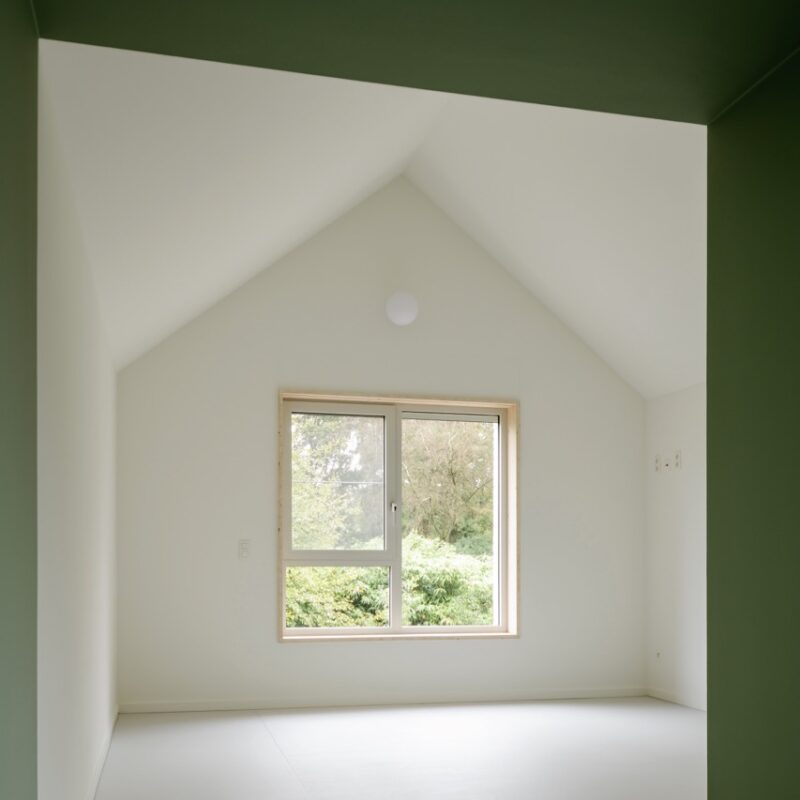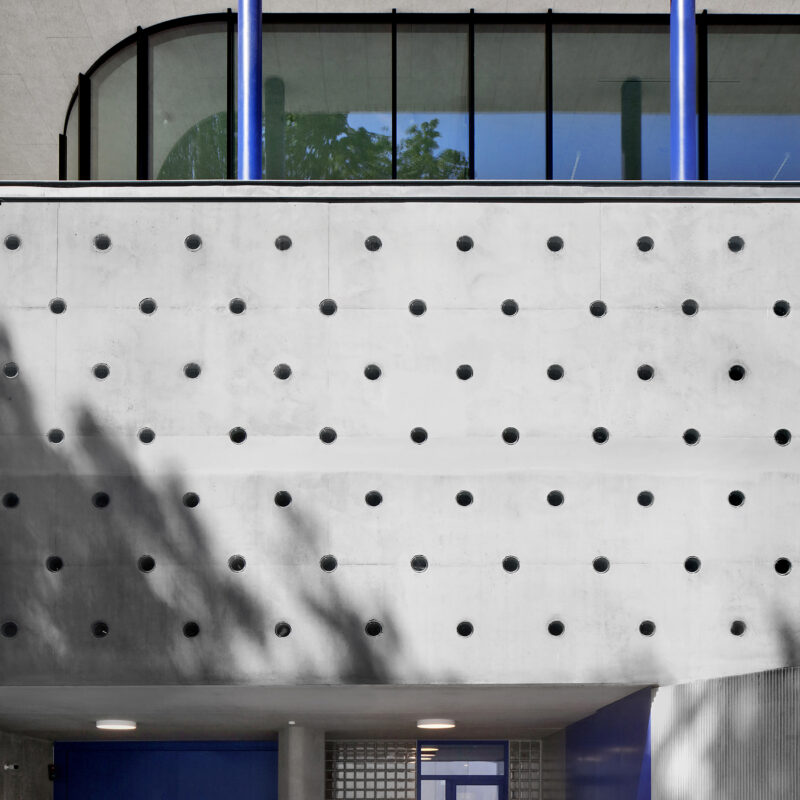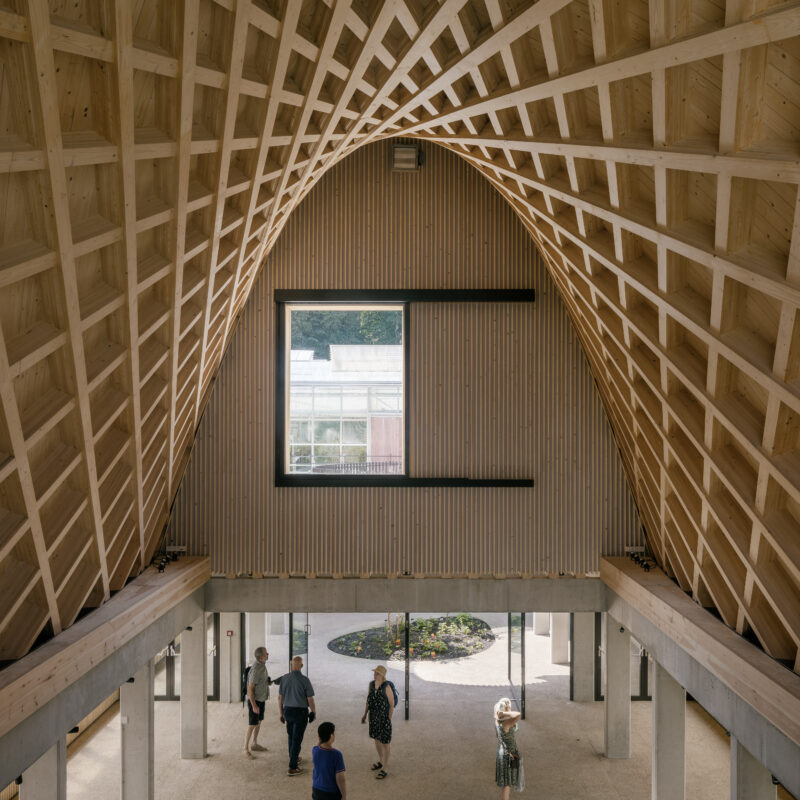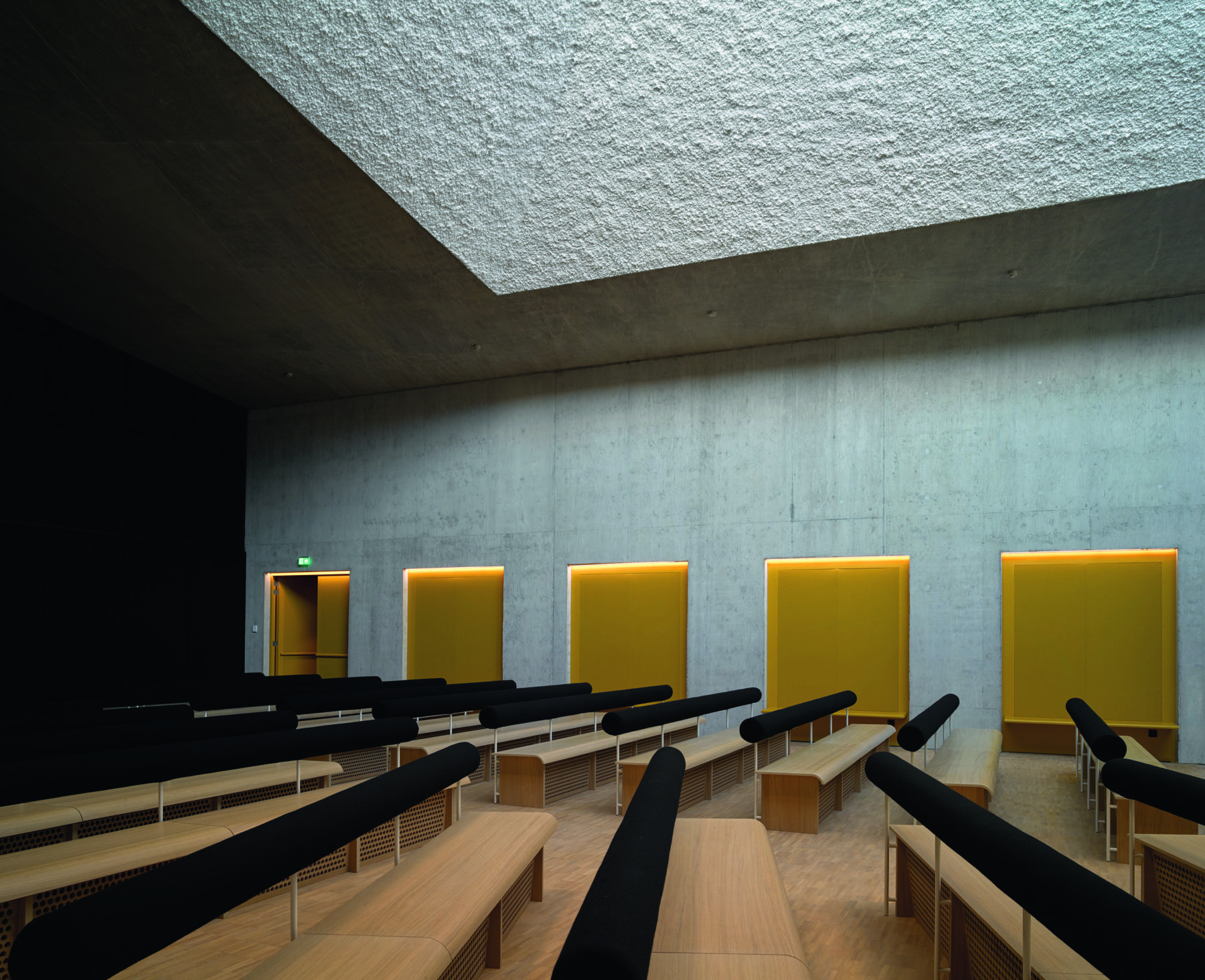
The crematorium built by Office Kersten Geers David Van Severen and Richard Venlet in Ostend is the result of an Open Oproep procedure in 2013. Creating a place for final farewells or a final resting place is a difficult task. Functionality must avoid routine, without the architecture becoming overly dramatic.
The fact that only a small part of architecture can be described as art – the tomb and the monument – is a famous statement by Adolf Loos that is no longer necessarily valid. Perhaps, in the face of death, architecture cannot be described as art – it is neither a personal expression nor a display of identity and uniqueness, nor is it a safe haven for social or other experiences. “Dying / Is an art, like everything else,” wrote Sylvia Plath in her collection Ariel, but dying is also the only “art” we all share, which is not commercialised and rarely generates discussion on social media, in columns or on talk shows. If architecture is the last bastion of metaphysics, as Jacques Derrida claimed in 1985, forty years later, this bastion has shrunk so much that all life has literally deserted it. To evoke metaphysics once again – and to avoid being considered yet another eminently individual, subjective and questionable activity – architecture must deal with death.