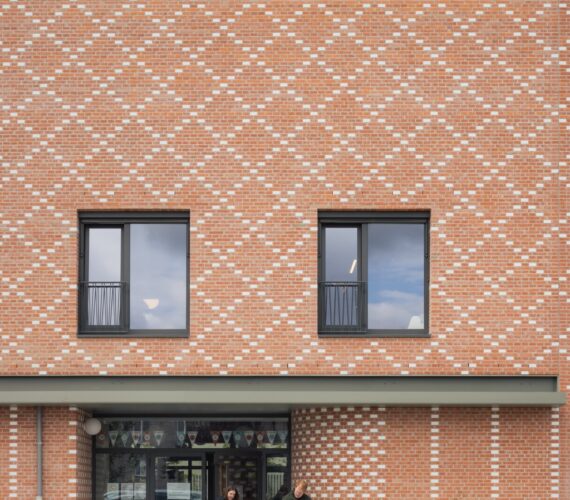
In southern France, the river Tarn meanders through the Occitan region. Along the southern bank, the picturesque town of Albi unfolds on the slopes of the valley. The town sprung from its medieval model as a network of winding streets around a central square. Albi derives its identity from the striking red Foraine brick. This homogeneous use of materials not only earned the town its nickname of ‘Red Town’, but also its recognition as a UNESCO World Heritage Site. In this complex historical context, contemporary interventions inevitably become a delicate exercise.
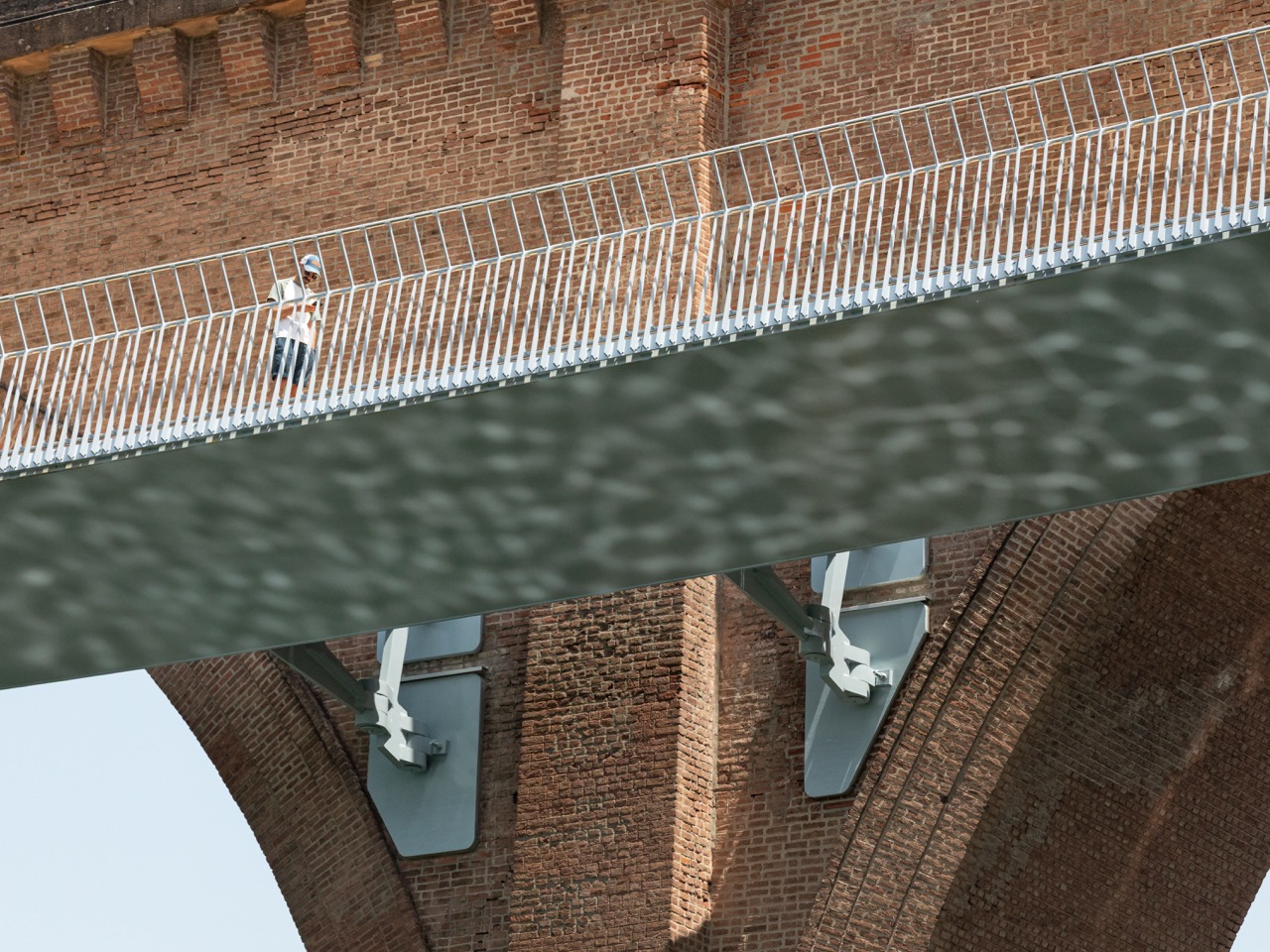
Only three bridges span the Tarn. The Pont Vieux down in the valley, the Pont Neuf closer to the centre, and a 19th-century railway viaduct that runs along the edge of the historic town. For pedestrians and cyclists, the connection between the centre and the periphery was difficult. A new and direct connection at the railway viaduct provided a solution to this mobility problem.