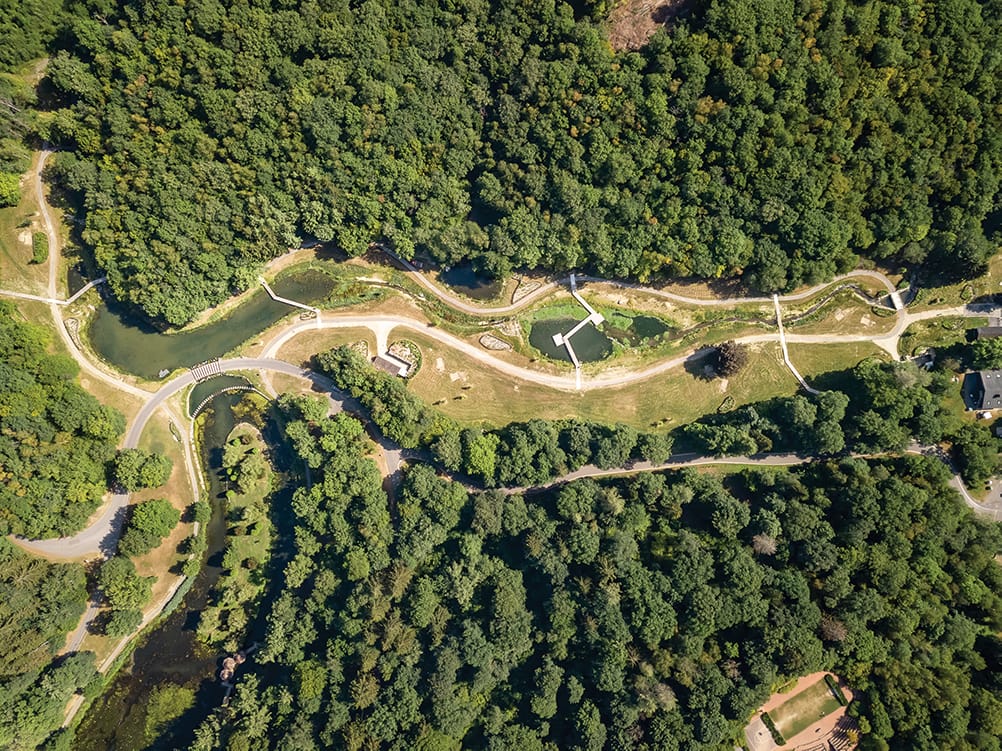
In the 19th and 20th centuries, humans attempted to tame water by confining streams and rivers within dykes and draining land for agriculture, but also for tourism. The water’s edge and wetlands, once dangerous places, became popular holiday destinations. For nature, however, this was a disaster. What’s more, water was not easily tamed: although the soil was drained and dried out, flooding became more and more frequent because the beds of many watercourses had become too narrow. In Chevetogne, Atelier Paysage showed how to restore a natural wetland while ensuring that it remained accessible to nature lovers and tourists.
In 1969, the Province of Namur purchased the 453-hectare estate around Chevetogne Castle, designed 100 years earlier by Hendrik Beyaert for Baron Jacques de Wykerslooth de Rooyesteyn. The Province then decided to reallocate the estate as a social tourism area, including a camping and caravanning site on the banks of the Molignat stream, which flows from east to west towards the Chevetogne ponds. Just before it flows into the ponds, it joins the Mivau stream, which comes from the north.