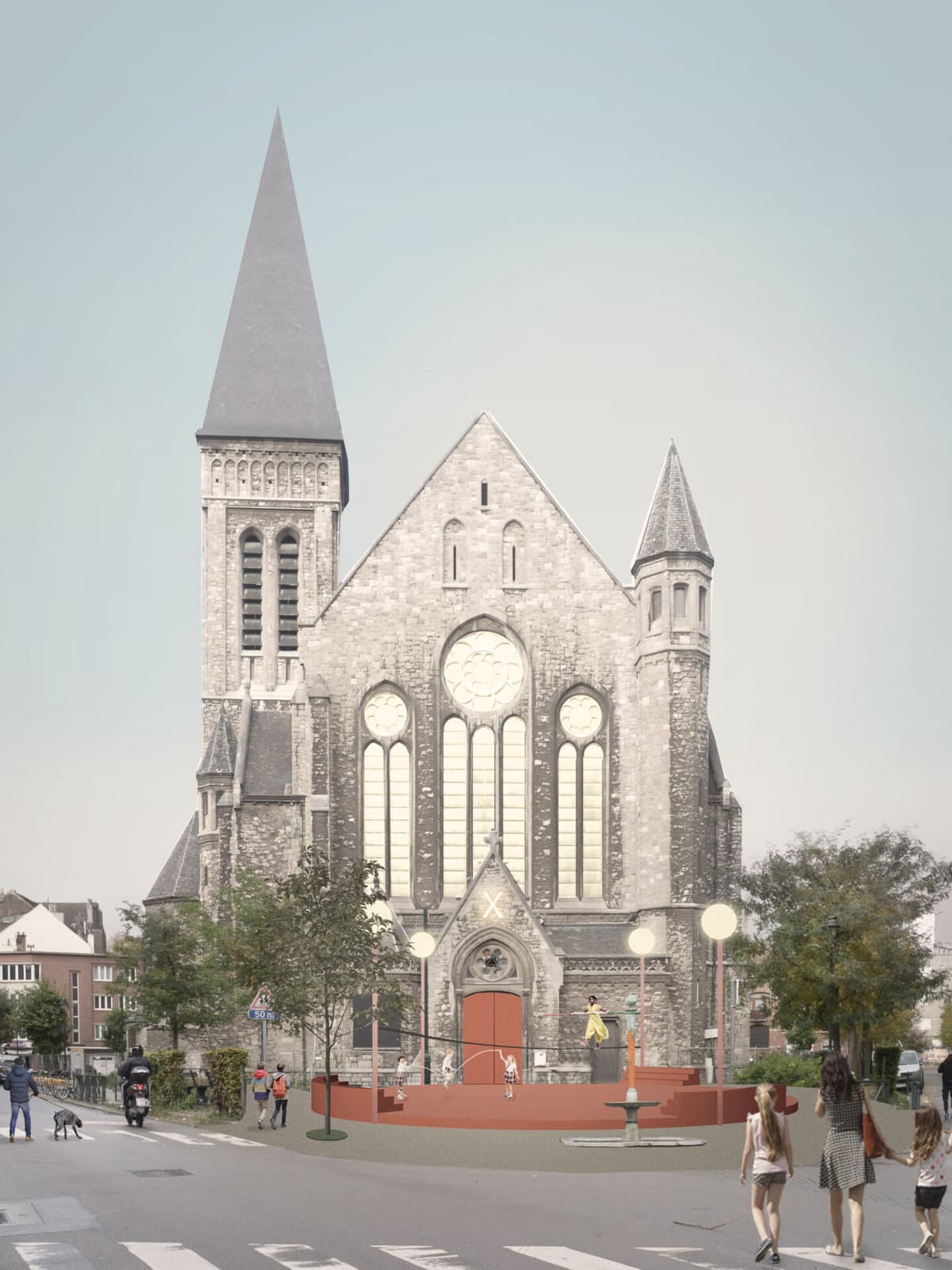
The neo-Gothic Church of St Francis Xavier stands on a wedge-shaped square in the heart of the Kuregem district in Anderlecht. This listed monument, dating from 1915, has stood empty for several years and is visibly falling into disrepair. It occupies a central position in the neighbourhood but has no connection with it. However, given its location and size, it offers considerable potential for the surrounding area. The local council therefore purchased the building and launched a design competition in mid-2021. The church was to be fully restored, and space was to be designed for cultural and sporting activities. The Temporary Partnership URA – ALTSTADT provided the best response to this brief.
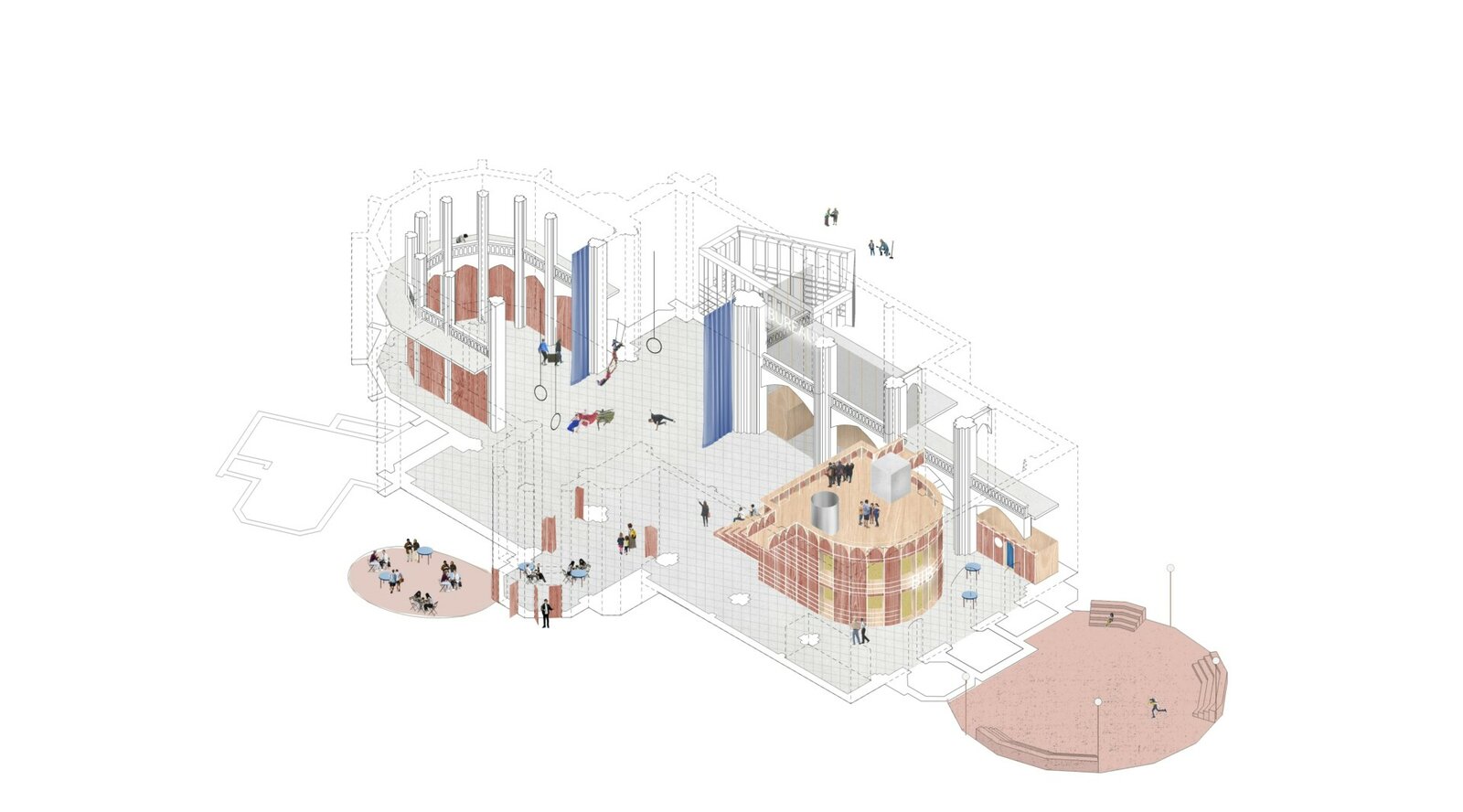
L’Église Performante, as the Brussels-based collaboration calls its project, is rooted in a respect for the church and its overwhelming spatial qualities. That is why the team alters the building as little as possible; where changes are made, they are done so in an extremely transparent manner. As the intervention consists of a set of light wooden structures, inspired by church furniture, it also gives the impression of a certain reversibility. The furniture is designed with numerous references to the church’s neo-Gothic style, ranging from ornamentation to the colour palette.
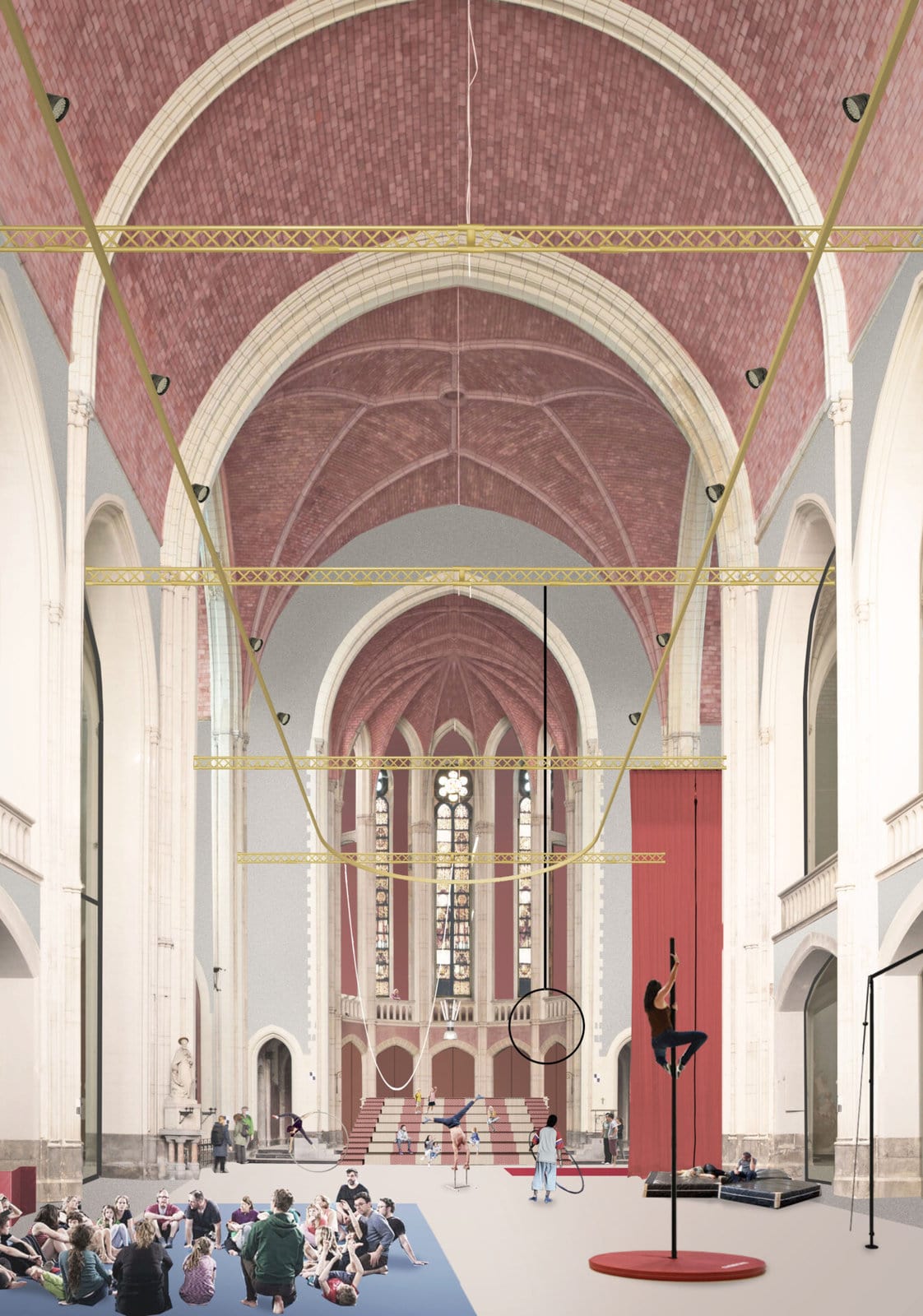
In the centre of the church, beneath the vaults of the chancel and naves, a circus school can operate undisturbed. Lighting equipment, gymnastics and circus apparatus, as well as curtains, are attached to beams between the pilasters. In the side aisles and in the galleries above, service functions are incorporated. Like new confessionals, they flank the central nave.
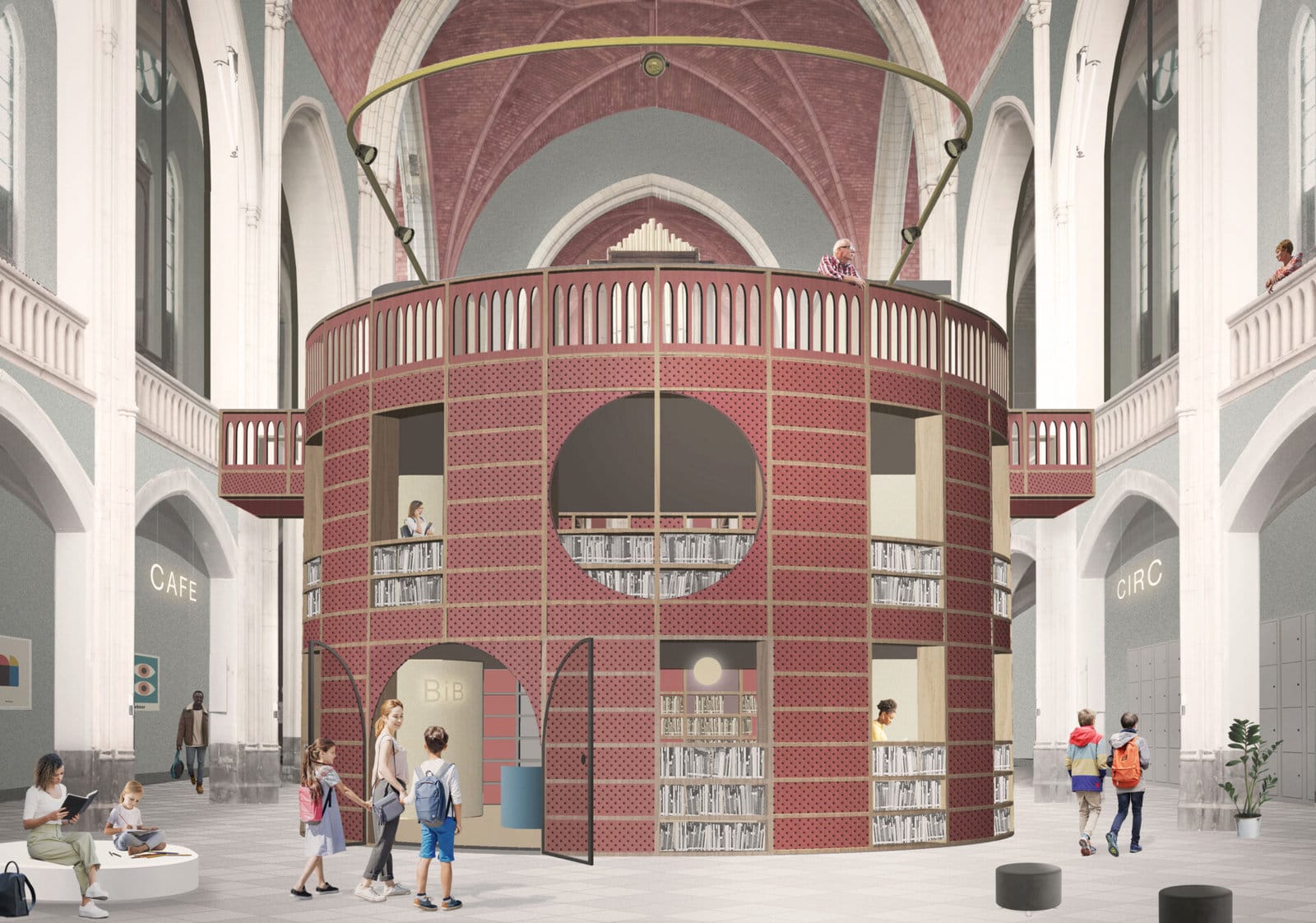
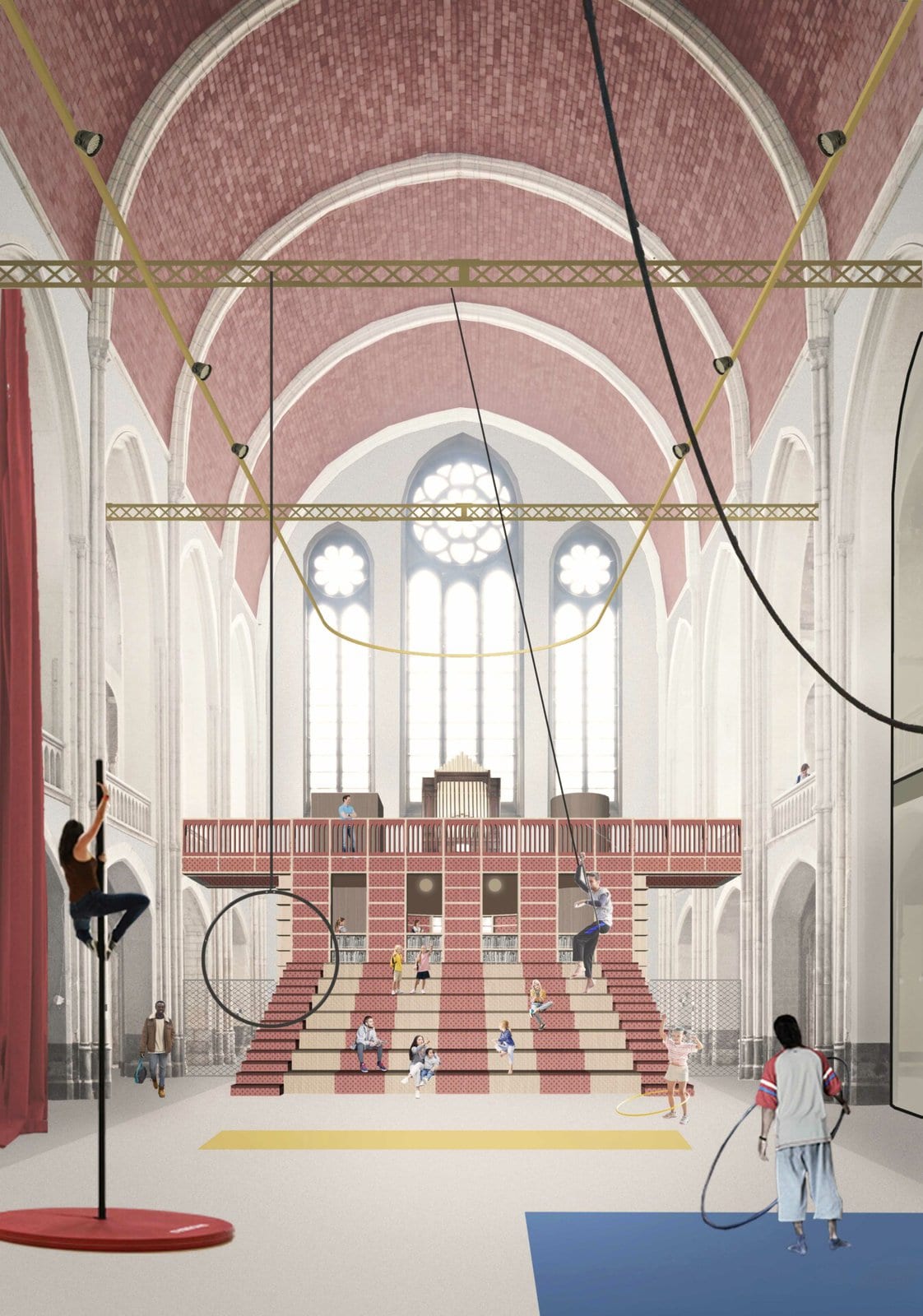
Granting the circus school a certain degree of security, the team has built a structure between the main entrance and the crossing. In plan, an inversion of the choir, it transforms the east side of the nave into a gallery. This antechamber functions as a foyer around the curved wall of the structure, a two-storey library. Like a screen, the bookcase shields the circus school from the entrance and the street. The structure connects the ambulatory on either side of the central nave; as a mezzanine beneath the vaults, it provides a fine spot for the organ and the audience during performances. The audience can also take their seats in the gallery, which is freely movable but is normally positioned next to the library. This movable structure can be deployed at other locations within the church as required, as it is designed to be dismantled.
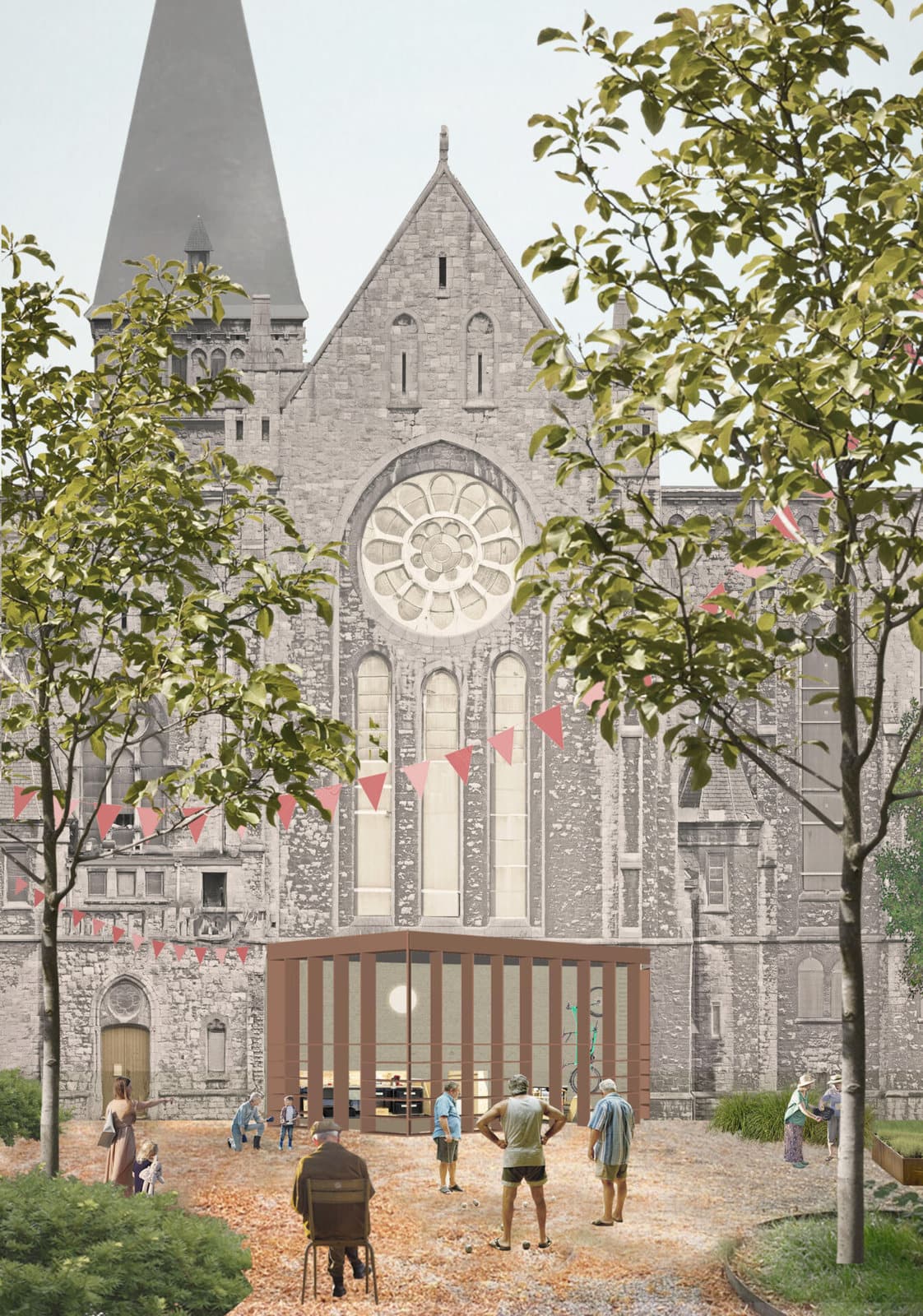
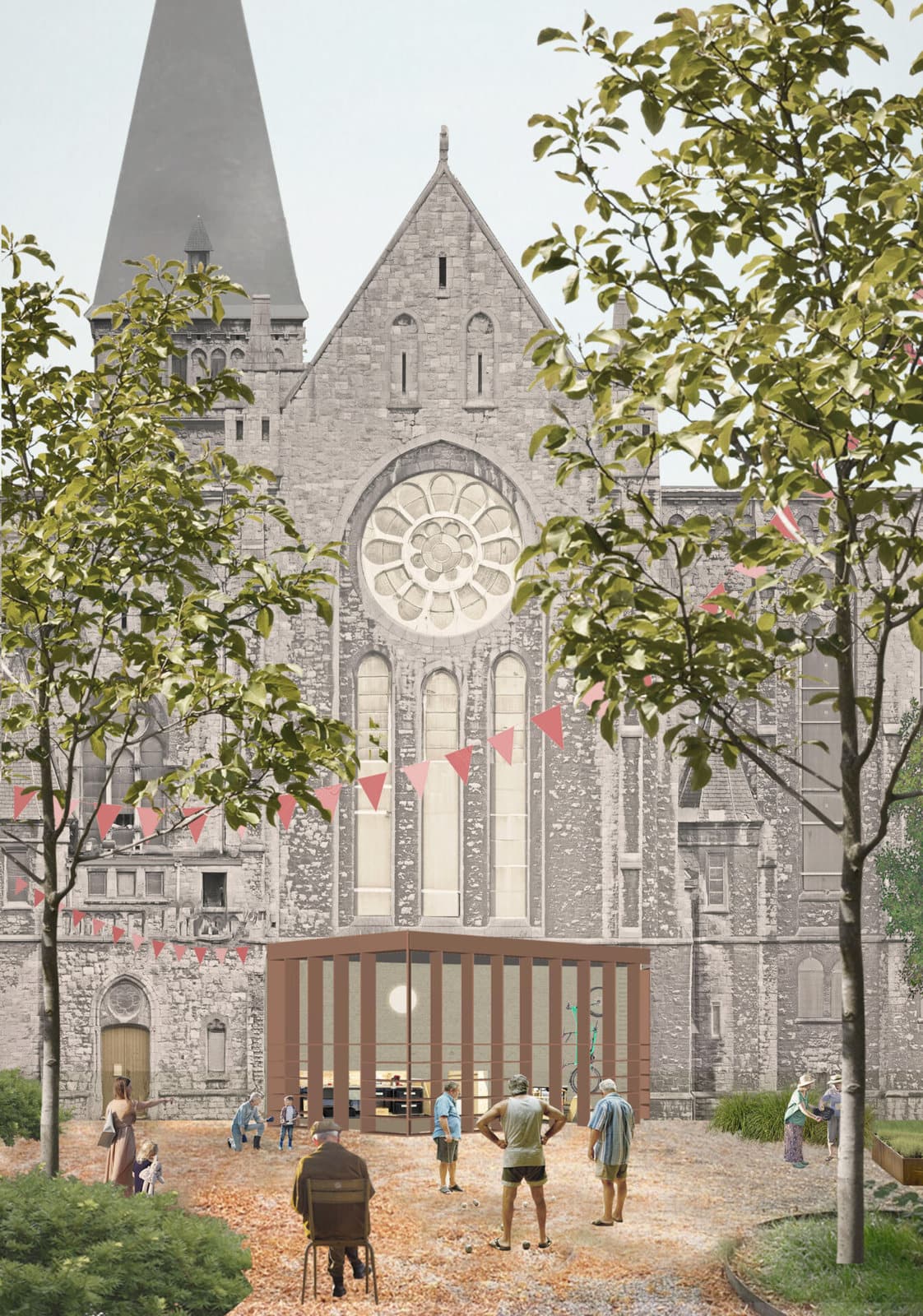
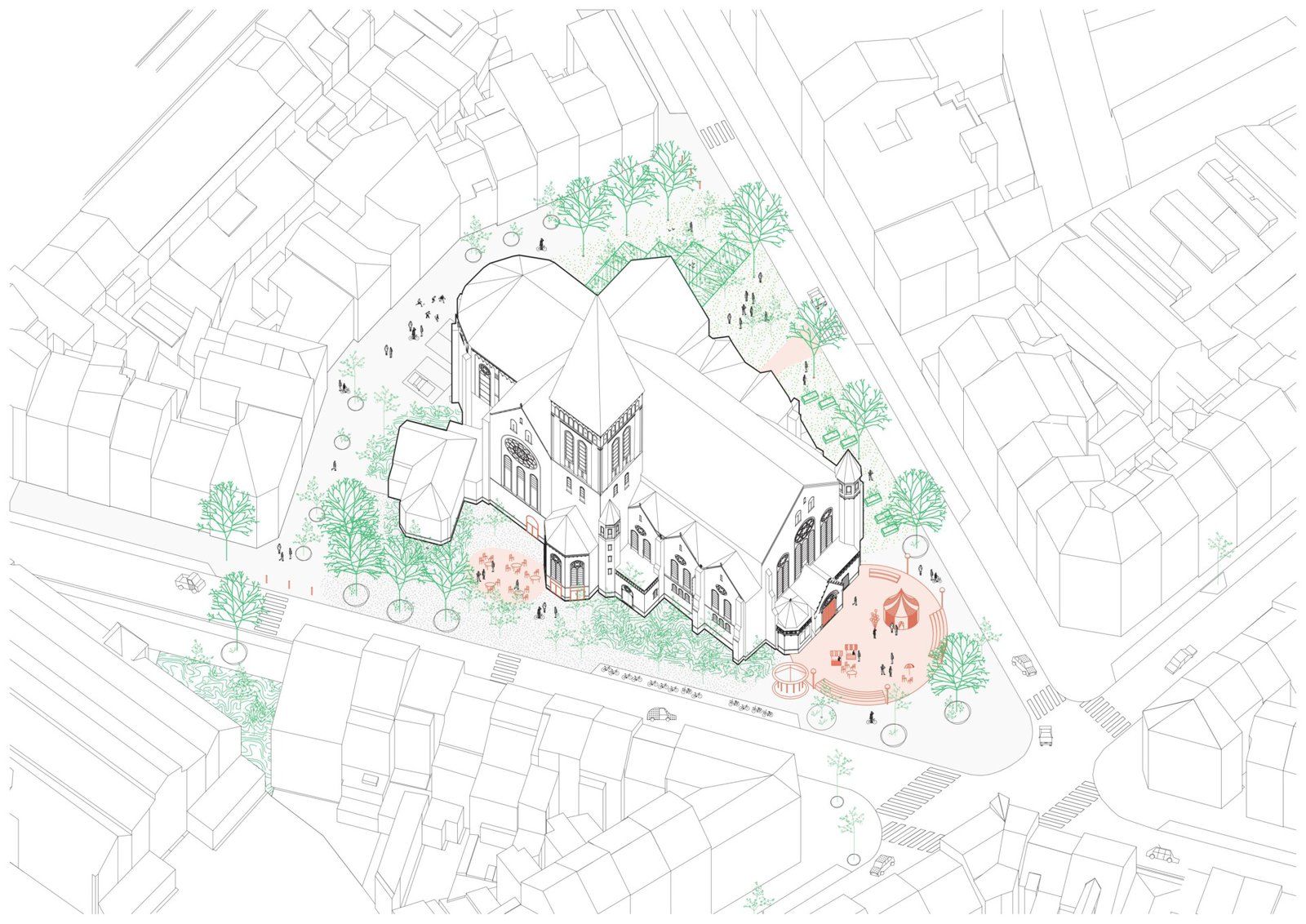
The team actively connects the church and its functions with the surrounding city. Programmes are organised between the city and the church that benefit both. This creates ‘satellites’ that show passers-by what is happening inside. On the north side of the church, on the site of a catechism hall that was never built, a workshop space is being constructed. It can be used as a workshop for the circus school, but is equally accessible to local residents for repairs. The conservatory-like structure also houses gardening tools, handy for the new allotments behind the church. In this way, the Circularium acts as the most effective link between the building and the neighbourhood.
The other satellites focus on events and passage. On the south side, along a prominent street in the neighbourhood, a terrace is being set up next to the cafeteria. Artists stay in the former sacristy by invitation. They perform on the terrace as they please. This is also possible on the forecourt, an outdoor stage for the acrobatic spectacle inside. Surrounded by fixed stands, the mineral part of the outdoor layout also lends itself to informal gatherings outside of performances.
The Xaverius Church, once neglected, is thus set for a bright future. To be experienced from 2025.