
On 2 October, A+ and Bozar, in collaboration with the KUL Brussels campus, are inviting Caruso St John Architects to give a lecture to mark the start of the academic year. A spoke to Adam Caruso about building in Belgium and their designs for the Venice Biennale.
Lisa De Visscher – At the moment, Caruso St John Architects have a strong presence in Belgium. You are building in Antwerp, working in Geel and have taken part in various competitions in Brussels, including the landmark competition for Kanal-Centre Pompidou. How did this relationship come about?
Adam Caruso – Our relationship with Belgium goes back a long way. The housing project in Geel, for which we are currently carrying out the feasibility study, is a collaboration with De Smet Vermeulen architects, a firm we have known for years and with whom we have worked in the past. Submitting an entry for the competition regarding the former Citroën garage for Kanal-Centre Pompidou was not only a natural step – every self-respecting firm submitted an entry – but also fits perfectly with what we do, our ambitions and our experience with museums. The collaboration with 51n4e went so smoothly because we were on exactly the same wavelength regarding the significance this site should have – both in architectural and urban planning terms and within the context of contemporary art museums. We have, perhaps more than any other team, brought together the programmatic, political and artistic elements to formulate a sustainable response to the question of how this project could be embedded within the existing, complex field of actors engaged in art and architecture at a high level in Belgium.
Collaborating with Belgian firms is, incidentally, a natural choice. Belgium currently boasts the most interesting architectural scene in Europe. No wonder so many Belgian architects now teach at top universities such as ETH Zurich.
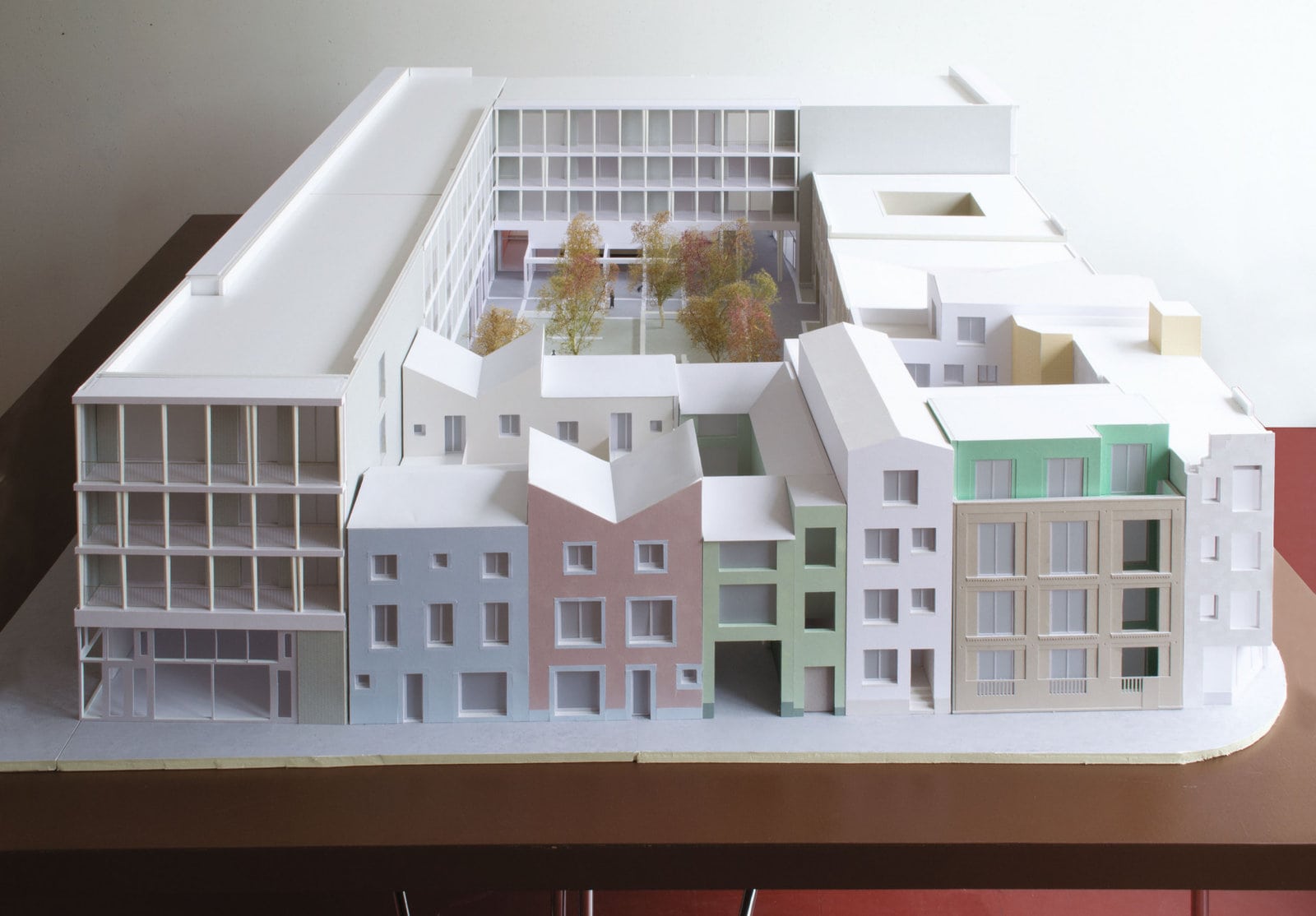
In Antwerp, where we designed a new block of buildings on Falconplein, the process took a different course. We formed a team with Rapp Rapp, Bovenbouw and ONO architectuur, but each practice took on a separate part of the block. Rapp Rapp drew up the masterplan in the first phase. We designed an L-shaped residential building, a ‘half-monastery’ around a courtyard garden, with recessed balconies acting as a kind of loggia and a brick façade with prefabricated concrete columns. Various passageways connect the courtyard garden to the street. One of the competition criteria was that the building had to achieve ‘BREEAM Outstanding’ status. Consequently, we have a floor-to-ceiling height of 3.2 metres and superb natural light inside. The building is currently at the structural stage. We have just had mock-ups made of the façade to test the brickwork and the concrete columns.
LDV The exploration of the façade is a recurring theme in your work. This concerns both the frequent use of very mineral materials, such as for the Landesbank in Bremen or the offices on Europaallee in Zurich, and the composition and the role the façade plays in the city. Is the hall you designed in the Biennale pavilion in the Giardini in Venice a reflection of this?
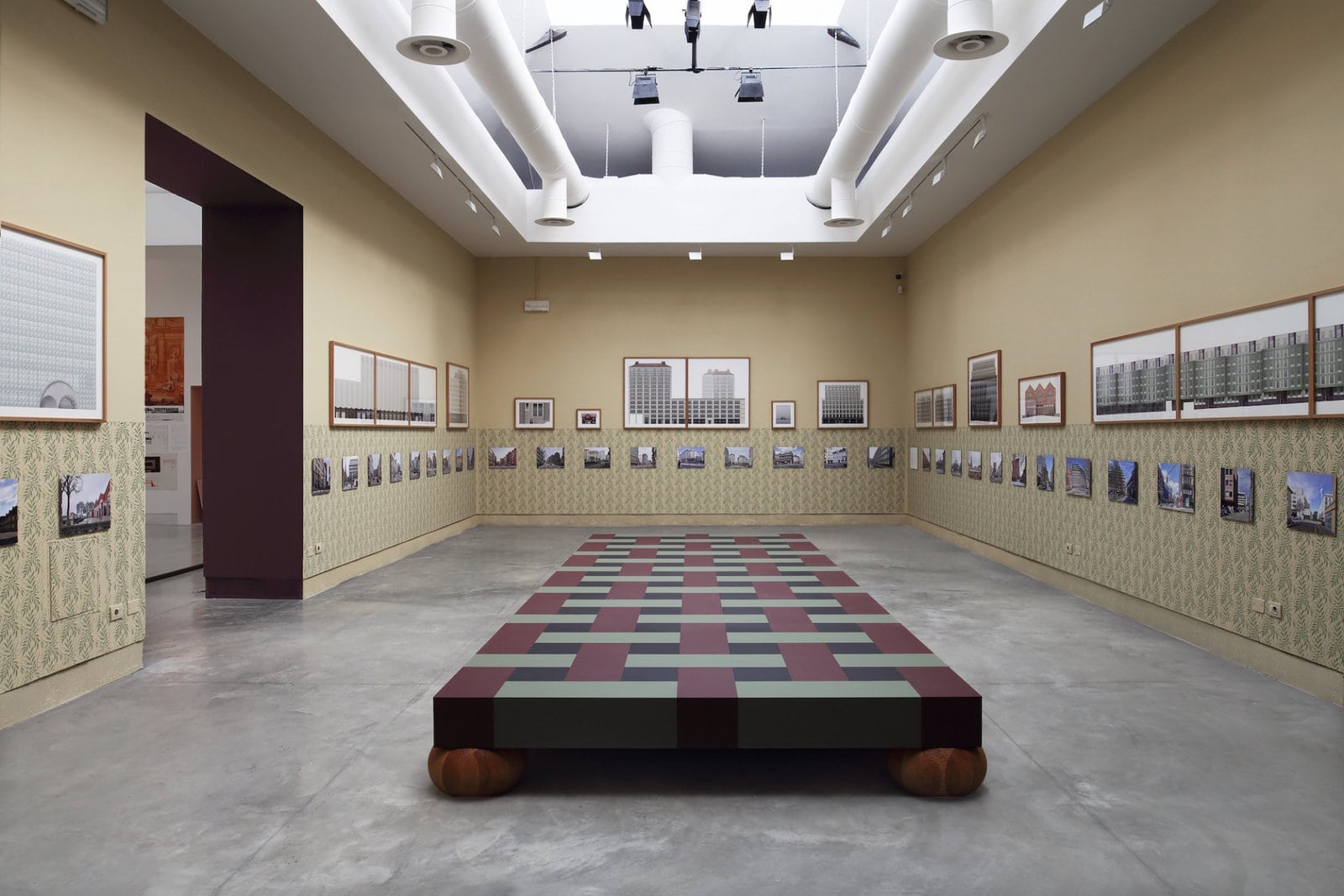
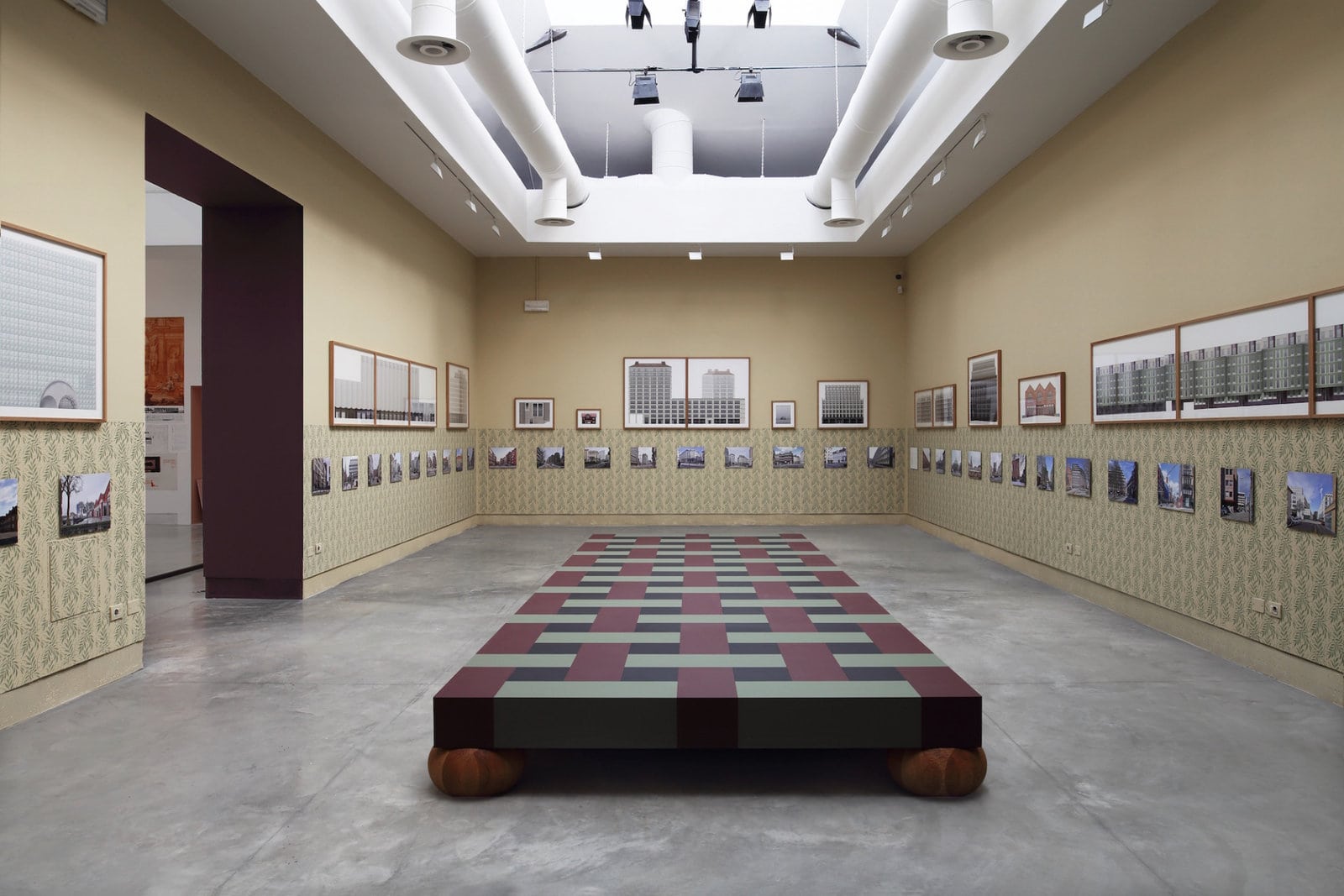
AC The exhibition we created in Venice consists solely of completed or yet-to-be-realised projects. The drawings and photographs express the confidence we had in the façade as a connecting element with the immediate built environment and, by extension, with the city. Like any exhibition, this one is also a moment of reflection on our own work and our methods. For us, this exhibition marks the end of a period in which the role of the façade in our projects was very clear.
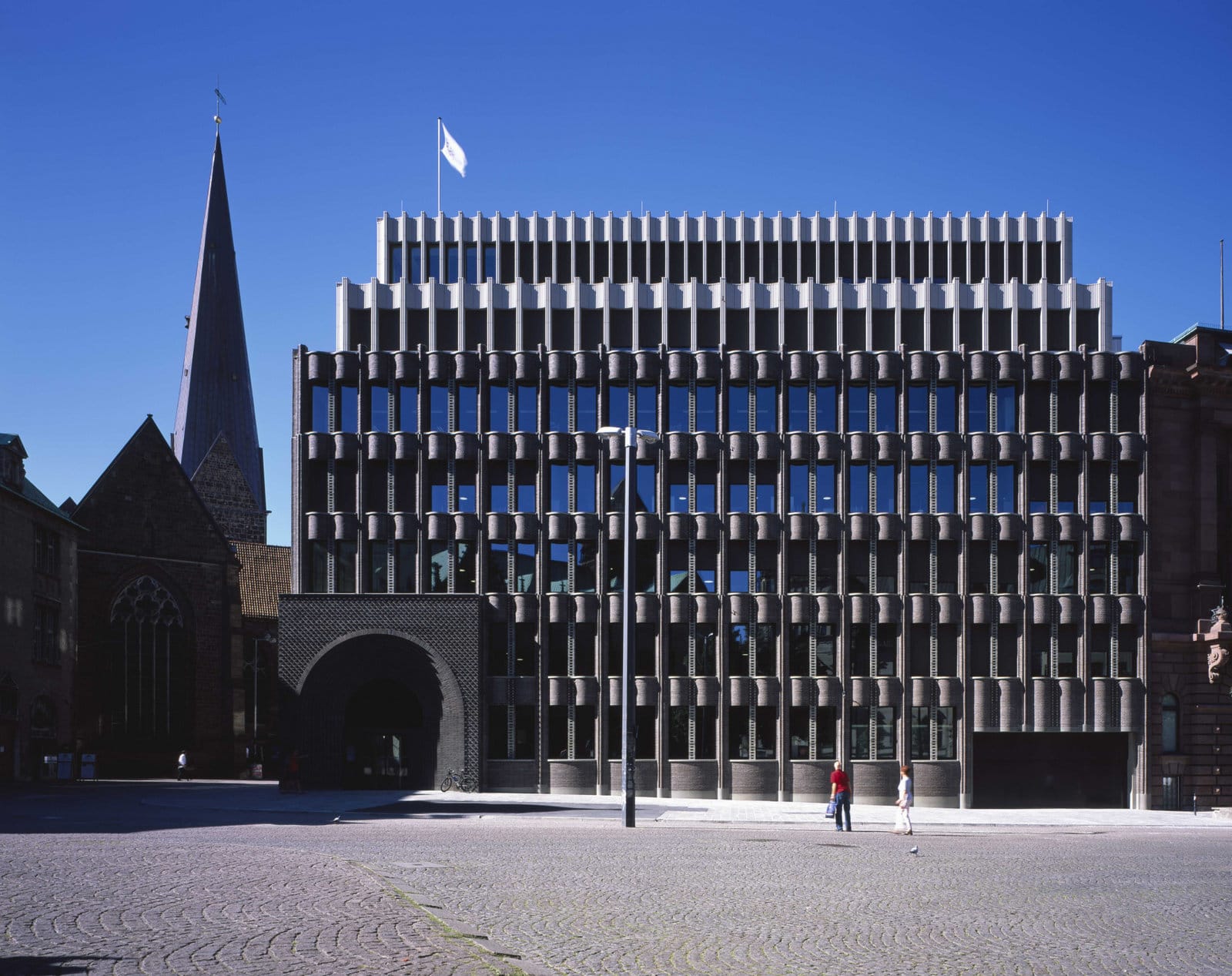
The Landesbank in Bremen is a good example of this. The building is situated in a UNESCO-protected zone, on the square in front of the cathedral. Previously, there was a dysfunctional office building from the 1980s, but most people think our building has always been there. That’s nice, because the undulating brick façade was a bold move in this historic context. The building has a very strong presence on the square, but its mineral façade blends perfectly with the surroundings. If you look from a certain angle, you no longer see the glass and the windows, giving the building an immense sense of massiveness. Very over the top. Only in very specific and rare cases can you afford such a ‘muscular’ façade.
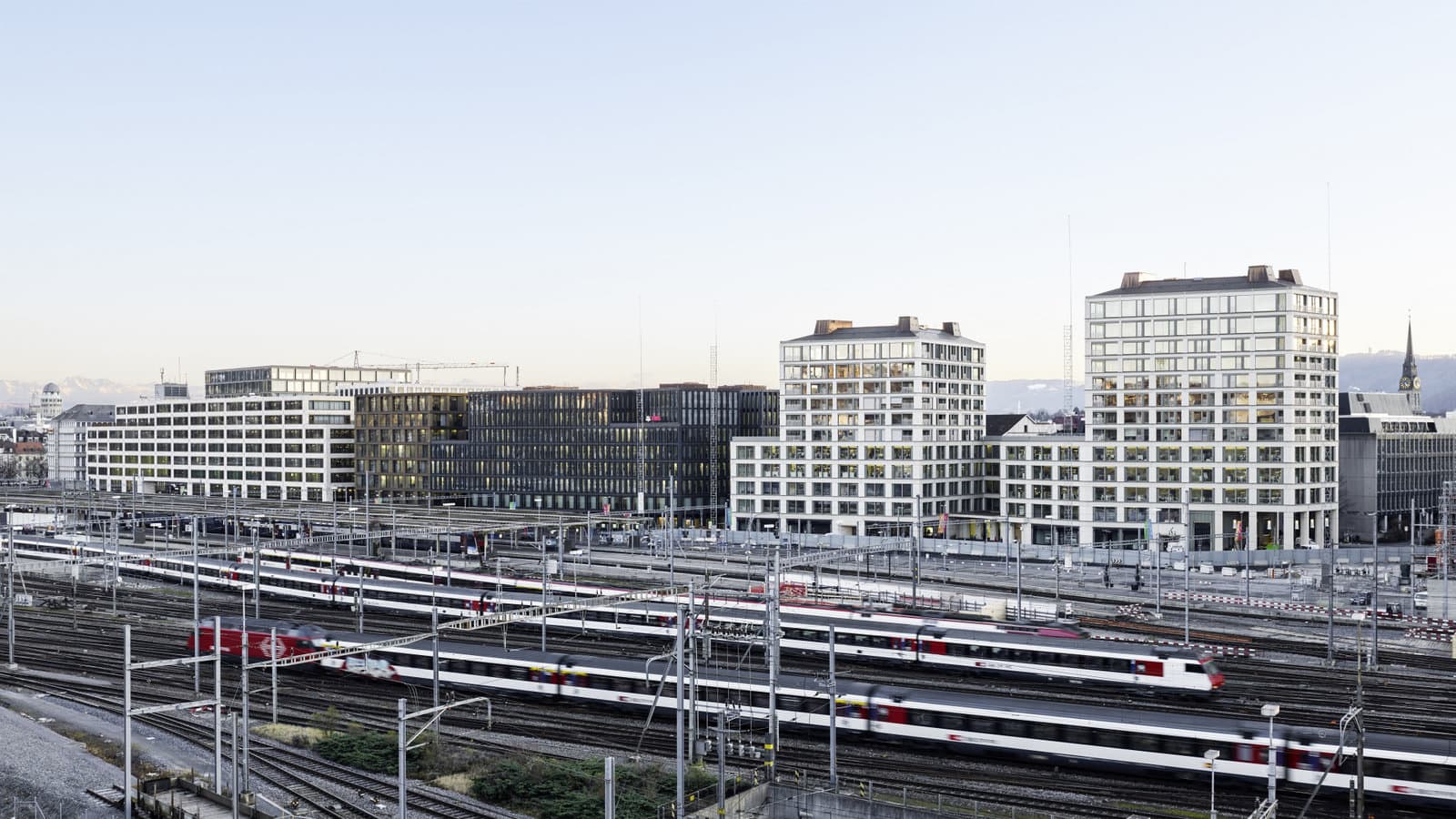
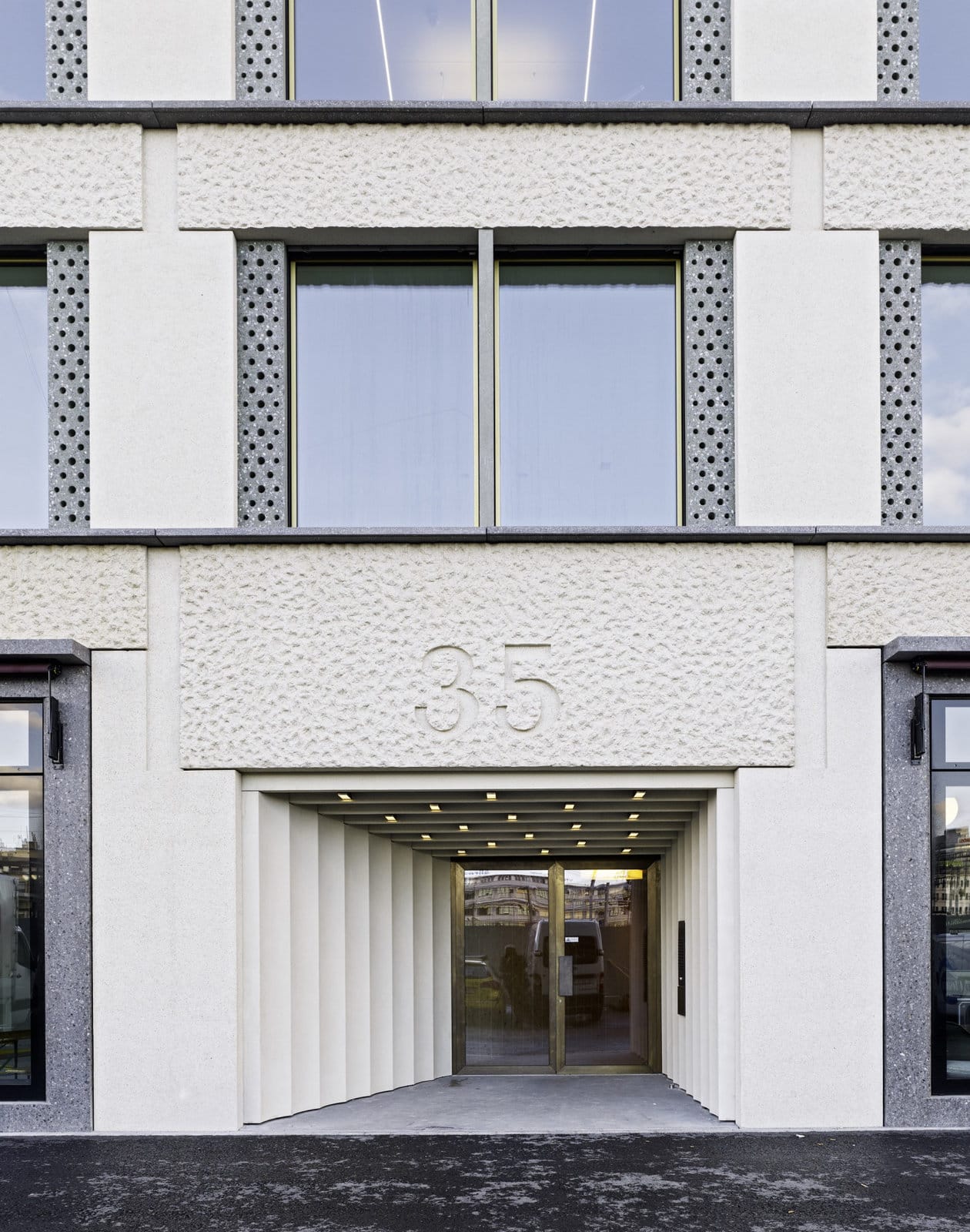
The project on Europaallee in Zurich also has a façade whose primary ambition is to generate an urban quality, to be the face of a metropolitan building. The result is that from the outside, you cannot see that various functions are concealed behind the façade, that it houses both residential units and offices as well as communal spaces.
Today, we want to create more honest façades once again – as Kay Fisker did in Denmark in the 1920s and 1930s. Façades that are directly linked to the programme and the organisation of the plan. In residential construction, this means you have to come to terms with the fact that you have balconies, parapets and casement windows. We have concealed all these elements in the Europaallee. We were more concerned with creating the city than with creating a good apartment block.
The context in which we build today is not always metropolitan. Even within the suburban fabric, we want to create façades that are representative of the programme.
LDV At the Venice Biennale, you were also the curators of the British Pavilion, which was awarded the Silver Lion. What was the aim there?
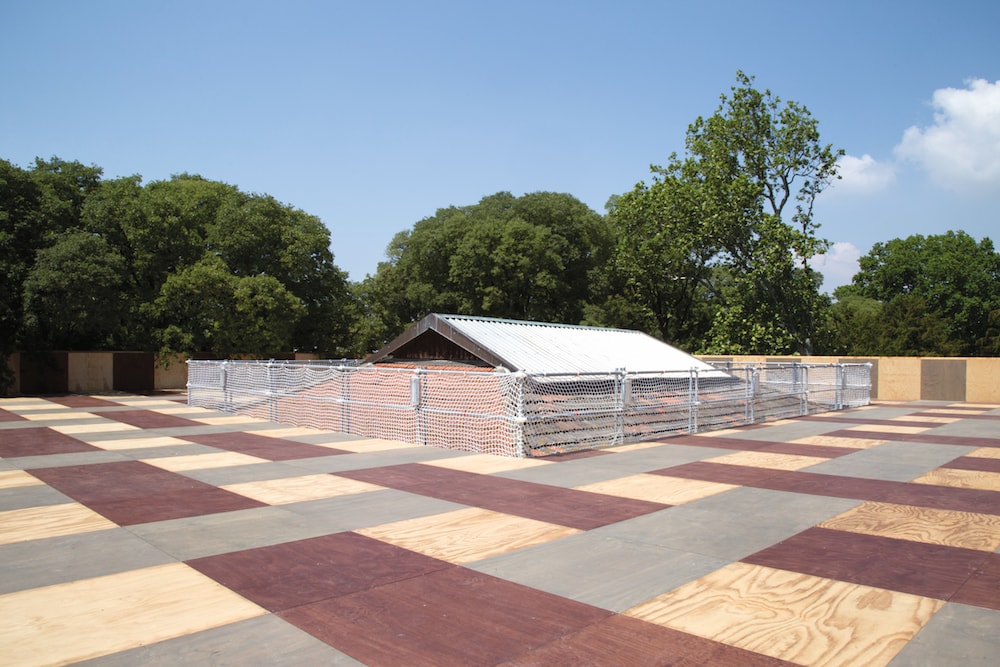
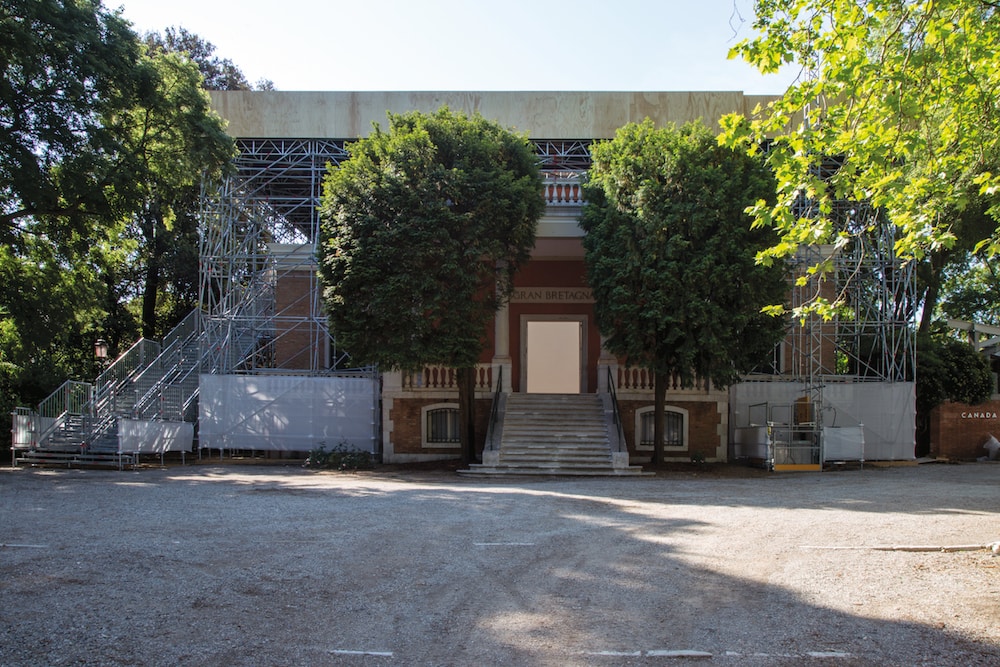
AC We didn’t want to create a traditional architecture exhibition, partly because these are not traditional times for Britain. We placed the British Pavilion on scaffolding because Britain is leaving the EU, and perhaps even this world. Hence the title Isola, or island, with the underlying idea that an island can be both a refuge and a prison. We didn’t want to create a project with a single, clear message. That’s why we created two spaces: a sort of raft, a freespace, floating on the roof of the building, supported by the scaffolding, and the space of the pavilion itself. Both spaces are empty, apart from a small bar on the roof where you can get free tea.
We wanted to make this pavilion a place where visitors can read and discuss, where a whole programme of lectures and performances takes place. We also opened the pavilion up to other pavilions and programme organisers. We wrote to all the curators across the entire Biennale with a proposal to use our space. The pavilions that do not have a space within the Giardini themselves, such as Singapore, were particularly interested. We also contacted various architecture schools and universities that use the pavilion as a workshop space for summer schools. That generosity towards other countries and influences was a central theme within the project right from the start.
The British Pavilion is built on the highest point in Venice. The ‘raft’ on the roof raises the site even higher, resulting in a magnificent view over the lagoon. Technically, the project is incredibly simple: the scaffolding is standard construction and we left the interior of the pavilion in the condition we found it. The only intervention is the painted pattern on the wooden panels of the platform. This corresponds to the pattern of the wooden bench in the exhibition space we designed in the Biennale pavilion, thus creating a subtle connection between our two works in Venice.
LDV Taking part in the Venice Biennale is often a major investment. Why do you do it?
AC Pure vanity! No, of course you don’t do it just out of vanity. You’re invited by the curator, someone whose work you respect and who gathers a group of people around them that you want to be part of. It’s not a commercial environment like, say, MIPIM or the Stirling Prize ceremony. The Biennale succeeds time and again in bringing quality to the fore, sparking debate about architecture and showcasing research that inspires you and helps you move forward in your own work. The opening is, of course, a networking event, but it doesn’t land you commissions, and that’s just as well. It is not like the Venice Art Biennale, which has unfortunately become a sort of art fair.
It struck me this year that I am part of the generation that is now calling the shots. There has been a changing of the guard. Peter Zumthor was there, of course, and Norman Foster has also created a beautiful chapel for the Vatican, but apart from that, the older generation that had been very much in the spotlight for years was absent. All the leading projects were by firms from our generation or younger. Personally, I was very pleased with the sequence of spaces within the Biennale pavilion: the project by advvt with Gideon Boie, Elizabeth Hatz’s magnificent space, and then us!
