Architecture for culture is often about anything but culture. Take the Guggenheim Museum in Bilbao, designed by Frank O. Gehry. The urban significance of the building far exceeds the intrinsic value of the exhibition space. The museum is the crowning glory of the revitalisation of the riverbanks and, by extension, the entire city. It is also unlikely that your city trip to Bilbao was motivated by the Guggenheim collection. The urban function of a cultural palace is as old as humanity itself. Just think of the Parthenon, which was probably an empty building, and the Westrand cultural centre in Dilbeek, designed by Alfons Hoppenbrouwers, which was part of a Flemish policy of presence in suburbia.
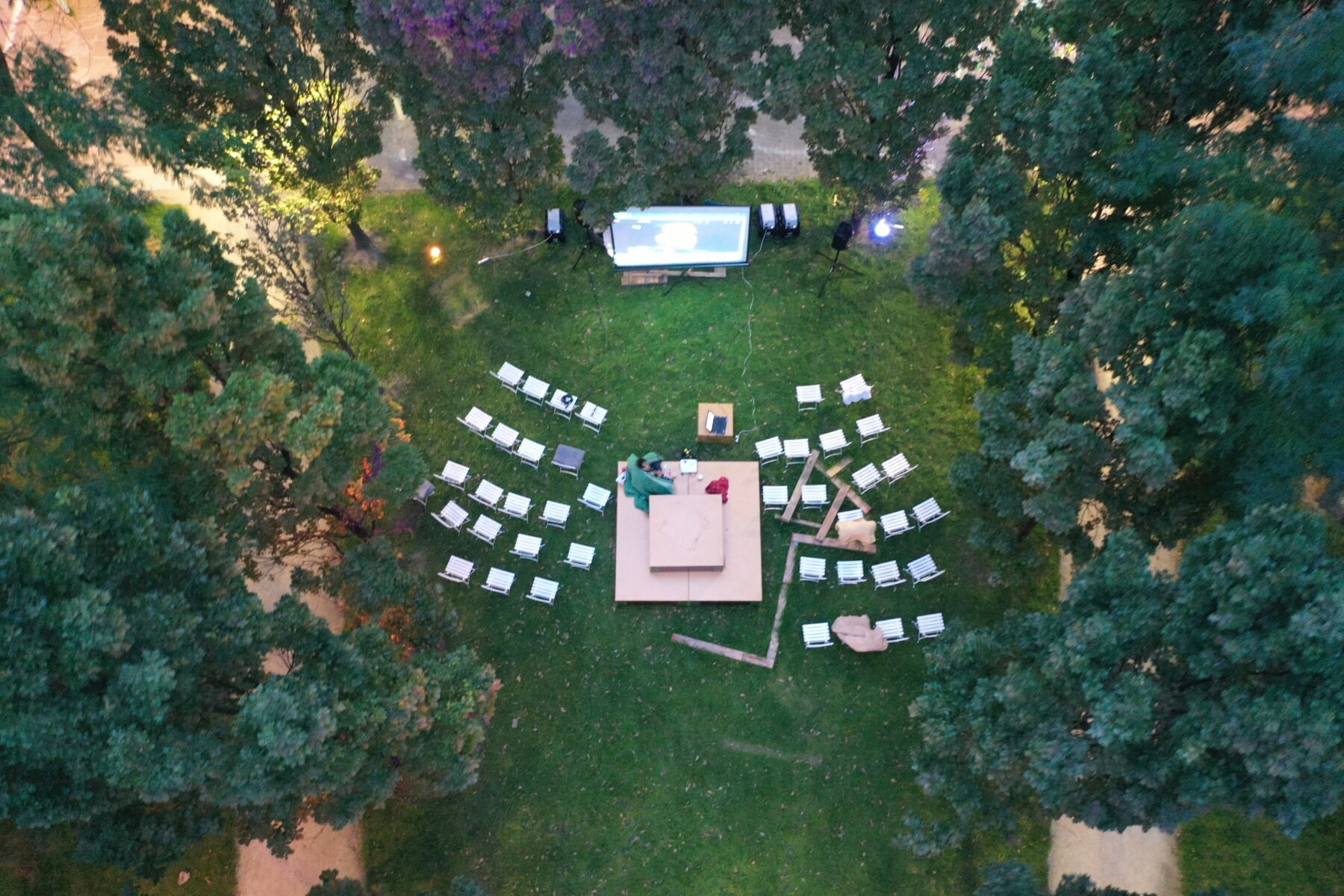
Could it be that culture only comes into its own when there is no building to draw all the attention? Let’s reverse the operation and start with Cinemaximiliaan, a cultural initiative in Brussels that has been led by Annabelle Van Nieuwenhuyse since 2021. Cinemaximiliaan started in 2015 as an activity in the tent camp in Maximiliaanpark, near Brussels North Station. The park at the foot of the WTC, where no fewer than a thousand refugees were staying, became a symbol of the refugee crisis that gripped Belgium. Every morning, there were long queues in front of the Immigration Office, which was then located in the basement of the vacant WTC.