Are flexible buildings recognizable? Flexible architecture symbolizes more than adaptability and it often possesses a form and aesthetic of its own.
Flexibility is the fever dream of architects. A fever is the result of a struggle. Whoever aims for flexibility is trying to get a grip on what is unpredictable. In that sense, it is an intensification of the project-like character specific to every design. This is what Alan Colquhoun wrote about it in 1977, in a text about the Centre Pompidou: ‘The philosophy behind the notion of flexibility is that the requirements of modern life are so complex and changeable that any attempt on the part of the designer to anticipate them results in a building which is unsuited to its function, and represents, as it were, a “false consciousness” of the society in which he operated.’
An architect who is aware of this can try to come up with a design that allows for other uses. Doubt leads the architect to relinquish power over other people’s activities. Choices are made later, by the user. It is no coincidence that discussions about flexibility became more heated after World War II. At this time, not only was the welfare state being established in Western European countries, it was also an era in which individuals began to resist authority.
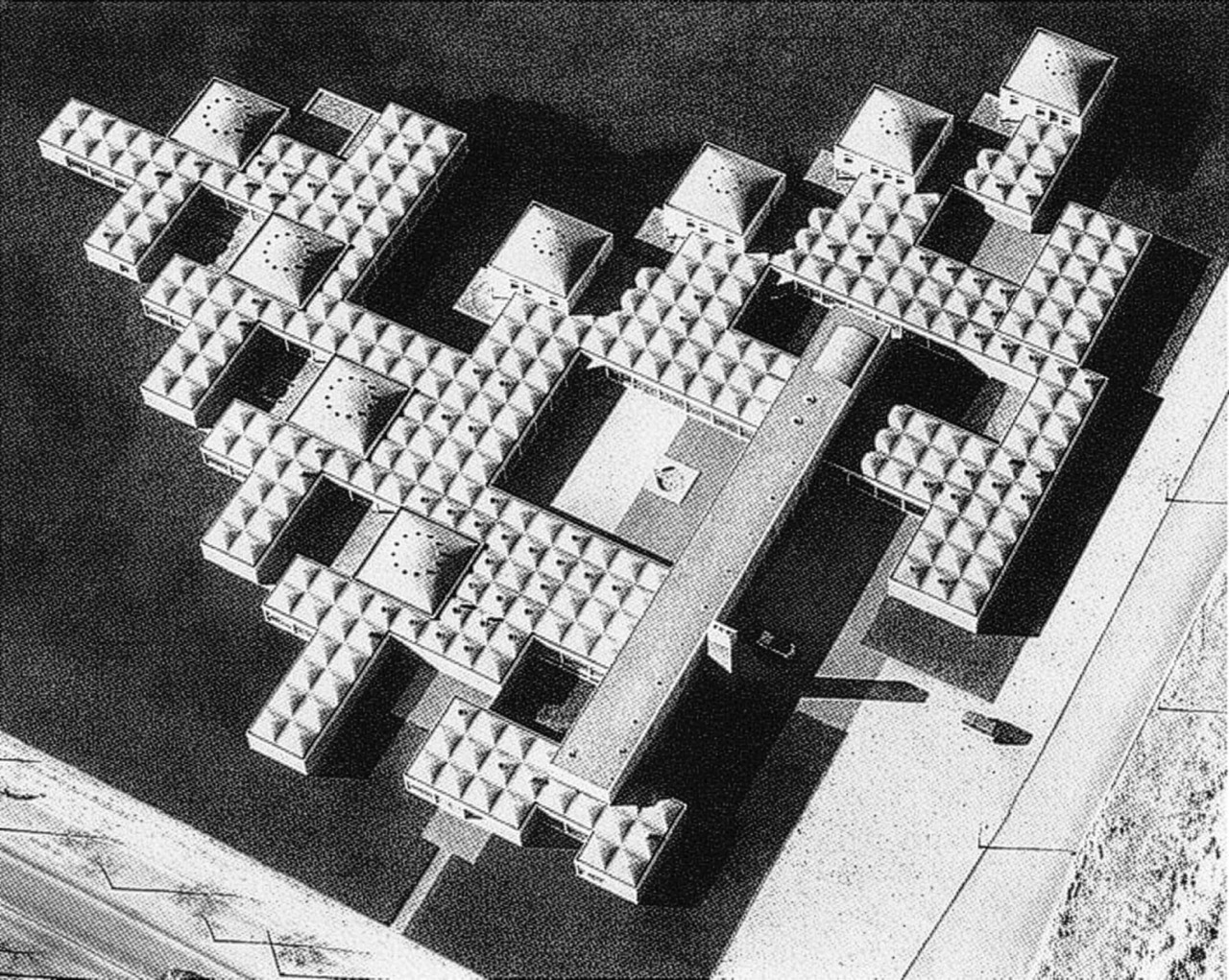
In the entry ‘Flexibility’ in Words and Buildings: A Vocabulary of Modern Architecture (2000), Adrian Forty expresses his surprise at how ‘Dutch contributions to the concept of “flexibility” exceed those of all other nations’. Architects such as Aldo van Eyck and Herman Hertzberger did indeed fiercely oppose the idea of flexibility. In 1962 Van Eyck warned against ‘the glove that fits no one because it fits everyone’. According to Hertzberger, the flexible architect shirks responsibility and the result is boring and meaningless. It is an aversion that is typical of the prosperous Netherlands of the 1960s and 1970s, but also of structuralism. Architecture that does not aim for flexibility is atypical and special, bordering on patronizing; neutrality is avoided, as are simplicity and uniformity.
Forty distinguishes three strategies in Words and Buildings for achieving flexibility. Architecture can be changeable because walls, floors, roofs and stairs can be moved. The result is a complex machine with different parts in different sizes. Cedric Price’s Fun Palace (1964) is an example, a precursor to the Centre Pompidou (see p. 28). But Gerrit Rietveld’s Schröder House in Utrecht, built in 1924, is also a building that seeks to outwit every ripple in daily life. The result, ideally, is a tableau vivant, like an installation by Jean Tinguely, which, however, can fall to pieces or take on a life of its own.
A second strategy, according to Forty, is rather anti-architectural: flexibility is power that the user demands, without the architect’s permission. The relationship between architecture and use is severed: people do what they want with a building, room or space. This too leads to proliferation: the occupant leaves traces, changes layouts and demonstrates the absolute relativity of architecture. Ultimately, every space is flexible. Even Aldo van Eyck’s Orphanage in Amsterdam, dating from 1960 and consisting of 328 small units, carefully designed for various communities and activities, became an office building. For a time, it even housed an architecture school, the Berlage Institute.
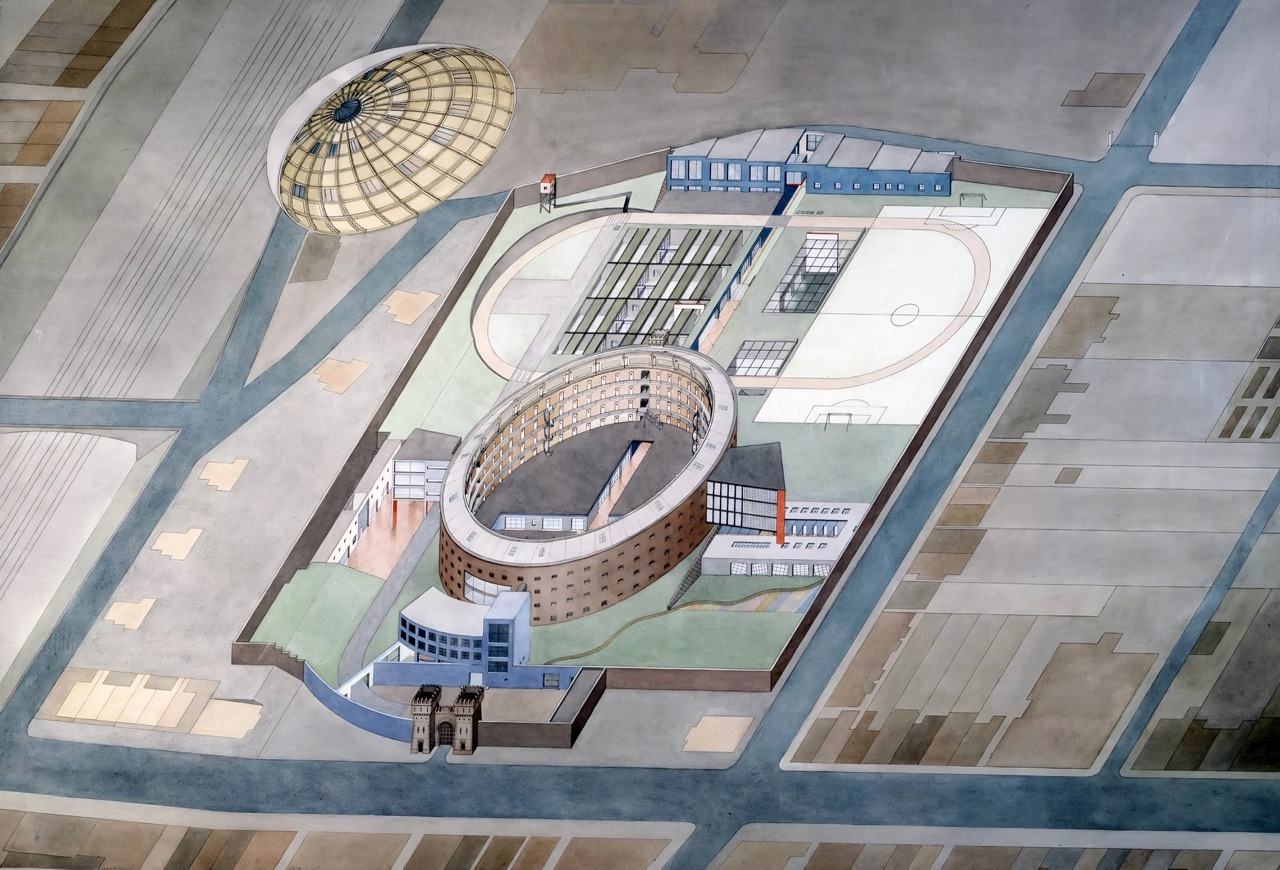
What remains of the good intentions of all these architects? The third strategy incorporates that realization, with restraint as a result. In Words and Buildings, Forty speaks of ‘redundancy’. He quotes another Dutchman, who distinguished himself from his predecessors by stubbornly embracing flexibility. In a 1980 explanation of the project for the dome prison in Arnhem, Rem Koolhaas defined flexibility as ‘the creation of margin – excess capacity that enables different and even opposite interpretations and uses’. According to Koolhaas, functionalist and structuralist architecture too has lost sight of this. A large, pre- or early-modern building is not predetermined; even baroque palaces, despite their decoration and ornamentation, consist of rooms in which anything can take place.
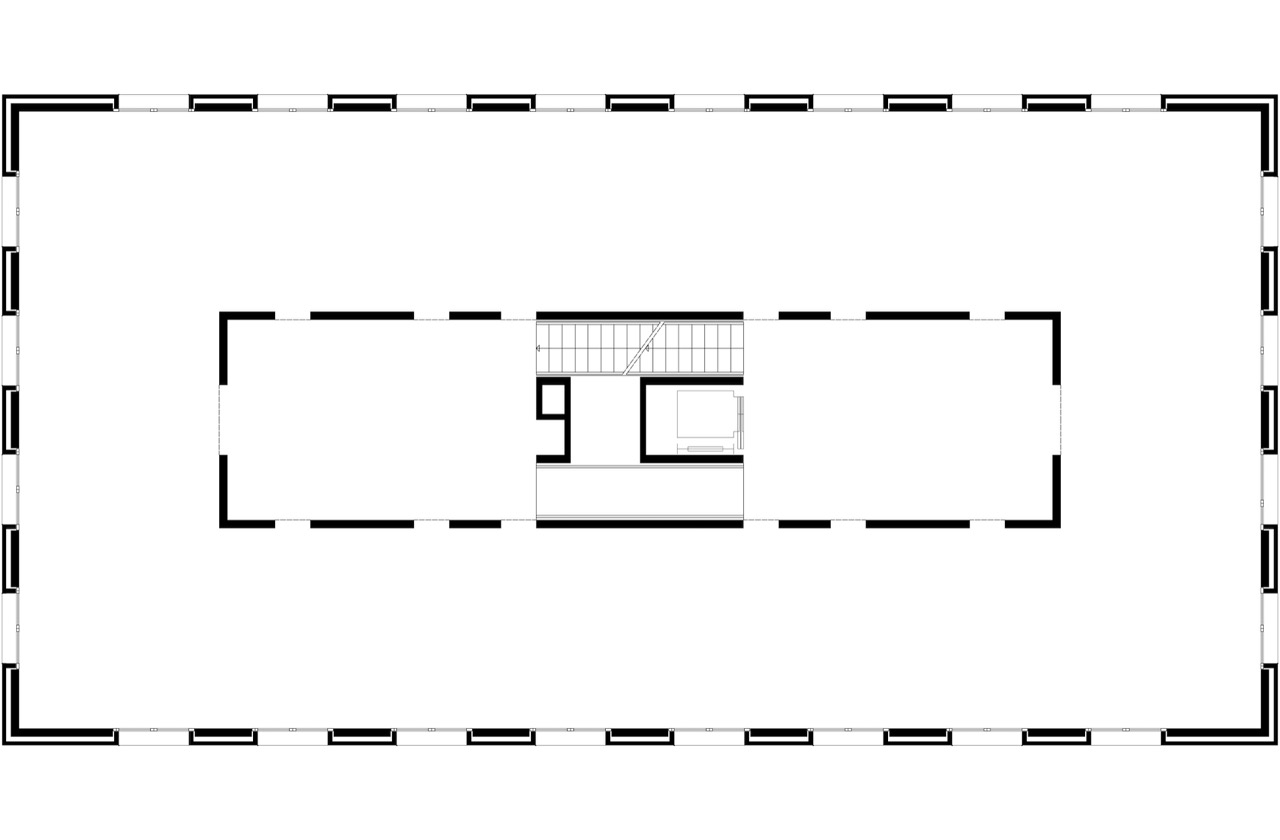
It is a flexibility that reduces architecture to the design of oversized structures. In 1983 a Belgian contemporary of Koolhaas gave a lecture titled ‘The long term that enables chance and imagination possible’. ‘Architecture’, said bOb Van Reeth, ‘must limit itself to the long-term and leave the short-term of life to life. The aim should not be to create a flexible building, because then you will soon be thinking about movable walls. The aim should be to design and build a building that is independent of a particular plan structure, in which the plan, in which many plans can be incorporated.’ This is what Van Reeth referred to as ‘intelligent ruins’ during his time as Flemish Government Architect: buildings with an open plan that last a long time and offer basic shelter. The architecture of Van Reeth and AWG also evolved in this direction, with the publishing house in Averbode in 1990 as a turning point: a rectangular, empty floor plan, with a smaller rectangle in the middle with the same proportions, and with a staircase and service areas. ‘More has been left out of this building than added to it’, said Van Reeth in 1993. This flexibility looks anything but literally ruinous. The result is rather an aesthetic of grids and repetition, but also of generic, reliable, stone urbanity.
What remains standing in this modesty are floors, provided with light by façades and façade openings. If flexibility is a fever dream, then the open floor is what presents itself upon awakening. In all its rationality, the architecture is cured of its compulsion to control. Façades and windows make possible a standard plan that no longer needs to be divided or detailed. Everything else is luxury and ostentation. ‘Architecture is illuminated floors’, wrote Le Corbusier in 1930 in Précisions sur un état présent de l’architecture et de l’urbanisme, and he had already succinctly illustrated that definition in 1915 with the Maison Dom-ino.
Stacks of illuminated floors urbanized large parts of the world during the twentieth century because they are not programmatically determined. Flats, offices, warehouses, hospitals, shelters and parking spaces: everything is welcome, temporarily and simultaneously if necessary. Today, Le Corbusier’s planchers éclairés are more useful than ever before. Savings, an economic crisis and shrinking government authorities go hand in hand with an architectural sense of guilt about climate disruption. The result is the zero degree of the empty plan, which no longer makes any statements about the future and which knows what to do with every crisis – bankruptcy, war, flooding, restructuring or austerity.
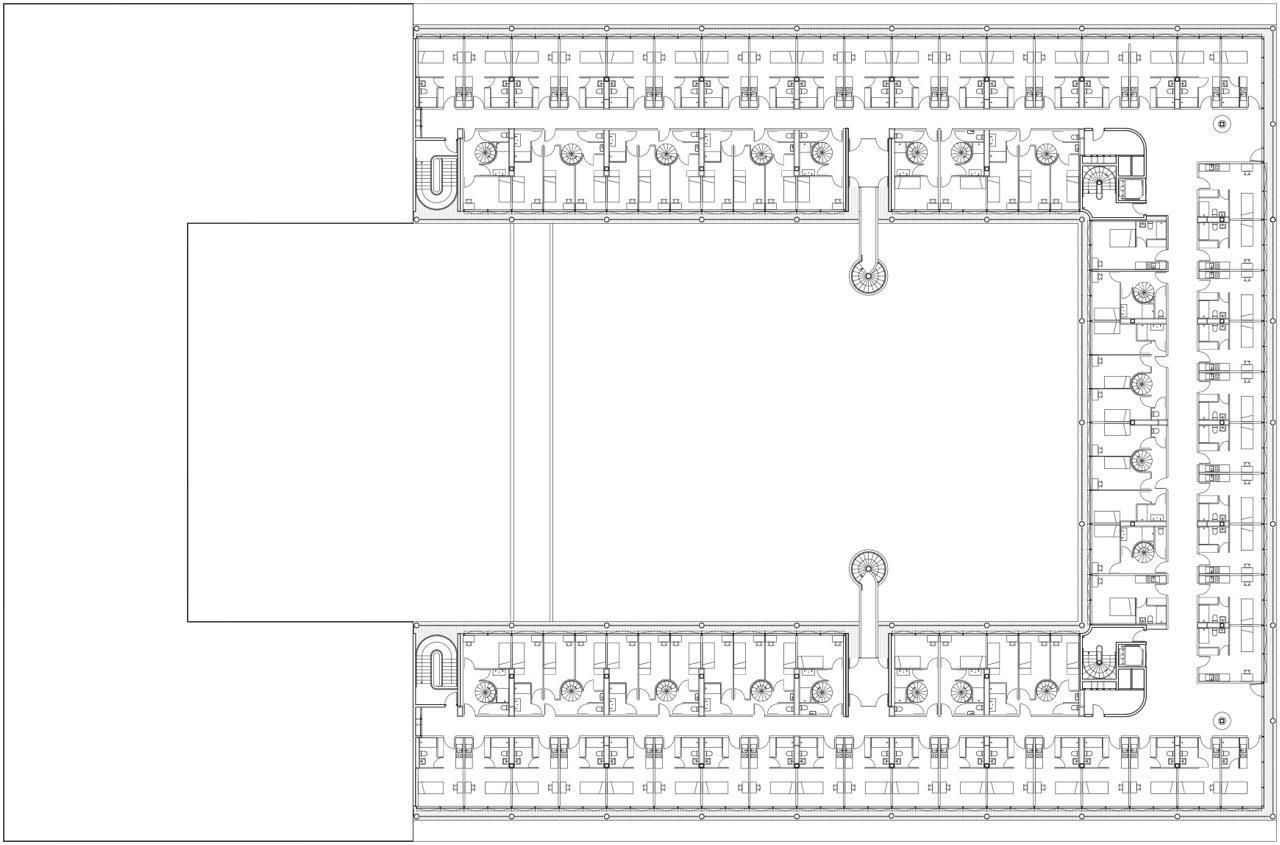
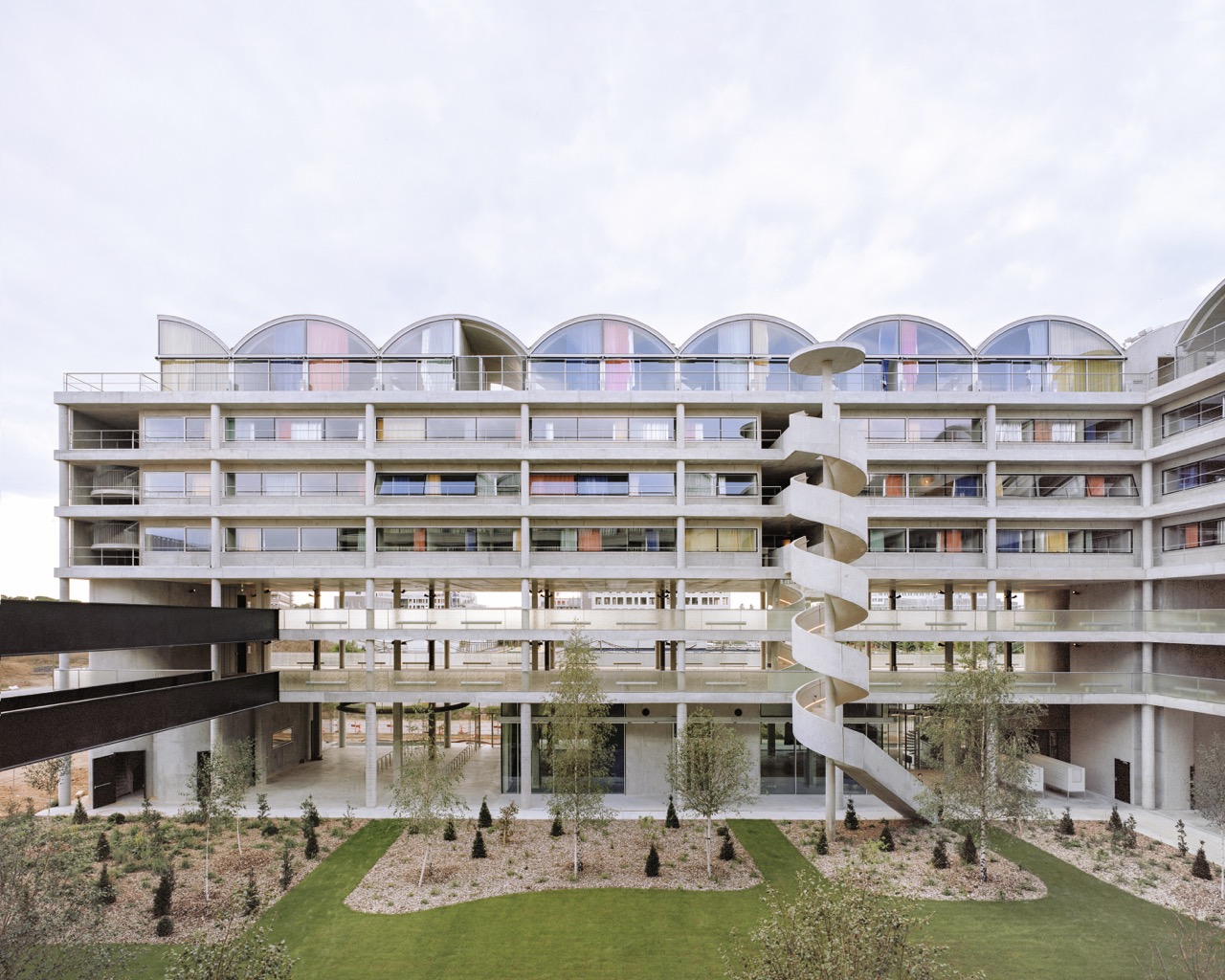
The Rosalind Franklin student accommodation on the Université Paris-Saclay technology campus, completed in 2020 by Bruther and Baukunst, is emblematic in this respect. The building is in almost every way the opposite of Lucien Kroll’s legendary Mémé from 1972. Every individuality of the resident has been banished, as has every architectural struggle. In what is set to become a French version of Silicon Valley, Bruther and Baukunst stacked six concrete floors for 192 student residences (with communal and commercial spaces) and 491 parking spaces. One part can easily be transformed into the other. If the campus is a failure, space will be available for an unpopulated distribution centre. What is unique about the design is that the illuminated floors feature a contemporary and light aesthetic, thanks in part to brightly coloured thermal curtains, the last remnant of the struggle with adaptability. The column and beam structure is visible and, as Pierre Chabard wrote in A+289, ‘explicitly shows the application of a generic construction method’. The circulation, currently still partly for cars, also responds to this. ‘The separate ramps, symmetrically suspended from the structure (to make them easier to remove in the event of a repurposing), give the double-height ground floor the allure of a castle on the Loire’, according to Chabard.
The car park thus becomes the archetypal space of the 2020s. Is there anything that illuminated floors cannot do? Is there a future scenario, however dystopian or pessimistic, in which they cannot play a role, above and even below ground? Lucid and illusionless, the architecture proves to be more flexible than ever before.