
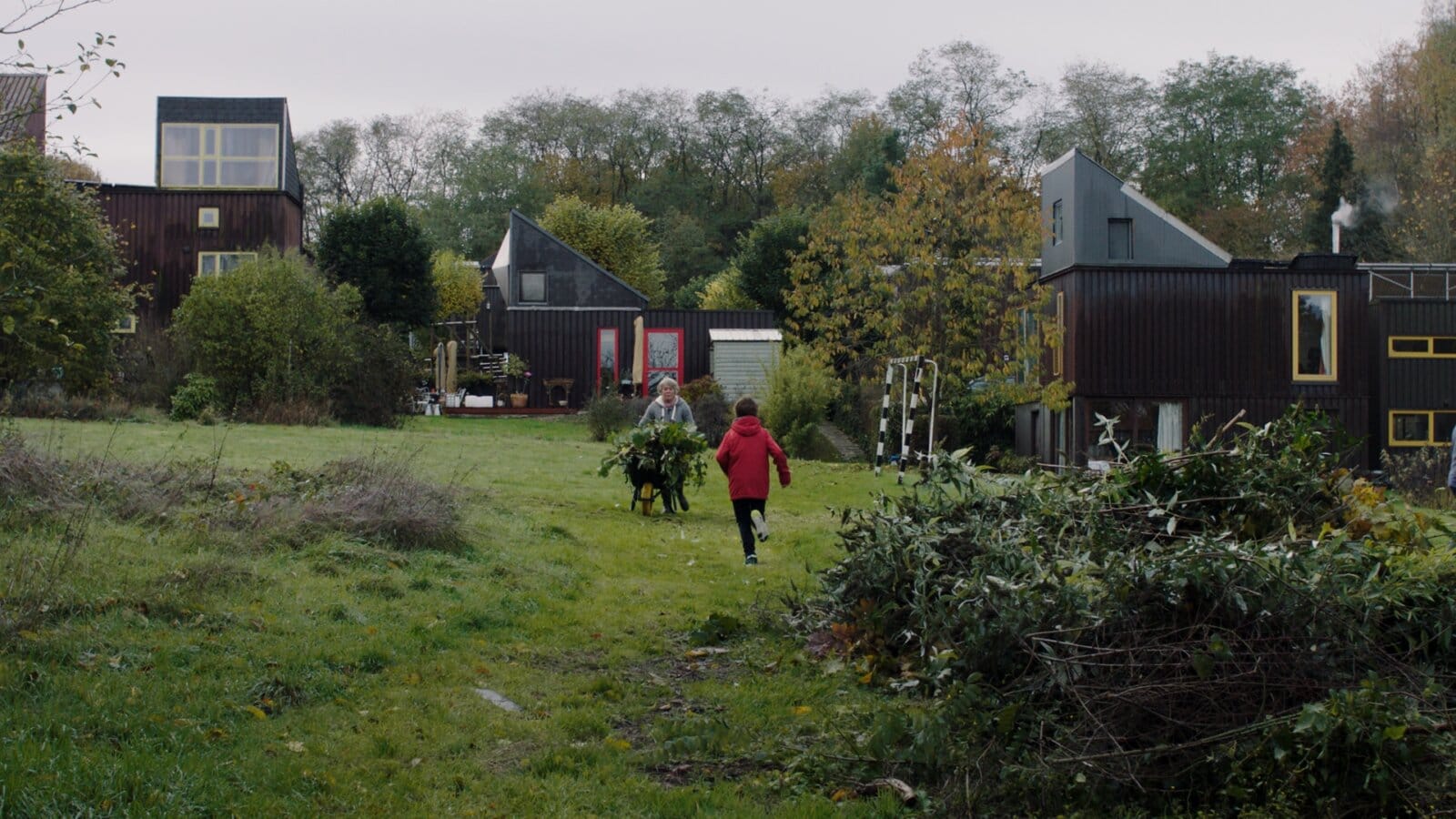
The documentary La Vie en Kit follows in the footsteps of Belgian architects Jean Englebert, Paul Petit, Lucien and Simone Kroll, and explores their research into housing in Belgium during the 1970s. On 13 November, the film won the Audience Award at the BAFF/Festival du Film sur l’Art. On this occasion, Maurizio Cohen spoke with director Elodie Degavre.
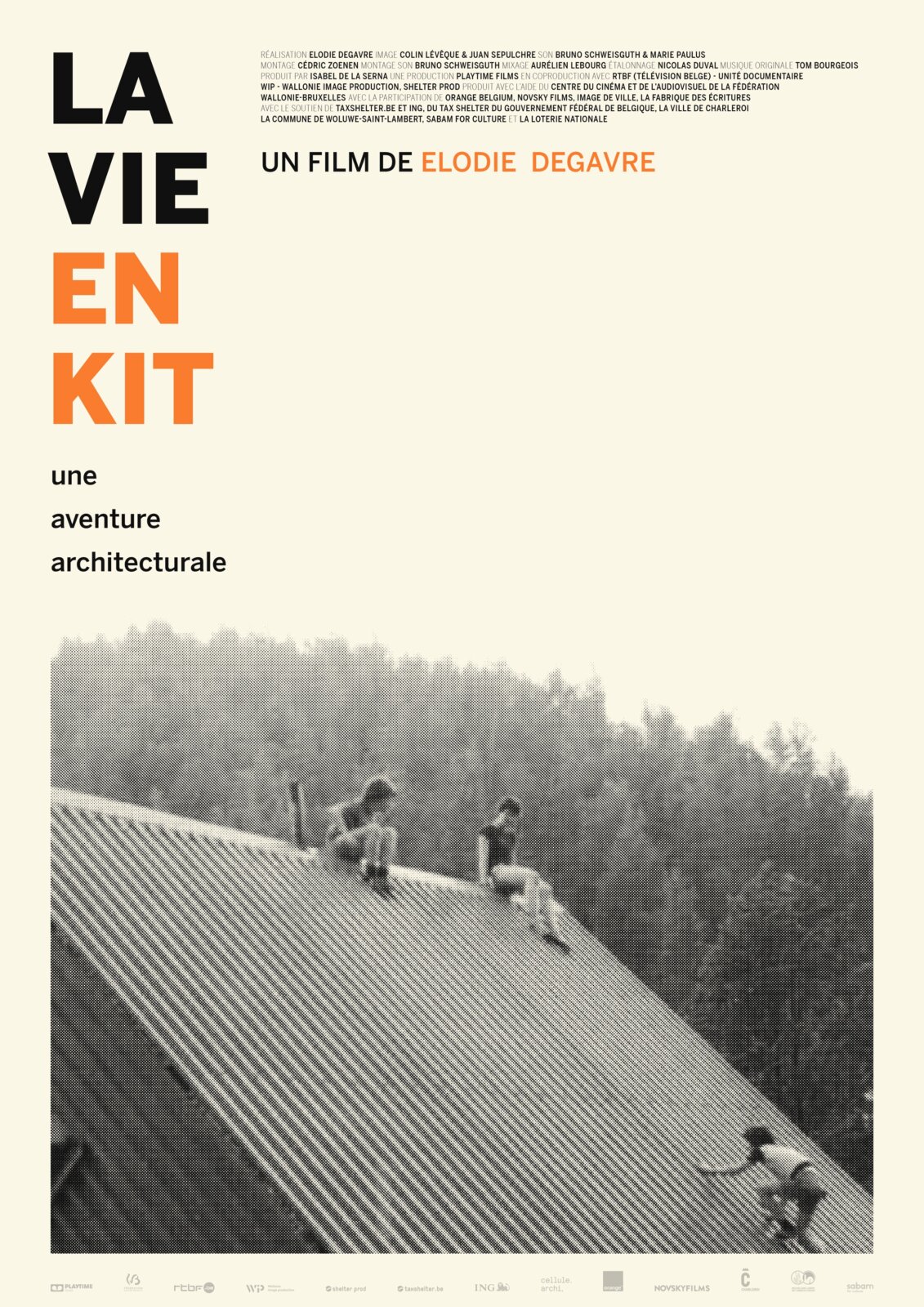
Maurizio Cohen – This film has kept you busy for several years. You trace a unique story through figures in Belgian architecture active in the post-war period, who were concerned by the crisis of the early 1970s. They ask the following question: how can we provide housing that is accessible to all? Not through a state-led initiative that gives residents hope of being housed, but through alternative approaches and initiatives. How would you describe this, in relation to the following key words and concepts:
Politics
Elodie Degavre – It’s a word that comes up very quickly when we talk about housing in architecture. That’s what lies behind the approach of this film: to convey a message to architects, but above all to those who aren’t. Through this film, I’m trying to make people understand that architecture necessarily concerns everyone. That it is decisive for our living environments, and often for our lives, quite simply. And that decisions regarding housing are often made by others and are beyond our control. Architects have this power: the power to design these living environments and to be part of these decisions. And I can’t think of anything more political than that.
By the residents
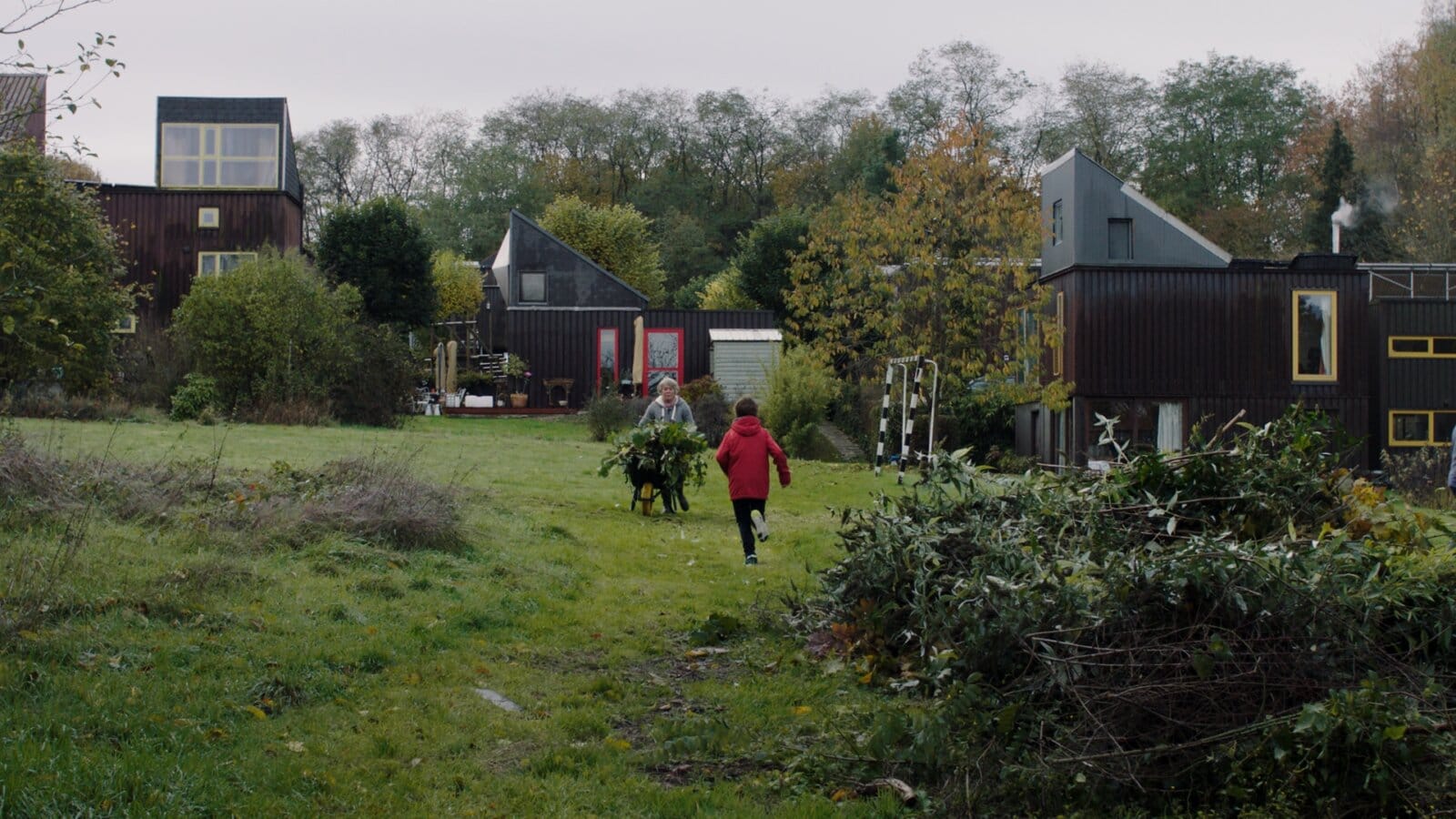
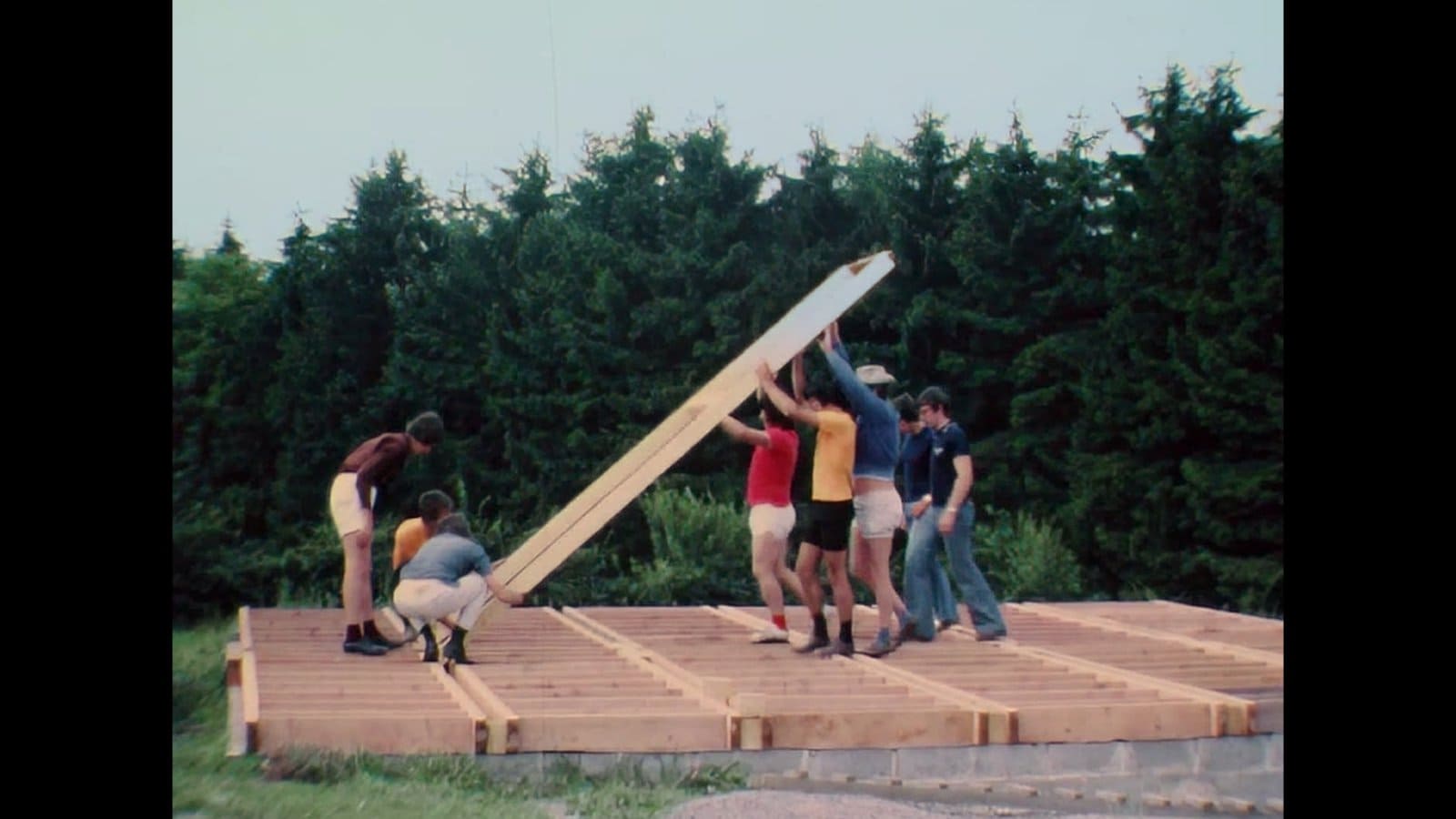
ED ‘By the residents’ means: participation. It can mean everything and nothing! In architecture, I think it’s a word we tend to use a bit too loosely. Based on my professional experience and what I’ve seen and read about architecture so far, I’ve noticed that participation is perhaps a more legitimate approach for sociologists and mediators than it is for architects. What I mean is: if architects are to concern themselves with this, how can they do so using their own tools, without pretending to know as much as sociologists? And the architect’s tools are: construction and design. Through the three projects I show in the film, I try to explain how the architect can remain within the scope of their own expertise when it comes to participation. In these three ‘system’ architectures (Le Sart Saint-Nicolas, La Mémé and the Patze-Englebert system), the architect stops at a certain point in the design process so that the resident can carry out the subsequent stages and take ownership of part of the process: building their home, designing it, or modifying it over time.
Narration
ED Telling the story of architecture is what motivates me in the film, and in many of the things I undertake today. The general public isn’t necessarily aware of what architecture can be, and we often encounter a rather unfavourable perception; there is clearly a negative reception. That is where the motivation comes from to tell the story of architecture differently: we can raise awareness among many people by telling them the fascinating stories that architecture produces, and we can do so through narrative techniques borrowed from cinema, with heroes, a quest and obstacles.
Archives
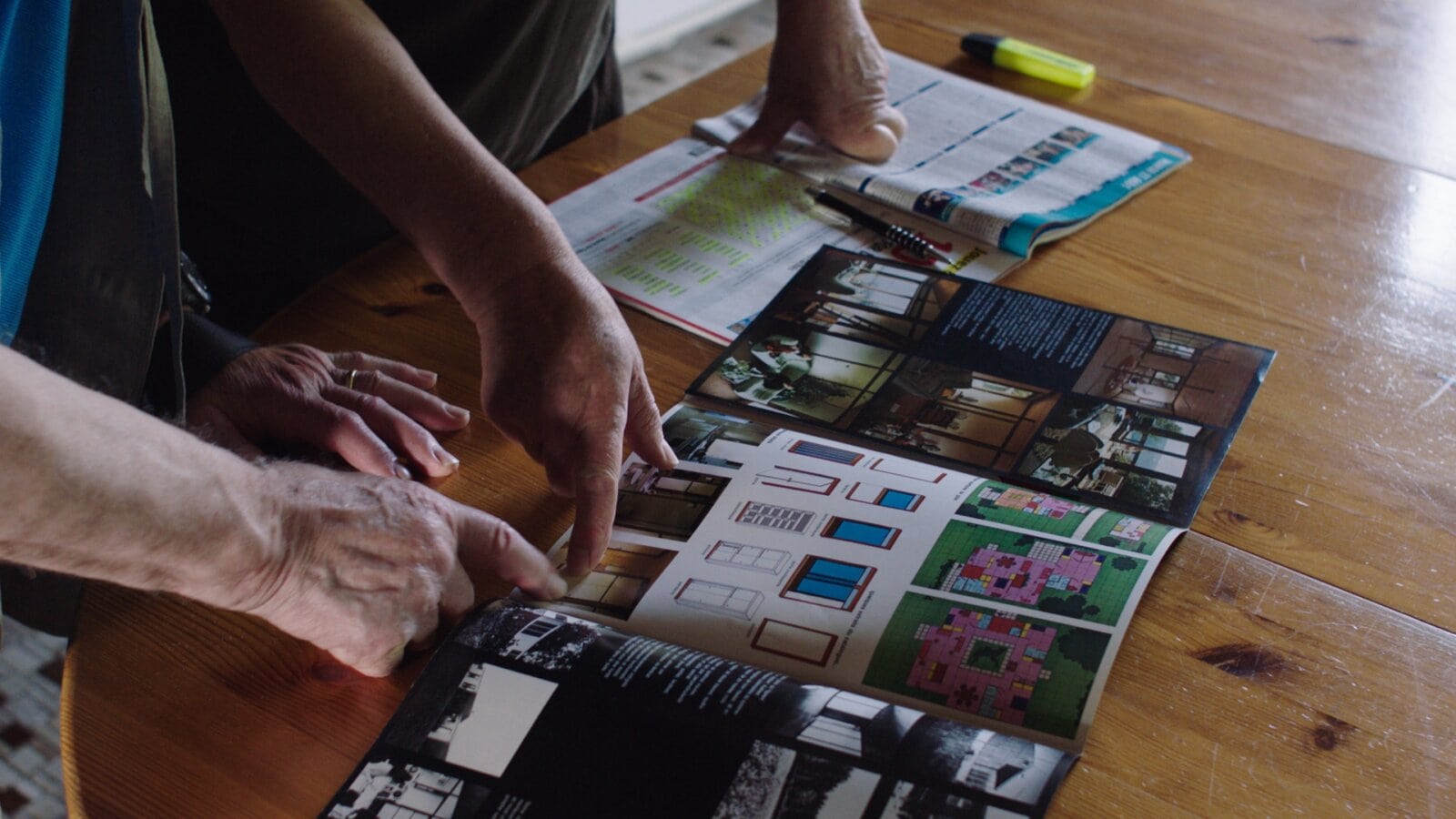
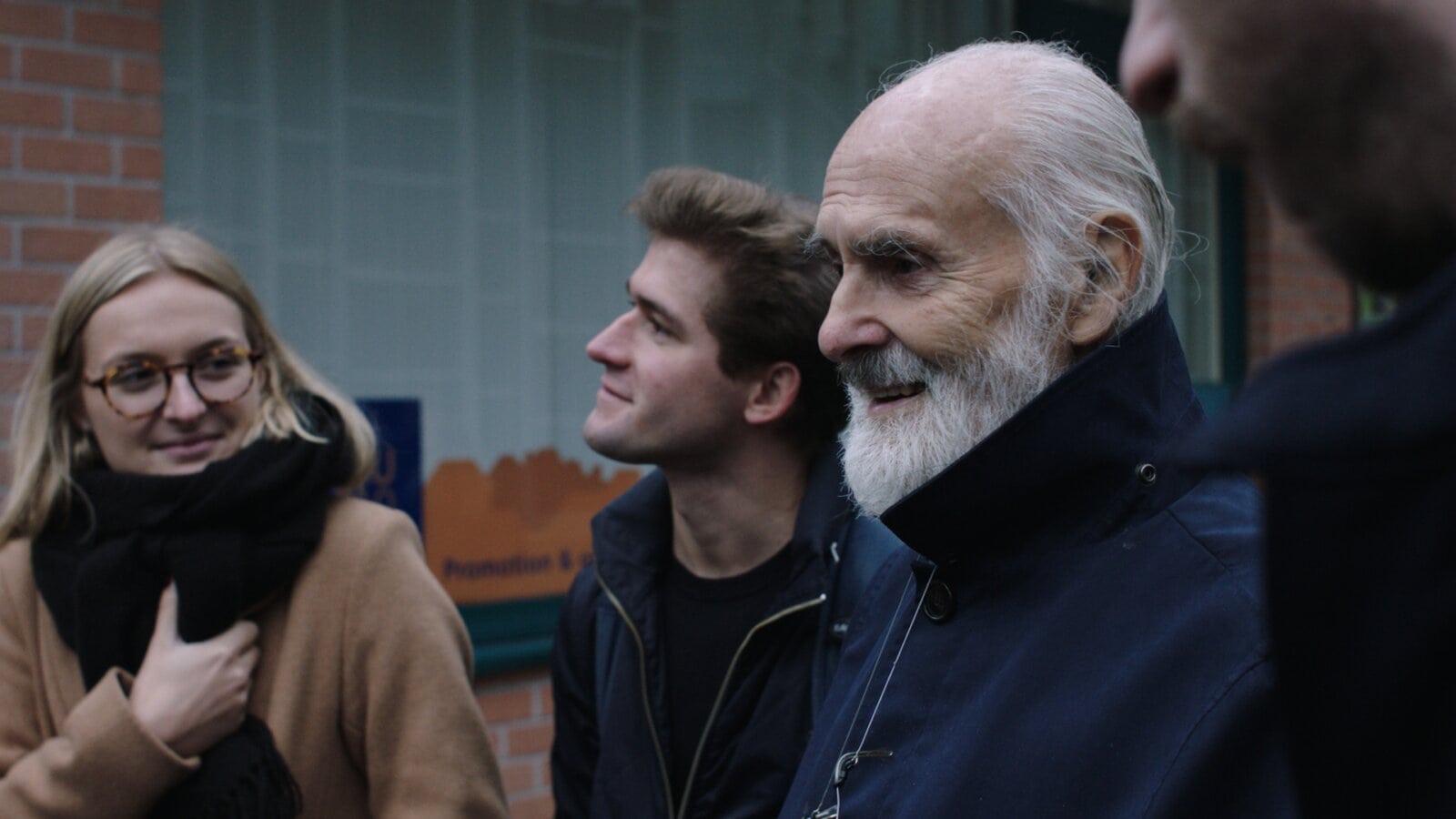
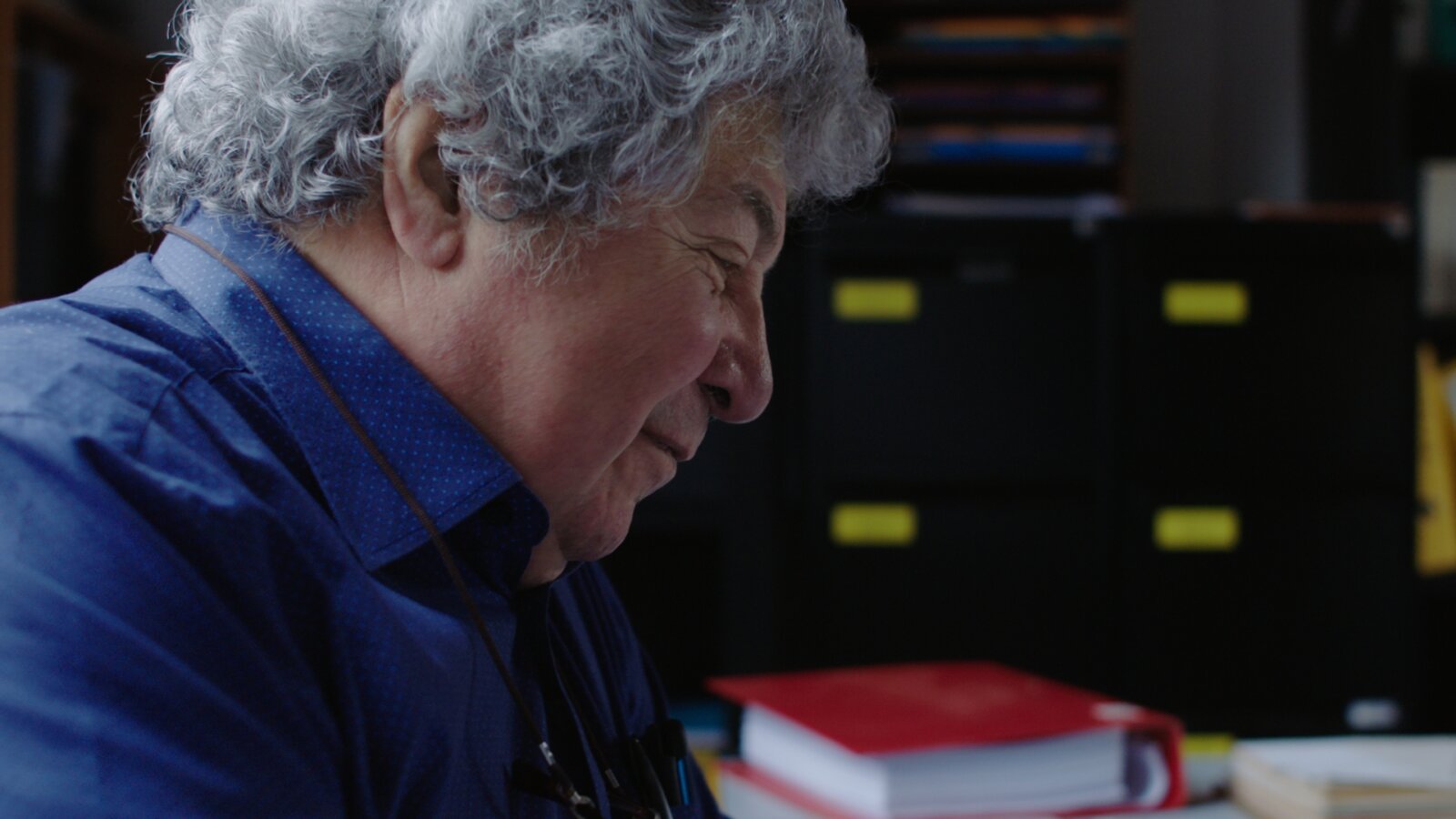
ED I met these architects at a time in their lives when they were growing older, surrounded by their paperwork, their books, their plans. The archive became a subject in the film because it was a subject of concern for all three architects. It is also a raw material from which I was able to draw to reconstruct the story, understand what had happened, but also to draw the energy for the narrative. I was able to draw on the graphic details of certain plans and brochures, and on their militant tone, which was always highly creative. The archives also served to spark a conversation with the architects. It was a very valuable tool for gathering words, which we brought into the present to rediscover their meaning.
Experimentation
ED These three architects experimented not only in the projects I’m showing, but in all their projects, throughout their lives. Experimentation, in architecture, is a driving force for finding new solutions to societal problems and construction challenges. We test things, and what’s fascinating is that we can test them on a full-scale basis. The film also shows that experimentation requires courage and that it can lead to failure. It’s something not all architects do, but in my view, and in the lives of my characters, it is the main driving force behind architecture.
Frustration
ED It was very interesting to see the human side of things, with these characters reflecting on what they’d done. All their lives, they’ve been experimenting, thinking about housing models and the societal models that go with them. And then it doesn’t sell and isn’t realised on a large scale. Or it’s demolished after a while, or the project is unpopular, hence: frustration. Frustration at not being heard, at being in a framework that is systematically too narrow, at being there too soon. The three architects often told me they were ahead of their time. I was very interested in this frustration because I felt that, paradoxically, it blinded them to a success that was right there, in the form of a few buildings that had been built and were inhabited—a fairly simple success that I wanted to make visible. I could also use this two-speed success to drive the film’s narrative. We try things we think we’ve failed at, and at the end of our lives, we ask ourselves, but why? What am I leaving behind? This feeling of frustration, of old age and failure, is universal; it’s something many people can relate to.
Ageing
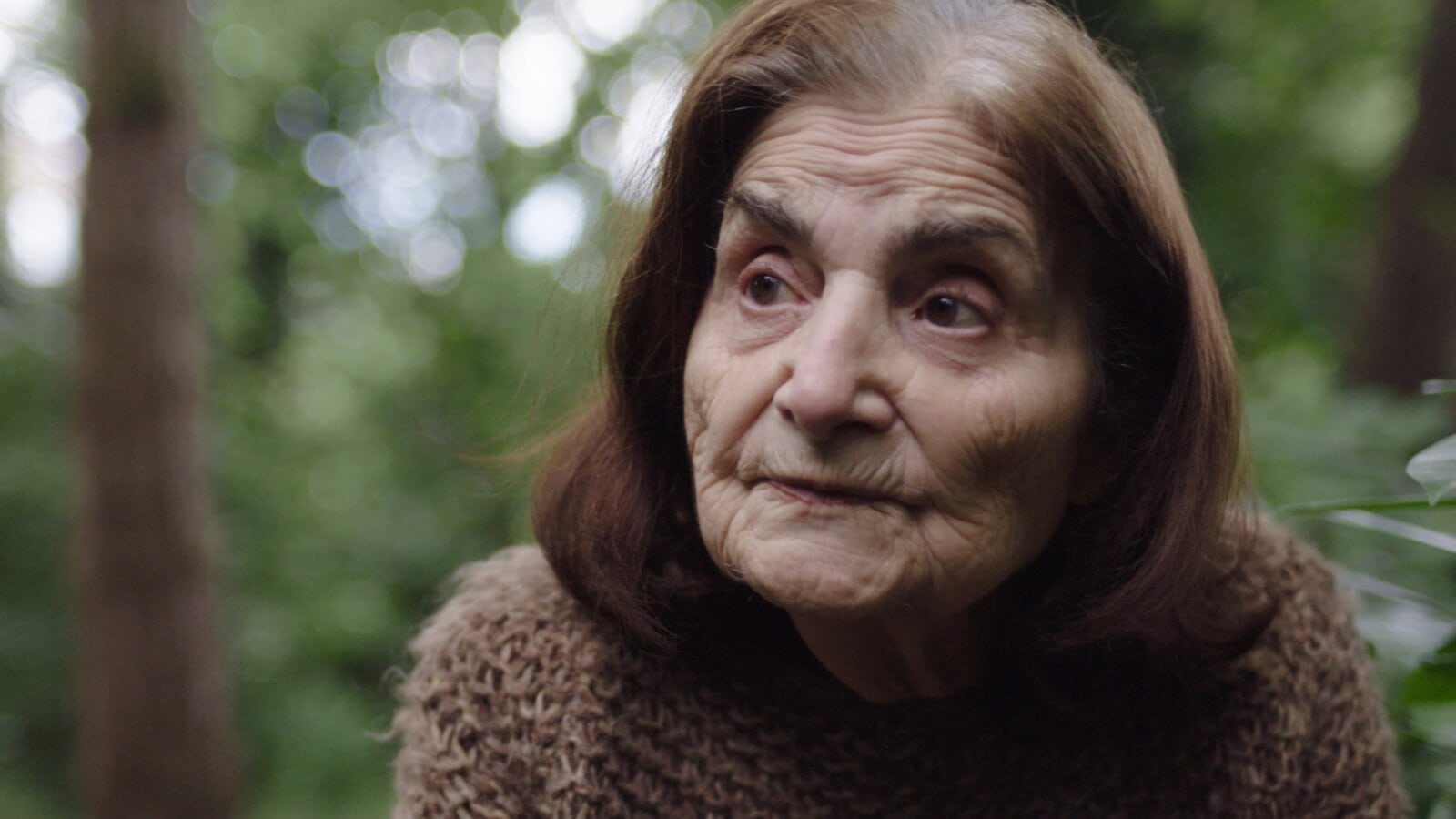
ED It’s also a film about old age. The director Louise Lemoine – Bêka&Lemoine – told me: ‘Your film is a film about men growing old, but also about the ageing of their ideas’. I think that’s very true. It’s not an era we can bring back to life; that’s not possible. But can we breathe new life into an idea that has grown old? Is that the breeding ground for the next set of ideas? And then, it’s also a film about the memory of these characters, which is gradually fading. Several years passed between location scouting and filming, and what had been stable at the outset – ‘memory’ and the ‘archive’ – was slipping further and further from my grasp. People in the film industry made me realise that, on the contrary, this also revealed something very beautiful: that’s life. I meet them, and I show them, at this particular moment in their lives. I just had to be honest about this state of affairs, whilst remaining respectful of what I was showing.
Resonance
ED Do these ideas resonate with today’s world? That is the question I ask myself in the film’s introduction. Does it resonate with our architectural concerns today? I also try to make the three stories resonate with one another, so that they complement each other and tell a single story, across different timeframes. It’s another form of resonance: I seek out that past and make it resonate with my own past, and my own present. What fascinated me as a little girl, when I discovered different styles of architecture, was something I’ve, in a way, rediscovered in these very buildings.
Local industry and self-build
ED These are the driving forces behind these three stories, born in very specific contexts. The question of building materials plays a major role, for example, in the creation of the Patze-Englebert houses: the wood, the Ardennes, the fact that Jean Englebert comes from that region. It was when he began to worry about the future of this material that he met the carpenter with whom the adventure of these houses began. Paul Petit, for his part, returned from the United States in the late 1960s. There, he had discovered timber construction. Ultimately, the industrial, steel-making environment to which he returned made him change his mind. And he told himself that we must try to find new outlets for steel. As for self-build, it was also very local circumstances that created the opportunity. The best example is the ‘Memé’ – the ‘Maison Médicale’ at UCLouvain. Lucien Kroll, supported by his wife Simone, was in the right place at the right time: he met students who were highly motivated to build a new faculty. They were ready to throw themselves headlong into the design and construction of their living space. It’s like flashes of inspiration. Like shooting stars that come together in the same place at the right time – it creates sparks. So these are little stories, little encounters, and all of this gives rise to these projects, but it’s not at all the ‘grand narrative’ of architecture; these experiences aren’t based on some grand pre-existing theory – it’s local.
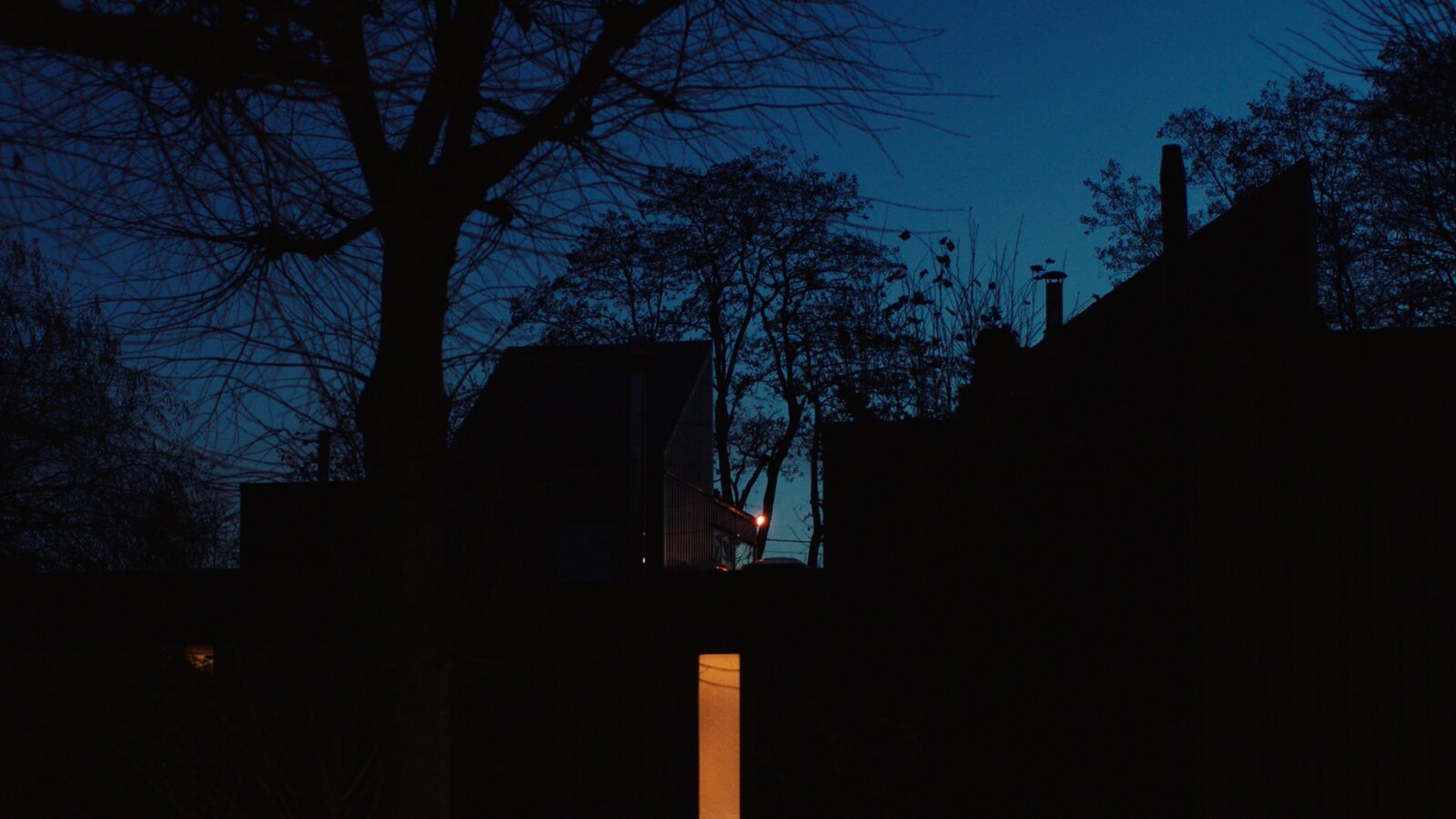
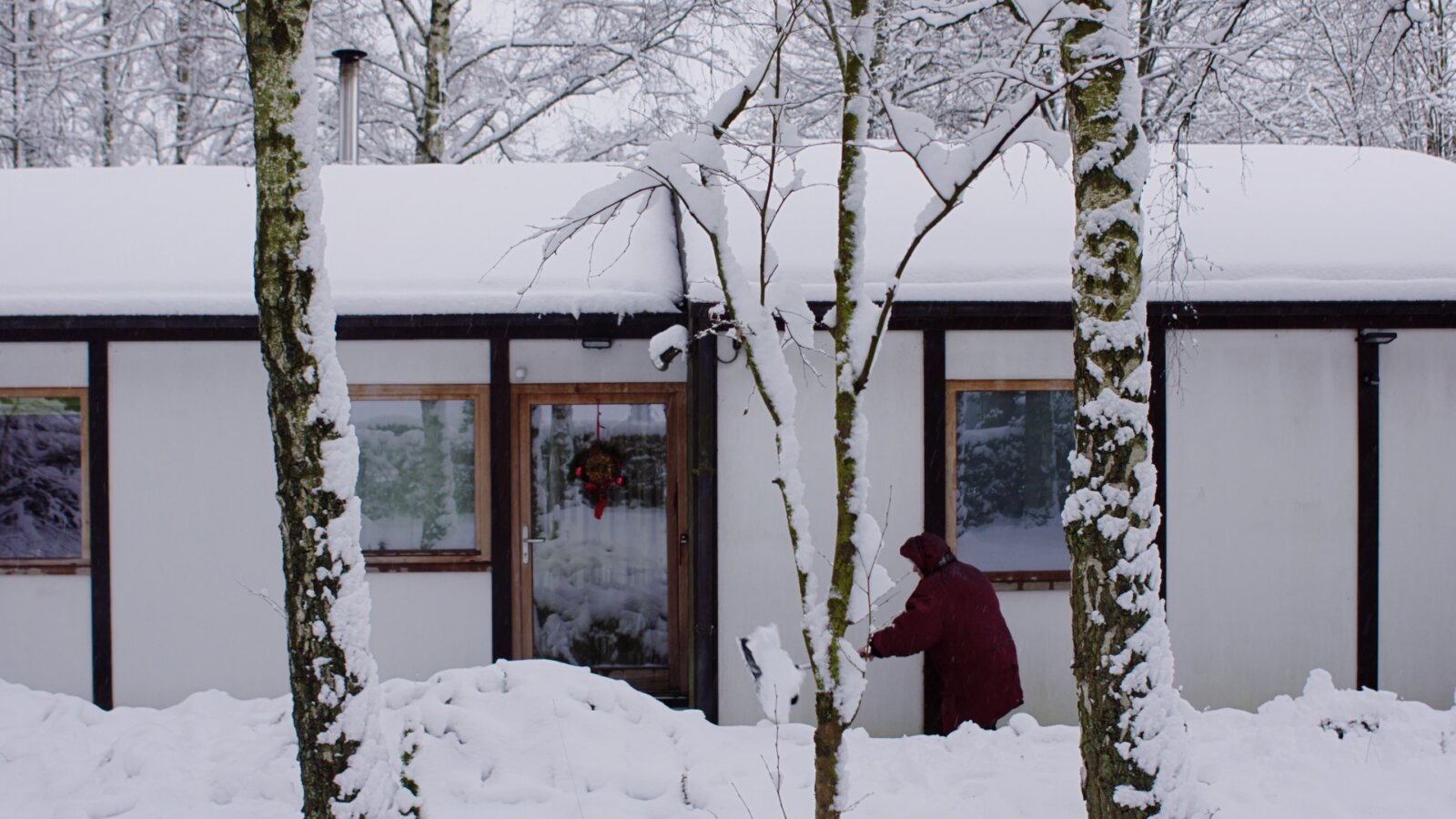
Cinema and architecture?
ED Perhaps this is a challenge we could set ourselves today: using cinema to say what we have to say about architecture. Because we realise it’s a way of reaching an audience. Not just the academic world: we can speak to everyone. The world of creative documentary has a lot to offer our perspective as architects. At a certain point in the film’s development, for example, the question of the film’s point of view arose. At the start of the project, I wasn’t in the film as a character. Later on, I added myself as a narrator, through voice-over and a brief glimpse, in the introduction, into my childhood. All of this stems from an ethical questioning that emerged from my engagement with film professionals. The stance I’ve taken is to offer a situated perspective: never to say ‘what I’m telling you is true’, but rather ‘what I’m telling you, I’m telling you this because I am an architect, this is my background, this is how I see things, and so what I’m telling you isn’t the truth, it’s the way I see things’. I have often said that in the film I was a conduit, and at a certain point, this character of the ‘conduit’ demanded to exist.
Connections
ED The stories of these three figures run parallel, yet at the same time they diverge in their development and also in the recognition they have received. What unites them is that they are three utopias, and that is a word we need to discuss. In reality, they are realised utopias. What will remain utopian is the scale of the change. The personalities of the three figures, on the other hand, are different, and their life stories and levels of fame are very different too. But I think that despite what I’m told, Simone and Lucien Kroll remain relatively unknown in Belgium. The same goes for Jean Englebert. He is indeed known in Liège, where he made his career in academia. But when I mention him in Brussels, amongst those around me, he is not someone whose work is widely known. And paradoxically, I know that Jean Englebert enjoys a respectable critical reputation in Japan. And of course, when I speak of Lucien and Simone Kroll in France, they are, naturally, celebrities. Paul Petit is also very well known locally, and in the United States he worked for Louis Kahn, which has earned him a bit of a reputation in our circles. It’s true that he was the first for whom I discovered several students’ final-year projects, so his project has certainly made an impact. Apart from all that, all three of them spoke to me about the relative lack of success of their fame in Belgium, and I got the impression that they were on the same page, in terms of how they felt about what they’d achieved in their lives. At the end of this journey, aren’t they all asking themselves, ‘But what really matters in what we’ve done, in the end? And what are we going to pass on? It was also interesting to discover that they knew one another, that there were connections. The ideas discussed in the film emerged more or less at the same time, and the three architects took an interest in each other’s projects. As an aside, Paul Petit was working in Henri Montois’s office at the time the Memé was being built. And when he went to visit the Montois hospital site, he would pop round to see the Kroll site because he knew it was something exceptional. Jean Englebert visited Paul Petit’s site two or three times whilst the steel-framed houses were being built because he was interested in these issues of prefabrication. There are connections like that, curiosities, which are the links I explore in the film.
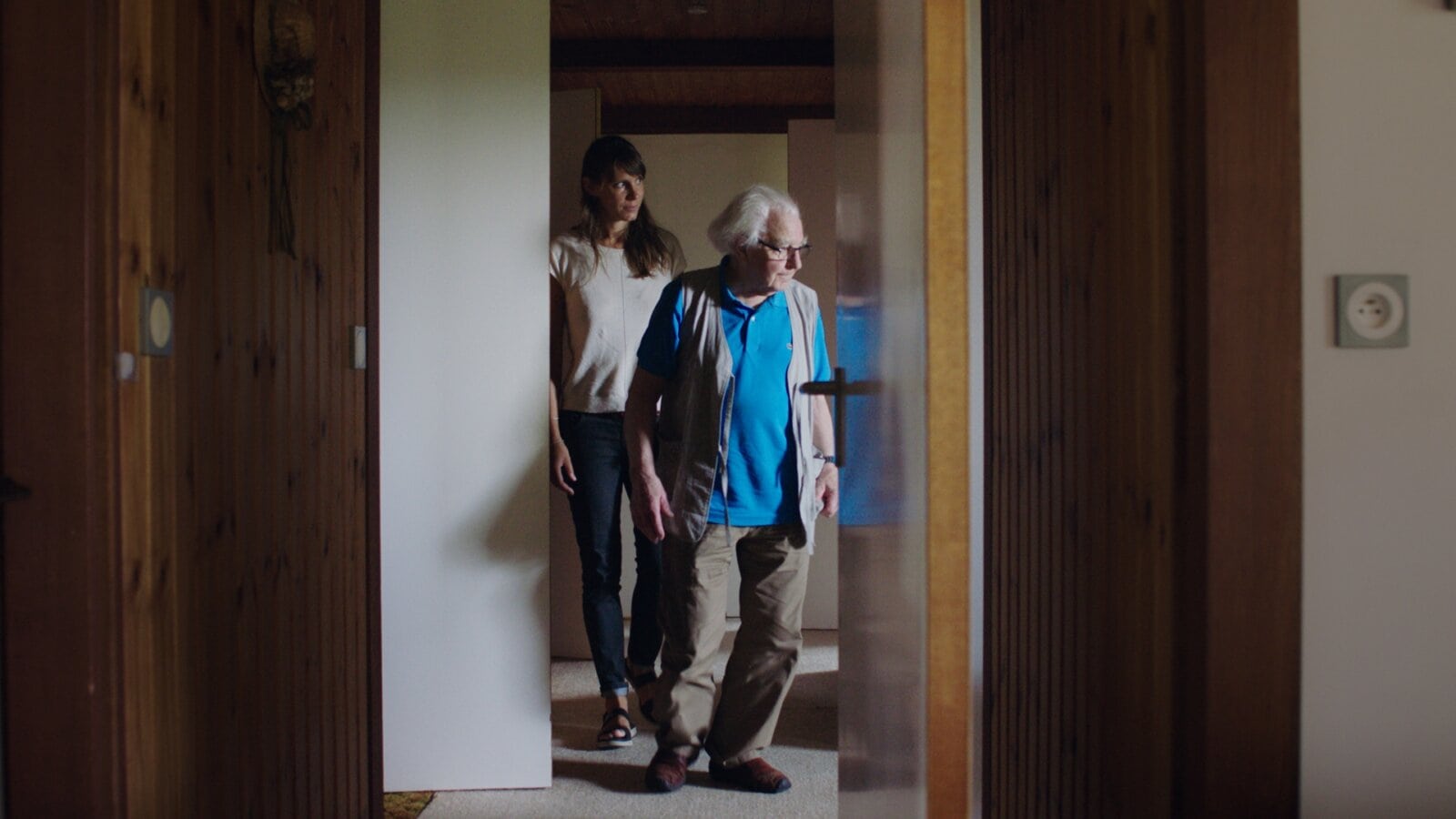
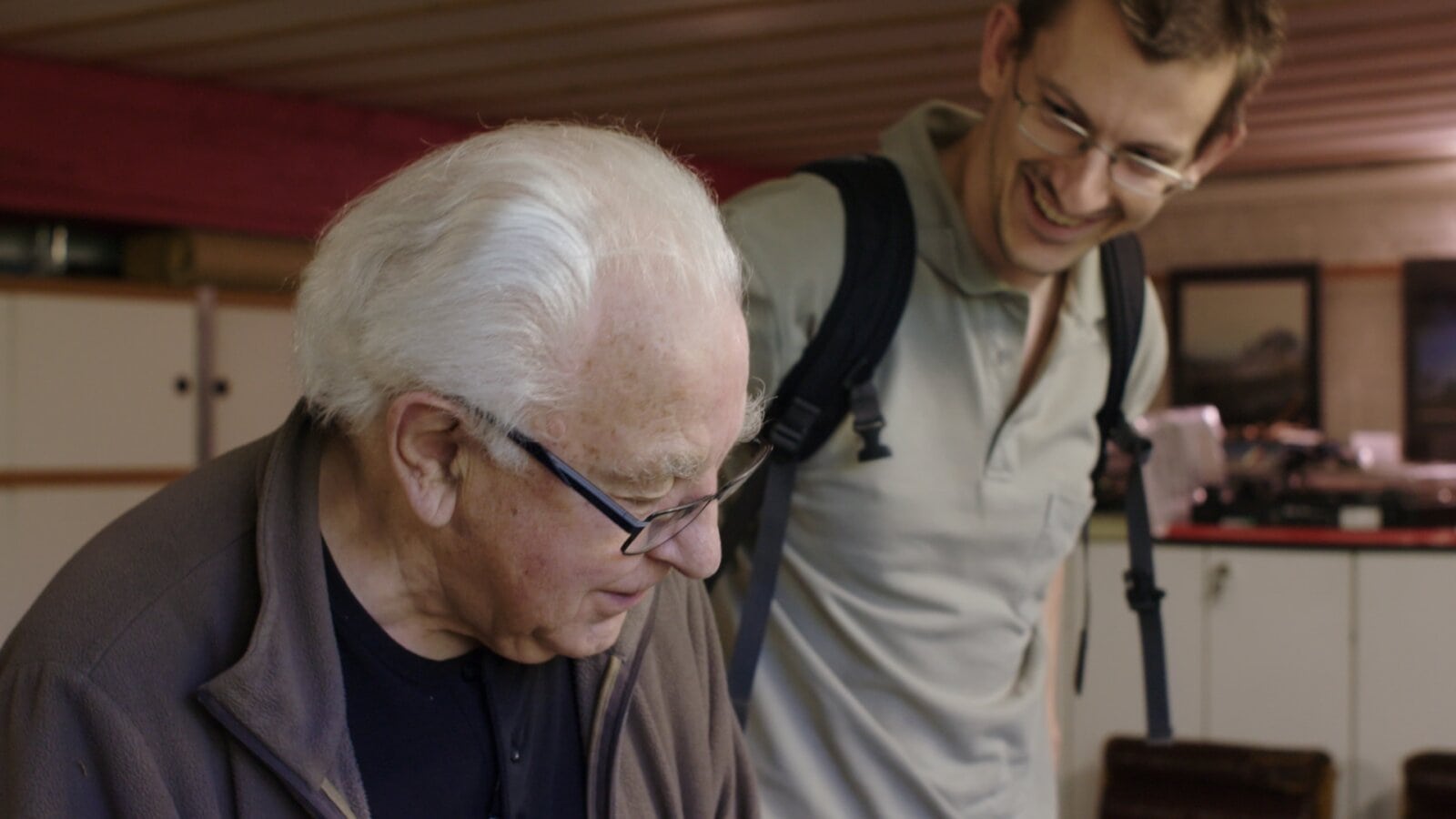
Is it simply a matter of taking an interest?
ED You’re quoting that line from the first interview I did, just before the film was released. I think there’s still a lot to discover in the recent history of architecture. In any case, I found myself faced with a wealth of material after searching for only a short while. The history of very local, French-speaking architecture hasn’t been explored much and isn’t very well known. There is so much ground to cover, and really, all you need to do is take an interest. All you need to do is open an old magazine, dive in and dig deep, meet all those people who are still around. All you need to do is sit down and listen.
La Vie en Kit, 69 minutes
Original language: French, English subtitles
Directed by: Elodie Degavre
Produced by Playtime Films (Isabel de la Serna)
