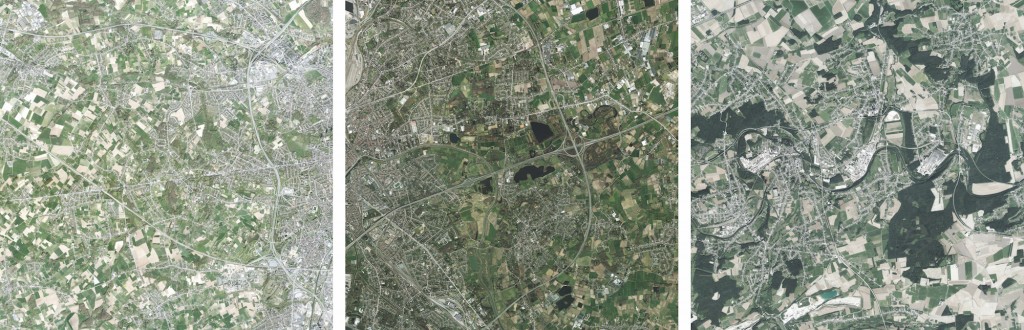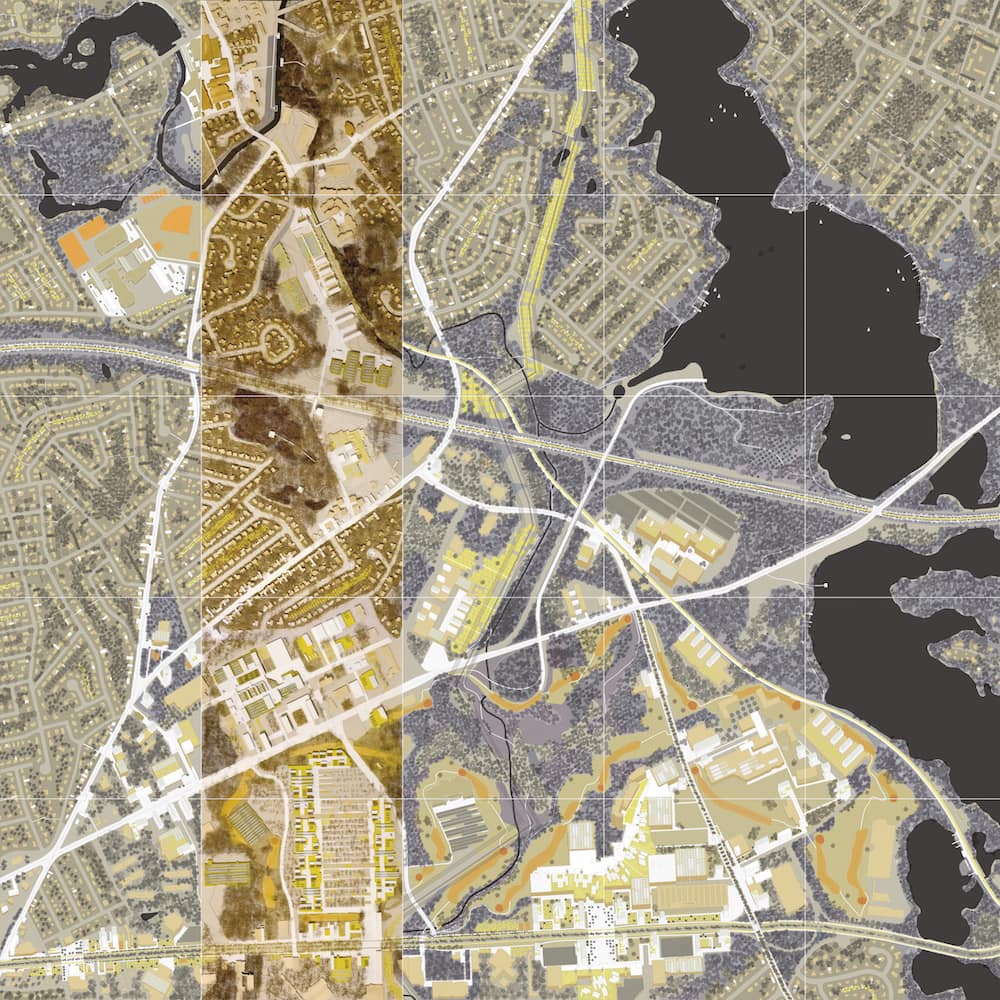
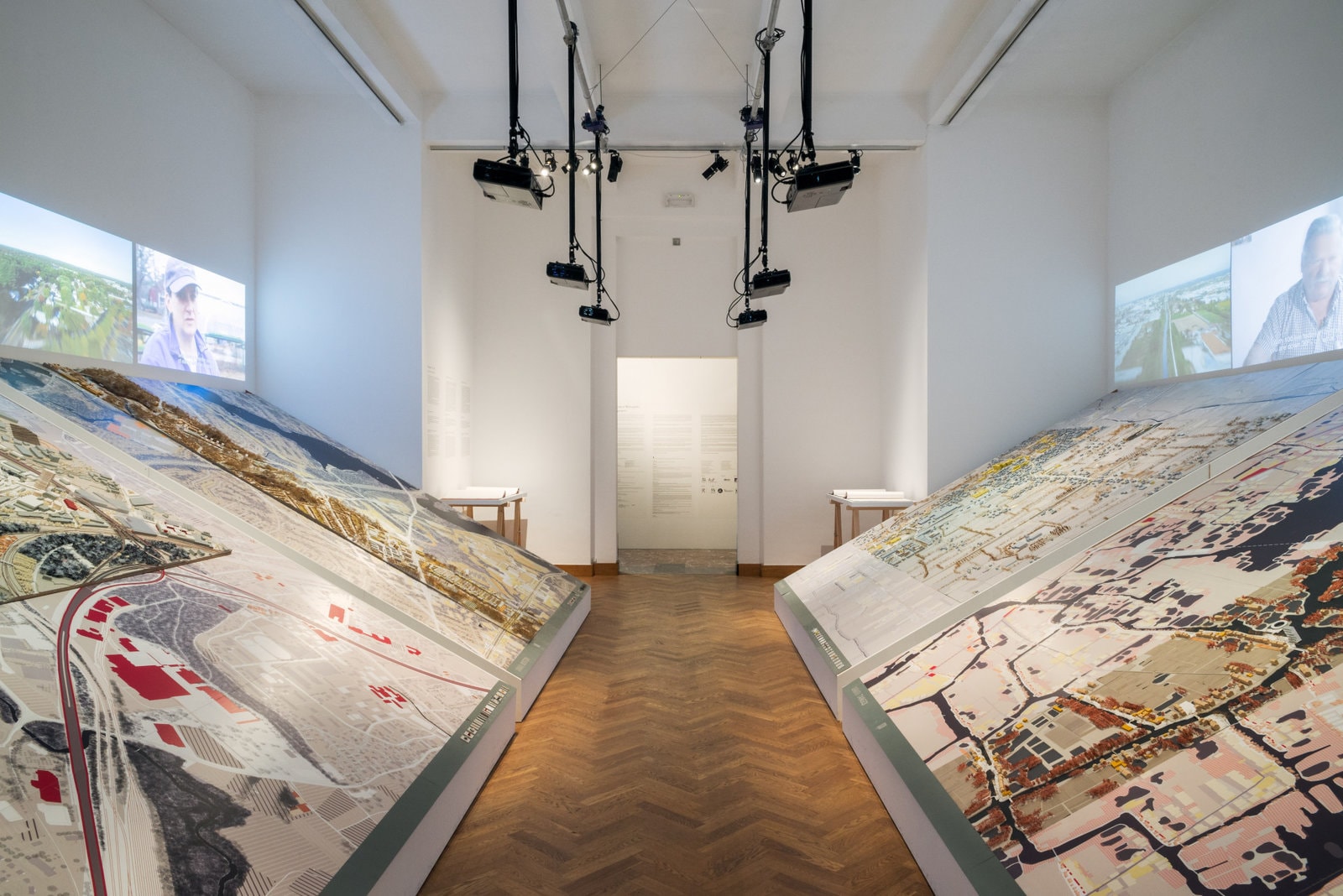
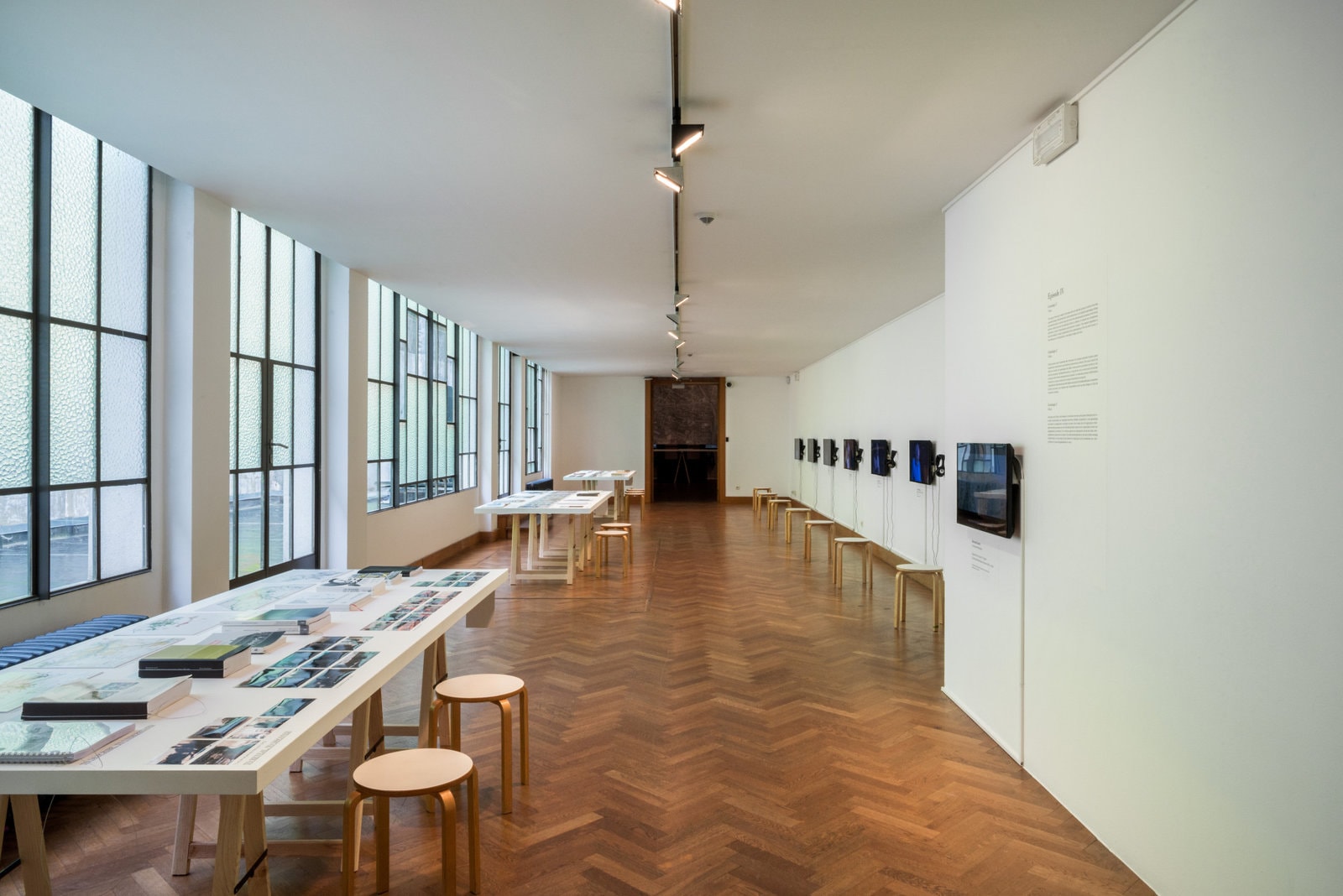
Paola Viganò will make you fall in love with the periphery, that undefined territory she examines with such interest. This summer, at the invitation of A+ and Bozar, the Italian architect and urban planner, lecturer, researcher and co-founder, with Bernardo Secchi, of the Studio practice, is focusing on Belgium. Our country, which she has been exploring for over twenty years to shape her thinking and her projects, will take centre stage in a three-part series comprising an exhibition, a lecture and a summer school dedicated to the ‘horizontal metropolis’, a vision of the future that is already taking shape across our territories.
Elodie Degavre – Paola Viganò, you took an interest very early on in areas that had been neglected by spatial professionals. To better understand your approach, we need to take a step back. You are an architect and urban planner. What lies behind the combination of these two words?
Paola Viganò – There is a tradition, in my view an Italian one, though undoubtedly broader, of continuity between architecture and urban planning. Throughout history, in Italian architectural and urban planning culture, the architect has also been an urban planner. Giuseppe Samonà was among the first to theorise the unity that exists between architect and urban planner, a unity that does not necessarily mean they are identical or that they use the same tools. It is, above all, a matter of engaging with various scales. All the great Italian architects have been capable of thinking on a large scale: one need only think of Vittorio Gregotti, who worked on ‘the form of the territory’, or Aldo Rossi, who wrote extensively on urban construction. For someone coming from a background in architecture, and who therefore has a curiosity about space and its different scales, the best starting point for approaching urban planning is space itself, with its tangible objects that are the repository of practices and imaginations. And not the mechanisms and rules of a “discipline” or established procedures. I’d say it’s fair to say that as an architect, one becomes an urban planner, and that urban planning is the slow construction of an understanding of space; it’s not a hat one can simply put straight onto one’s head. In my view, there is no divide between these two worlds, architecture and urban planning. A project does not belong to one field and not the other. When we start introducing this sort of distinction, we are heading towards highly specialised fields. In the Western world, from the 1970s onwards, education and research were structured by separating the two disciplines: this way of thinking, fuelled by the fragmentation of knowledge, is archaic, and I see many signs around me indicating that today, architecture and urban planning are re-establishing links.
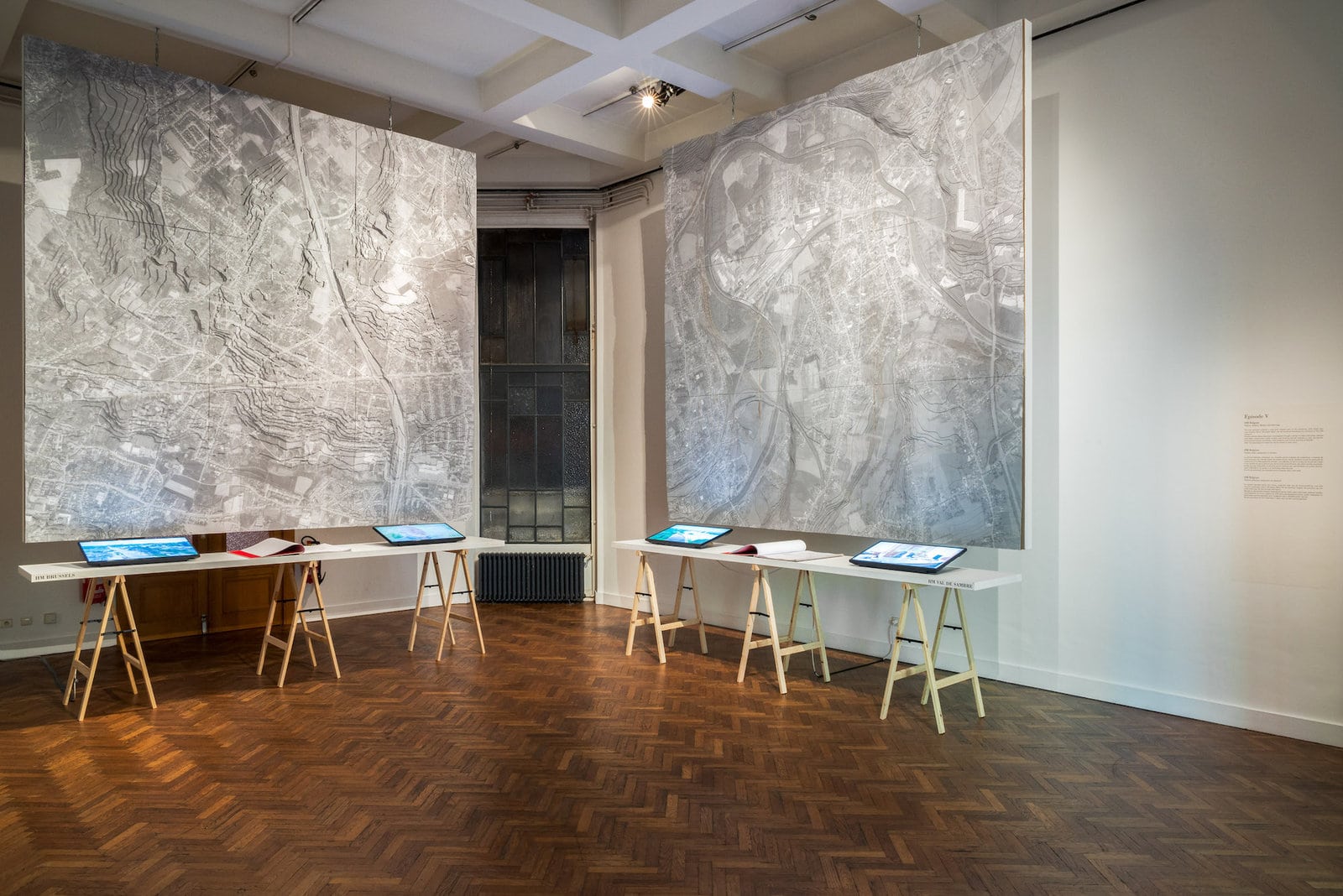
ED This interest in the project’s reflective power has led you to propose, first at the Venice Biennale in 2016 and now in Brussels, the ‘horizontal metropolis’—a vision that stands in contrast to the usual emphasis on the dense city. It ties in with a number of studies and forward-looking visions that have, for several years, been focusing on diffuse, undefined, suburban, even rural areas. When did these concerns first emerge?
PV A long time ago! We began to take an interest in this new phenomenon that was taking shape at the end of the 19th century. We haven’t stopped since, and particularly from the 1960s onwards, trying to interpret, define and say: here is a city that is different from the traditional city, and it challenges its categorisation. And we gave it a name. In Italy, we spoke of the ‘city-territory’. In Veneto, of the ‘diffuse city’, bringing together two terms that form an oxymoron. It was demonstrated that services, infrastructure and production were present in this diffuse yet urban and metropolitan space. It therefore possessed all the characteristics of urbanity, but took a different form. We spoke of the “radiant suburbs” with Marcel Smets in Belgium, a political project that situated the radiant future not in traditional cities, but elsewhere. We spoke of the “Zwischenstadt” for the space between cities, as Thomas Sieverts did. Each definition arose in a specific context; it is not something abstract that we have simply applied to a place.
ED You recognise Belgium as a territory of dispersion, conducive to some of these definitions. What constitutes Belgian dispersion?
PV Belgium and Italy may well have played a particular role in the development of these definitions. In France, we were much slower to the point where we didn’t want to admit that it was a phenomenon worthy of interest. We were told, ‘that’s a purely Italian issue’. Then, of course, we realised it was a broader phenomenon. The Belgian diaspora is a long-standing one, like the Italian diaspora. These are very densely populated countries. Belgium because it is small and has no significant relief. Italy because it has many mountains. The available land is very limited. And it has been extensively worked over the centuries to make it habitable. The importance of local-scale infrastructure is a common feature of these territories where, as in Belgium, one gets the impression that not a single centimetre has not been designed, transformed, made habitable, made useful.
ED How does the ‘horizontal metropolis’ make use of these characteristics? Why is it relevant to use the word ‘metropolis’ today?
PV It is not a new word; the metropolis became a key concern from the end of the 19th century onwards. The metropolis was the focal point for wealth, power and opportunities. It was, too, a social lever. From another perspective, the metropolis consumed the resources provided by the surrounding regions, concentrating wealth and culture at their expense. That was the metropolis of the 19th and 20th centuries. Today, we must ask ourselves: ‘What kind of metropolis do we want?’ This is where the concept of a ‘horizontal metropolis’ comes in, as the opposite of a metropolis that expresses hierarchical verticality in its spatial, social and political organisation. The “horizontal metropolis”, on the contrary, allows the benefits of metropolisation – a process underway in many contexts – to permeate all its parts. It does not accept the existence of centres and peripheries, or margins. Its isotropic nature is key. It draws on the spatial capital that already exists, and on the possibility of reusing it, of integrating it into a vision capable of driving the transition towards sustainable spaces. In recognising that, from the point of view of the economy, cultural production and lifestyles, what happens there matters just as much as what happens in the dense, well-connected city, equipped with museums… For in the sprawling city too there are museums, literature, filmmakers, photographers. It has generated its own aesthetic, which is now recognised. I can no longer accept the idea of a metropolis that is a mechanism of exclusion.
ED Going against the current economic and political trends, you believe that the future, in terms of sustainability, lies not in the dense city—the result of ‘vertical’ metropolisation—but in the horizontal metropolis.
PV People say that sprawling areas have been poorly conceived and poorly planned, and that the sustainable city won’t be found there! Yet there is infrastructure there, linked to the development of a productive region, which could form the foundation for the ecological transition. If, in an absurd scenario, we were to sacrifice the centuriation work carried out by the Romans in the marshes of the Veneto plain… we would be permanently giving up on their habitability. Yet today we would not have the means, the resources, or the thousands of workers needed to build all that. If we consider Belgium as a horizontal metropolis, we see that some areas are far more marginalised than others. Despite this, they are well-connected, well-equipped, and possess a rich cultural and environmental history. This spatial, environmental and human capital, which lies somewhat dormant, needs to be awakened! By working on the qualities of their spaces, on the diversity they bring, and on the connections to other, stronger areas of the metropolis. We need to think about the distribution of infrastructure and services. The ‘horizontal metropolis’ revisits decentralisation, the problems of excessive concentration, and the horizontality and complementarity of relationships. For me, sustainability means making the most of what is already there, of the major territorial rationales linked to water, soil and agriculture, and making the most of existing cities in their varied forms of housing, including dense forms. This city, which no longer has an ‘outside’, is the place in which to solve today’s problems, in which to adapt better to climate change, restore biodiversity, enjoy an interesting living environment, and rethink the forms and spaces of work. The mainstream view, according to which the only future for cities is to densify areas that are already dense, is of no interest. Today, densification strategies all point in the same direction: filling in all the gaps! This means we have failed to understand that these gaps play a very important role, for example from an ecosystem perspective. We are beginning to realise this, for example in the north of Milan, where density is very high and scattered. Open spaces are now quite rare. It only takes a bit of rain for us to understand why it might well be a good idea not to go and densify these last remaining empty spaces. If we take a broader view, thinking about the ‘horizontal metropolis’ means rethinking power relations, looking at the urban landscape we have built, and, from there, considering the issues we need to address.
ED For the exhibition in Brussels, you are applying this territorial analysis to Belgium. Three new case studies – from Wallonia, Flanders and Brussels – will be discussed during a summer school under your supervision, and will gradually be added to five case studies already covered in Switzerland, Italy, the United States and China. Which territories have you chosen and why?
PV The first case we are proposing is the Sambre Valley. It is a valley that has inherited hundreds of hectares of polluted wasteland. For every few decades of wealth creation prior to the 1960s, it will take several centuries to restore the area’s functionality, from an ecosystem perspective. Whilst we cannot decontaminate it immediately, we can generate wealth there. Through recycling, and through experimental plantations producing molecules useful to the pharmaceutical industry – this is a project by Gembloux Agro-Bio-Tech – capable of generating revenue that will subsequently enable us to clean it up. It is a marginalised area, where the SNCB is closing stations, where there is poverty, and a population that has suffered greatly in recent years. For the latter, the ‘horizontal metropolis’ is a vision that moves beyond the dominant image of the industrial corridor and connects it to the rest of the region.
We also examine Brussels, the area where the concept of the ‘horizontal metropolis’ first emerged during our ‘Brussels 2040’ study, because Brussels already seemed to us to be close to being a horizontal metropolis, much like the major cities that have not been particularly attractive up to now. But if Brussels continues its current trend of becoming more attractive and more geared towards certain demographics, it will be far less horizontal. Now is the time to revisit the question of its horizontality—which we had previously interpreted as a positive quality—this time through the lens of the ‘Western Gardens’ concept.
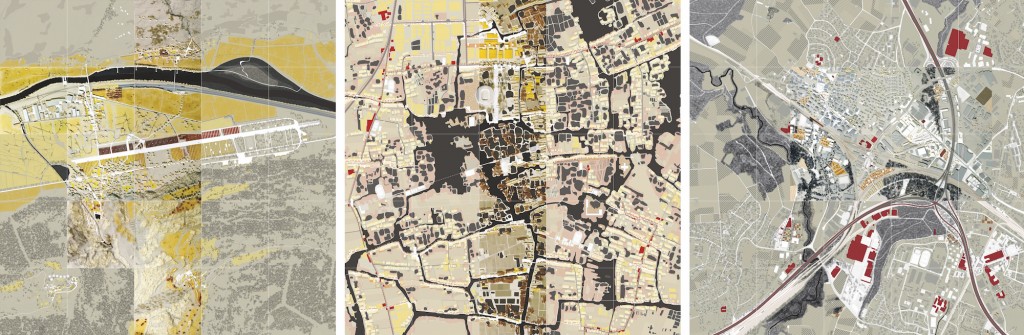
And the third area is that of Ghent, which is growing rapidly, much more so than the Sambre Valley, but only in appearance. In these areas where agriculture is intensive and industrial, the soil is depleted. The city’s dispersed population is ageing, and so is the spatial capital: the houses, the gardens, the roads… We need to return there with a vision for the future. These three very different cases will be interesting, because they are precisely the kind of territories in which the issues revealed by the horizontal metropolis can be raised, and because they can support spatial projects that break with conventional wisdom and take on different dimensions.