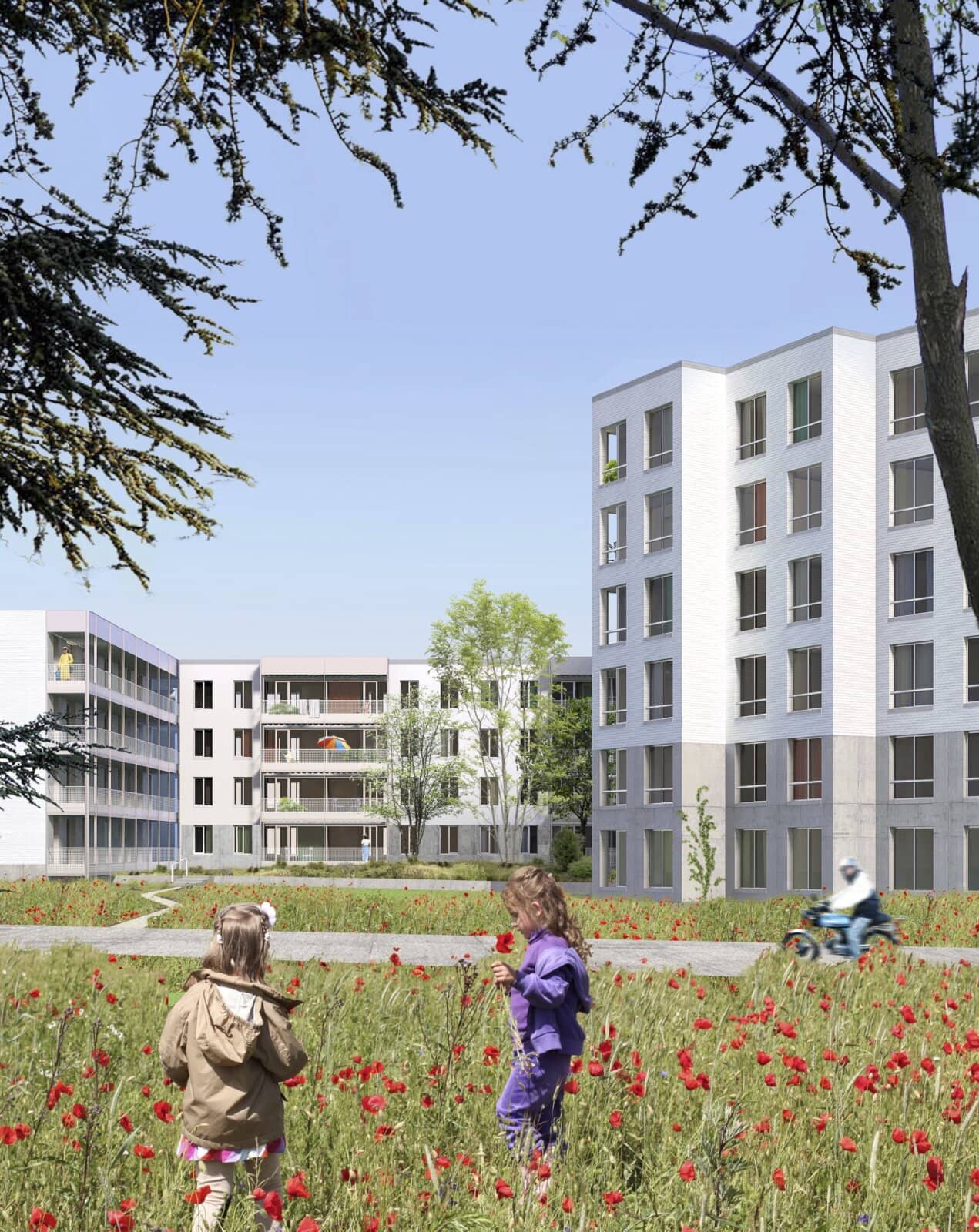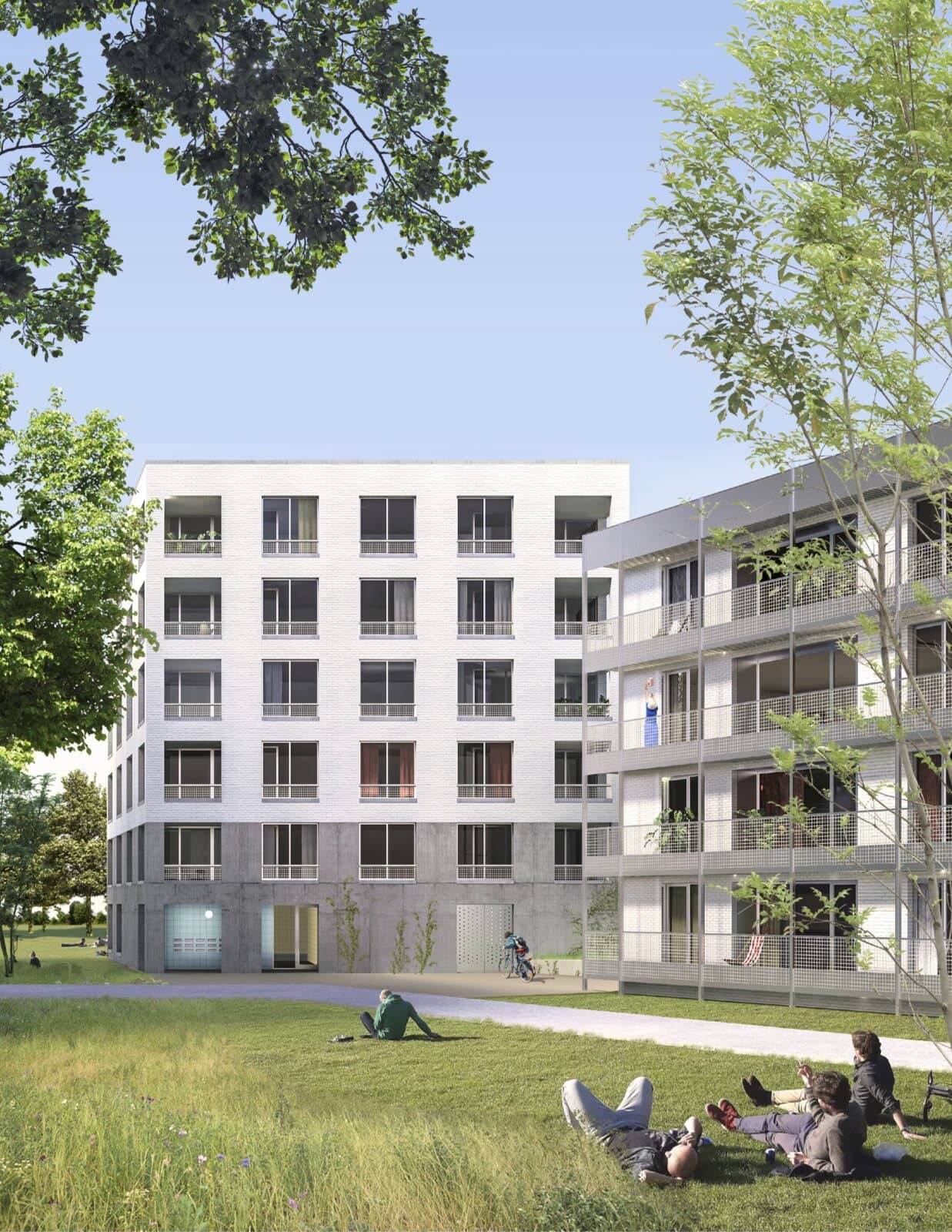
With a complex comprising two low-rise blocks, accompanied by three medium- to high-rise towers, DBLV architecten and Tab Architects won the competition in spring 2022 to build social housing in Nieuw-Gent. Woningent wishes to systematically replace its ageing housing stock in this neighbourhood in the south of the city and therefore launched a design competition. Within an existing masterplan, the architects sought to create a sense of identity and recognisability, but above all, quality of living.
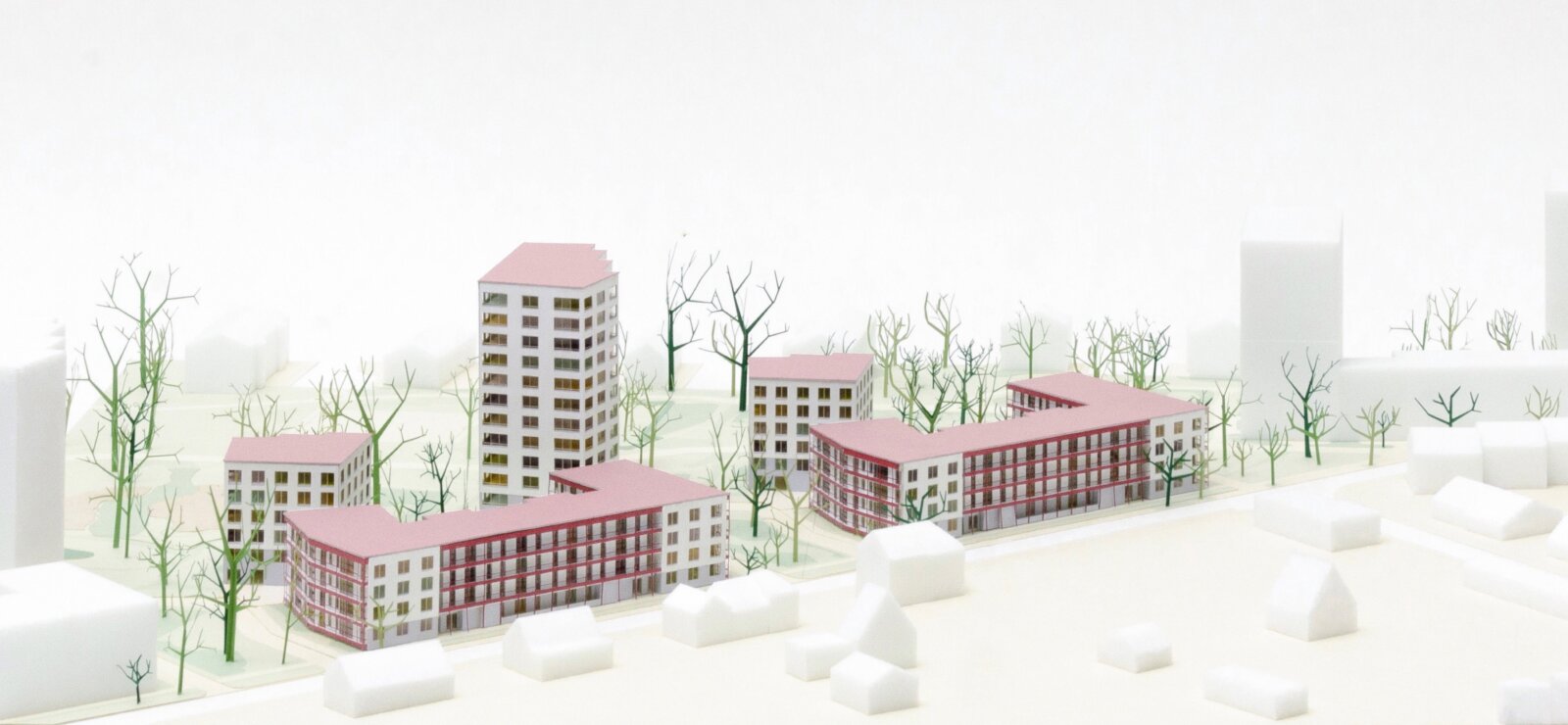
The masterplan places several U-shaped buildings in a park, opposite villas on the other side of the street. On the street side, the volumes remain low, but the park side is accentuated by vertical elements, rising up to twelve storeys high. DBLV and Tab make the difference in scale between the park and the surrounding buildings more explicit. “To us, the masterplan felt like a continuous undulating wall. We separated the vertical ends from the horizontal volumes to make the whole more open. This creates a more permeable structure, offering views in two dimensions. This separation strengthens the relationship between residents in the neighbourhood; we hope this will increase the sense of safety in the area.”
With their design, the architects aim above all to place the small-scale, human experience at the heart of the large-scale masterplan. They achieve this by giving each flat a dual orientation. Larger units, for families with children, are arranged as through-apartments along a gallery within the low-rise blocks. Smaller units are arranged as corner units around a loggia within the towers. The towers are stepped in volume to allow more light into the homes and improve views. The small-scale nature of the user’s experience extends through the façades into the large-scale context of the masterplan.
The galleries flank the low-rise blocks on the street side. They serve as circulation routes, but also as informal meeting and gathering places, alongside each resident’s private outdoor space. Away from the street, these galleries are oriented towards the courtyard garden, having been carved through the building. The outdoor walkways provide residents with a clear view; parents can see their children playing in the park, but there is also a sense of social connection between neighbours. In the tower, too, the team focuses on recognisability and social interaction. The circulation is split into smaller corridors. In this way, residents become neighbours rather than mere acquaintances.
“To prevent people looking in from the street, but also to ensure that residents can look out over the traffic, we raised the level of the ground floor.” The adjacent courtyard garden is raised as well, giving it a different status from the publicly accessible park. Visually connected to the park, yet separated from it by a difference in height of a few steps, the courtyard garden possesses the qualities of a lively communal space. Between the two low-rise buildings lies a traffic loop, as stipulated in the masterplan, which facilitates both addressing and logistics. Unlike that loop, the communal recess is a place where the human scale connects with the large-scale neighbourhood.
With the design and construction of the five buildings by this team, the original masterplan is not yet complete. Alongside the ensemble, a virtually identical combination of low and high-rise volumes awaits development. The project by DBLV architecten and Tab Architects brings a sense of fine-grained detail to the cumbersome plan. It would be ideal for the neighbourhood if Woningent were to adopt the same vision of fine-grained detail – of architecture that fosters social cohesion – in the next phase of this development.