In addition to a major access road to Oudenaarde, the Ghent-based Urbain architectural collective is renovating a townhouse for the care provider Heuvelheem vzw. It is renovating and extending the property towards the large garden, adding a single-storey extension. The building will accommodate thirteen rooms for people with disabilities. The non-profit organisation supports the residents in their city life, within a homely setting that is closely connected to the greenery of the inner courtyard.
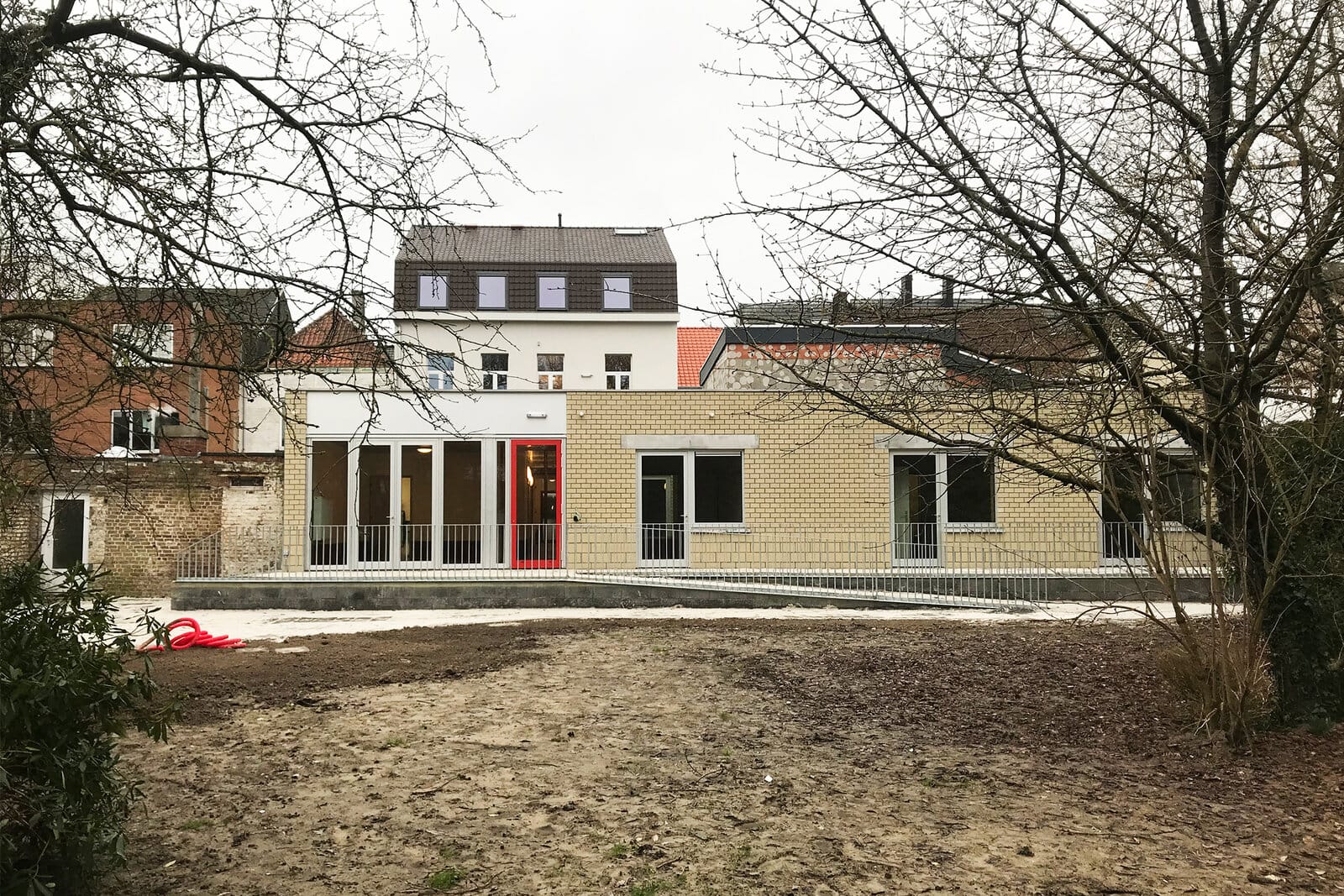
Heuvelheem is a care provider for people with disabilities, active in Oudenaarde and Kruisem for almost 50 years. The non-profit organisation’s services focus on social activities and tailored housing support, in various spatial contexts. To establish a presence in the city centre, the association purchased a townhouse on Beverestraat with a spacious city garden, which is also accessible via a side street. In this context, urbain developed a design centred on the construction of three distinct buildings, one for each planned residential group.
The first residential group is situated vertically within the converted townhouse. Opposite this is residential group two, which is situated horizontally within the extension. In a separate building, above the side entrance to the garden, urbain designed the third residential group. The separate building has not yet been constructed, but this does appear likely to happen in the future, albeit possibly in a modified form. The non-profit organisation is considering purchasing several properties around the garden, with a view to converting them into residential buildings connected to the garden.
Internally, the two completed sections read as logical variations on a theme; they are loosely connected and formally closely related. On the street side, in the former reception rooms of the house, urbain has integrated the communal kitchen and the staff office. The authentic staircase leads to a communal area on the garden side, which opens onto a large roof terrace. On the other side and on the top floor, the residents of the residential group can retreat to their rooms.
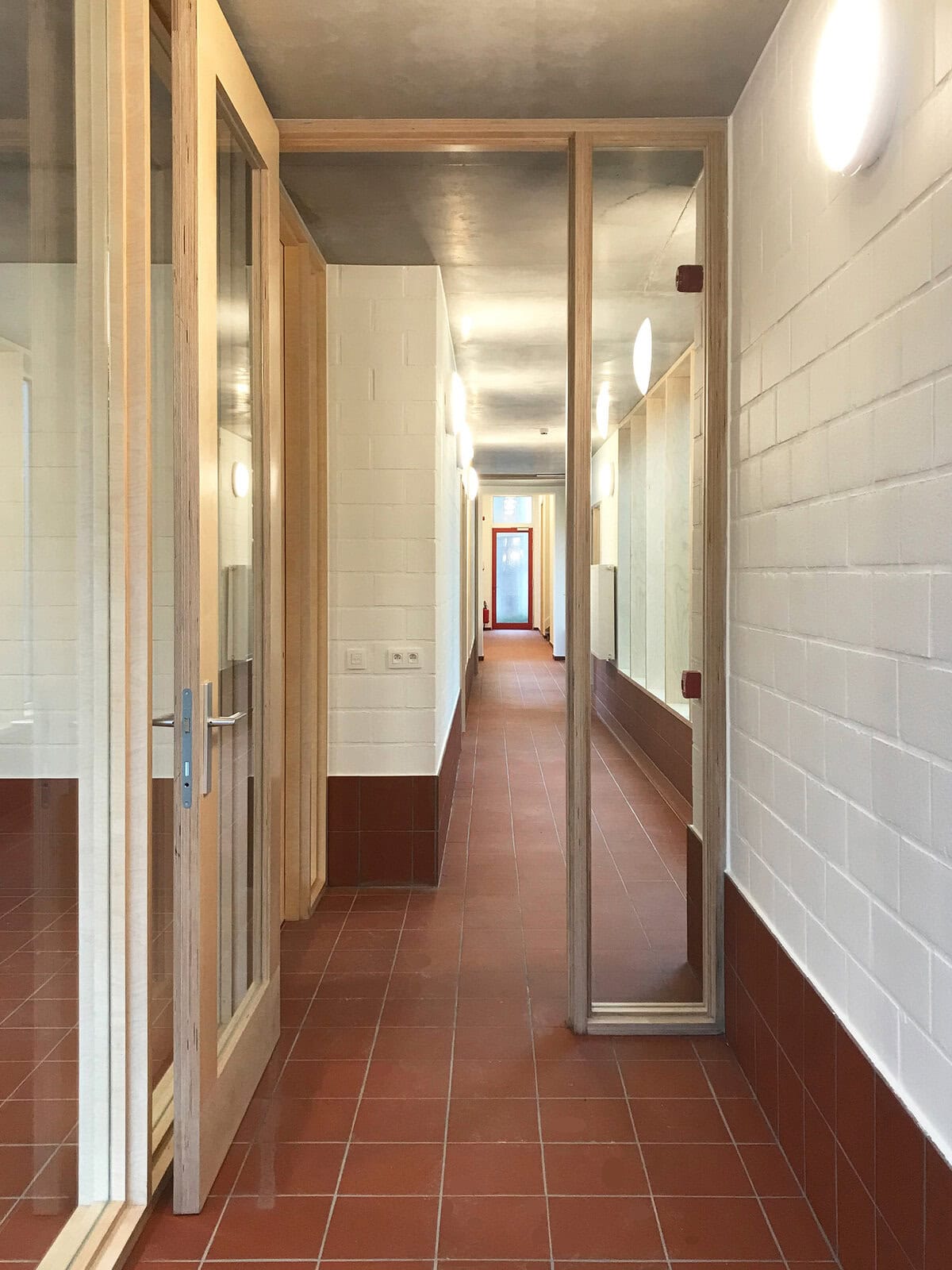
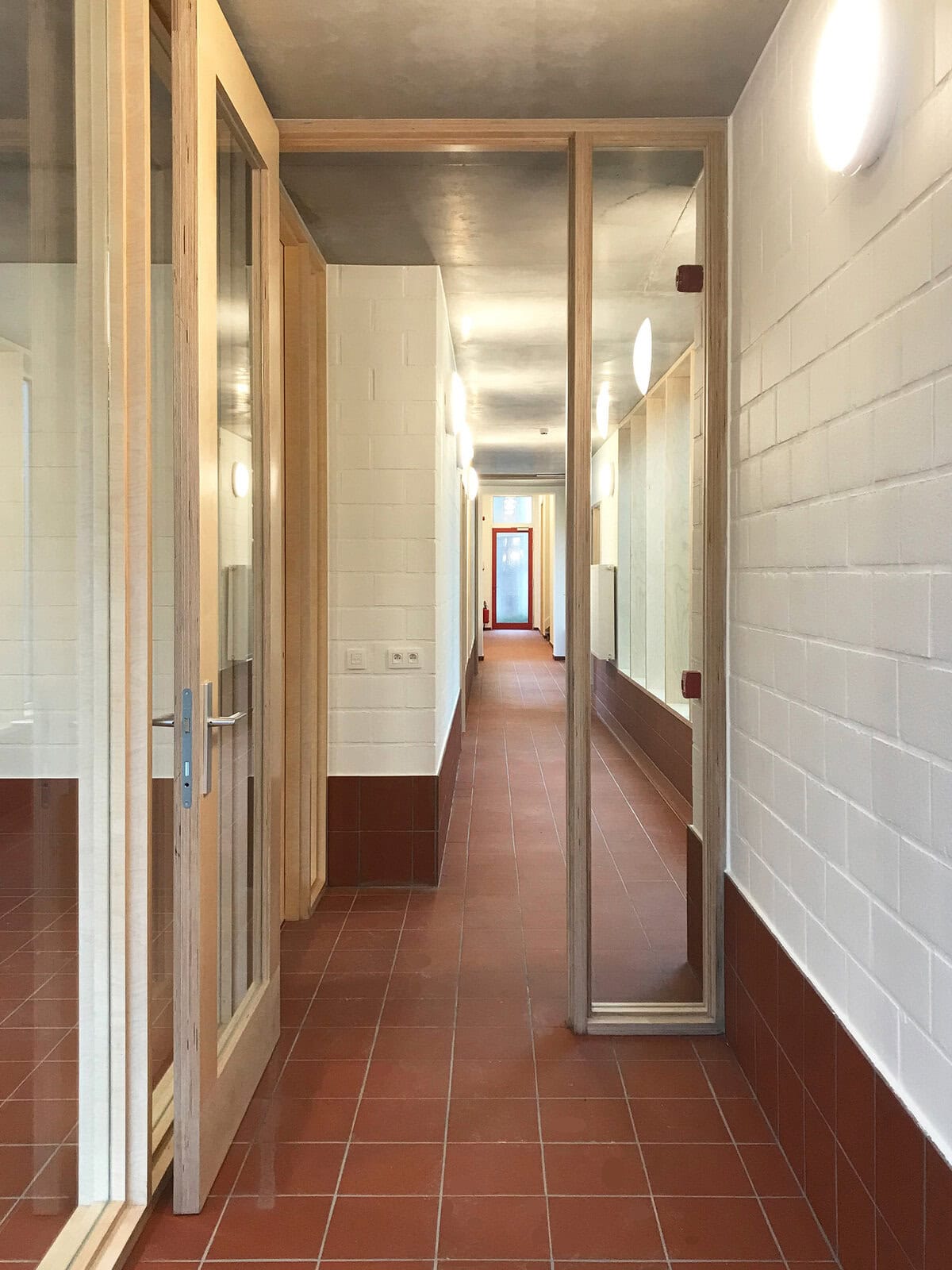
In the extension, all rooms have direct access to an outdoor space, either the garden or a patio. The entrance hall of the mansion extends into the extension as a central axis, around which the rooms and patios are arranged. Anyone can access the patios from the corridor, but they can also function as an outdoor room for a unit. The axis is a succession of views of greenery and light. It feels like an internal street connecting Beverestraat with the back garden.
The homely interior is dominated by the warm tones of the terracotta floor and wall tiles and birch wood joinery. These are combined with unplastered brickwork and concrete ceilings. The whole has a robust appearance and is easy to maintain. The bathrooms in each residential unit are tiled in a different colour. This small gesture reminds residents of their uniqueness, but also of their connection to the community.
Urbain architectencollectief succeeded in translating the non-profit organisation’s mission into spatial terms, whilst also reinforcing it formally. Within the city block, Heuvelheem is a place that offers its residents seclusion, passage and contact in a controlled manner, within a secure environment. In a way, the project mirrors city life outside.