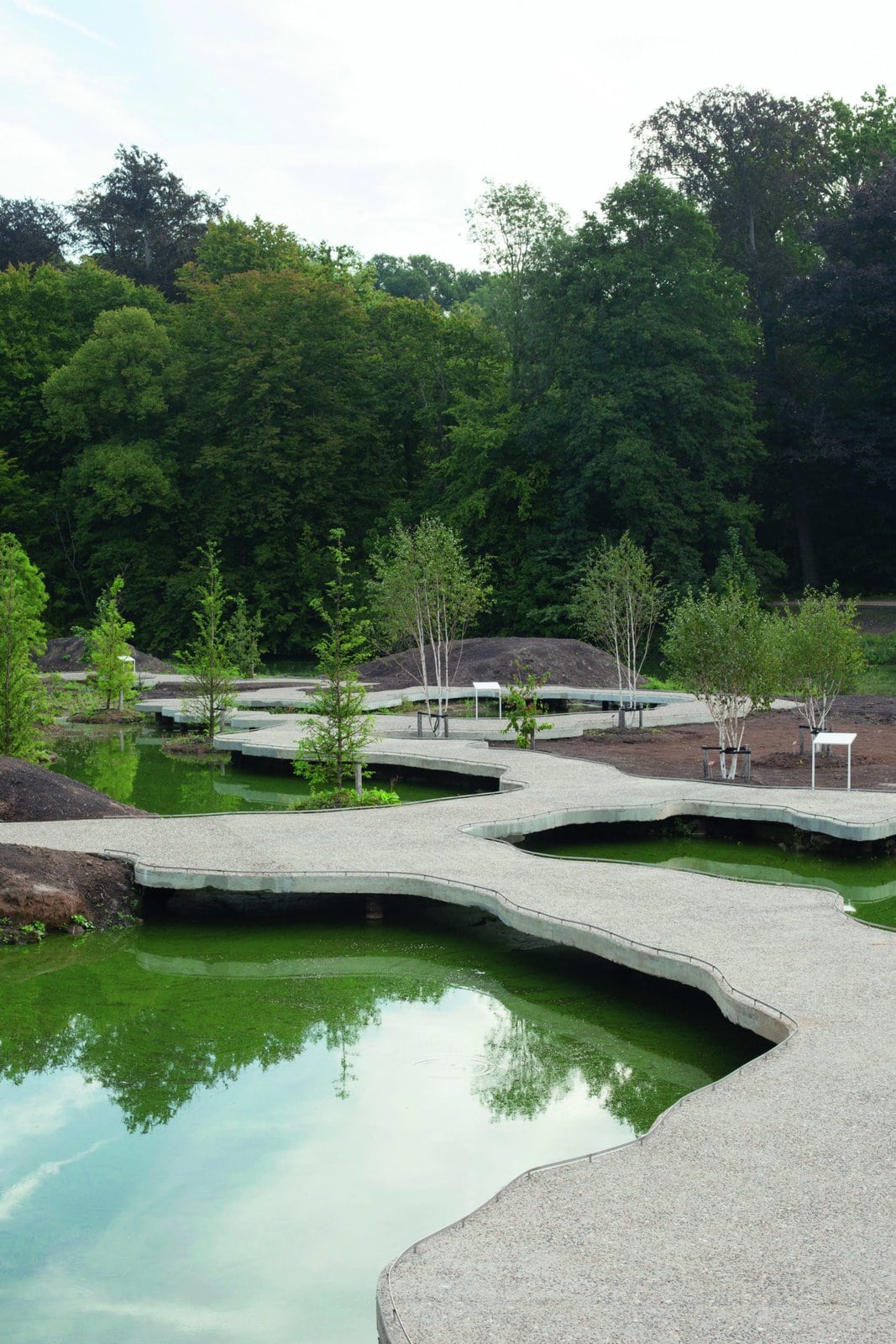
Belgium can be particularly wet, but for several years now we have been facing serious water shortages. Flanders even tops the European water stress index, together with southern Italy and Portugal. The problem is not so much that there is too little rain, but rather how we deal with it.
There are several explanations for this – geographical, geological and historical. First of all, there is the specific geographical location of the Rhine-Meuse-Scheldt delta. The Scheldt has the smallest drainage area of the river delta and an open connection to the North Sea. The ebb and flow of the tide pushes the salty seawater deep inland, where it mixes with the fresh water from the outflowing rivers. The brackish water conditions that this creates are unsuitable for water supply. The major international rivers, the Meuse and the Rhine, flow in a wide arc around Flanders before emptying into the North Sea. At Liège, water is extracted from the Meuse on a massive scale. This supplies 40 per cent of Flemish households with drinking water. The Albert Canal functions as an elongated straw that channels the Meuse water to the water production station in Oelegem, from where it is pumped on to East and West Flanders. The serious decline in water levels in the Meuse and Rhine during the summer period is putting severe pressure on the future use of river water as a source of drinking water production.