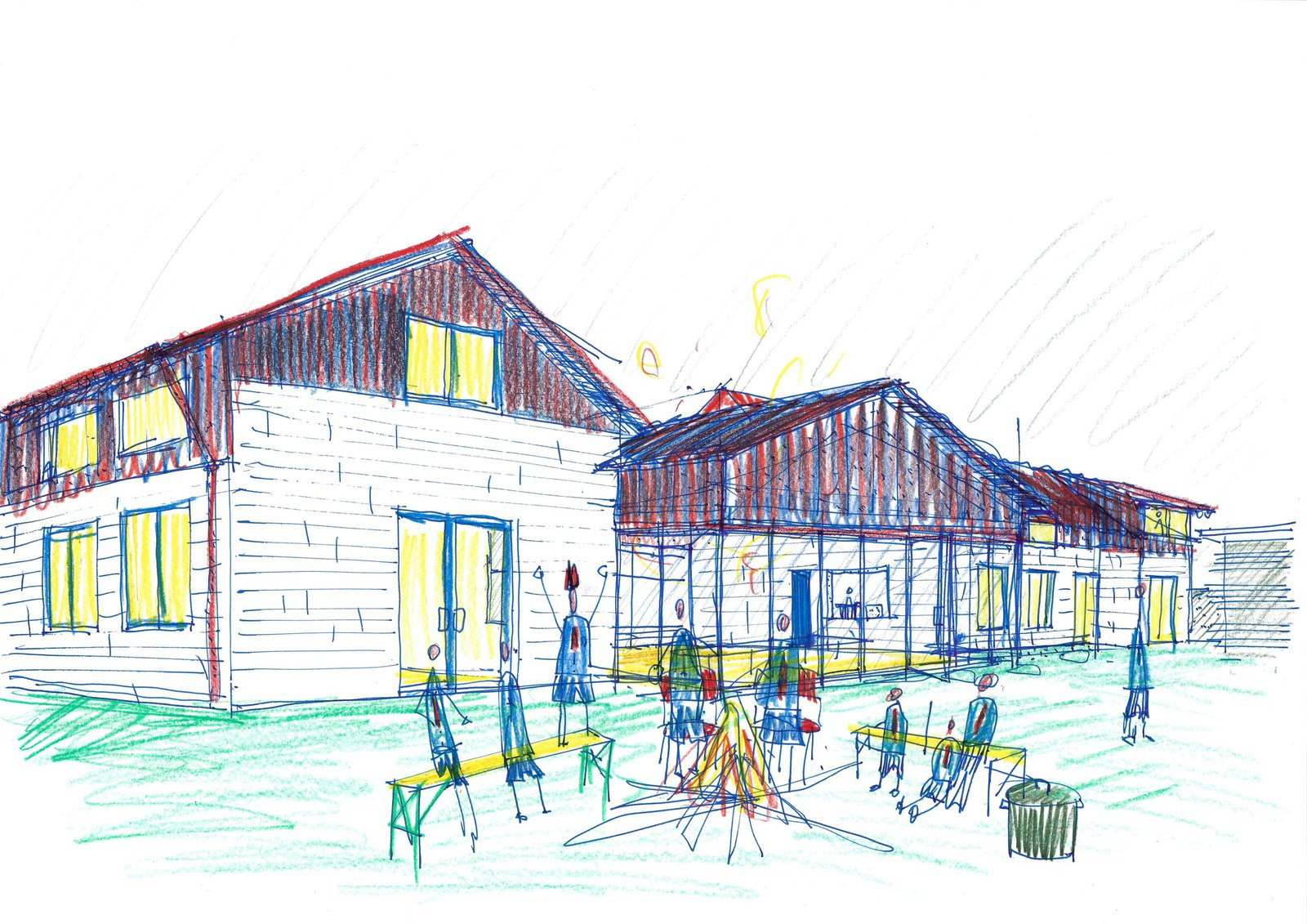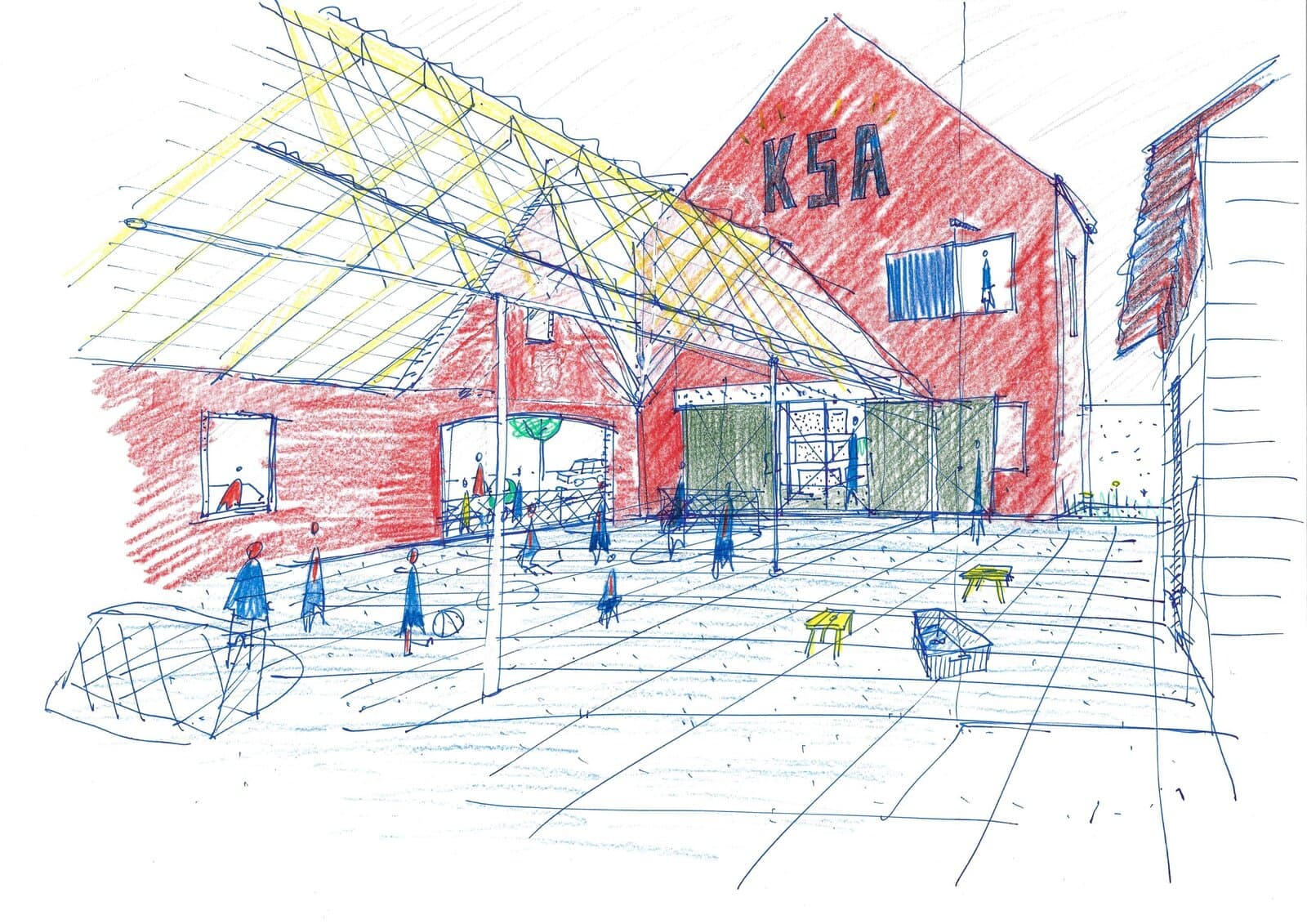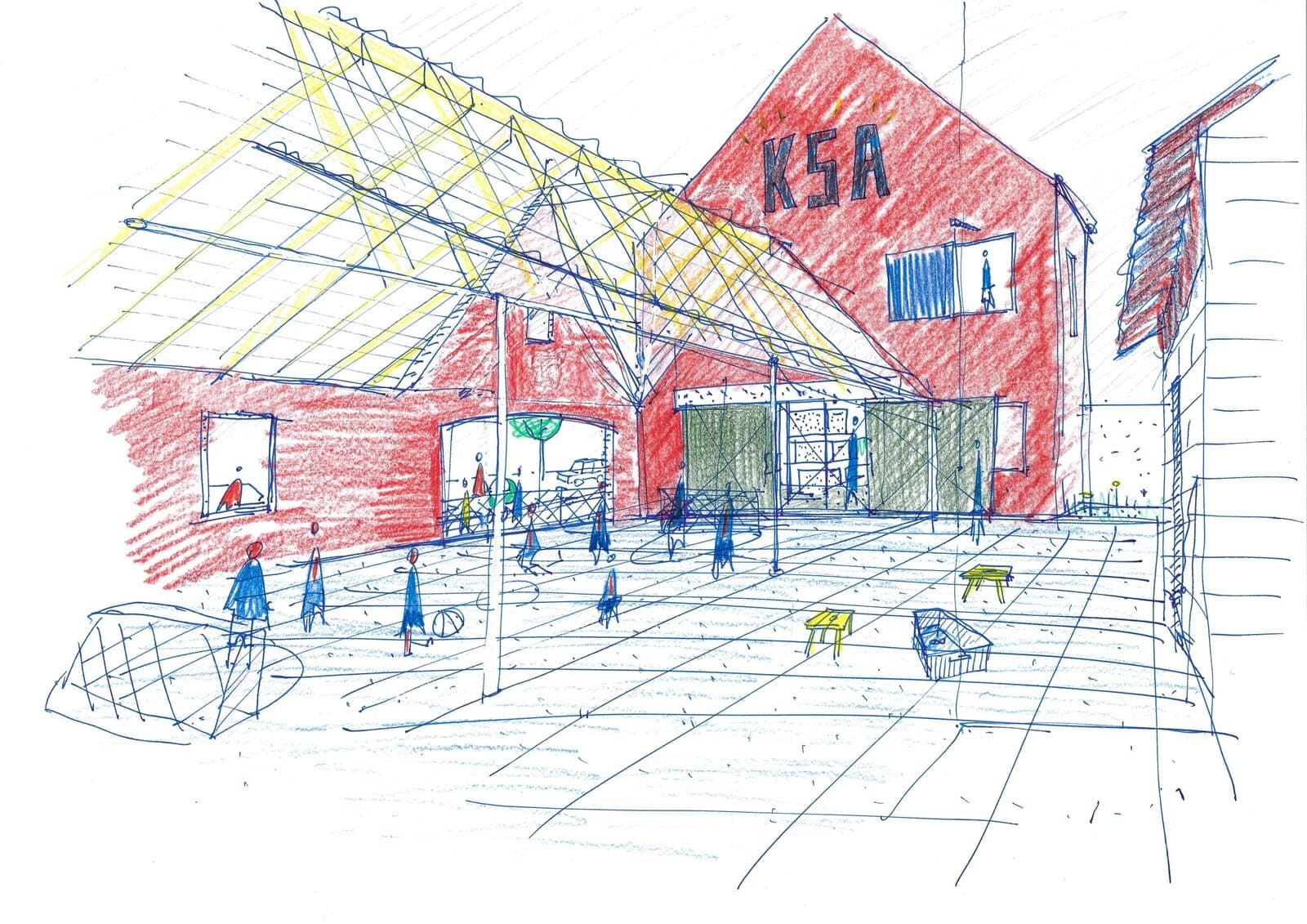
The Sperregem site plays a key role in youth work in Torhout, West Flanders. Various youth organisations have their headquarters there, but this is precisely why the site is reaching its limits. In their design, the team from MARCEL architects and Veldhuis architecture removes a few buildings that detract from the view and introduces structures that foster connection. The team, led by several former youth movement members, won over the jury of the Winvorm competition precisely because its plan takes a very sensitive approach to youth work.
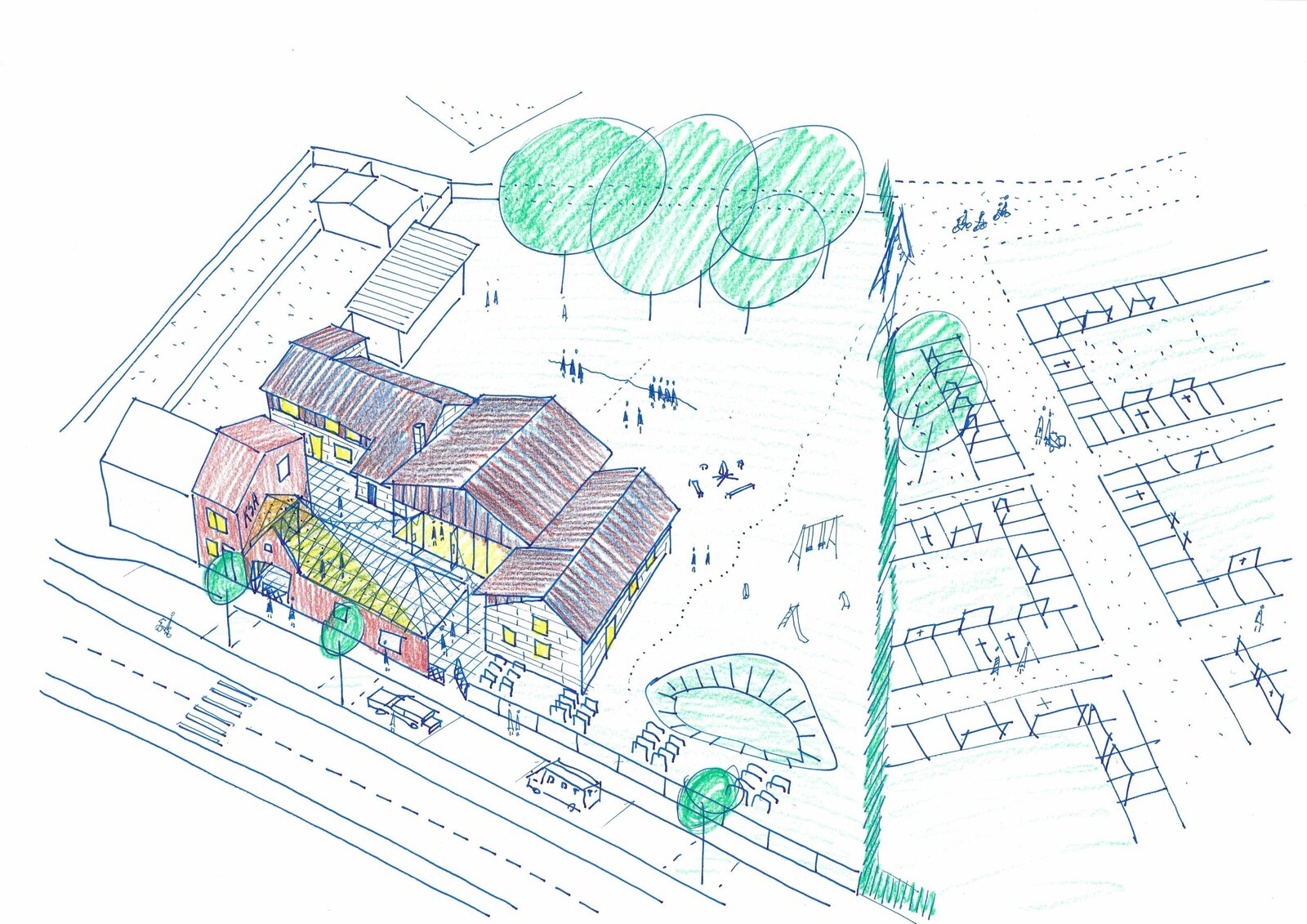
Sperregem is the collective name for a small green park with a historically grown cluster of buildings along the busy Bruggestraat, a major access road to the city centre. The cluster is outdated, unsuitable and too small for the optimal operation of three youth movements. Of these, two KSA groups will remain on the site (for the French-speaking version: the KSA is a Flemish youth movement, originally of a Catholic nature), whilst a scout group that is still active there will be moving away. From now on, Sperregem will continue as a KSA meeting place. The Torhout municipal council aims, as part of its remit, to carry out a far-reaching dismantling of the buildings on the site. Driven by ecological and energy considerations, but also because the limited budget necessitates it, the architectural team is not pursuing this approach.
The complex consists of a series of buildings without a clear hierarchy. MARCEL and Veldhuis create clarity and remove small intermediate structures. Running parallel to the street is a building that compromises the site’s accessibility. Rather than demolishing it entirely, the team transforms the building into a large canopy. It utilises the roof structure and street façade, but removes the floors and remaining walls. Between the buildings, the architects create a forecourt, a paved area where heavy equipment can be easily manoeuvred, but above all a playground and terrace for the two associations. The street façade offers safety and security away from the street, yet allows interaction with the outside world through its window openings.
Next to the canopy stands a narrow, tall building, which the team is converting into a warehouse. Close to the street and the forecourt, it is the ideal logistics hub on the site. The other two buildings are allocated to the two KSA groups. In their building, each association has a room on the ground floor and two on the first floor. The architects have slightly raised the roofs of the two buildings to make the interior spaces more pleasant. With highly distinctive roof typologies, the team has given the buildings a new lease of life.
Where the two buildings meet, MARCEL and Veldhuis are planning the final element of the site: a multi-purpose hall. The large, glass-clad volume complements the interplay of the pitched roofs and opens out onto the forecourt and the large garden. The connecting volume is the clearest expression of the team’s connection to the youth movement. As insiders, the designers know how to spatially support the workings of the youth movement and the character of the site. The forecourt and the multi-purpose hall are, par excellence, the places where members meet, where the groups break out of their cocoons. Yet each group is granted its own identity, in the form of clearly distinct buildings. On a site where two KSA groups are joining forces to ensure young people have a good time, this renovation is a logical expression of their commitment.