The team at NU architectuuratelier – Raamwerk – Plusoffice architects, in collaboration with Plant en Houtgoed, ELD and Ingenium, were awarded the commission to develop a vision for a new care neighbourhood and the construction of a community care centre, a residential care home and a group care home in Kessel. The other candidates in this Open Call procedure were Jorge Vidal League, TAB Architects VK Studio Architects and Studio Tuin en Wereld Mike Viktor Viktor Lama Landscape.
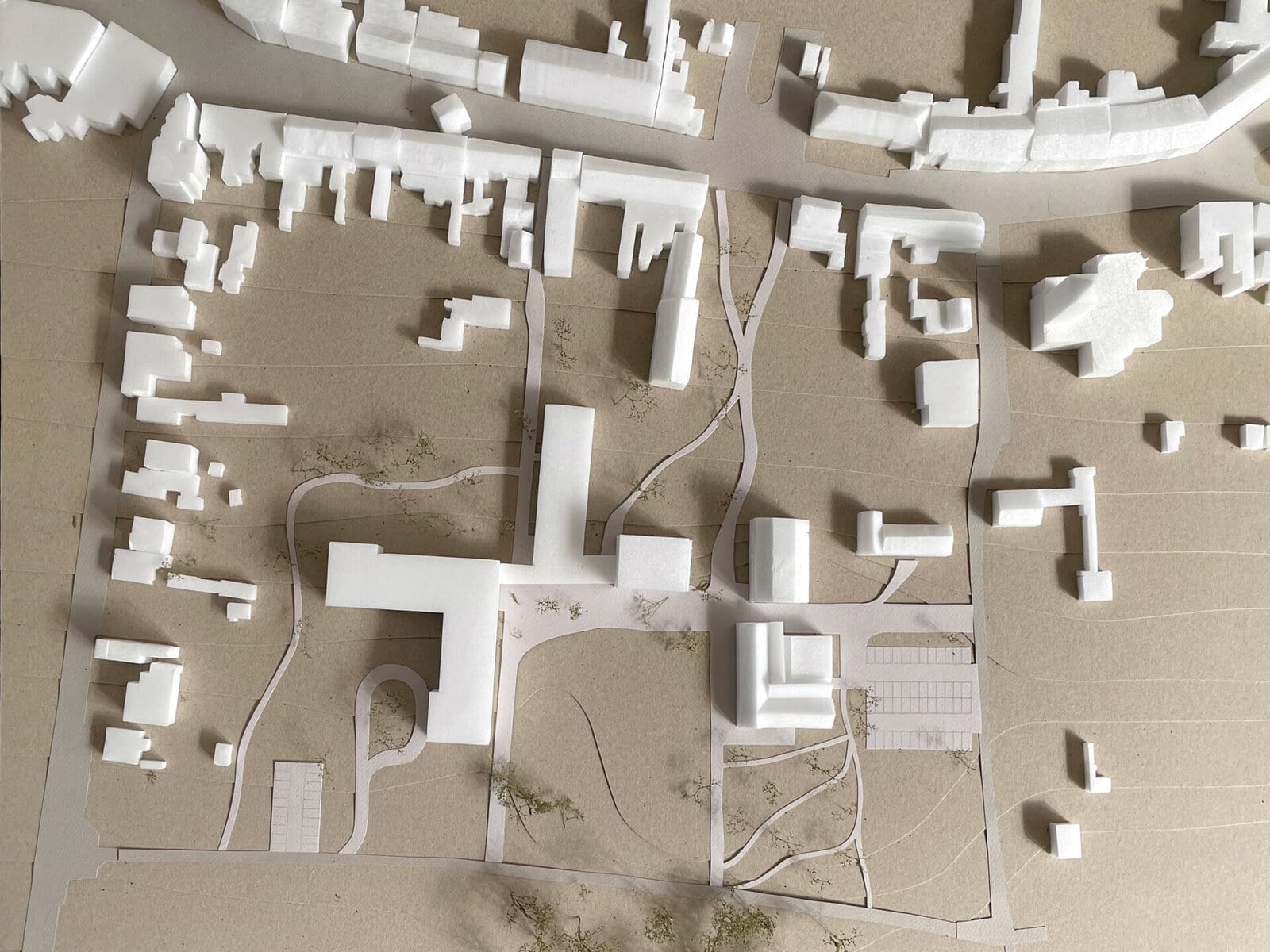
How do you plan an entire care neighbourhood within a small-scale village? The team comprising NU architectuuratelier – Raamwerk – Plusoffice architects could draw on experience in both authentic care architecture (such as Nu’s Huis Perrekes in Westerlo) as in the integration of public programmes into village centres (such as Raamwerk’s youth centre in Lichtervelde) and on the studies in village urban planning that Plusoffice has been involved in over recent years.
In Kessel, the team based their design on a contemporary vision of care-supported living in the village. To this end, they first sketched out a series of thematic outlines.
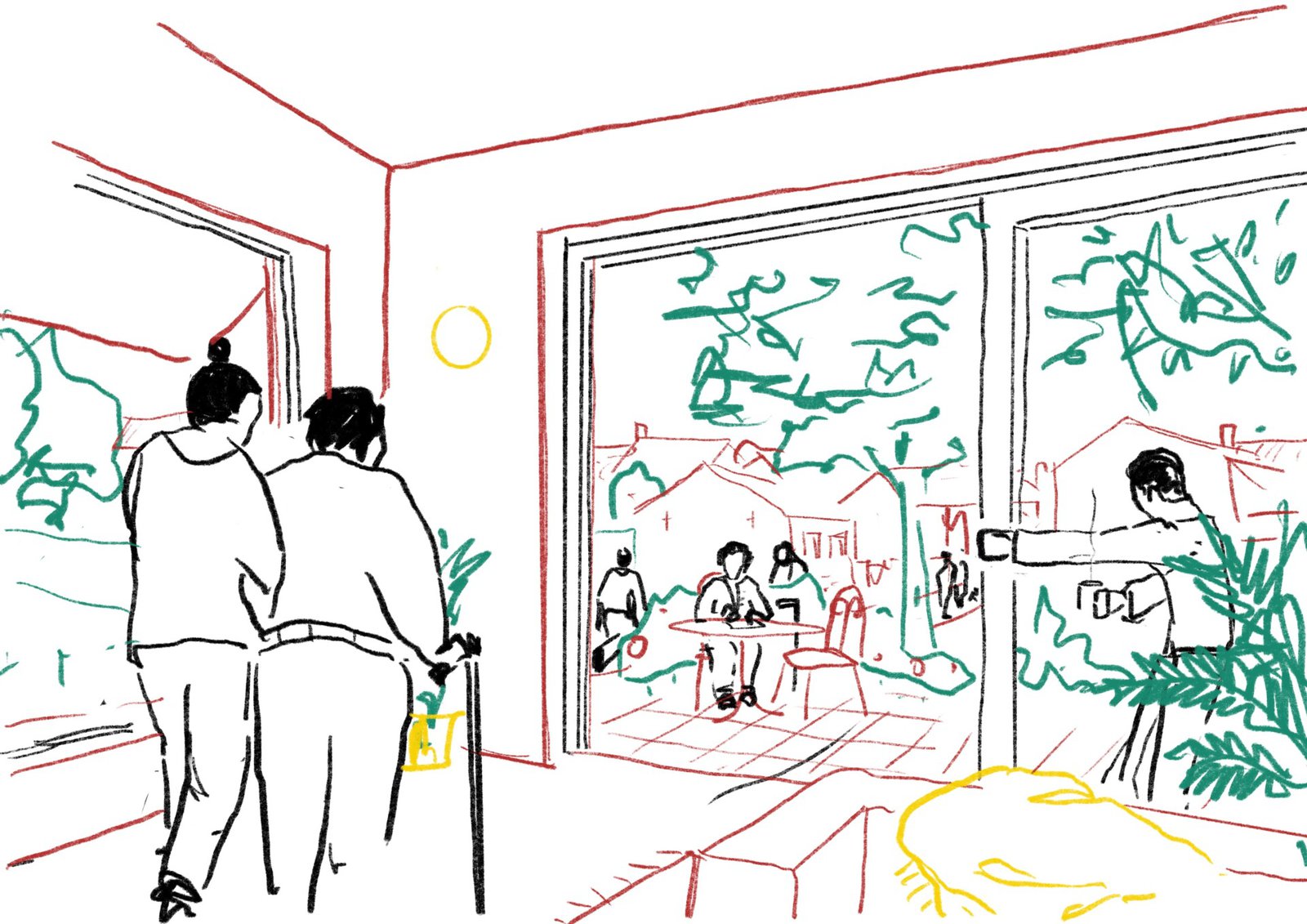
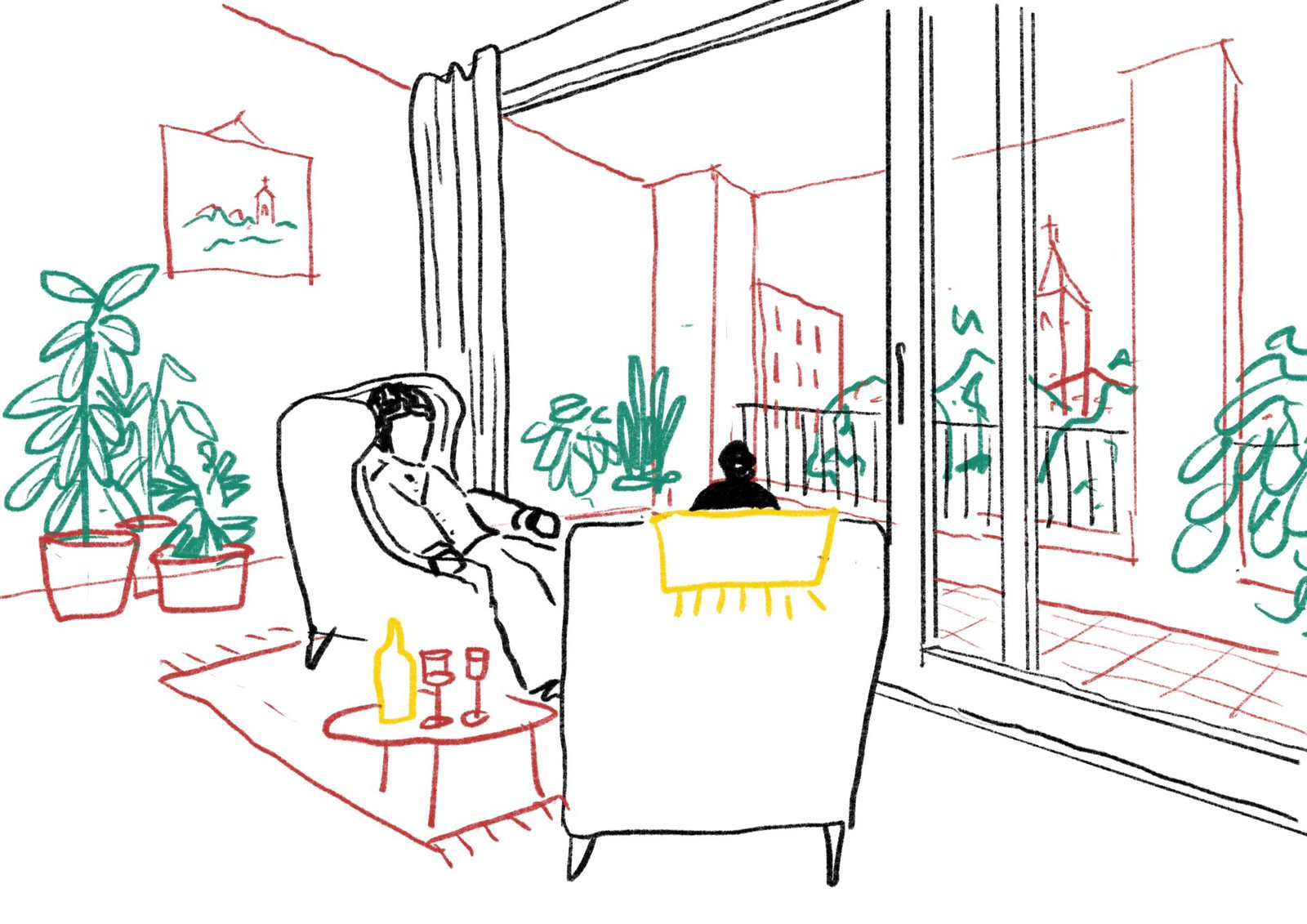
“First and foremost, we want to strive for a place where it is good to live,” say the architects. “The care programme is conceived as a neighbourhood within the village, rich in experiences. We therefore wish to propose a care neighbourhood that, despite its size, can genuinely nestle within the village. A neighbourhood as a generous space, where spontaneous encounters and activities take place. A neighbourhood that can transcend the purely care-oriented nature of the residential care centre. In this context, homeliness is not merely a backdrop, but an integration of daily life and its rituals into the architecture.” A second theme addresses the ‘connecting landscape’, whereby existing and new thoroughfares, paths and alleys naturally link the site with the centre of Kessel and the landscape of the stream valley. The buildings are grafted onto the historic ridge structure that connects the village with the valley.
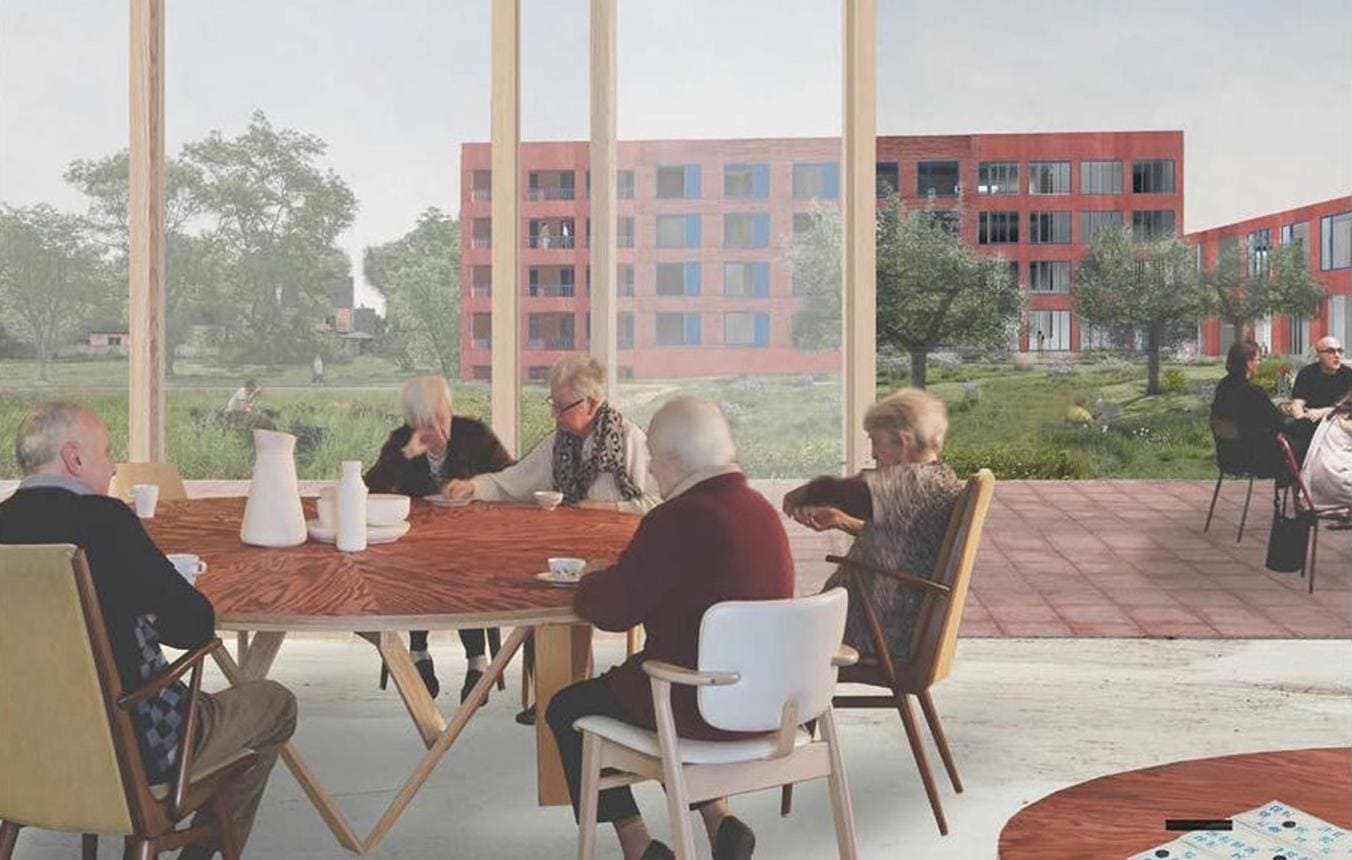
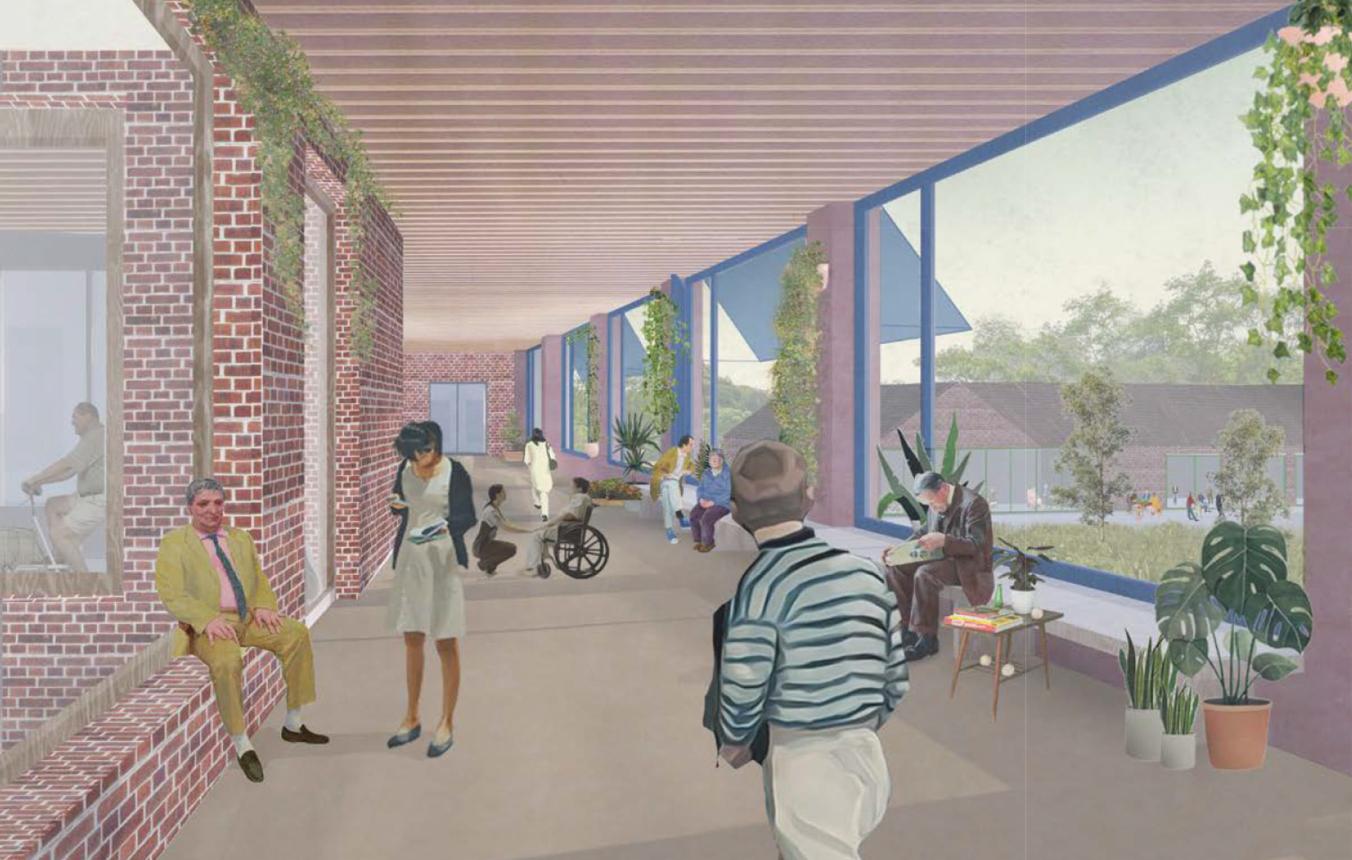
Given the scale of the project in relation to the scale of the neighbourhood, the design team developed a specific vision for the spatial and programmatic integration of the care facility. “The care neighbourhood will not only become part of the village; the village will also be incorporated into the care neighbourhood. The public programme elements of the residential care centre are planned in such a way as to enable mixed use. The cafeteria forms the link between the village and the landscape.”
The designers developed the spatial concept as a logistical cluster that supports the objective of cost-effective operation whilst remaining accessible to the public. In this way, both the flexibility of the whole and the opportunity for residents to stay in touch with the outside world are maximised.
Finally, the team focused on social, ecological and economic sustainability and affordability. “With the aim of organising affordable care that is accessible to a broad group of villagers, we have opted for simple, functional architecture. Life and the activities that take place there are at the forefront. The project derives its character primarily from its functions, not from a self-indulgent design language. We are based on budget-friendly construction systems that offer a logical and clear structure.”
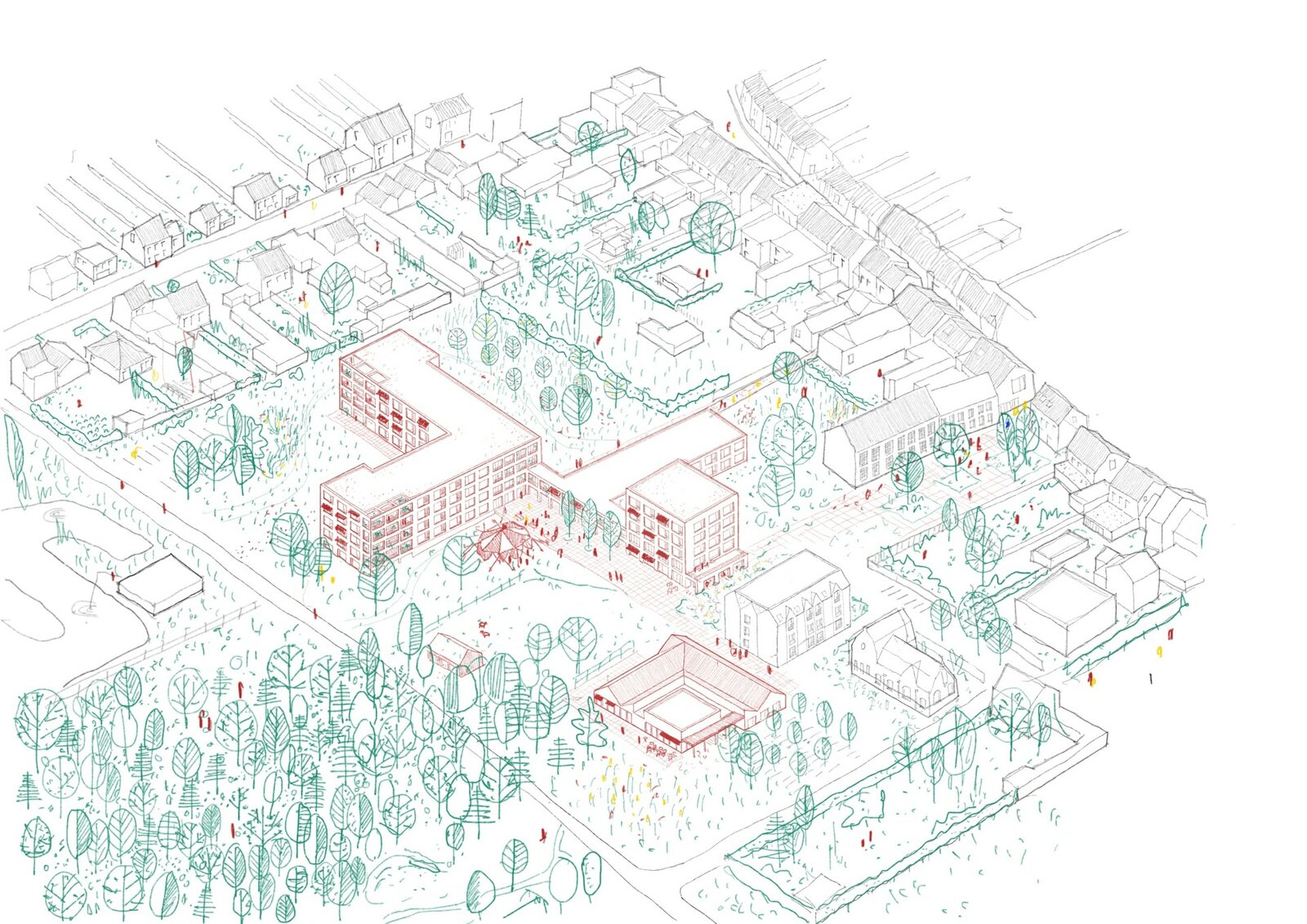
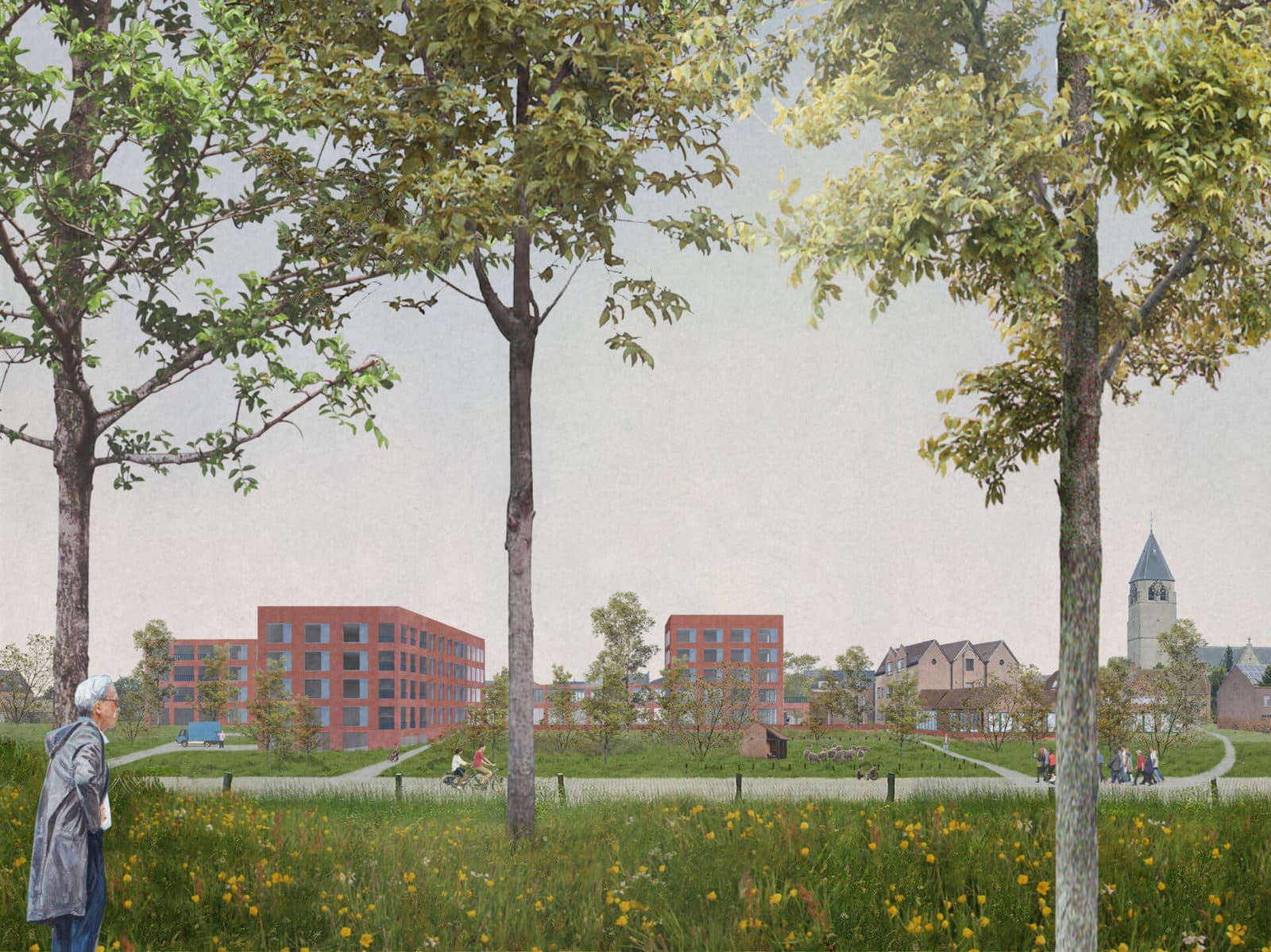
The design builds on the existing visual quality plan for the centre of Kessel. The renovation of the care campus is being used as an opportunity to strengthen the relationship between Kessel-Dorp and the Lindekensbeek valley. On the flank between Kessel’s main street and the wet valley, there are plenty of opportunities to develop a new fabric centred not on the car but on soft mobility.
The concept is conceived as a well-thought-out sequence of four building sections, each with a specific function and character. The residential building, the centre for short-stay and day care linked to the central reception, and the cafeteria with the residential care flats above are connected by a conservatory on the first floor and a logistical link via the basement. The local service centre is situated on the site as a fourth independent volume and serves as an open house for the neighbourhood. Together, the four building sections form an ensemble around a forecourt, a village balcony overlooking the landscape.
The new programmes are modelled on the village structure, with a varied interplay of front and rear facades in ever-changing configurations. Viewed from the stream valley, this creates a rhythm of slender volumes with generous open spaces. The residential building is situated on the axis between the forecourt with its balcony overlooking the landscape and the footpath connecting Kessel village with the valley. The diagonal layout creates a varied relationship with the immediate surroundings and a clear, centralised plan. Three diagonally linked living spaces form the hub. Here lies the communal kitchen, an open kitchen serving both living groups. As the heart of the residential building, this communal kitchen allows residents to be involved in the cooking.
The residential building is connected to the other volumes by means of a conservatory, a light structure that serves not only as a circulation space but also as a meeting place. As an extension of the public domain, it forms the most public axis within the building.
“Within the plan, the cafeteria plays a pivotal role as one of the functions through which we aim to bring the care neighbourhood out into the open, connecting it with the village.” According to the design team. The cafeteria is prominently situated on the forecourt, alongside the potential thoroughfare (the village green) that connects the valley with the village via the school site. This location ensures high visibility within village life. Above the cafeteria are the care flats, which connect to both the forecourt and the winter garden. The typology of a small apartment block contributes to the autonomous character of the flats, which are nevertheless subtly connected to the care centre. On each floor, five flats are arranged around the central circulation space.
For the local service centre in combination with the medical block, the designers have opted to reuse the existing structural shell. The most prominent part of the existing building, with its double-height space and location at the site entrance, is the most suitable for reuse as a structural element. In this way, the designers give the local service centre a sustainable place in the village as a meeting point between the village, the church surroundings, the village green, the forecourt and the open countryside, thereby once again interweaving village life with the entire care neighbourhood.