
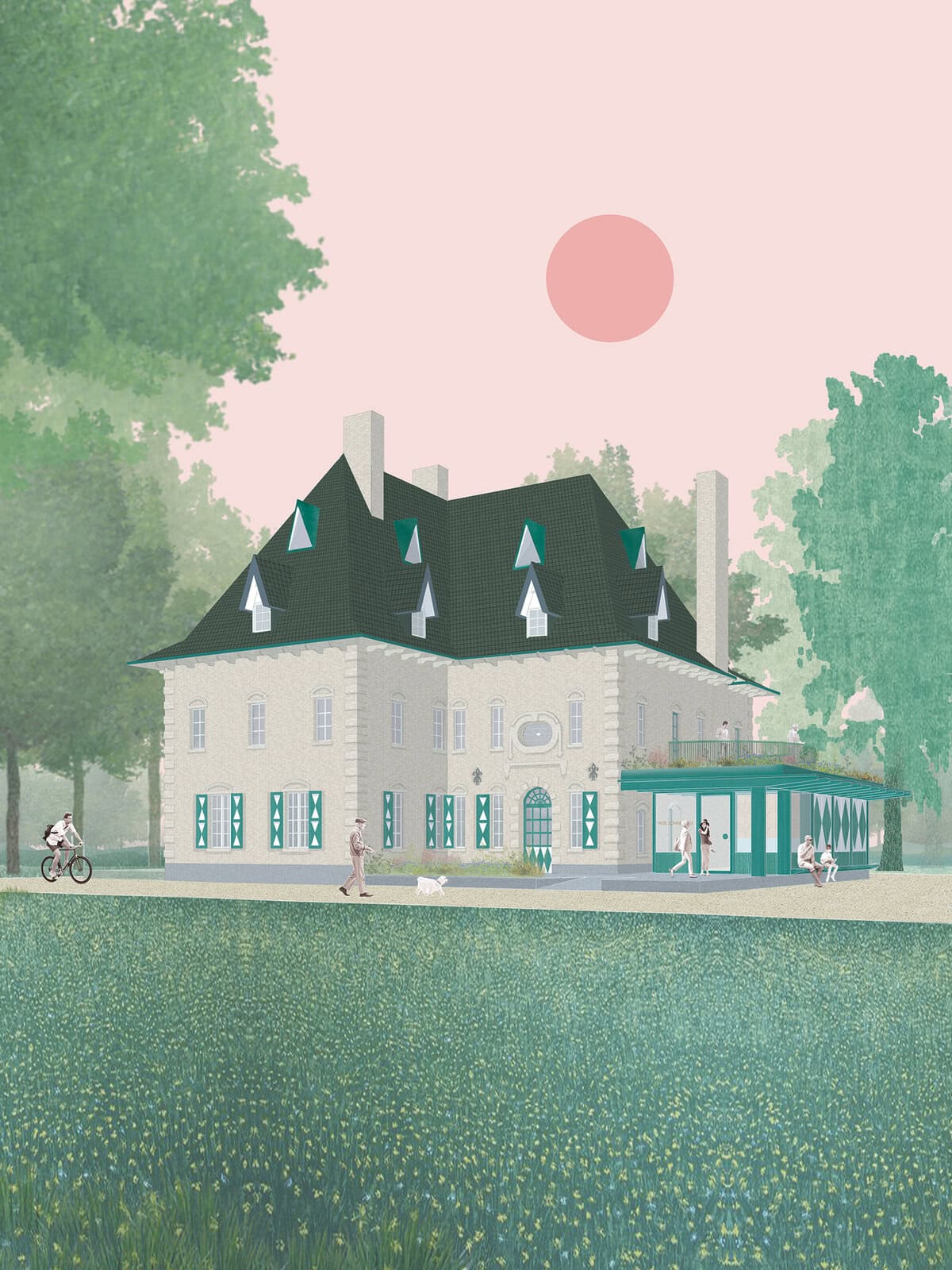
The centre of Zonnebeke in West Flanders is nestled around a large green space. The park, a former castle estate, has been opened up to residents and now houses a number of public facilities in and around listed buildings. As such, it is a popular spot for relaxation and socialising among local residents. One building on the edge of the estate, Landhuis Zonnedaele, had been falling into disrepair for years. The local council wants to put an end to this and develop the building into a community centre and venue for ceremonies. With a design that embraces homeliness and seeks to connect with the park, the team from studiobont and Atelier Starzak Strebicki won the Winvorm competition.
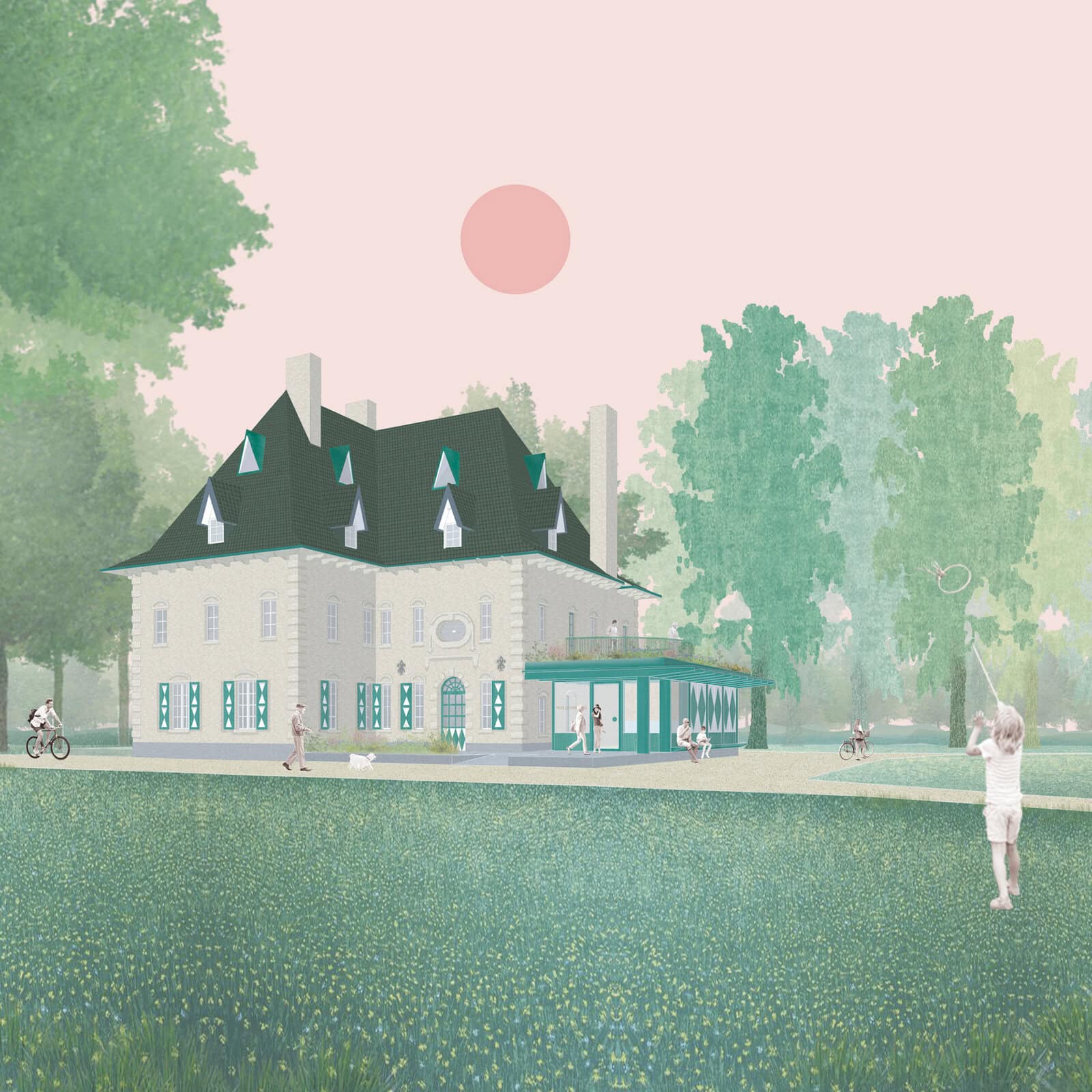
Zonnedaele Manor House was built in 1933 as a residence for the baron’s daughter, so that she could live close to the family yet independently. On the edge of the castle grounds, where the woodland gives way to fields, it stood in a separate garden. That garden and the interior of the building did not survive the test of time. The appearance of the eclectic little castle did survive, however, and became a favourite backdrop for photographs for the village’s residents, particularly at weddings. The council wished to incorporate this popular aspect into the redevelopment. Space is being created within the building for ceremonies, for the local authority and its residents.
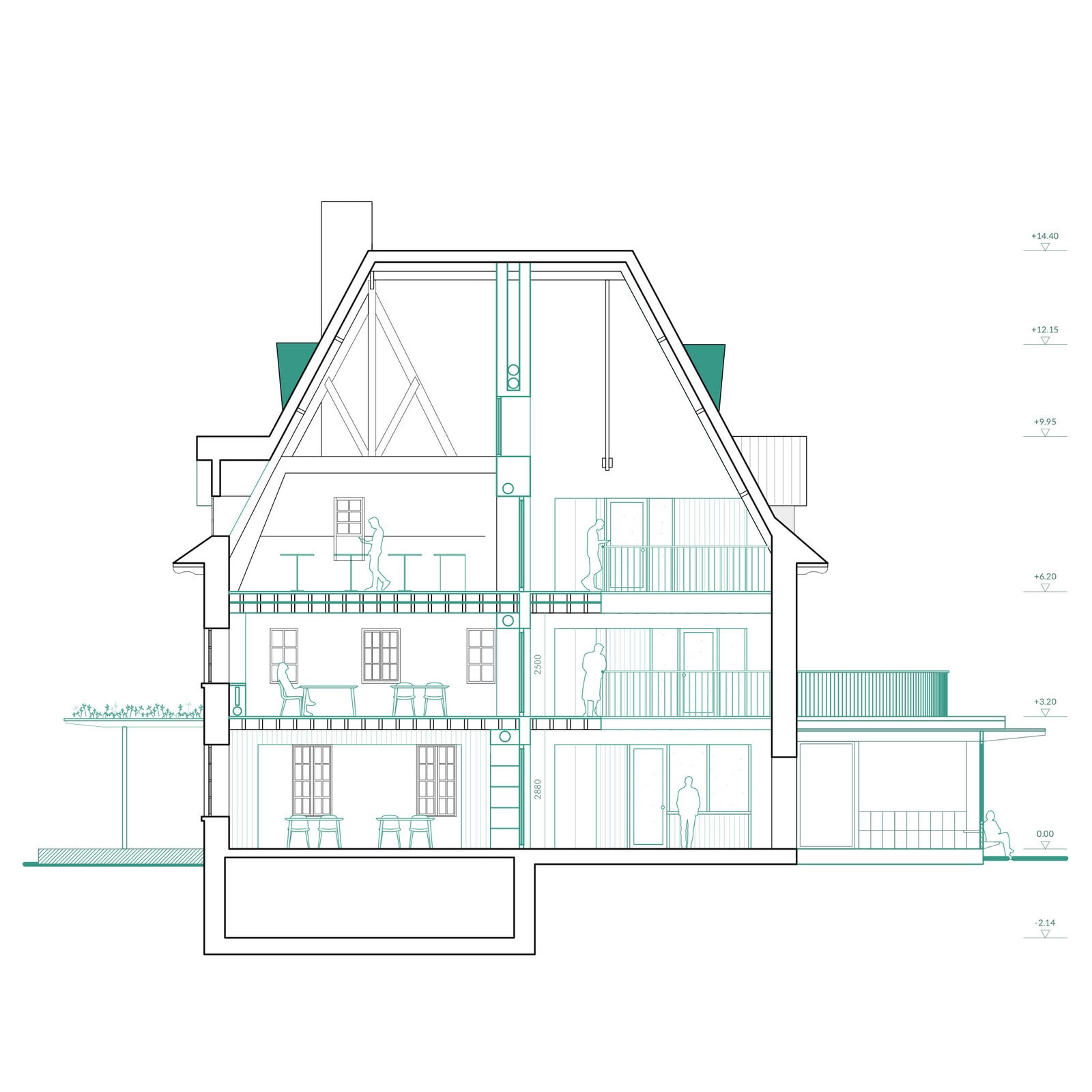
The L-shaped building is being renovated to improve energy efficiency and extended with a single-storey volume on the park side. This houses the toilets but, above all, provides a clear entrance. Moreover, it functions as a piece of street furniture. The façade offers seating for passers-by and there is a large panoramic terrace on top of the volume. Through this intervention, the team aims to connect the building more closely with its surroundings. Adjacent to the extension lies the former entrance hall of the house. The design team reinforces the central role of this space within the house and installs a monumental staircase, which winds through a void and connects all floors. On the staircase, visitors can gaze out at the surroundings, both inside and out, yet they themselves also become the centre of attention.
All floors consist of a large rectangular space, which can be divided into smaller areas depending on use. The shorter arm of the L-shape contains smaller, mostly service areas. These are linked both to the main space and to the central hall. This creates a series of interconnected rooms within which users can choose their own route, just as in a home. Downstairs is a community lounge, featuring fixed seating to view the park, as well as a large terrace facing the fields. Upstairs there is space for classrooms and workshop areas. Beneath the roof trusses, the ceremonial space can also be used as an intimate concert hall.
The team reinforces its intention – a centre where everyone can feel at home – through the use of a subtle design language inspired by the heritage. The additions to the exterior give the country house a sense of direction within the park. The interiors are spaces with a variety of fixed furniture where people can relax and retreat, whilst admiring the park. Landhuis Zonnedaele thus regains its original function as a place to linger, but now for everyone.
