
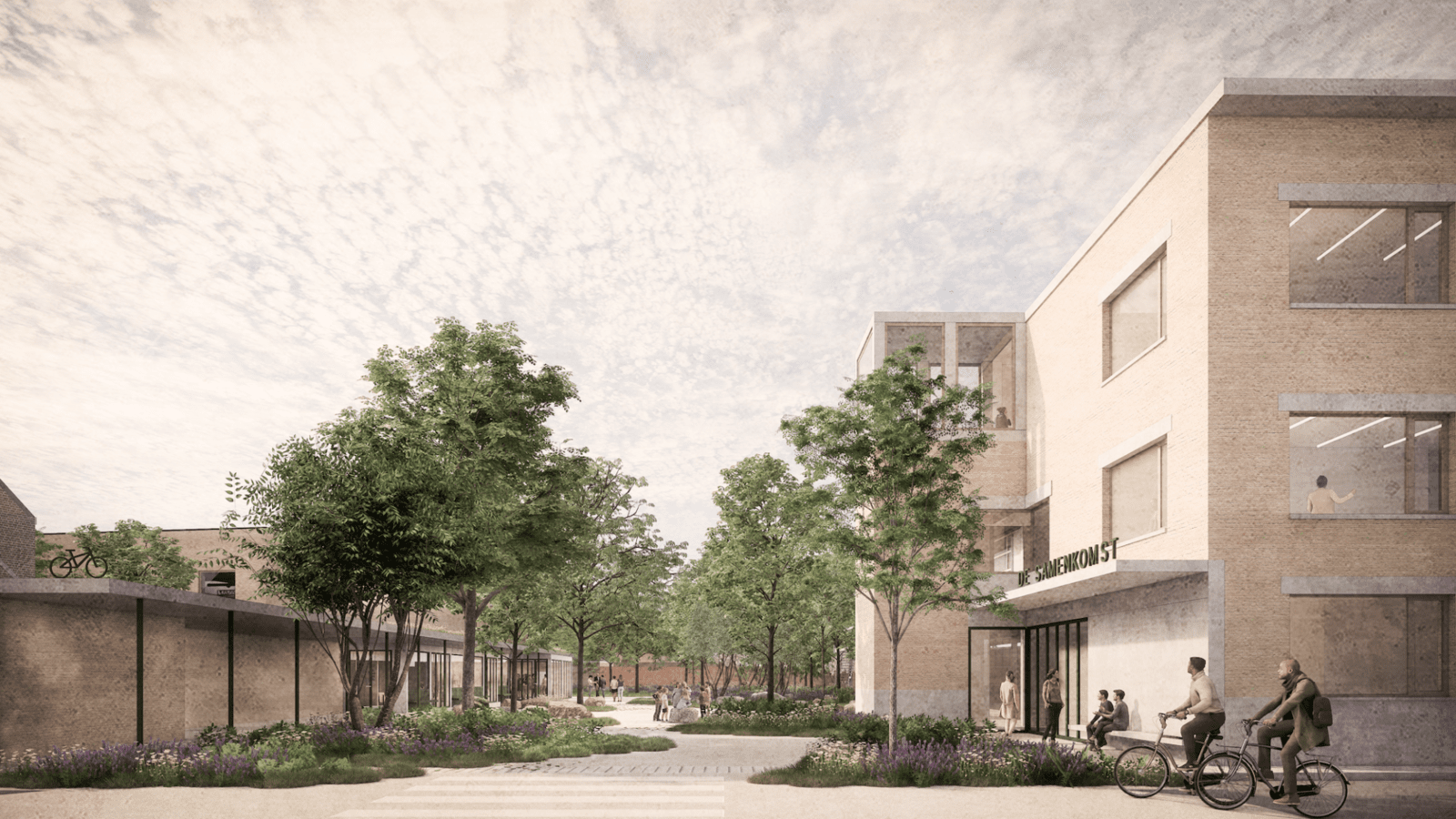
At the junction of two major streets running through the centre of Ledegem in West Flanders, a closed-off site is undergoing a transformation. Where De Samenkomst centre and a school once stood, a more spacious socio-cultural facility is soon to be built within a park. In the competition organised by the council, an Oproep Winvorm, the team led by Ae-architecten and Czvek-Rigby produced the best design proposal. It creates a generous third place, a park surrounded by public facilities, an accessible communal space, in a central location in the village.
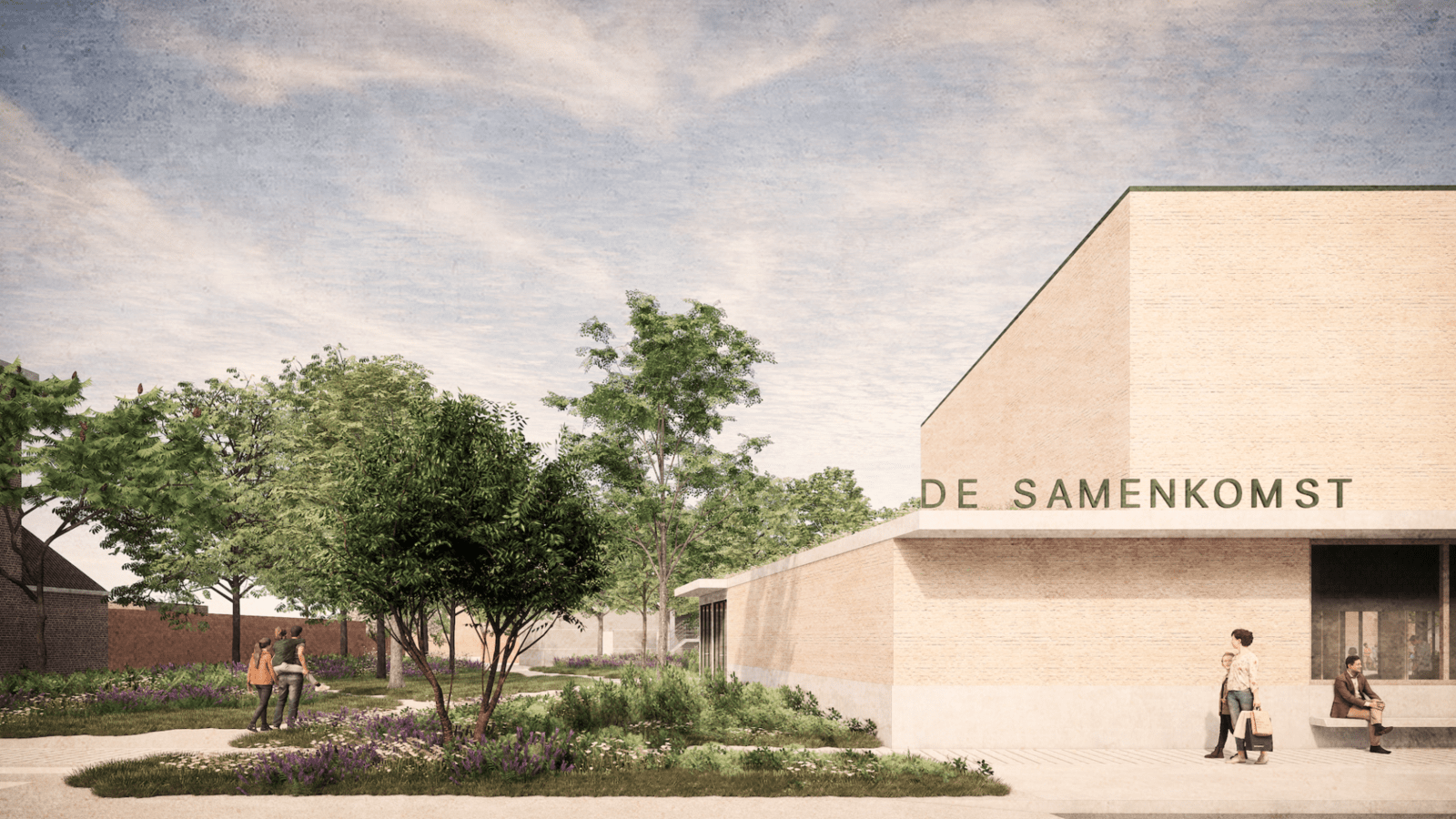
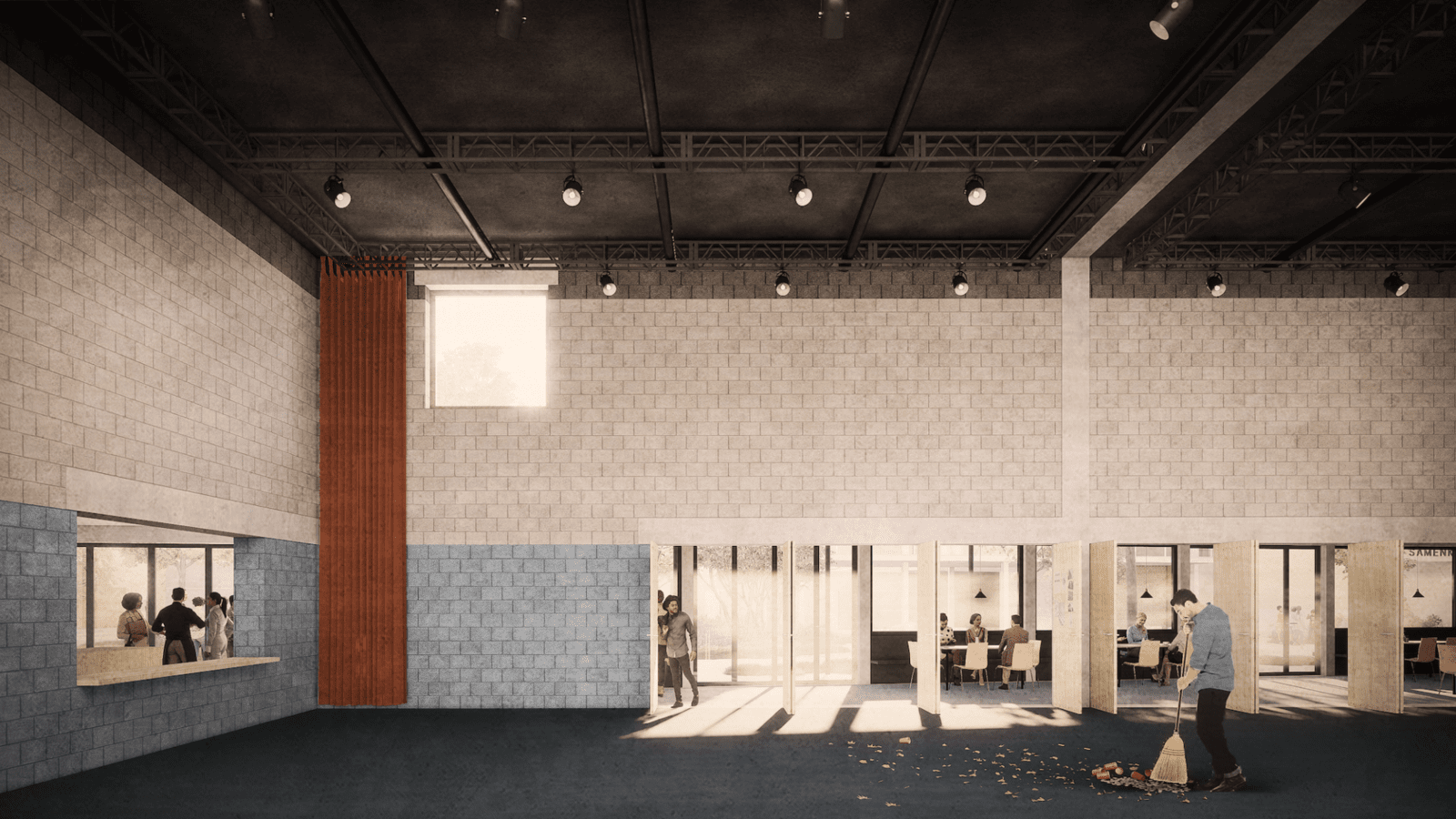
The project’s location is ideally suited to fulfilling a central function. It lies both along the route between the town hall and the church square, and next to a street connecting various schools and housing estates. The original buildings meekly follow the streets, thus concealing a large inner area. This area contains rooms that can be used by youth clubs. As the school and hall hinder the effective functioning of the area, the council wanted them demolished. However, it did see potential in the youth clubs.
Rather than creating a park within the block containing a building, the architects complete the battered village layout. They introduce two volumes: a music and art academy — on the street alongside the schools — and a multi-purpose hall for the community along the public axis. The academy connects to the existing premises; from the inner area, it forms an elongated beam-like volume on columns. An open space is created between the buildings, accessible from three sides. The park opens onto the two streets, but also connects with the green space behind the sports hall. The network of slow routes continues into the park, making De Samenkomst a place where informal movements intersect.
The temporary association draws inspiration from the ideas of Ray Oldenburg; it aims to design a third place. There, people can meet others without obligations and be themselves freely, which makes this type of place crucial for the well-being of the individual and the functioning of society. If De Nieuwe Samenkomst is to be a successful third place, the local community must have sufficient reason to spend time there. There is no shortage of such reasons. The multi-purpose space is an empty space that can be used by anyone, either in combination with the foyer or separately. The foyer extends into the park, towards the youth movement’s covered outdoor area, next to the academy. This is open to visitors; virtually the entire ground floor can be used as an exhibition space. The park is also open for any activity organised by the three organisations based there, but certainly also for the village residents.
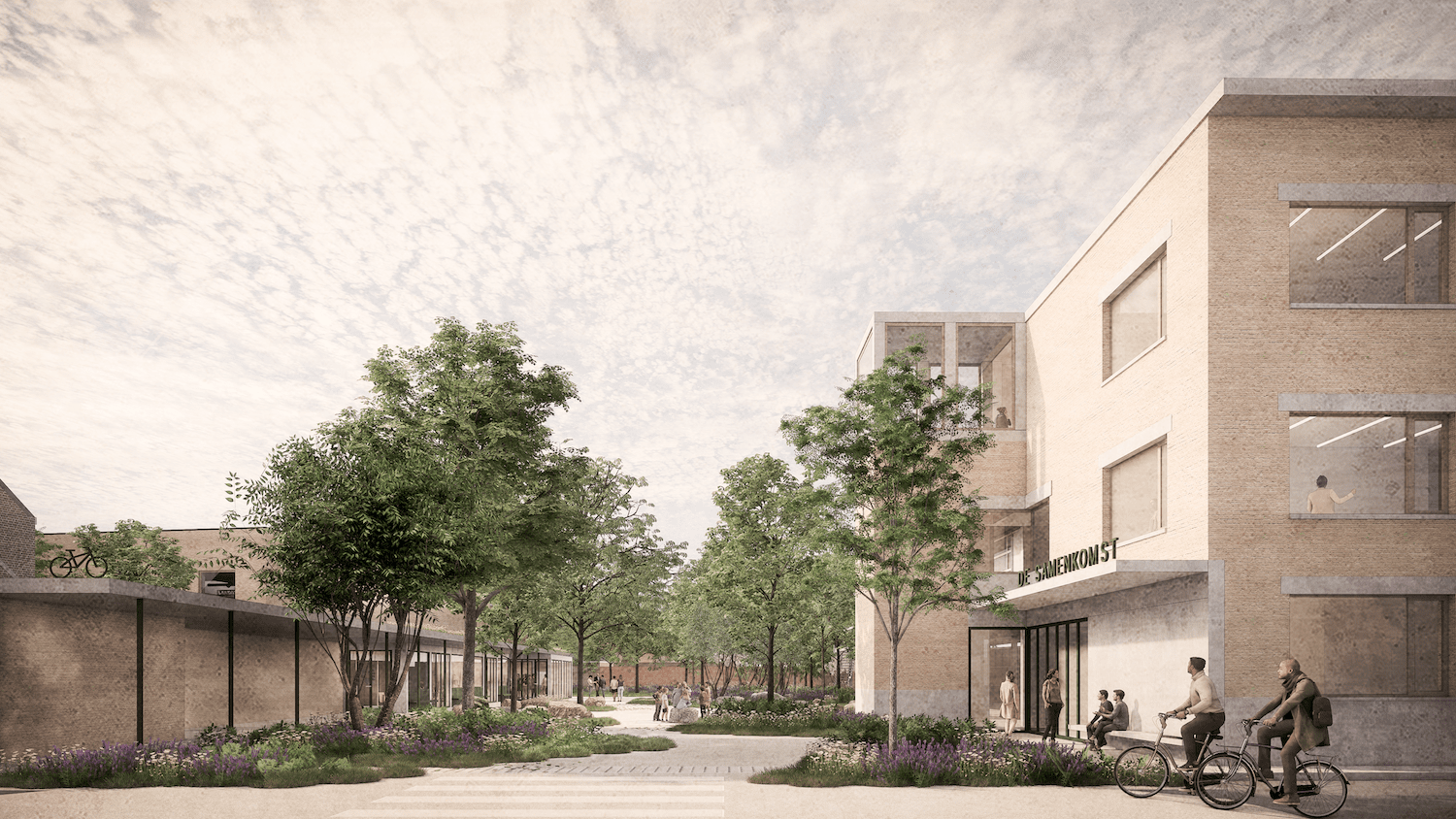
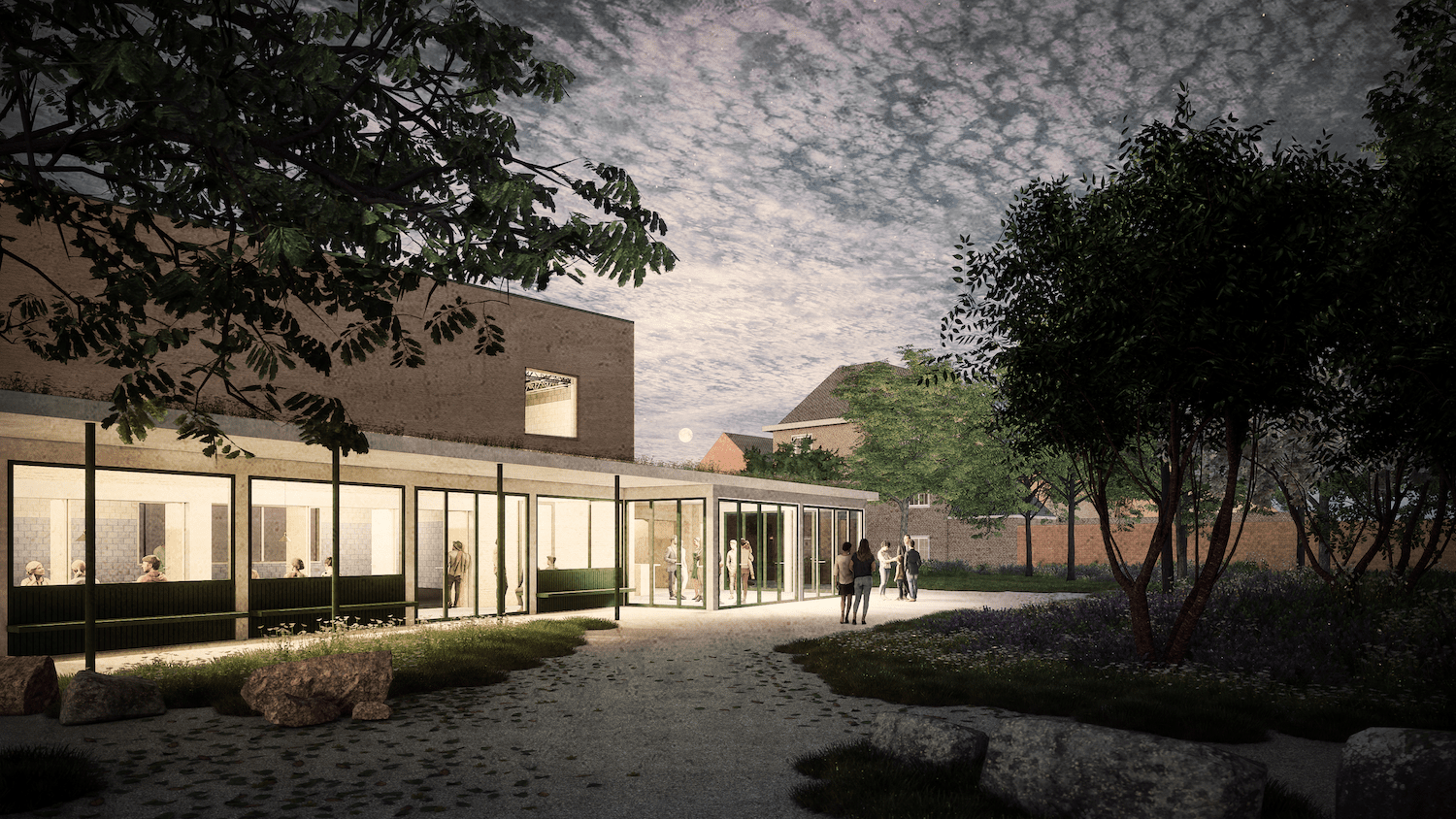
To give the people of Ledegem a greater sense of connection with the site, the design pays close attention to the small moments. Entrances are flanked by benches, which can serve as bus stops, but more as spaces to linger or to admire the floral displays. The buildings are versatile in volume, a reference to historic public buildings, but above all a reflection of the spatial conditions surrounding the site. This makes the whole very contextual without seeking to be explicit. De Samenkomst has the potential to be a central forum in Ledegem, serving as the third place for the community alongside the home and the public building.
