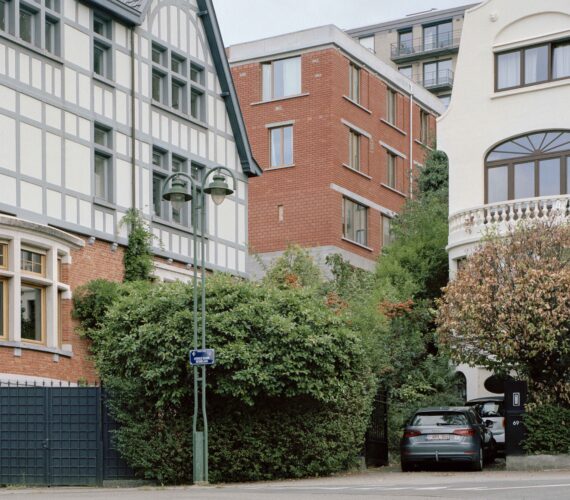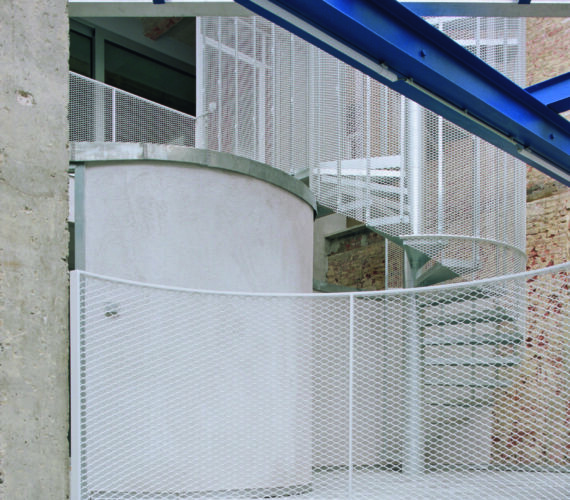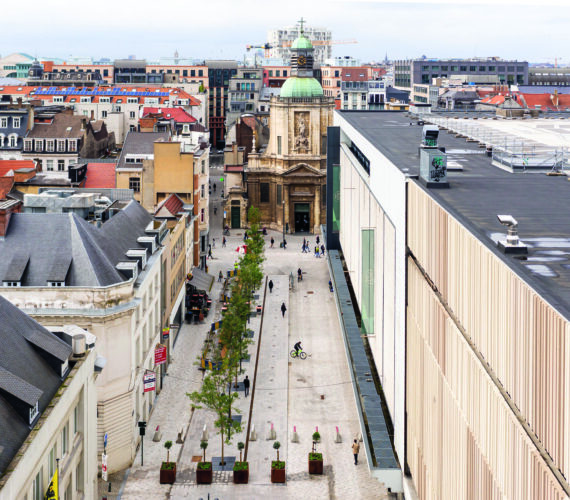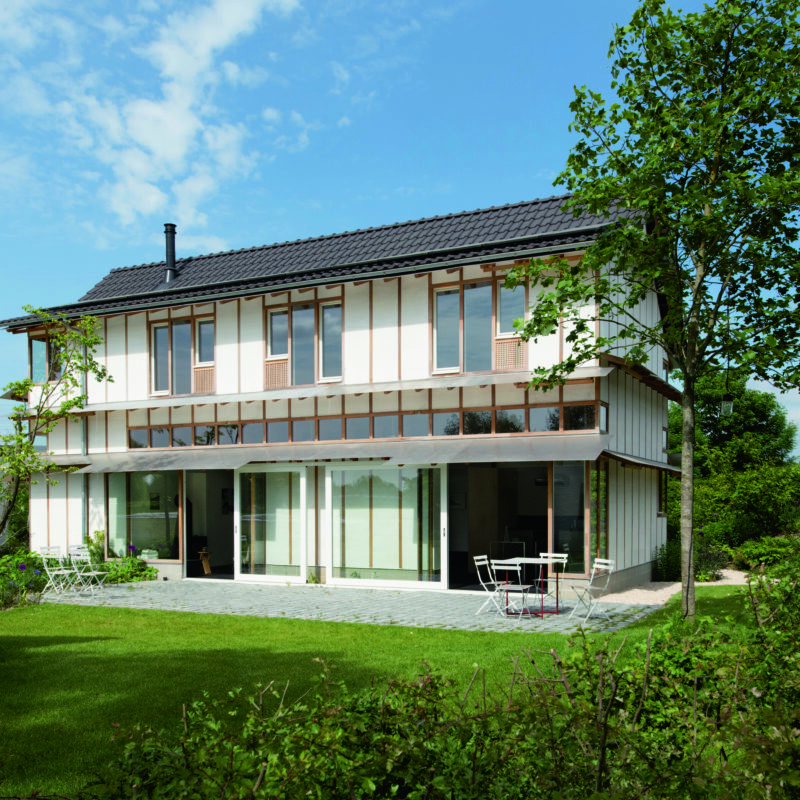
There are plenty of architecture prizes, it seems. Cities, companies and professional organizations regularly pay tribute to buildings or their designers. And rightly so! You can never talk about architecture enough. But an architecture prize is more than just the award ceremony. This is proven once again by the Brussels Architecture Prize, an initiative of the Brussels-Capital Region and organized by A+ in co-production with Urban. After a successful first year in 2021, the course of this edition was immediately mapped out. Because this prize aims not only to celebrate but also to question. It is a means of examining the social urgencies at play today through the lens of built space. Because architects and urban planners help to steer society. Whether it concerns affordable housing, sustainable building, the climate transition, the circular economy or high-quality public space with sufficient room for pedestrians and cyclists, it is always a spatial task. The architect’s view on these urgencies has a major impact on the design of the city. And when it is preceded by outstanding and responsible commissioning and a progressive out-of-the-box architectural policy, it grows wings.
As the largest city in Belgium, the capital of Europe, a city of arrival and a multicultural melting pot, Brussels has an exemplary role to play here. It also has all the assets to live up to this role: an interesting economic position, a large number of public and private commissioners, and the presence of a large group of talented designers. The result is an impressive architectural production, one which has not escaped the attention of the international jury of the Brussels Architecture Prize. ‘I was impressed by the number of projects submitted and by their quality and diversity’, said Danish architect Dorte Mandrup, president of the jury. The projects nominated for this prize prove once again that architects are not afraid to tackle thorny issues, nor do they shy away from complex urban-planning situations, hyperdensity, alternative construction methods and inclusive participatory processes. The challenging and ever-changing spatial conditions peculiar to Brussels make this city a laboratory where experimentation – if given oxygen – can form the blueprint for tomorrow’s building, providing a breeding ground for the next generation of architects.