
In Liège, on the historic site of the former Fonck barracks–now home to the ULiège Faculty of Architecture–a competition has been launched to consolidate and expand the faculty complex with new spaces. On this already densely built-up site, there are a number of challenges to be addressed. The candidates are engaged in a process of reflection to find a new synergy for the campus, a sensitive integration of the existing heritage, and the possible evolution of the buildings. Five teams submitted entries: Robbrecht en Daem Chora, Baukunst, Altstadt Karamuk Kuo, Studio Muoto Laboratoire Baumans Deffet and the winners, Office kgdvs.
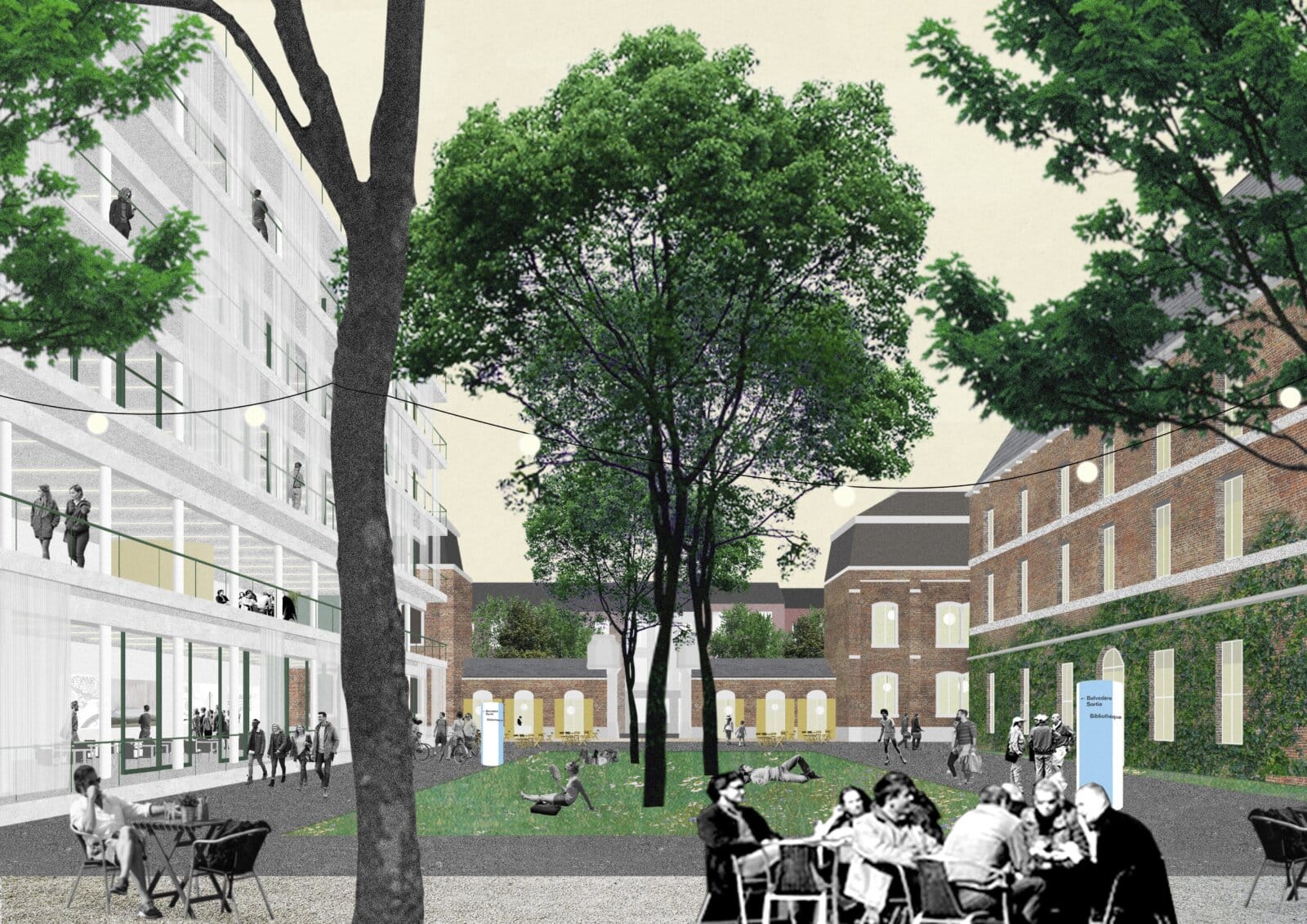
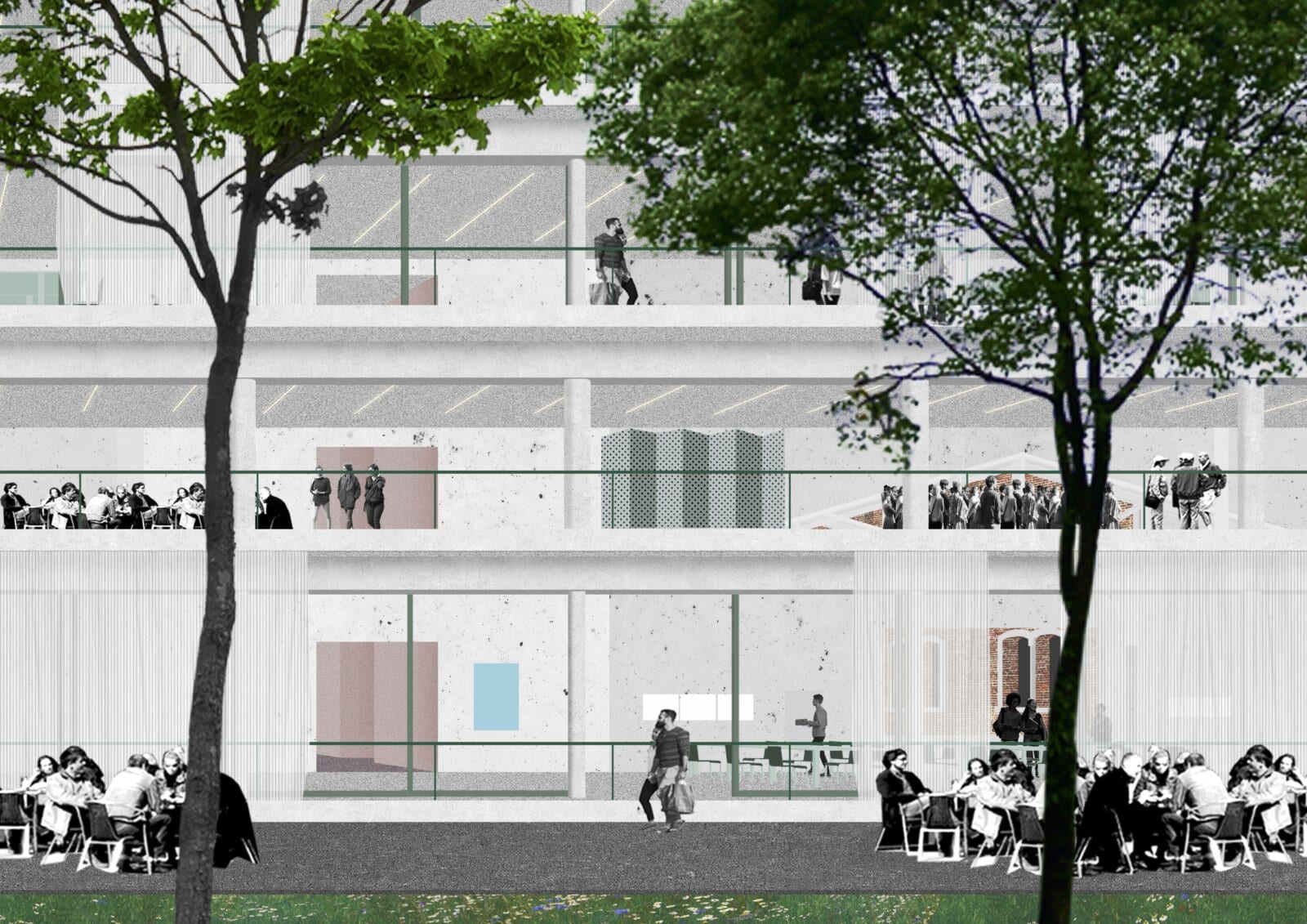
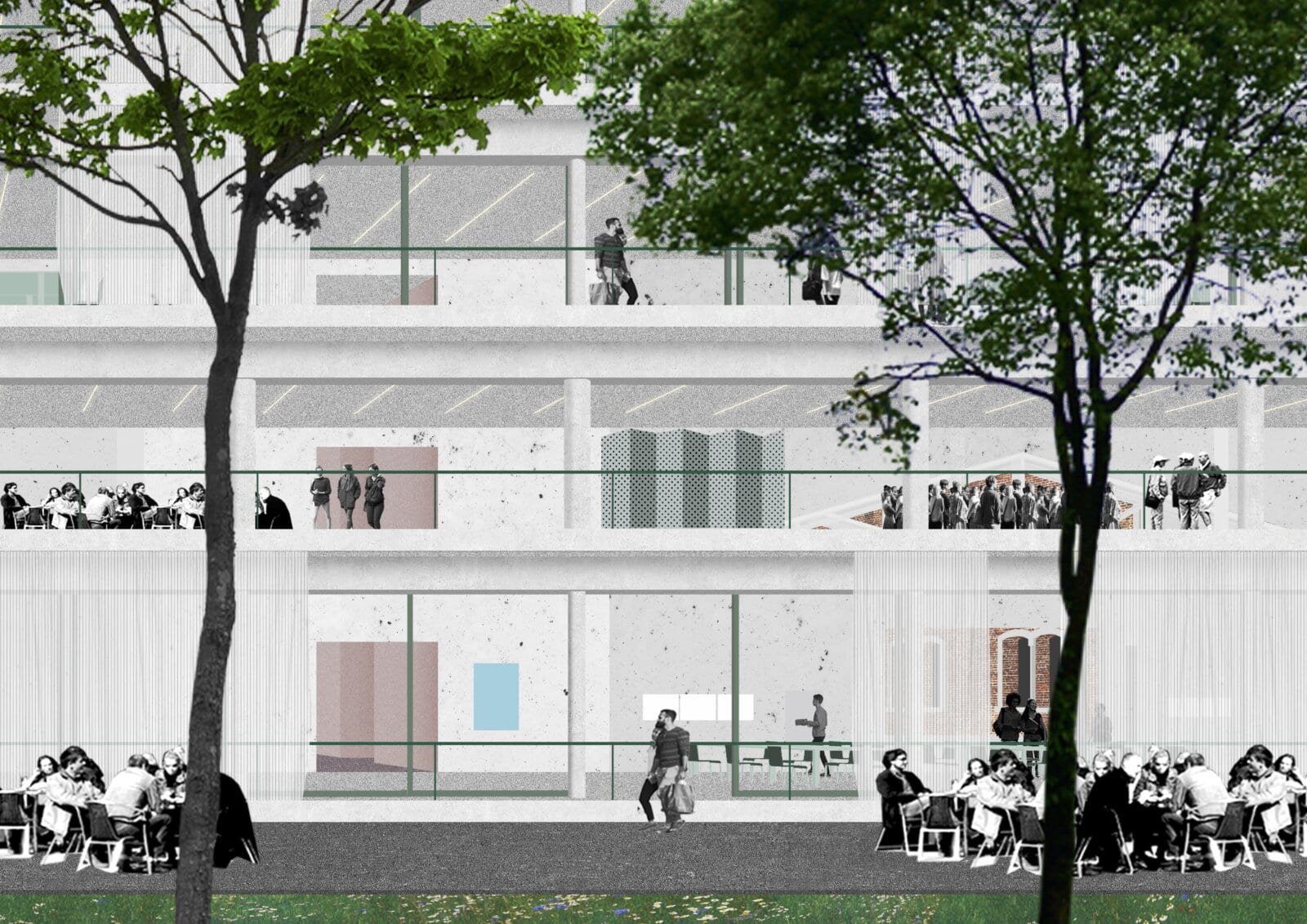
As a guiding principle, Office kgdvs, as is its custom, attempts to define a clear layout by ‘correcting’ the geometry of the main courtyard through the new linear building it introduces. The importance of demarcation and boundaries is further emphasised by the choice of a façade that acts as a blank wall facing Rue Ransonnet, whilst the courtyard-facing façade opens up as much as possible. This building, housing the workshops, is defined as “between wall and walkway”. It dares to sit against the existing two-storey building, thus becoming a filter for natural light. Its maximum opening on the other side therefore follows the logic of necessity.
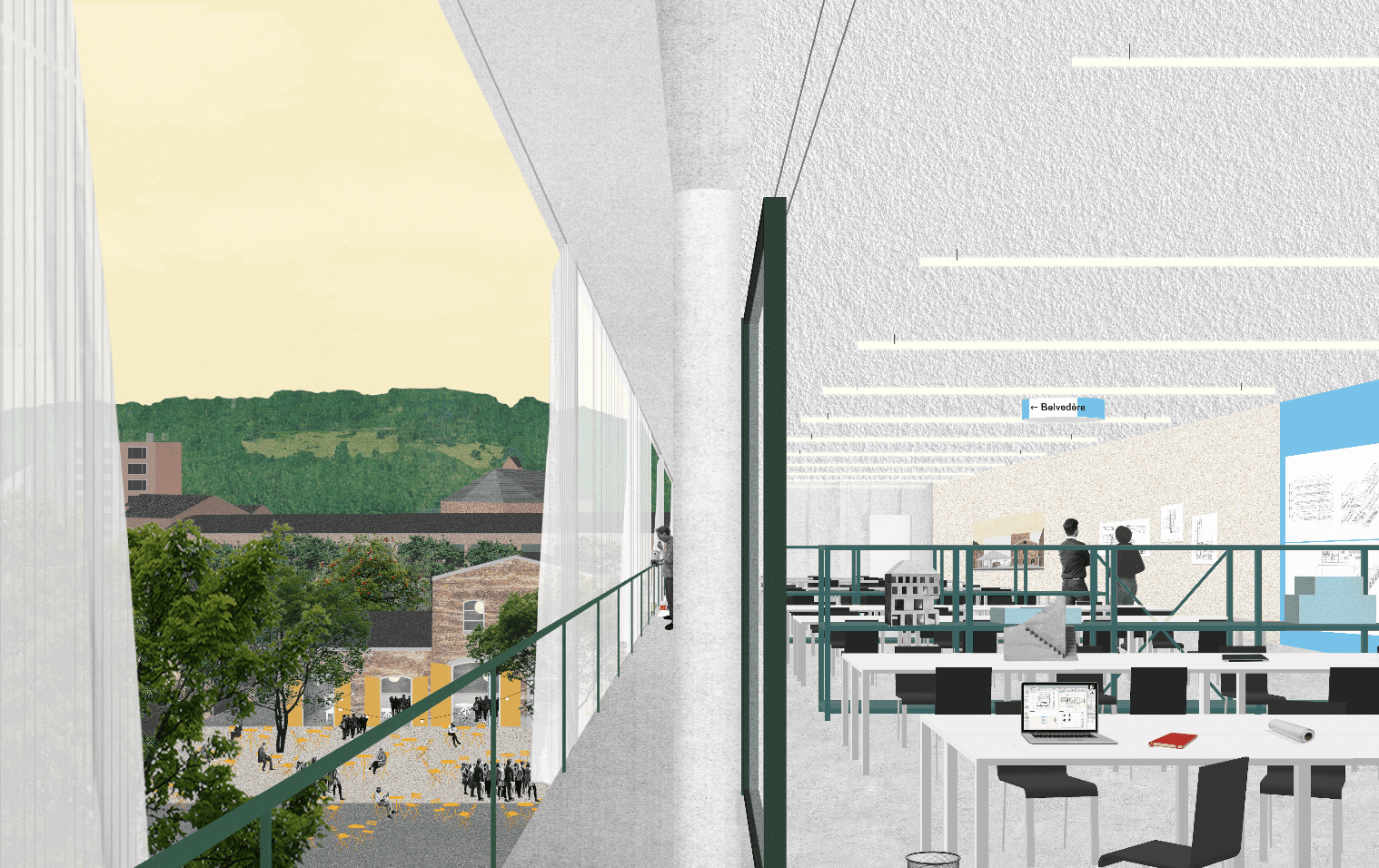
The intention also lies in defining clear identities, thanks to the three interventions: the workshops, the lecture hall and the learning centre. These are new spaces designed to evoke a concrete vision for students, thereby clarifying the site. The auditorium is a volume that fills the void between the two existing buildings housing the reprographics department, laboratories and teaching rooms. It serves as an interface, connecting the two buildings and becoming a new space for interaction. But it also connects the street with the central courtyard, thereby maintaining a link with the city.
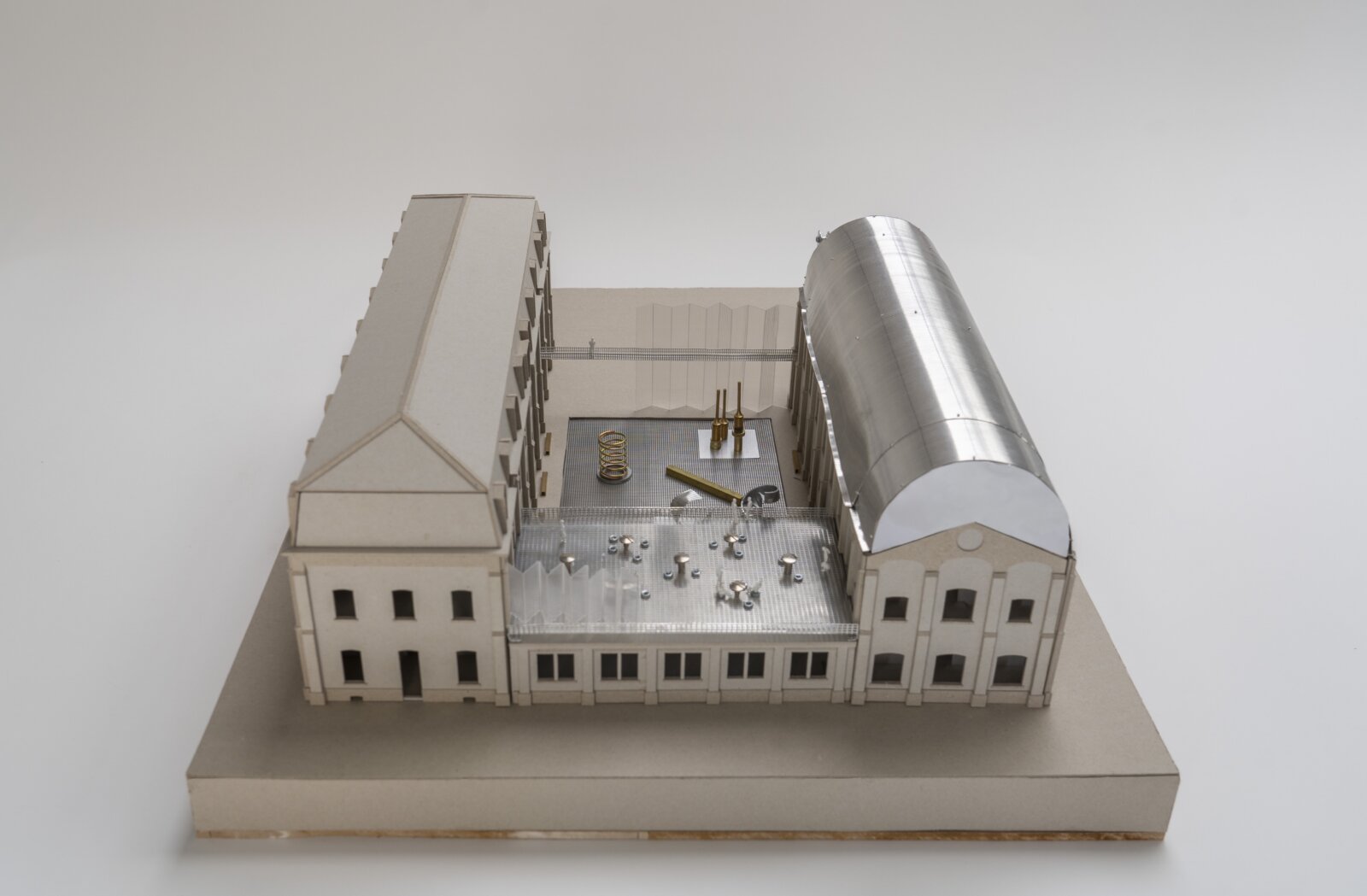
Among the other proposals, two trends emerge. One is similar to Office’s approach, which seeks to work with the existing structure, whilst the other favours a more independent approach. The former, which includes Baukunst, focus on a section of the site and choose to integrate the new volume into the same void as the auditorium. There is an interesting desire to use the competition as an educational programme, engaging students through a participatory construction project.
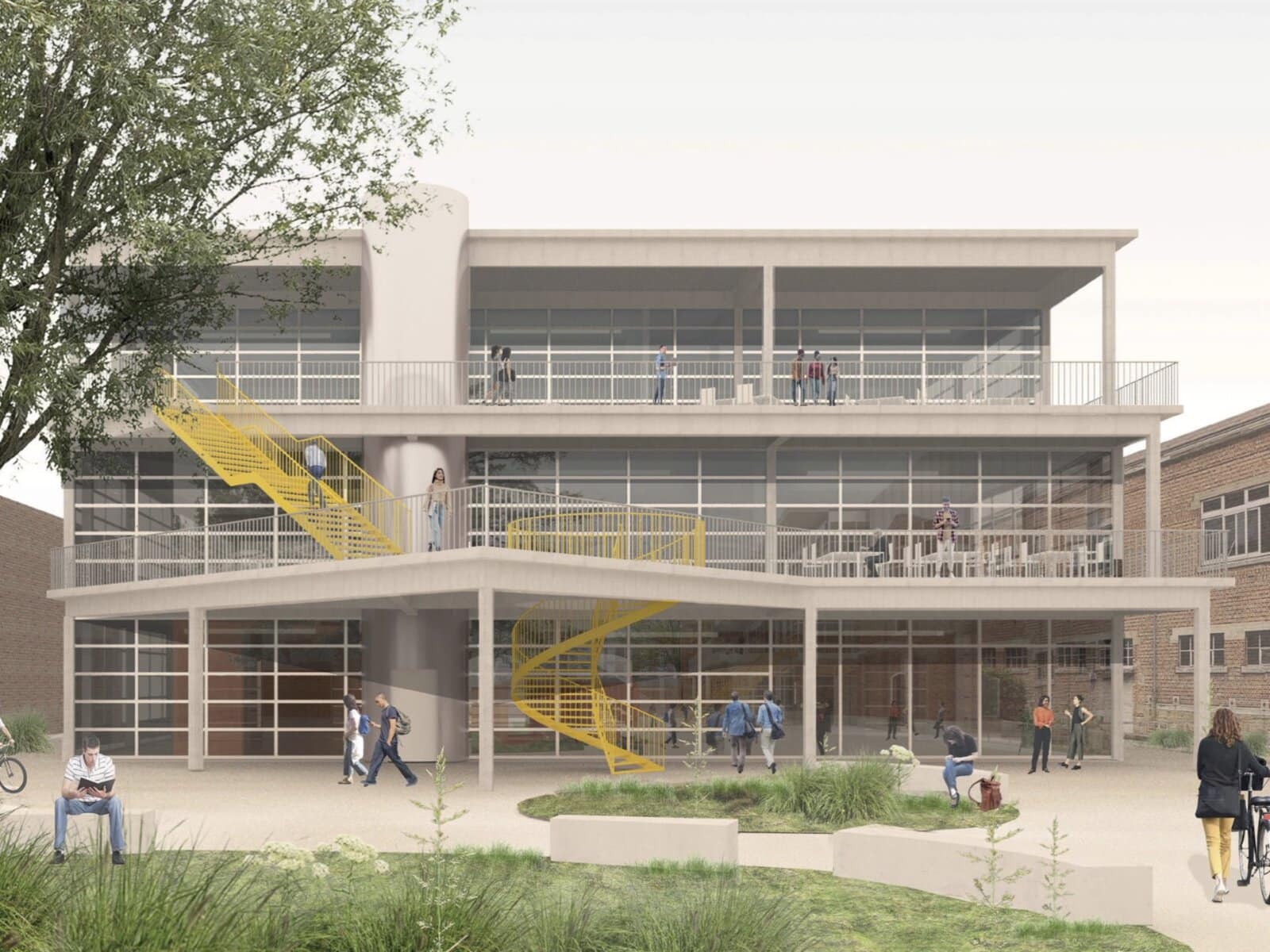
Altstadt, in collaboration with the Swiss firm Karamuk Kuo, also seek to better define the courtyard’s perimeter with two new volumes. An innovative hybrid structure of concrete columns and timber beams takes shape within the new building, which features an infrastructural aesthetic.
More surprisingly, Robbrecht en Daem, in collaboration with Atelier Chora, propose a square-plan tower punctuated by voids and a central patio. A volume that resonates more with off-site buildings than with the context of the former barracks.
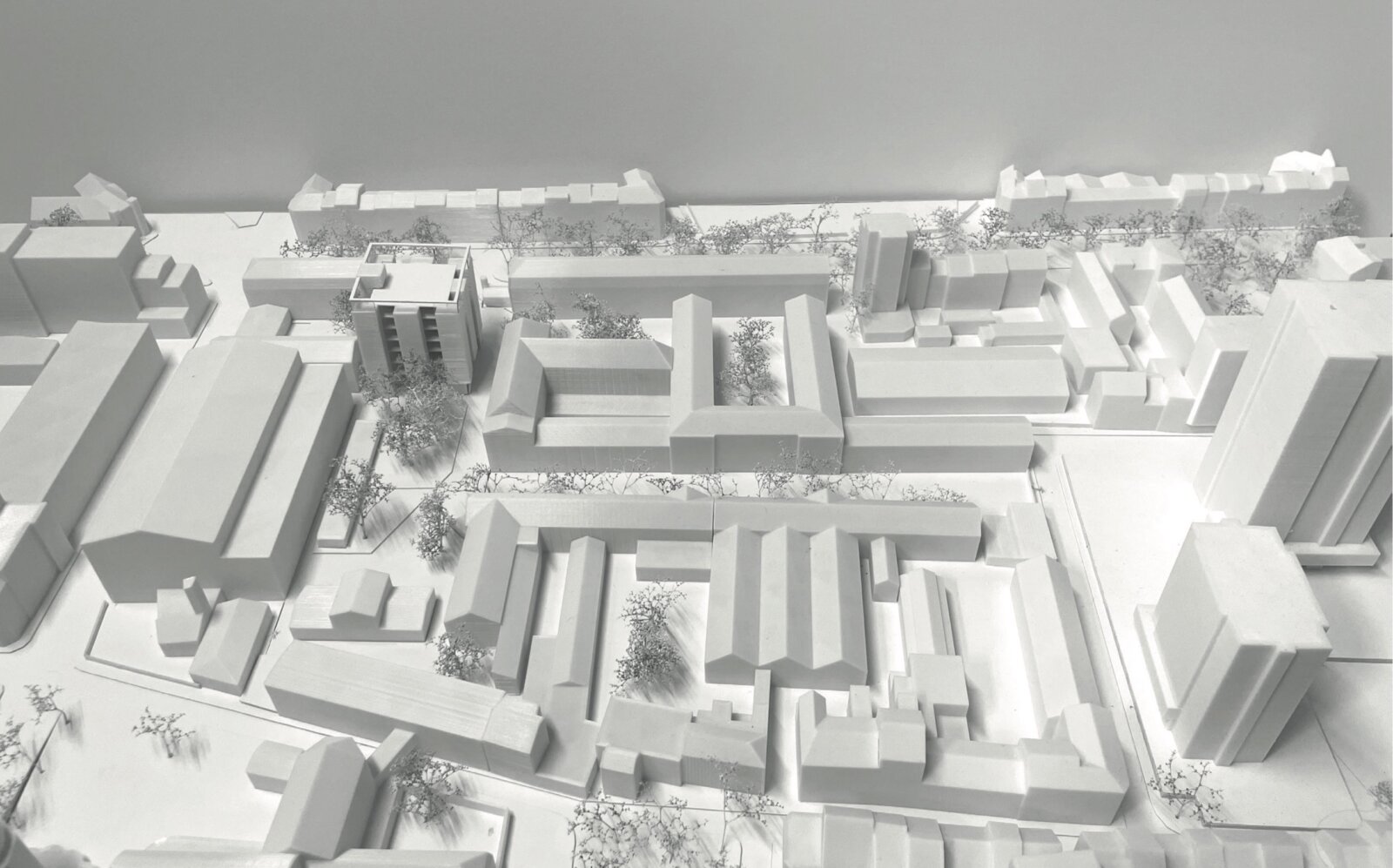
The collaboration between the Paris-based Studio Muoto and the Liège-based firms Laboratoire and Baumans-Deffet fits into the same void as Baukunst and Office. This time, the building rises up and stands taller than the others, opting not to be juxtaposed but leaving a slight gap between itself and the existing buildings. The façade, resembling an office block, features a large terrace suspended over the courtyard and asserts (perhaps too strongly) its uniqueness.
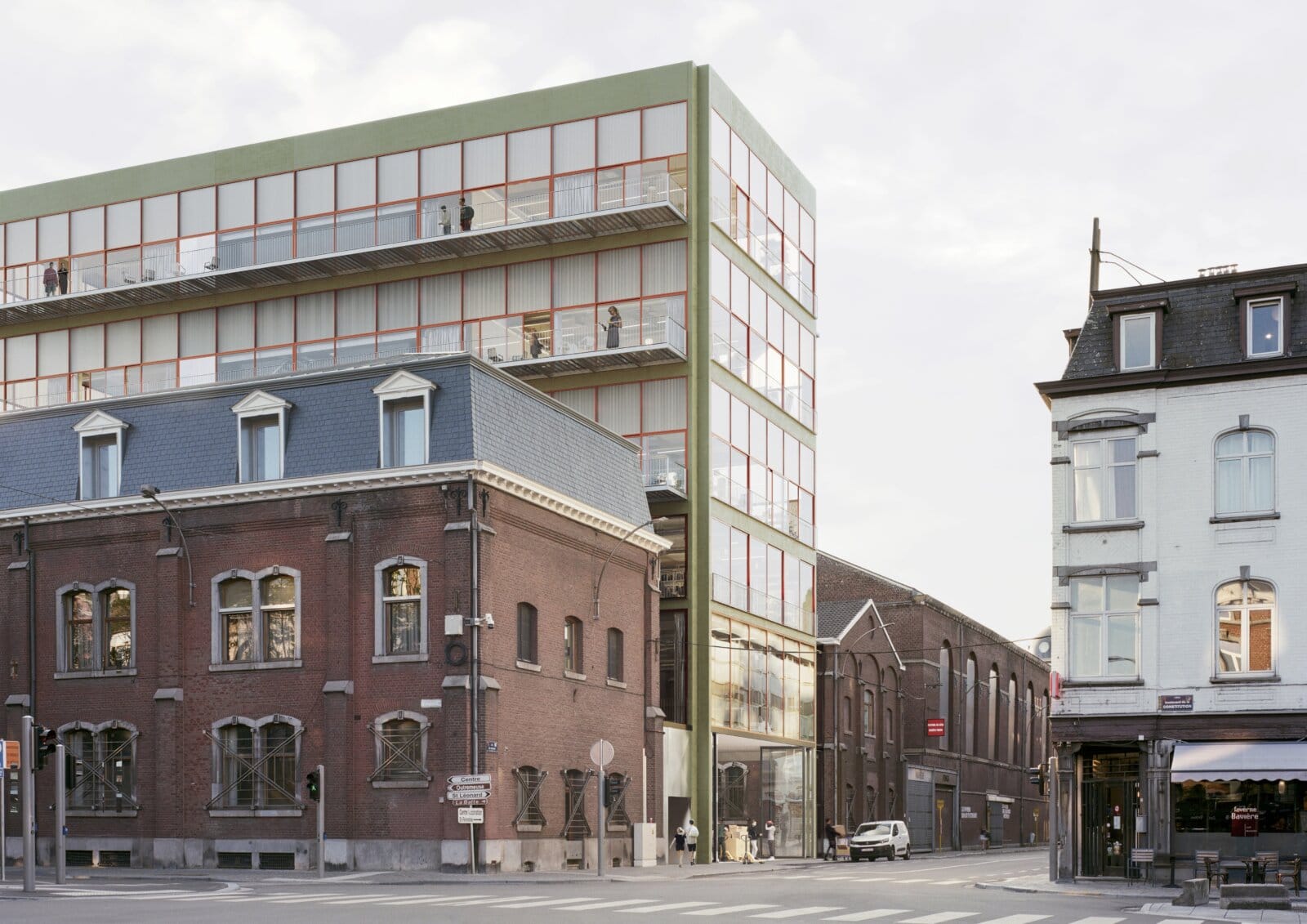
It is all a question of thresholds, interfaces, and playing with existing volumes to fit in just right. The ambitious siting of Office creates a new complex with striking ‘addresses’. These are new ways of interacting with the existing environment. It naturally raises questions about voids, light, the lack of breathing space, and the promotion of heritage by choosing to adjoin it. However, this is an approach that seeks to harmonise with the existing fabric, like an assemblage, rather than simply standing apart. The primary aim is to clarify the site to make it coherent and legible for the city.
