Following the lecture in Brussels, Amaryllis Jacobs, artistic director of A+, spoke with Cecilia Puga about her practice’s most recent projects, the dire state of housing and heritage in Chile, and the importance of material and structural systems.
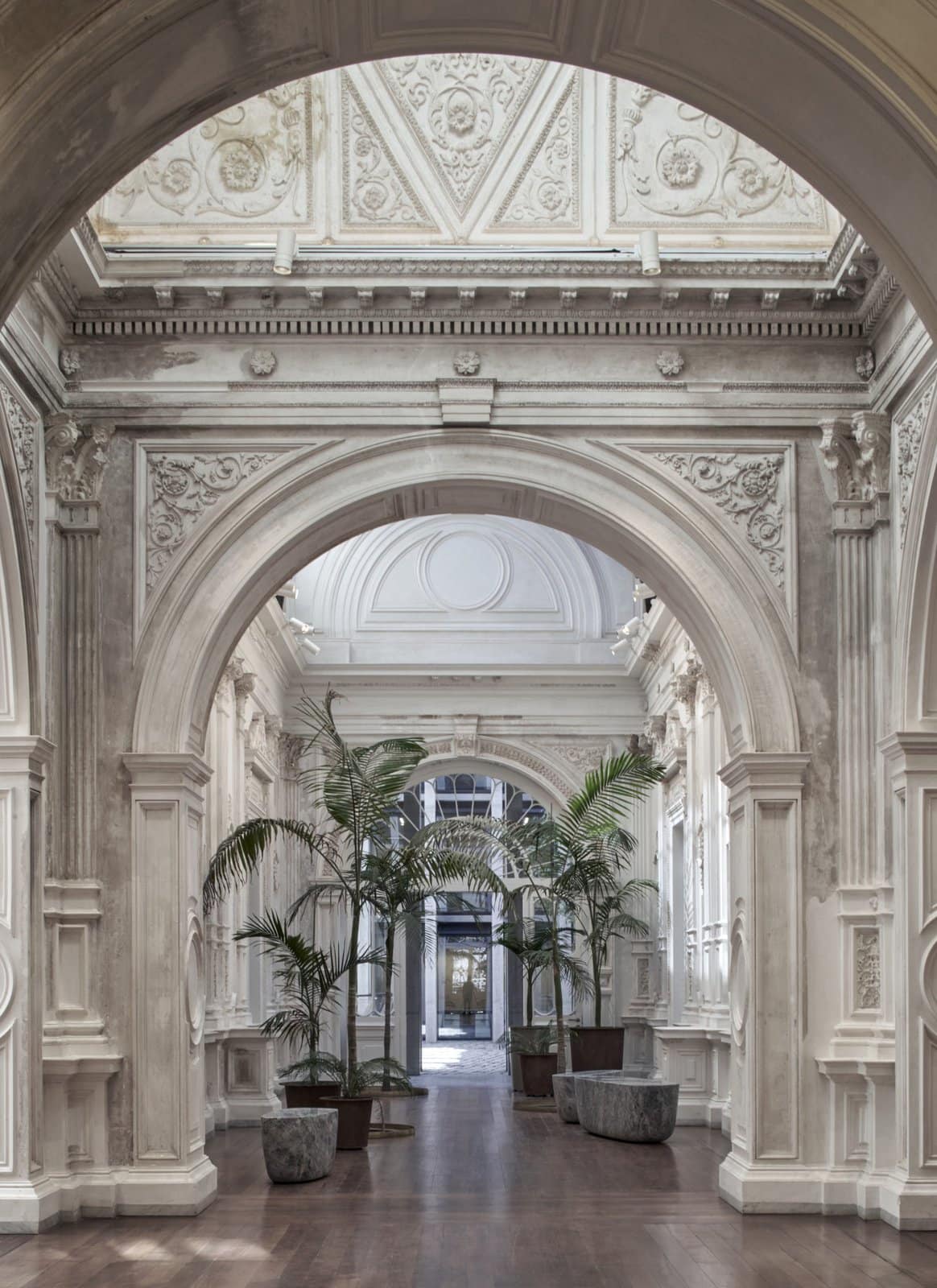
A+ One of your most recent projects is the remarkable Palacio Pereira, an abandoned 19th-century neoclassical mansion which you, together with Paula Velasco and Alberto Moletto, have restored and converted into the headquarters of the Ministry of Culture, Arts and Heritage of your country. In one of the upcoming issues of A+ magazine, we will be discussing ‘Adaptive Reuse’. ‘Demolition is an act of violence’, says architect Arno Brandlhuber. We would like to know how important it is to you to convert and reuse existing buildings rather than build new ones.
CP We are, of course, in a completely different context. In Chile, and by extension in all Latin American countries, there is a severe housing shortage. Many people still live in favelas, without proper infrastructure. We cannot simply stop building; we still have a great deal of work to do. We need to build high-quality homes in areas that are highly vulnerable. Due to the many severe earthquakes here, there aren’t many historic buildings. This country has been rebuilt several times. It is only since the mid-20th century that strict regulations have ensured that buildings are constructed to a high standard and are safe. In 2010, there was a particularly severe earthquake, yet there was very little damage.
There is little heritage in our country. The condition of the few remaining buildings is dire and worrying. The UNESCO-protected city of Valparaíso, for example, is in a state of complete disrepair. Thanks to strict conservation laws, the old buildings cannot be demolished, but there is insufficient government funding to restore them or even secure them. Large parts of this exceptionally beautiful city are crumbling. Only thanks to private initiatives are a handful of buildings being saved.
Our modernist heritage, on the other hand, is not sufficiently protected. These buildings and public spaces, too, must be safeguarded, maintained and renovated.
The Palacio Pereira was a highly successful project because the government was closely involved and even took a very active role, as well as making funds available. We enjoyed a fair amount of freedom. The 19th-century palace was completely dilapidated. The building was in private hands. For years, the property developer tried to obtain permission to erect a 20-storey building on the ruins, effectively demolishing the interior and retaining only the façade. After a long battle, the government decided to purchase the palace and launch a design competition, which we won. We preserved not only the façade but also the structure. We carried out very precise, stabilising interventions in the existing structure, within the original and highly effective structural design – even though this went against current seismic regulations. I believe our project brought about a significant and important change in the way heritage is treated in Chile. The experienced heritage team within the government responsible for the complex restoration and refurbishment understood what was at stake. They gave us very detailed instructions and set precise boundaries within which we could work. The façade and the core of the building, namely the gallery, had to be preserved, as did special historical ornaments. Despite these restrictions, we enjoyed a great deal of freedom.
But I’d like to return to the question, which I consider important in light of the current climate crisis. Where possible, improving existing architecture should be prioritised over new construction. But in Latin America, we find ourselves in a completely different reality. We still need a lot of new, good infrastructure. I would say that 80% of the buildings here are in a really precarious state.
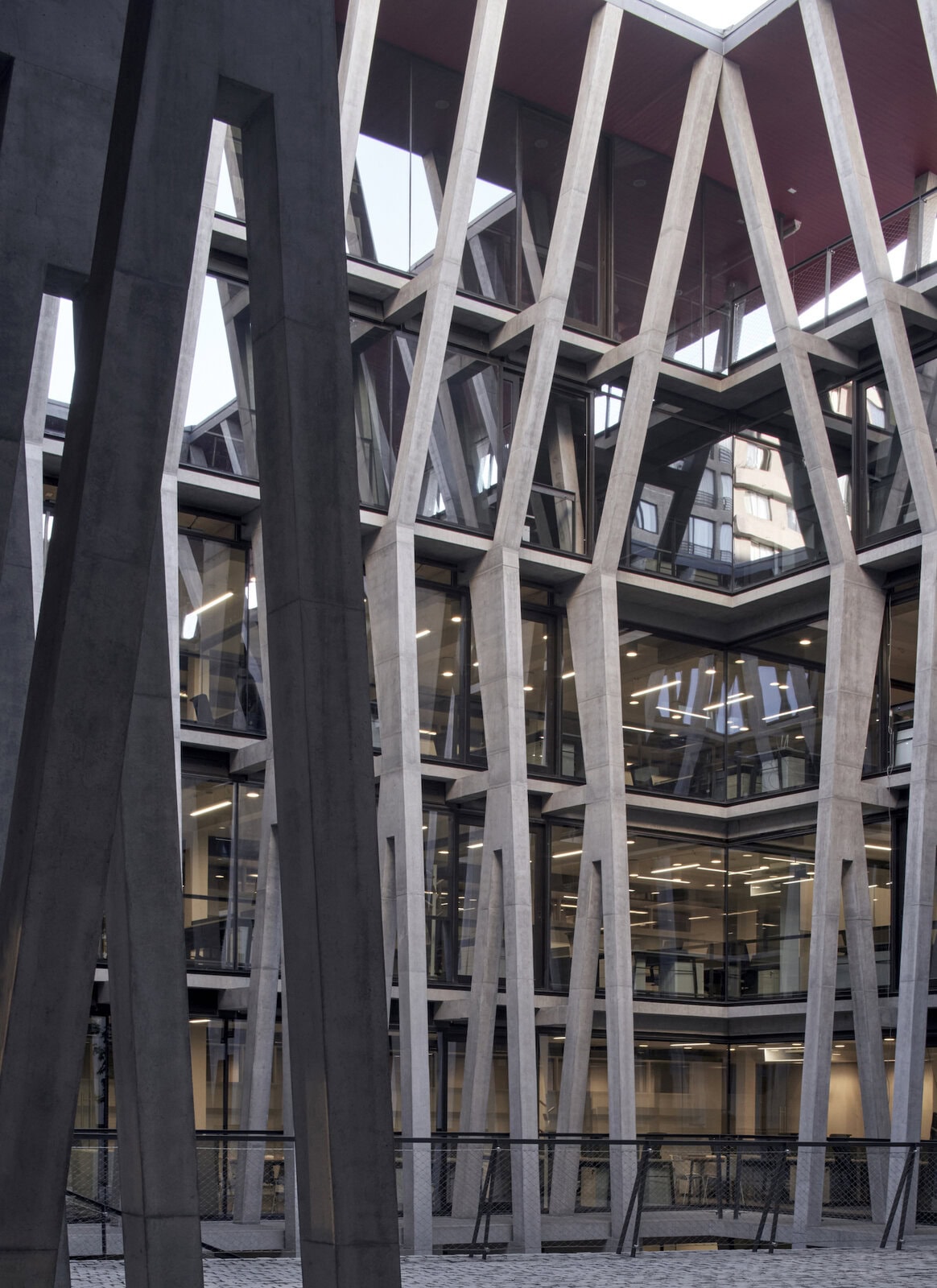
A+ The intersecting columns in the Palacio’s patio make a strong architectural statement. It is not merely a structurally significant intervention?
CP We wanted the renovated building to reflect the original typology. The lush patio with its unusual tropical plants had disappeared because all the surrounding structures had collapsed, leaving an empty space. The palace was – by European standards – fairly modest, but it was particularly scenographic.
We did indeed have to add the columns for structural reasons, but we wanted a light construction; we sought a certain transparency, a unique way to connect the old with the new and ensure continuity. We loved the idea of designing columns that reference scaffolding, which always reflects a desire to preserve and cherish the existing structure. We affectionately call them ‘finger columns’. It is, therefore, a highly flexible structure. The fingers can reach out to anywhere, to any element requiring support. Moreover, the beautiful old wall is fully visible through the transparent structure.
The plan for the new building is exceptionally open. All partitions can be removed. We always strive to draw very generic plans to allow for an evolution in use and functions. We do not know what the future holds, which is why we want a building to be versatile, useful for every conceivable purpose. The building was originally constructed as a private residence, but later became a school, then fell into ruin, and now the old walls house the Ministry of Culture with public spaces such as an art gallery, a cafeteria and a library. What function will the Palacio Pereira serve in 100 years’ time? Nobody knows, but anything is possible.
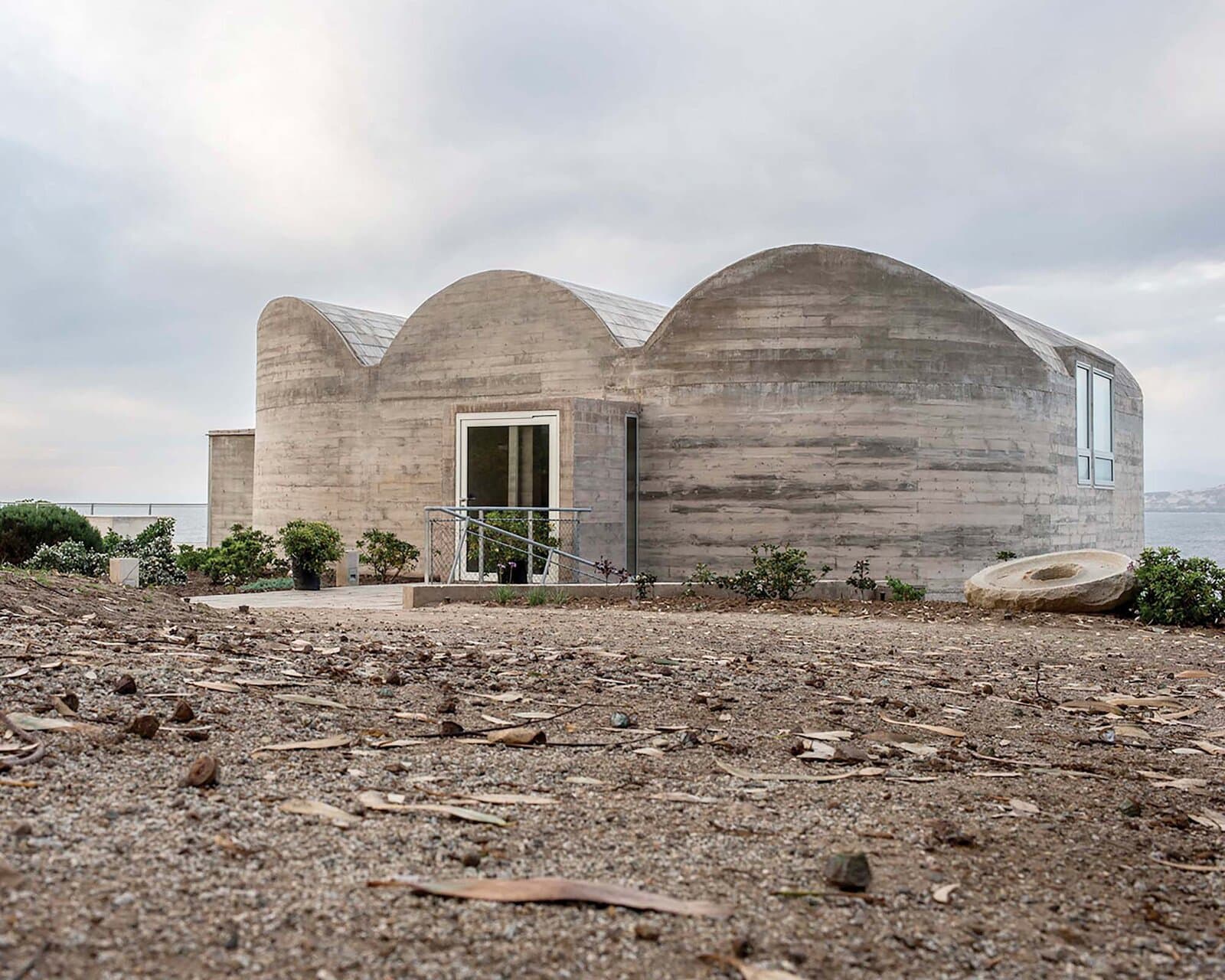
A+ We often see vaulted roofs in your architecture, already in your proposal for Ordos 100, in the Hotel Indigo and again in the recently completed Vaulted House. Is there a link to Chile’s vernacular architecture?
CP No, not at all. There is little heritage left in Chile due to the earthquakes. This also applies to our country’s vernacular architecture. Traditional buildings do not have stone vaults, but wooden roof structures that hold up best when the earth shakes.
The vault is indeed a structural element that has long been present in our architecture due to its structural qualities and efficiency. Vaults allow large spans to be created with minimal support. The vaulted concave space offers a continuous interior full of nuances. It allows for a flexible, open-plan layout that can change over the days and years and adapt to different requirements. In addition, the vault also has a temperature-regulating function. When an opening is created on each side, spaces can be cooled or heated naturally.