
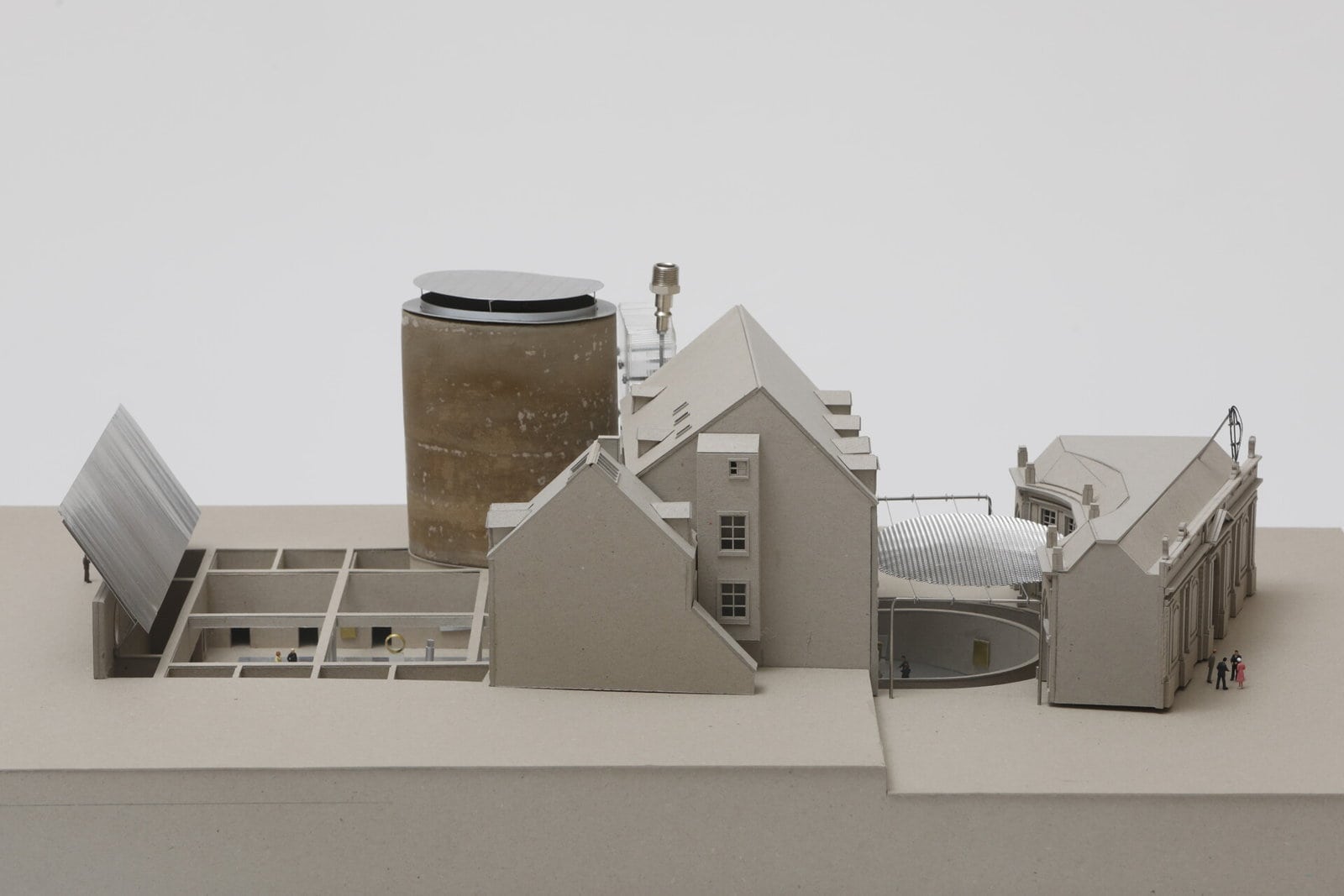
The TreM.a is a museum in the Province of Namur that houses several treasures of ancient art right in the heart of Namur’s historic centre. The extension and renovation project was entrusted to BAUKUNST and Barbara Van der Wee. The Hôtel de Gaiffier d’Hestroy and its outbuildings, including the entrance, are listed as monuments, and the project aims to increase the floor area from 1,500 to 3,750 m². A remarkable feat, given that the original layout of the residence, set between the courtyard and the garden, will be preserved.
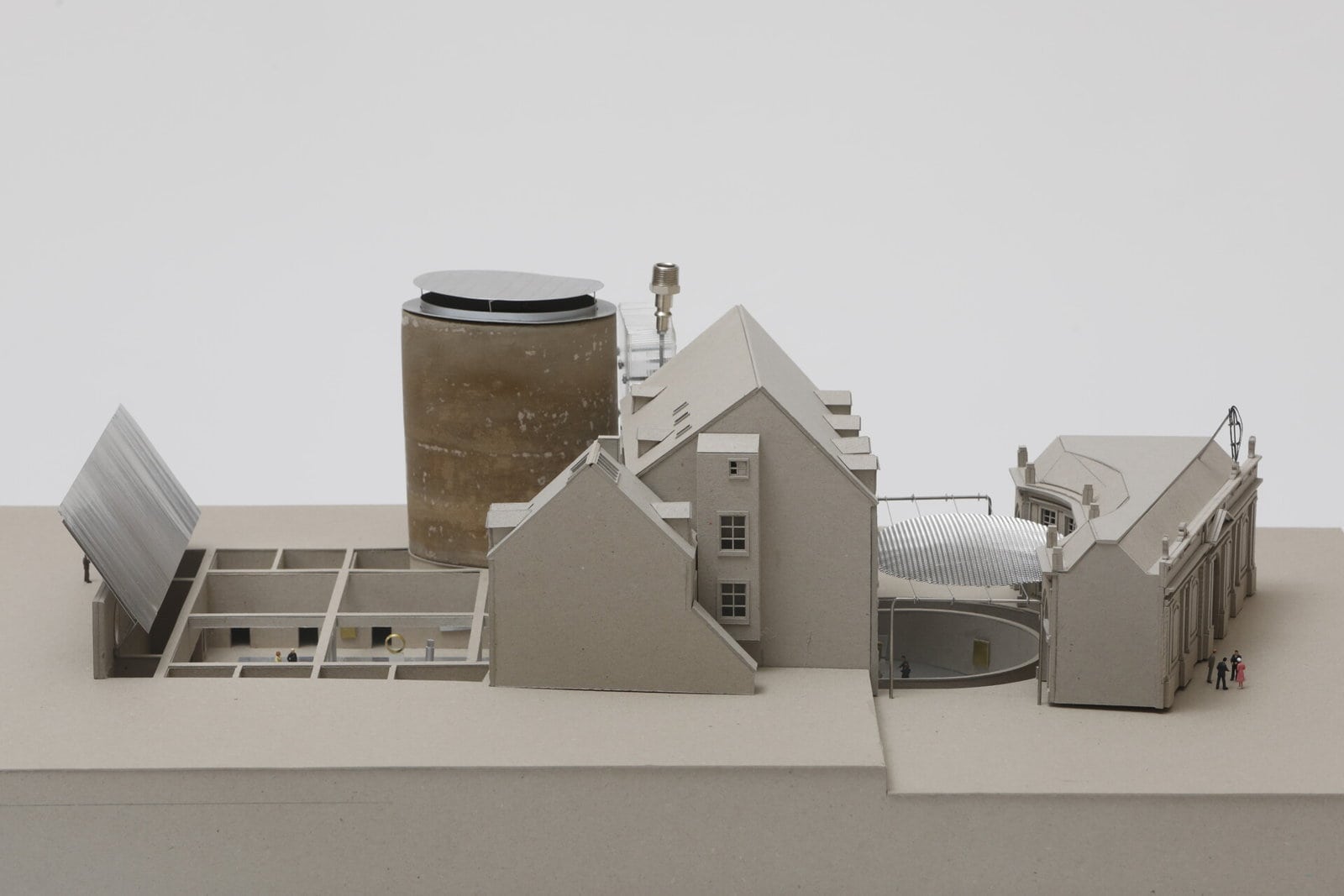
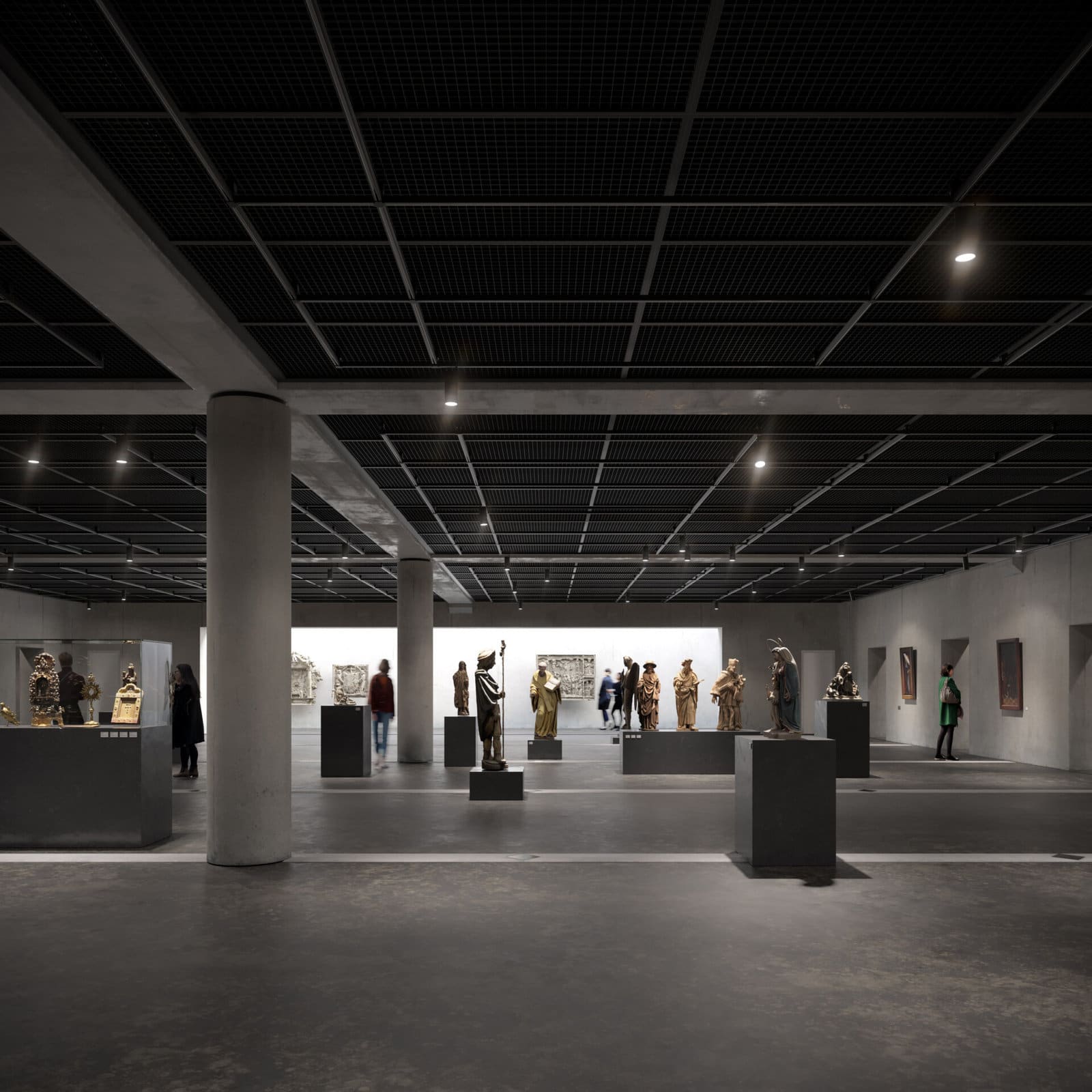
Five teams competed: AM Noa / Binario, ORIGIN-LRA-VOET, archipelago – Mangado y asociados – EMPTY, NIETO SOBEJANO – SPECIMEN – KORTEKAAS and, finally, A.M. BAUKUNST – Barbara Van der Wee Architects. The setting is inspiring, as the museum, situated opposite St Jacques Church, lies between Rue de Fer—the main shopping street leading to the Town Hall—and Venelle des Capucins, which leads to the Municipal Library, the courtyard of the Institut Saint-Louis and the Town Hall car park.
The main building dates from 1730–1745 and the outbuildings from 1768, designed by François-Joseph Beaulieu. Converted into a museum in 1964, the site once housed the provincial art gallery and hosted the first exhibition of works by Félicien Rops. The exhibition design for this ‘Provincial Museum of Ancient Arts of the Namur Region’ was by Corneille Hannoset. The collections consist of pieces from the Burgundian Netherlands, notably including Meuse sculpture from the 12th to the 16th century, with magnificent altarpieces and artefacts from various guilds. They also include the most significant collection of works by the painter Henri Bles (c. 1500–1555). To this has been added, since 2010, the Oignies Treasure, a jewel of 13th-century goldsmithing on loan from the King Baudouin Foundation. The name TreM.a does not refer to the diacritical mark but to these Treasures of the Middle Ages.
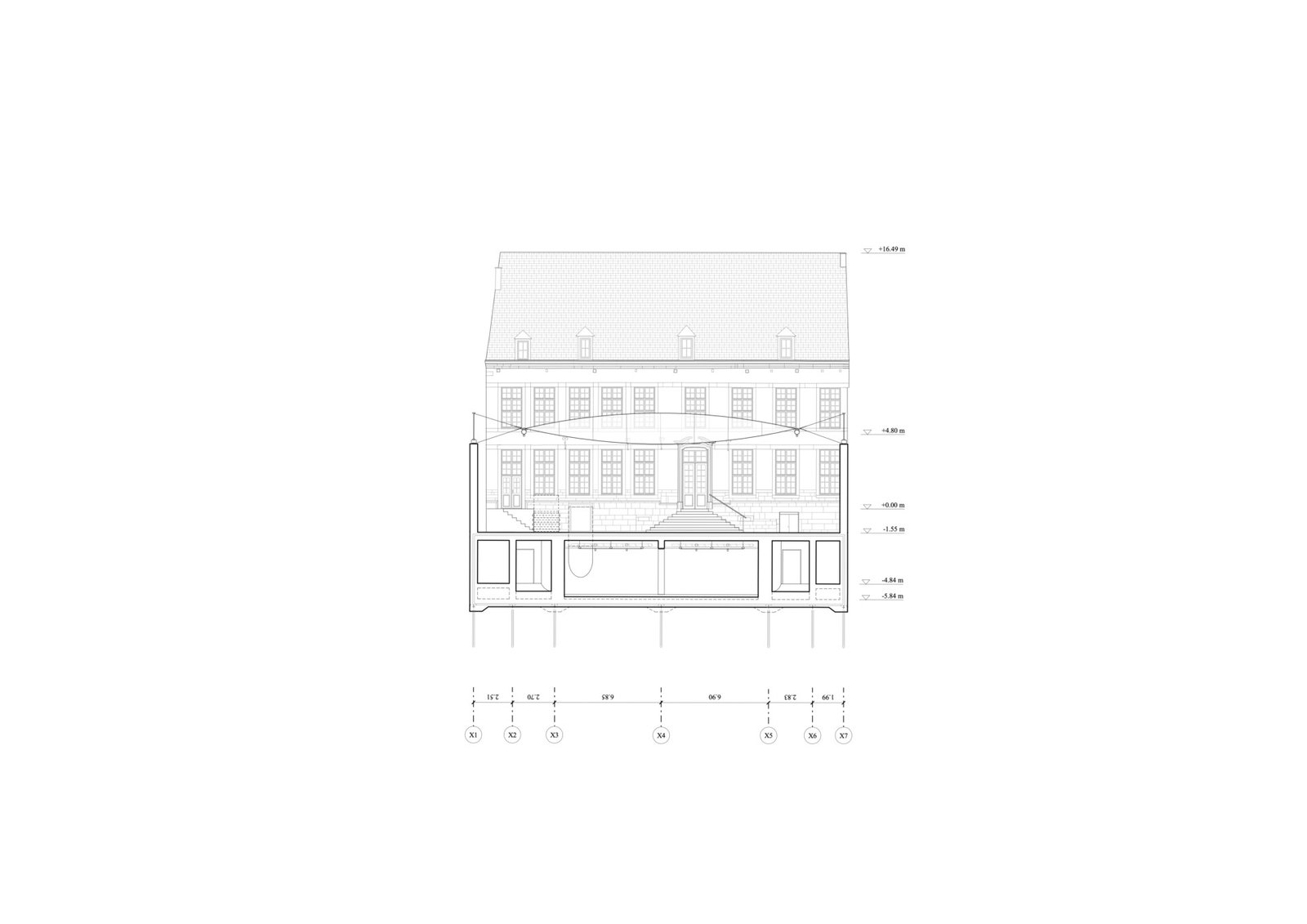
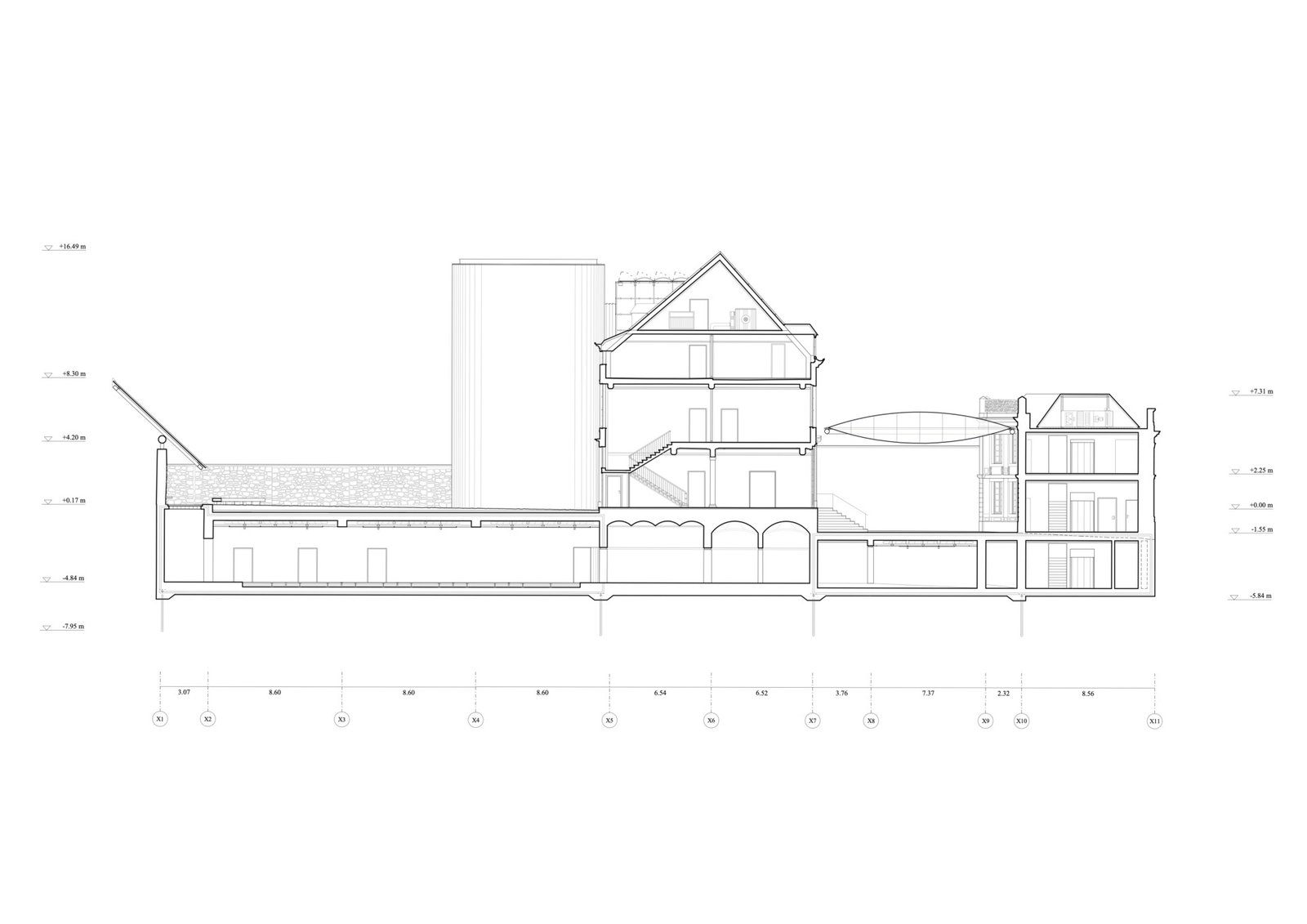
Although partially renovated several times, the museum was nevertheless cramped, offering no disabled access to all the galleries and sorely lacking in technical and educational facilities. Several design teams were tempted to occupy all or part of the garden or to raise the front section—to the point of engulfing the main building—with the implicit necessity of excavating to create additional floor space. The exceptional location and content called for a bold vision for the future and a profound transformation. The key features of the winning design: 1) the envelopes of the existing buildings are preserved and enhance the overall sequence, 2) the bulk of the museum space is situated below ground level across almost the entire site, made possible by the necessary underpinning works, 3) the above-ground additions are limited in number, and their distinctive features demonstrate a passion for radical construction techniques.
As the existing sections are largely dedicated to the site’s operations, visitor reception or the documentation centre, it is the layout of level -1 that dictates the new layout. Without negating the pre-existing layout, a core of vertical circulation routes is situated on the garden side, providing access to two major underground spaces. The Nave, a vast rectangular hall for the reference collections, beneath the garden, flanked by extensive storage areas on level -2, and opposite it, the Oignies Treasury, a semi-circular room beneath the main courtyard, the ‘chancel’ of the tour. Smaller, multi-purpose rooms occupy the remaining spaces. The overall impression is that of a sort of crypt on the scale of a basilica, constructed of reinforced concrete, whose irregularities are dictated by the shape of the plot and the buildings above.
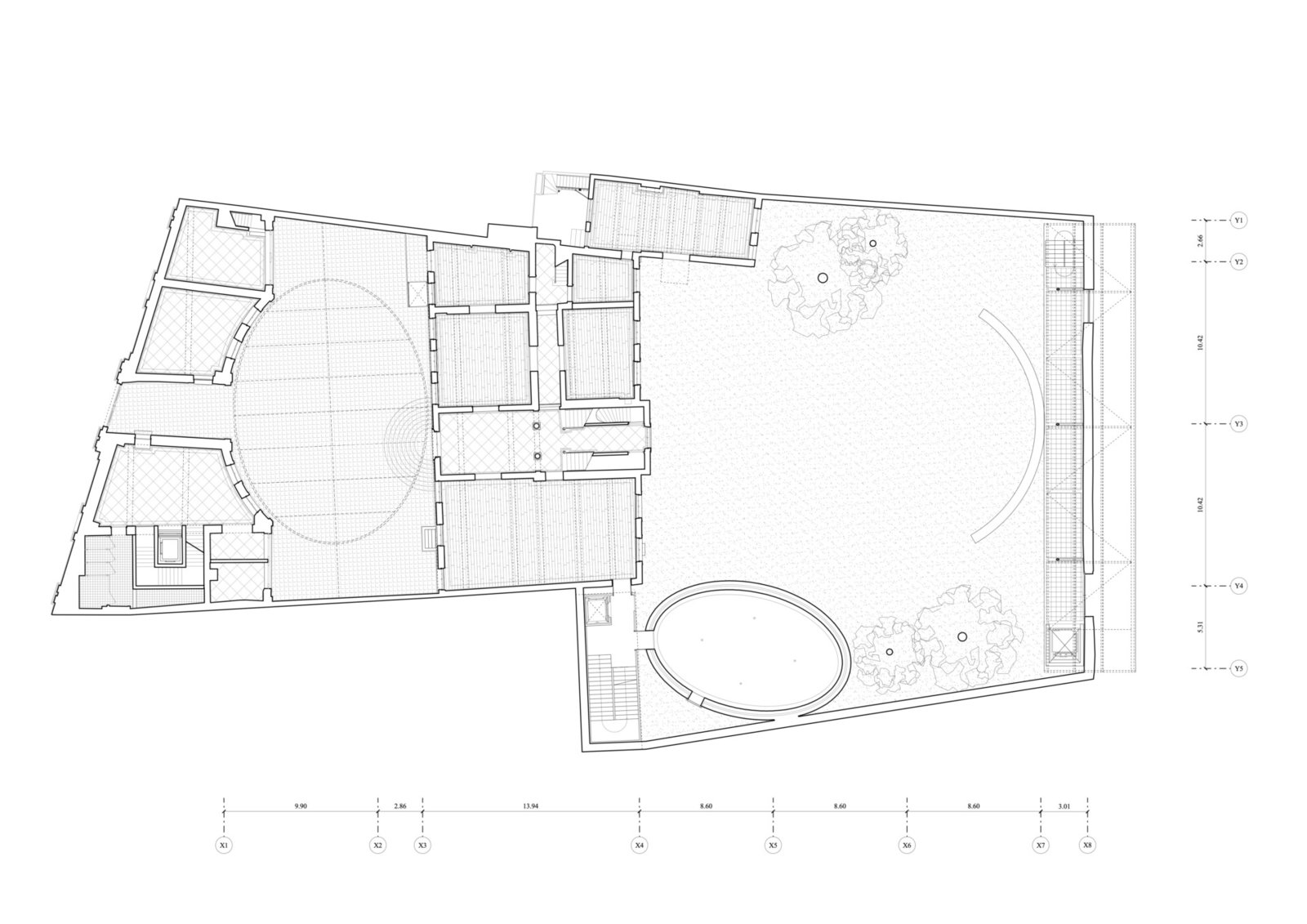
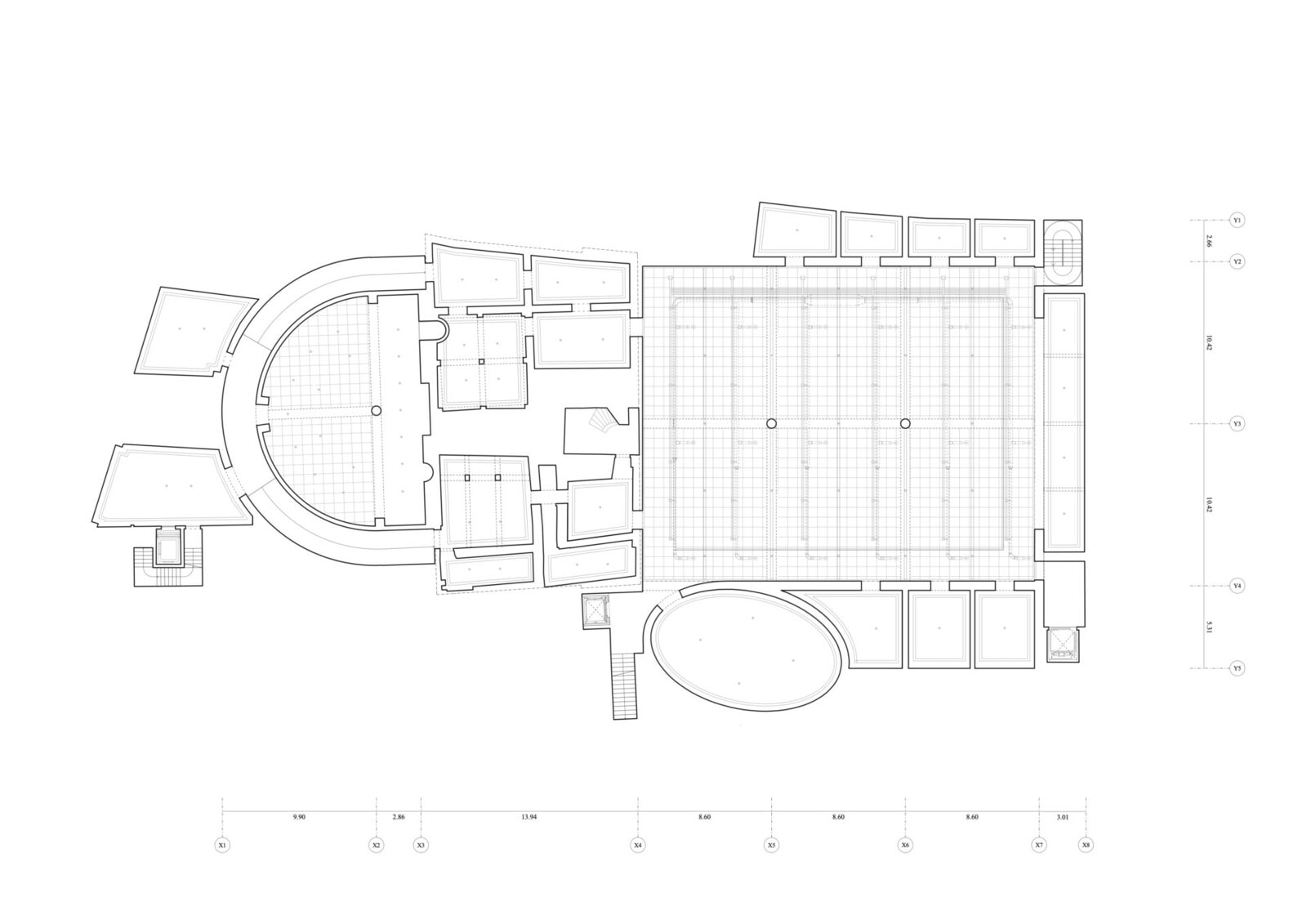
This choice allows the two outdoor spaces to be restored by adding striking architectural features. The main courtyard is covered by a glass roof with a slender steel structure, the central oval supporting sails designed by Chevalier Masson as part of the integration of a work of art. It thus becomes the focal point for countless activities. The vertical circulation space is flanked along its entire height by a blind elliptical cylinder known as the rotunda. It is intended for temporary exhibitions. Finally, at the far end of the garden, a pergola-style roof section cuts across the space, overhanging the alleyway. It houses access points to the basements and encourages outdoor activities.
One thing is clear: the frank and uncompromising dialogue between the architectural heritage and what is added to it is a treasure in its own right, yet another one. This justifies seeing the architects’ vision through to the end, particularly when it comes to the most crucial details. Counterbalancing the inevitable digital enchantments, the TreM.a will offer visitors an experience of works enhanced by an architecture whose simplicity is rich in meaning.
The competition dossier is available here.
AWaP Cultural Heritage Inventory Listing
TreM.a website
The contract was awarded on 23 December 2021. Estimated budget: €13,000,000. A detailed programme is currently being drawn up.
